
Sign up to save your podcasts
Or

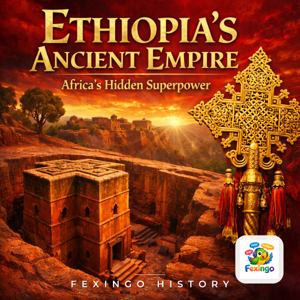


When did the Aksumite Empire truly end? Episode 74 of Ethiopia's Ancient Empire: Africa's Hidden Superpower dives into the shadowy reign of Dil Na'od, the last Aksumite king, whose defeat by the Zagwe general Mara Takla Haymanot around 1150 CE marked the end of an era. We explore the scant historical sources: the royal chronicles, the Gadla Lalibela (Lalibela's hagiography), and the Kebra Nagast's version of events. How did a king whose name means 'the covenant of the shepherd' preside over the collapse of a superpower? Was the Zagwe takeover a brutal conquest or a power transfer within the elite? Lucas and Luna unpack the competing narratives, the role of the Amhara province, the mysterious 'Jewish queen' Gudit, and the last recorded Aksumite military campaign into the interior. They also discuss the fate of Dil Na'od's dynasty — did his line survive in the Shewa region, setting the stage for Yekuno Amlak's restoration a century later? A story of twilight, legend, and the fragile thread of history.
#Ethiopia #Aksum #DilNaod #ZagweDynasty #MaraTaklaHaymanot #KebraNagast #Gudit #Amhara #Shewa #YekunoAmlak #GadlaLalibela #LastKing #MedievalAfrica #EastAfrica #SolomonicDynasty #Coup #FexingoHistory #History
Keep every episode free: buymeacoffee.com/fexingo
When Lucas and Luna explore the Aksumite Empire's sophisticated water management, they uncover how dams, reservoirs, and terraced agriculture sustained one of antiquity's great civilizations. From the massive Mai Shum dam to the mysterious D streams of Aksum, they examine the engineering prowess that allowed Aksum to dominate East Africa and the Red Sea for centuries. Along the way, they discuss the role of water in Aksumite religion, the decline of these systems, and what archaeology reveals about climate resilience. This episode brings to life the hills of Tigray, the valley of the Gash River, and the kingdom of Damot — all tied to water.
#Aksum #AksumiteWater #MaiShum #AncientEngineering #Tigray #GashRiver #DanakuValley #Ezana #Frumentius #AncientReservoirs #ClimateResilience #Dams #Terraces #EthiopianHistory #EastAfrica #RedSea #History #FexingoHistory
Keep every episode free: buymeacoffee.com/fexingo
In the 10th century, a queen named Gudit led a rebellion that sacked the city of Aksum and burned its churches, plunging Ethiopia's Solomonic dynasty into centuries of obscurity. This episode explores who Gudit really was — a Jewish queen, a pagan invader, a southern usurper — and what her reign meant for the kingdom. We examine the legends from the Kebra Nagast and the Ethiopian Church histories, the archaeological evidence for the destruction of Aksumite monuments, and the theories that link her to the Zagwe dynasty that followed. Lucas and Luna discuss Gudit's identity as Yodit or Judith, her possible connection to the Beta Israel, and why her story was suppressed by later Solomonic chroniclers.
#Gudit #Yodit #Aksum #BetaIsrael #KebraNagast #ZagweDynasty #SolomonicDynasty #EthiopianHistory #QueenGudit #AksumiteEmpire #EastAfrica #10thCentury #JewishHistory #Lalibela #EthiopianOrthodox #History #FexingoHistory #LostQueen
Keep every episode free: buymeacoffee.com/fexingo
Long before Lalibela's churches, before the Solomonic restoration, a kingdom in the Horn of Africa minted its own gold coins, traded with Byzantium and India, and built an economy that sustained an empire for centuries. This episode dives into the Aksumite economy — how the port of Adulis funneled ivory, frankincense, and slaves to the Roman world; how King Endubis introduced the first indigenous coinage in sub-Saharan Africa; and how the Aksumite navy protected trade routes against rival powers. We explore the Periplus of the Erythraean Sea as a window into ancient commerce, the mysterious gold source of the interior, and the economic pressures that contributed to Aksum's decline. Lucas and Luna discuss the weight of a gold coin's image, the role of the Arabian peninsula connection, and what happens when a trade network collapses.
#Aksum #AksumiteEconomy #Endubis #Adulis #PeriplusOfTheErythraeanSea #ByzantineTrade #IndianOceanTrade #IvoryTrade #Frankincense #AksumiteCoinage #GoldTrade #RedSea #HornOfAfrica #AncientEconomy #Ezana #Ge'ez #History #FexingoHistory
Keep every episode free: buymeacoffee.com/fexingo
In this episode, Lucas and Luna explore the naval power of the Aksumite Empire. Long before the Solomonic dynasty, Aksum dominated the Red Sea with a fleet that controlled trade routes from Africa to India. They discuss the port of Adulis, the Periplus of the Erythraean Sea, the empire's war with Himyar under Kaleb, and the mysterious decline of Aksum's maritime strength. How did a highland kingdom become a thalassocracy? And why did it vanish from the waves? Dive into the forgotten naval history of Ethiopia.
#AksumiteNavy #RedSea #Adulis #Kaleb #Himyar #Periplus #EthiopianHistory #EastAfrica #AncientMaritime #Thalassocracy #Ezana #CosmasIndicopleustes #Aksum #IndianOceanTrade #Ge'ez #History #FexingoHistory #MaritimeHistory
Keep every episode free: buymeacoffee.com/fexingo
Emperor Ezana ruled Aksum in the 4th century CE, overseeing a period of dramatic expansion and cultural transformation. He is best known for adopting Christianity under the influence of his mentor Frumentius, making Aksum one of the earliest Christian states. But Ezana's legacy is far richer: his military campaigns subdued the Beja nomads, conquered the Kingdom of Kush at Meroë, and extended Aksumite power into South Arabia. The trilingual Ezana Stone—inscribed in Ge'ez, Sabaean, and Greek—records his victories and religious shift, first invoking pagan gods then praising the Lord of Heaven. Coins minted under Ezana mirror this transition, bearing the cross. The episode explores how Ezana's reign set the stage for Aksum's golden age, its trade networks linking Rome and India, and the enduring Ethiopic script still used in Ethiopian liturgy. Mention of Kaleb, Lalibela, and the Kebra Nagast provide connective tissue to earlier episodes, while the Ezana Stone's parallel to the Rosetta Stone highlights its significance for deciphering ancient languages.
#Ezana #Aksum #Ethiopia #AksumiteEmpire #Frumentius #Christianity #Ge'ez #Meroë #Kush #Beja #EzanaStone #AncientHistory #EastAfrica #TradeRoutes #RomanIndiaTrade #EthiopicScript #4thCentury #FexingoHistory
Keep every episode free: buymeacoffee.com/fexingo
In this episode, Lucas and Luna journey to the rugged highlands of Lasta to explore the story behind Ethiopia's most astonishing architectural achievement—the eleven rock-hewn churches of Lalibela. Carved from solid volcanic tufa in the late 12th and early 13th centuries, these structures are a testament to the vision of King Lalibela (also known as Gebre Mesqel), a ruler of the Zagwe dynasty. They discuss the legend of King Lalibela's journey to Jerusalem, his dream of building a New Jerusalem in Ethiopia, and the engineering marvel of churches like Bet Giyorgis (the Church of Saint George) and Bet Medhane Alem (the House of the Saviour of the World). The episode touches on the role of the Zagwe dynasty, the influence of the Ethiopian Orthodox Tewahedo Church, and the challenges of dating and preserving these sacred sites. Lucas also recounts the story of the Knights Templar connection—a controversial theory that links Lalibela's construction to Crusader masons, a claim dismissed by most scholars but still tantalizing. The conversation ends with a reflection on how Lalibela remains a living pilgrimage site today, drawing thousands of worshippers every Orthodox Christmas.
#Lalibela #RockHewnChurches #Ethiopia #ZagweDynasty #KingLalibela #BetGiyorgis #BetMedhaneAlef #Lasta #EthiopianOrthodox #GebreMesqel #NewJerusalem #MedievalArchitecture #Pilgrimage #TemplarTheory #EastAfrica #History #FexingoHistory #Podcast
Keep every episode free: buymeacoffee.com/fexingo
In this episode, Lucas and Luna delve into the final stand of Emperor Tewodros II, a visionary modernizer whose reign ended in tragedy at the Siege of Magdala in 1868. They explore Tewodros's rise from a provincial warlord during the Zemene Mesafint (Era of the Princes), his efforts to unify Ethiopia and modernize its army, and his increasingly erratic behavior after personal losses. The siege by a British expedition under General Robert Napier is detailed, including the emperor's fortifications, the assault, and his suicide to avoid capture. Lucas also discusses the looting of treasures, including Ethiopian manuscripts and crowns, and the legacy of Tewodros as both a hero and a tragic figure. The conversation touches on the letters Tewodros sent to Queen Victoria, his demands for skilled workers, and the Victorian-era politics that led to the British intervention. This episode builds on prior episodes about Ethiopian rulers, offering a nuanced look at a complex emperor.
#TewodrosII #SiegeOfMagdala #Magdala #EthiopianEmpire #ZemeneMesafint #NapierExpedition #QueenVictoria #KassaHailu #Gondar #DebraTabor #WubeHaileMaryam #RasAli #BritishExpedition #EthiopianHistory #EastAfrica #19thCenturyHistory #History #FexingoHistory
Keep every episode free: buymeacoffee.com/fexingo
In the late 13th century, Ethiopia was ruled by the Zagwe dynasty, a line of kings from the Lasta region who had seized power centuries before. But in the highlands of Amhara, a young prince named Yekuno Amlak gathered allies among monks, nobles, and even the Ethiopian Orthodox Church, claiming descent from the biblical King Solomon. This episode unpacks how Yekuno Amlak overthrew the last Zagwe king, Yetbarak, in a series of battles around about 1270 AD, and established the Solomonic dynasty that would rule Ethiopia for nearly 700 years. We explore the role of the monk Tekle Haymanot, the story that Yekuno Amlak's ancestors survived a massacre at Debre Damo, and how the Kebra Nagast — the epic that ties Ethiopian royalty to the Queen of Sheba and the Ark of the Covenant — was composed to legitimize the new dynasty. We also examine the archaeological evidence from the church of Gännäta Maryam, with its unique wall paintings that may depict Yekuno Amlak himself. This is a story of power, faith, and the invention of a golden past.
#YekunoAmlak #SolomonicDynasty #Zagwe #TekleHaymanot #KebraNagast #EthiopianHistory #GännätaMaryam #Amhara #Lasta #DebreDamo #Yetbarak #13thCentury #EastAfrica #EthiopianOrthodox #QueenofSheba #ArkOfTheCovenant #History #FexingoHistory
Keep every episode free: buymeacoffee.com/fexingo
We often think of the Ottoman Empire as a Turkish story, but its harem and court were run by African eunuchs — specifically, from Ethiopia. In this episode, Lucas and Luna explore the Ethiopian slave trade that supplied the Ottoman palace with its most trusted officials: the 'Aghas of the Gate' and the 'Kizlar Agha' (Chief Black Eunuch). They trace the journey from the Lake Tana region and the Horn of Africa to Cairo and Istanbul, where boys were castrated — often fatally — and rose to become kingmakers, mosque builders, and the only people allowed inside the imperial harem. Lucas explains why Ethiopian Christians were preferred over other African sources, how eunuch dynasties formed in Cairo, and how figures like Beshir Agha (d. 1746) amassed enormous political power. The conversation also touches on the economic side: the link between the Ethiopian slave trade and the Red Sea port of Massawa, and the lasting legacy of these men in Ottoman architecture and Sufi patronage. This episode offers a fresh lens on Ethiopian-Ottoman connections that most history podcasts overlook.
#Ethiopia #OttomanEmpire #Eunuchs #Harem #SlaveTrade #KizlarAgha #BeshirAgha #Massawa #RedSea #HornOfAfrica #Cairo #Istanbul #LakeTana #Sufi #History #FexingoHistory #AfricanDiaspora #OttomanPalace
Keep every episode free: buymeacoffee.com/fexingo
From the publisher's feed