
Sign up to save your podcasts
Or

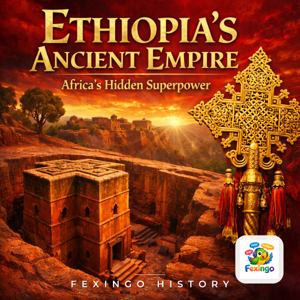


For centuries, Europe believed a mythical Christian king named Prester John ruled a vast realm somewhere beyond the Islamic world. This episode follows how that legend became entwined with Ethiopia's real history, from the first Ethiopian delegation to Portugal in 1306 to the arrival of Portuguese ambassadors and Jesuit missionaries in the 16th century. We explore how the search for Prester John shaped European geopolitics, how King Zara Yaqob actively cultivated the myth to forge alliances, and how it culminated in the Portuguese military expedition that helped Ethiopia survive the wars of Imam Ahmad ibn Ibrahim al-Ghazi. But the legend also brought unintended consequences — Jesuit attempts to convert Ethiopia to Catholicism, the bloody conflicts over religion, and the eventual expulsion of the Jesuits under Emperor Fasilides. Along the way, we meet figures like Pero da Covilhã, Francisco Álvares, and the enigmatic Ethiopian monk known as 'John, Patriarch of the Indians' who visited Europe. This is the story of how a medieval rumor changed the course of an empire.
#PresterJohn #PresteJoO #EthiopianHistory #ZaraYaqob #PortugalEthiopia #JesuitsInEthiopia #Fasilides #Galawdewos #PeroDaCovilha #FranciscoAlvares #LebnaDengel #EthiopianOrthodox #CatholicMission #IberianExploration #AgeOfDiscovery #AfroEuropeanContact #History #FexingoHistory #AksumiteEmpire #Lalibela
Keep every episode free: buymeacoffee.com/fexingo
In this episode, Lucas and Luna explore the Ezana Stone, a fourth-century monument that marks Ethiopia's conversion to Christianity under King Ezana of Aksum. Discover how this trilingual inscription — written in Ge'ez, Sabaean, and Greek — reveals a pivotal moment in ancient history, when a powerful African kingdom embraced a new faith and reshaped its identity. Lucas explains the stone's discovery in the 19th century, its decipherment, and what it tells us about Aksum's relations with Rome and Persia. He also discusses the controversies surrounding Ezana's reign, including the debate over whether he was the first Christian king of Aksum or if his predecessor, Ousanas, also converted. Along the way, they touch on the symbolism of the cross and crescent on Aksumite coins, the role of the young king's tutor Frumentius, and the enduring legacy of the Ethiopian Orthodox Church. This episode delves into a single artifact that changed our understanding of Africa's ancient superpower.
#EzanaStone #AksumiteEmpire #KingEzana #GeEz #Sabaean #Greek #ChristianConversion #Frumentius #AksumiteCoins #EthiopianOrthodox #AncientInscriptions #Trilingual #FourthCentury #RedSeaTrade #Epigraphy #History #AfricanHistory #FexingoHistory #Lalibela #ZagweDynasty
Keep every episode free: buymeacoffee.com/fexingo
In the chaos after the Axumite Empire's decline, when Ethiopia fragmented into rival states, a prince named Dagmawi Mikael (also known as Degna Mikael) emerged as a rebel leader and would-be restorer. This episode explores his campaigns in the 9th century CE against the encroaching Beja tribes and the rival kingdom of Damot, his alliance with the powerful monastery of Debre Libanos, and his controversial claim to the Axumite throne. We examine the scanty but telling evidence from Ge'ez manuscripts and oral traditions, and consider how his failed revolt paved the way for the Zagwe dynasty. Lucas and Luna discuss the meaning of kingship in a fractured era, the role of the Church in legitimizing power, and the stark choices facing rulers when an ancient empire crumbles. Dagmawi Mikael remains a shadowy figure, but his story illuminates a dark age that shaped medieval Ethiopia.
#DagmawiMikael #DegnaMikael #AxumiteEmpire #EthiopianHistory #BejaTribes #Damot #DebreLibanos #ZagweDynasty #GeEz #9thCentury #DarkAges #MedievalAfrica #EthiopianOrthodox #Rebellion #Kingship #OralTradition #History #FexingoHistory #AksumiteEmpire #Lalibela
Keep every episode free: buymeacoffee.com/fexingo
In this episode of Ethiopia's Ancient Empire, Lucas and Luna explore the Battle of Ansata (1899), a lesser-known but pivotal conflict where Emperor Menelik II's forces decisively defeated a British-led expedition. While the Battle of Adwa is celebrated, Ansata reveals a different side of Ethiopian resistance: against the British Empire rather than the Italians. The episode delves into the motivations behind the British incursion, including disputes over the Ogaden border and the role of Sir Charles Eliot, the British Commissioner for the Somali Coast. Lucas explains how Menelik's general, Ras Makonnen, led a disciplined force armed with modern rifles to crush the British at the Juba River, forcing London to recognize Ethiopian sovereignty in the region. The conversation also touches on the diplomatic aftermath, including the 1902 Anglo-Ethiopian Treaty, and how this victory reinforced Ethiopia's status as the only uncolonized African nation. Listeners will learn about key figures like Emperor Menelik II, Ras Makonnen, Sir Charles Eliot, and the controversial 'Mad Mullah' Mohammed Abdullah Hassan, whose movements intersected with this conflict.
#BattleOfAnsata #MenelikII #RasMakonnen #BritishEmpire #Ogaden #JubaRiver #SirCharlesEliot #EthiopianSovereignty #AngloEthiopianTreaty1902 #ColonialResistance #Adwa #EastAfrica #FexingoHistory #EthiopianHistory #ScrambleForAfrica #19thCentury #History #HiddenHistories #AksumiteEmpire #Lalibela
Keep every episode free: buymeacoffee.com/fexingo
High atop a sheer 3,000-meter cliff in northern Ethiopia sits Debre Damo, a monastery so inaccessible that visitors must be hauled up by rope. Legend says it was founded in the 6th century by Abuna Aregawi, one of the Nine Saints who brought monasticism from Syria. For centuries, it was the place where Aksumite emperors were crowned — and where they retreated to pray before battle. This episode explores the monastery's unique architecture, its role in political legitimacy, and the gripping legend of Emperor Kaleb and his son Gebre Meskel, who built the church in gratitude for divine aid. We also discuss the controversial tradition that bans women and female animals from the site, and the challenge of preserving a living monument that has been continuously inhabited for 1,500 years.
#DebreDamo #AbunaAregawi #NineSaints #AksumiteEmpire #EthiopianOrthodox #Monasticism #KalebEllaAsbeha #GebreMeskel #Aksum #Tigray #AncientEthiopia #RockHewnChurches #History #FexingoHistory #EthiopianHistory #MedievalAfrica #SacredArchitecture #Tradition #Lalibela #ZagweDynasty
Keep every episode free: buymeacoffee.com/fexingo
Ethiopian tradition holds that the Ark of the Covenant rests in a small chapel in Aksum, guarded by a single monk for life. But how did it get there, and what does history say? In this episode, Lucas and Luna explore the story of the Ark's journey from Jerusalem to Ethiopia, as told in the Kebra Nagast. They trace the legendary visit of the Queen of Sheba to King Solomon, the birth of their son Menelik I, and his daring theft of the Ark. But they also weigh the historical evidence: what do scholars make of the claim? Is the Ark really in Aksum, or is it a powerful symbol of Ethiopian identity? The conversation touches on the Aksumite Church of Our Lady Mary of Zion, the role of the Ark in Ethiopian Orthodox liturgy, and the modern guardians of the Ark. They discuss why the story matters, not as proven fact, but as a living tradition that has shaped Ethiopian culture and faith for centuries. Whether you're a skeptic or a believer, this episode offers a nuanced look at one of history's most enduring legends.
#ArkOfTheCovenant #Ethiopia #KebraNagast #QueenOfSheba #MenelikI #Aksum #ChurchOfOurLadyMaryOfZion #Solomon #Jerusalem #Tabot #EthiopianOrthodox #Lalibela #GeEz #Legend #Faith #History #FexingoHistory #EastAfrica #AksumiteEmpire #ZagweDynasty
Keep every episode free: buymeacoffee.com/fexingo
In this episode, Lucas and Luna delve into the historical and cultural impact of the Queen of Sheba on Ethiopia, moving beyond the biblical and Kebra Nagast legends. They explore archaeological evidence for the Sabaean presence in Ethiopia, the rise of the D'mt kingdom, and the real trade networks that connected the Red Sea and the Horn of Africa. The conversation covers the temple of Yeha, the Sabaean inscriptions, and the question of whether the Queen of Sheba was a Sabaean ruler or a figure from the Ethiopian highlands. They also discuss how the Solomonic dynasty later used the Sheba legend to legitimize their rule, and what modern scholarship says about the historical basis for the story.
#QueenofSheba #KebraNagast #Sabaean #Yeha #DMt #Aksum #EthiopianHistory #AncientEthiopia #OldTestament #Solomonic #RedSeaTrade #Archaeology #EthiopianCross #Legend #BiblicalHistory #EastAfrica #History #FexingoHistory #AksumiteEmpire #Lalibela
Keep every episode free: buymeacoffee.com/fexingo
In the late 13th century, a rebel named Yekuno Amlak overthrew the Zagwe dynasty and claimed descent from King Solomon and the Queen of Sheba. This episode dives into the political intrigue, religious upheaval, and historical mythmaking that surrounded the restoration of Ethiopia's Solomonic line. We explore how a monk named Iyasus Mo'a anointed Yekuno Amlak, how the Ethiopian Orthodox Church legitimized his rule, and why the Kebra Nagast—a text blending biblical legend with nationalist ambition—was composed to cement his dynasty. We also examine the forgotten Agaw people of Lasta, the role of the Amhara elite, and the strategic alliances that shifted power from the Zagwe heartland to Shewa. Amidst the fire and sword, Yekuno Amlak built a new Ethiopia: one that would endure for over 700 years. But was he truly a descendant of Solomon, or the architect of a brilliant political fiction?
#YekunoAmlak #SolomonicDynasty #ZagweDynasty #KebraNagast #IyasusMoa #EthiopianHistory #MedievalAfrica #Lasta #Shewa #Amhara #Agaw #TekleHaymanot #EthiopianOrthodox #13thCentury #Monarchy #AncientAfrica #History #FexingoHistory #AksumiteEmpire #Lalibela
Keep every episode free: buymeacoffee.com/fexingo
In this episode, Lucas and Luna explore the colossal granite stelae of Aksum, the towering obelisks that marked the tombs of ancient Ethiopian emperors. They discuss how these monoliths were quarried, carved, and erected without modern technology, serving as both funerary monuments and symbols of royal power. The conversation covers the largest standing stela, the Great Stele (33 meters tall), and the fallen Giant Stele (possibly 40 meters), which lies broken on the ground from a catastrophic toppling during or after construction. They touch on the mysterious King Remha, who may have commissioned the Giant Stele, and the later King Ezana, whose stela is the tallest still upright. Lucas explains the architectural features carved into the stone—false doors, windows, and even a representation of a multi-story building—and how these resemble Aksumite palaces. The episode also reveals the riddle of why the stelae were erected in the first place, the challenges of transporting them from quarries miles away, and the cultural connections to the South Arabian obelisks. A fascinating look at the engineering and ritual of a forgotten superpower.
#Aksum #Stelae #KingRemha #KingEzana #GreatStele #GiantStele #AncientEngineering #EthiopianHistory #EastAfrica #Archaeology #Monoliths #FuneraryArt #AncientArchitecture #AksumiteCivilization #EthiopianEmpire #Obelisks #History #FexingoHistory #AksumiteEmpire #Lalibela
Keep every episode free: buymeacoffee.com/fexingo
Before Ethiopia's rock-hewn churches and medieval castles, the Kingdom of Aksum minted some of the most remarkable coins of the ancient world. This episode explores how Aksumite gold, silver, and bronze coins — inscribed in Ge'ez and Greek — projected imperial power, facilitated Red Sea trade, and revealed the empire's religious transformation. Lucas and Luna examine the iconography of kings like Endubis, Aphilas, and Ezana, whose coin portraits evolved from crescent-and-disk symbols to the cross after Christianity became the state religion. They discuss the mysterious 'bucranium' motif, the coins' role in dating Aksumite history, and how these tiny artifacts challenge Eurocentric narratives of ancient economic systems. The episode also touches on the recent discovery of Aksumite coins in India and the Arabian Peninsula, proving the empire's reach from the Levant to Sri Lanka. With no written chronicles surviving from Aksum itself, these coins are a primary source for understanding one of Africa's greatest civilizations — its kings, its gods, and its place in the global economy of late antiquity.
#Aksum #AksumiteCurrency #AncientCoins #Numismatics #GeEz #Ezana #Endubis #Aphilas #RedSeaTrade #AncientEconomy #Christianity #AfricanHistory #EthiopianHistory #LateAntiquity #Archaeology #History #FexingoHistory #AncientAfrica #AksumiteEmpire #Lalibela
Keep every episode free: buymeacoffee.com/fexingo
From the publisher's feed