
Sign up to save your podcasts
Or

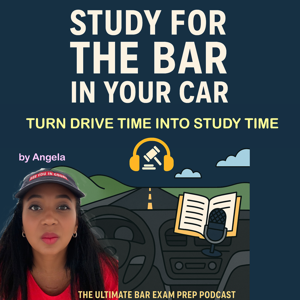

Ready to decode the courtroom? Dive into "Evidence - Hearsay - Part 1," brought to you by "Study for the Bar in Your Car." Your hosts, Ma and Claude, unpack the often-confusing world of hearsay, using Angela’s incredibly detailed notes—the product of an LLM law student and former judicial law clerk. This episode is your essential guide to understanding the foundational definition of hearsay and, crucially, why it's generally inadmissible due to reliability concerns, the lack of oath, and the absence of cross-examination.
We illuminate key categories of statements that are NOT hearsay at all, meaning you don't need an exception to admit them. Discover how statements offered for their effect on the listener (e.g., to show notice or fear) or as verbal acts (where the words themselves have legal significance, like contract offers) bypass the hearsay definition entirely.
Crucially, we dissect Rule 801(d) hearsay exclusions, which, though seemingly offered for truth, are legally defined as non-hearsay:
We also tackle the challenge of "hearsay within hearsay" (multiple hearsay), where each level of out-of-court statement must independently qualify for admission.
Finally, we begin our exploration of Rule 803 hearsay exceptions, which apply regardless of whether the declarant is available. Understand the nuances of:
This episode sets the stage for mastering one of evidence law's most complex topics. Listen now and subscribe to "Study for the Bar in Your Car" for clarity and confidence in your legal studies!
 View all episodes
 By Angela Rutledge, LLM, LLB
5
55 ratings
Ready to decode the courtroom? Dive into "Evidence - Hearsay - Part 1," brought to you by "Study for the Bar in Your Car." Your hosts, Ma and Claude, unpack the often-confusing world of hearsay, using Angela’s incredibly detailed notes—the product of an LLM law student and former judicial law clerk. This episode is your essential guide to understanding the foundational definition of hearsay and, crucially, why it's generally inadmissible due to reliability concerns, the lack of oath, and the absence of cross-examination.
We illuminate key categories of statements that are NOT hearsay at all, meaning you don't need an exception to admit them. Discover how statements offered for their effect on the listener (e.g., to show notice or fear) or as verbal acts (where the words themselves have legal significance, like contract offers) bypass the hearsay definition entirely.
Crucially, we dissect Rule 801(d) hearsay exclusions, which, though seemingly offered for truth, are legally defined as non-hearsay:
We also tackle the challenge of "hearsay within hearsay" (multiple hearsay), where each level of out-of-court statement must independently qualify for admission.
Finally, we begin our exploration of Rule 803 hearsay exceptions, which apply regardless of whether the declarant is available. Understand the nuances of:
This episode sets the stage for mastering one of evidence law's most complex topics. Listen now and subscribe to "Study for the Bar in Your Car" for clarity and confidence in your legal studies!
512 Listeners
193 Listeners

60 Listeners

15,411 Listeners
78 Listeners

20 Listeners

9 Listeners

6 Listeners