
Sign up to save your podcasts
Or

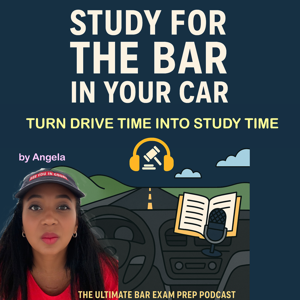

Don't let hearsay haunt your bar prep! "Evidence - Hearsay, Part 2," the latest deep dive from your "Study for the Bar in Your Car" podcast, masterfully unravels complex exceptions and crucial constitutional challenges. Join your AI guides, Claude and Ma, as we build on our foundational hearsay discussion, drawing directly from Angela’s comprehensive notes.
This episode dives into Rule 803 hearsay exceptions, where declarant availability doesn't matter:
Next, we explore Rule 804 exceptions, which require the declarant to be unavailable:
Finally, we confront the Confrontation Clause (Sixth Amendment), applicable only in criminal cases. We demystify the "testimonial" versus "non-testimonial" distinction, applying the "primary purpose test" (e.g., ongoing emergency vs. creating prosecution evidence). Forensic reports, for instance, are often testimonial.
Mastering these concepts is crucial for the bar exam. Don't confuse refreshing recollection with past recollection recorded, or the Best Evidence Rule's application to proving contents.
Tune in to "Study for the Bar in Your Car" and solidify your evidence knowledge. Don't just "blah, blah, blah" through hearsay – get the in-depth understanding needed to ace your exam!
 View all episodes
 By Angela Rutledge, LLM, LLB
5
55 ratings
Don't let hearsay haunt your bar prep! "Evidence - Hearsay, Part 2," the latest deep dive from your "Study for the Bar in Your Car" podcast, masterfully unravels complex exceptions and crucial constitutional challenges. Join your AI guides, Claude and Ma, as we build on our foundational hearsay discussion, drawing directly from Angela’s comprehensive notes.
This episode dives into Rule 803 hearsay exceptions, where declarant availability doesn't matter:
Next, we explore Rule 804 exceptions, which require the declarant to be unavailable:
Finally, we confront the Confrontation Clause (Sixth Amendment), applicable only in criminal cases. We demystify the "testimonial" versus "non-testimonial" distinction, applying the "primary purpose test" (e.g., ongoing emergency vs. creating prosecution evidence). Forensic reports, for instance, are often testimonial.
Mastering these concepts is crucial for the bar exam. Don't confuse refreshing recollection with past recollection recorded, or the Best Evidence Rule's application to proving contents.
Tune in to "Study for the Bar in Your Car" and solidify your evidence knowledge. Don't just "blah, blah, blah" through hearsay – get the in-depth understanding needed to ace your exam!
512 Listeners
193 Listeners
60 Listeners

15,411 Listeners
78 Listeners
20 Listeners
9 Listeners

6 Listeners