
Sign up to save your podcasts
Or

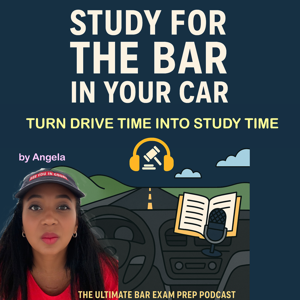

Struggling with Evidence for the Multi-State Essay Examination (MEE) requires a strategic framework. Our latest "Study for the Bar in Your Car" deep dive, drawing on Angela’s meticulously organized notes, equips you with exactly that.
Join AI hosts Claude and Maude as they unpack the Federal Rules of Evidence (FRE), revealing essential distinctions like applying state privilege law in federal diversity cases (Erie doctrine). This episode clarifies the judge's crucial gatekeeper role (FRE 104) and varying burdens of proof for admissibility. You’ll demystify judicial notice (FRE 201), focusing on key differences for civil versus criminal juries. Learn vital strategies for preserving appeal issues: timely, specific objections and effective offers of proof, plus the powerful rule of completeness (FRE 106).
We cover foundational concepts: relevance (FRE 401) and the omnipresent FRE 403 balancing test against unfair prejudice. Dive deep into public policy exclusions, including liability insurance, subsequent remedial measures, and settlement offers.
A major segment focuses on privileges, distinguishing attorney-client privilege from the work product doctrine, and clarifying the two spousal privileges (immunity vs. confidential communications). Understand the crime-fraud exception and how privilege waiver works (FRE 502).
Next, we tackle impeachment methods: prior inconsistent statements (PIS – when is it substantive?), bias (always relevant, extrinsic evidence allowed), prior criminal convictions (FRE 609 – felony types, 10-year rule, defendant vs. other witness), and prior bad acts (FRE 608(b) – inquiry only, no extrinsic evidence). Learn how to rehabilitate witness credibility and avoid prohibited bolstering.
Finally, master hearsay – its definition, non-hearsay uses, and crucial FRE 801(d) exclusions (prior witness statements, opposing party statements). We break down the frequently tested FRE 803 (availability immaterial) and FRE 804 (declarant unavailable) exceptions, and clarify multiple hearsay (FRE 805). Crucially, grasp the Confrontation Clause (Sixth Amendment) in criminal cases, understanding testimonial versus non-testimonial statements and its impact on hearsay.
This episode is packed with insights and common bar exam traps, helping you dissect facts, spot issues, and apply rules. Don't just study hard, study smart. Listen now to arm yourself with the strategic knowledge needed to maximize your MEE score and fundamentally change how you analyze legal information. Subscribe to "Study for the Bar in Your Car" for more essential deep dives!
 View all episodes
 By Angela Rutledge, LLM, LLB
5
55 ratings
Struggling with Evidence for the Multi-State Essay Examination (MEE) requires a strategic framework. Our latest "Study for the Bar in Your Car" deep dive, drawing on Angela’s meticulously organized notes, equips you with exactly that.
Join AI hosts Claude and Maude as they unpack the Federal Rules of Evidence (FRE), revealing essential distinctions like applying state privilege law in federal diversity cases (Erie doctrine). This episode clarifies the judge's crucial gatekeeper role (FRE 104) and varying burdens of proof for admissibility. You’ll demystify judicial notice (FRE 201), focusing on key differences for civil versus criminal juries. Learn vital strategies for preserving appeal issues: timely, specific objections and effective offers of proof, plus the powerful rule of completeness (FRE 106).
We cover foundational concepts: relevance (FRE 401) and the omnipresent FRE 403 balancing test against unfair prejudice. Dive deep into public policy exclusions, including liability insurance, subsequent remedial measures, and settlement offers.
A major segment focuses on privileges, distinguishing attorney-client privilege from the work product doctrine, and clarifying the two spousal privileges (immunity vs. confidential communications). Understand the crime-fraud exception and how privilege waiver works (FRE 502).
Next, we tackle impeachment methods: prior inconsistent statements (PIS – when is it substantive?), bias (always relevant, extrinsic evidence allowed), prior criminal convictions (FRE 609 – felony types, 10-year rule, defendant vs. other witness), and prior bad acts (FRE 608(b) – inquiry only, no extrinsic evidence). Learn how to rehabilitate witness credibility and avoid prohibited bolstering.
Finally, master hearsay – its definition, non-hearsay uses, and crucial FRE 801(d) exclusions (prior witness statements, opposing party statements). We break down the frequently tested FRE 803 (availability immaterial) and FRE 804 (declarant unavailable) exceptions, and clarify multiple hearsay (FRE 805). Crucially, grasp the Confrontation Clause (Sixth Amendment) in criminal cases, understanding testimonial versus non-testimonial statements and its impact on hearsay.
This episode is packed with insights and common bar exam traps, helping you dissect facts, spot issues, and apply rules. Don't just study hard, study smart. Listen now to arm yourself with the strategic knowledge needed to maximize your MEE score and fundamentally change how you analyze legal information. Subscribe to "Study for the Bar in Your Car" for more essential deep dives!
512 Listeners
193 Listeners
60 Listeners

15,411 Listeners
78 Listeners
20 Listeners
9 Listeners

6 Listeners