
Sign up to save your podcasts
Or

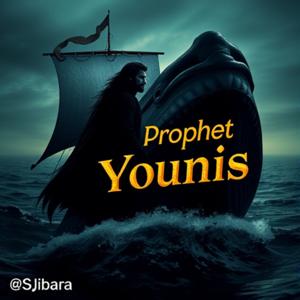


Challenging Traditional Interpretations of the Prophet Jonah (يونس) in Islam: A Clubhouse Discussion Review
This briefing document reviews a Clubhouse discussion led by "Captain Ehab" focusing on an alternative Islamic perspective of the story of the prophet Jonah (يونس). The discussion, featuring speakers like Sahir and Ayman, leverages Quranic analysis to challenge common interpretations, particularly those they attribute to "Bani Israel" (Children of Israel).
Key Arguments:
1. Jonah's Lineage:
The speakers strongly assert that Jonah was the son of Noah who initially refused to board the ark. They cite verses from Surah As-Saffat, emphasizing the phrase "the laden ark" which they claim exclusively refers to Noah's ark. This argument directly contradicts the traditional view of Jonah as a prophet sent to the people of Nineveh centuries after Noah.
2. The Swallowing Incident:
Challenging the conventional understanding, the speakers differentiate between "swallowing" (ابتلع) and "taking into the mouth" (التقم). They argue that the whale took Jonah into its mouth but did not swallow him. They cite verses describing Jonah's plea from "darkness" which they interpret as the turbulent conditions surrounding the ark, not the whale's belly.
3. Jonah's Repentance:
The discussion highlights Jonah's pre-existing status as a "praiser" (المسبحين), contrasting him with the "corruptor" (المفسدين) Pharaoh. They suggest Jonah's refusal to board the ark was an error in judgment, not outright disbelief. This challenges the narrative of Jonah as a disobedient prophet who needed to repent after being swallowed by the whale.
4. Jonah's Mission:
The speakers interpret the "gourd plant" (شجره من يقطين) that grew over Jonah after his ordeal as symbolic of his prophetic mission. They point to verses describing his subsequent mission to "a hundred thousand or more," suggesting the plant represents the growth and success of his mission after his initial hesitation.
Methodology and Conclusion:
Throughout the discussion, the speakers urge listeners to adopt a critical and contextual approach to Quranic interpretation, rejecting interpretations solely based on external narratives. They emphasize that Jonah's story, as presented in the Quran, offers valuable lessons about repentance, divine mercy, and the importance of careful scriptural analysis.
Important Note: This interpretation of Jonah's story is not universally accepted within Islam. Many scholars hold differing views based on various sources and interpretations. This Clubhouse discussion represents a specific perspective within Islamic thought and should be considered as such.
From the publisher's feed