
Sign up to save your podcasts
Or

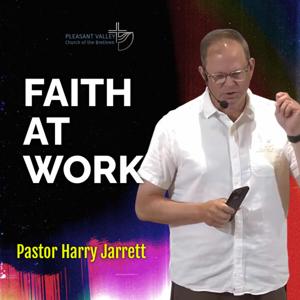


If you have ever wondered who your church might be missing without meaning to, or what a deacon is really for, this message is for you.
Pastor Harry Jarrett of Pleasant Valley Church of the Brethren in Weyers Cave, Virginia, preaches from Acts 6:1-7 in the final week of The Empty Chair series, on the Sunday the congregation began naming new deacons. The very first church is growing fast, and food is shared every day with widows who have no one else. Then a complaint comes up: the Greek-speaking widows are being overlooked. Nobody in the story is a villain. We tend to serve the people we already know. The apostles do not form a committee. They ask the community to look among themselves, and every one of the seven they choose has a Greek name, people close enough to see the need and trusted with real responsibility to meet it. Harry traces the word deacon back to diakonia, service, and shows that serving tables and serving the Word are the same kind of work. He remembers Brethren Service and the stories of Dan West and M.R. Zigler, shares a lesson from his hotel years, anticipate and fulfill, and invites the whole church to name the needs it sees and the people who already notice.
Watch the full sermon on YouTube: https://youtu.be/Sf-Axha7LD8
Chapters:
00:00 Who Might We Be Leaving Out Without Meaning To?
00:32 What Problem Did the Very First Church Run Into?
01:20 Was Anyone in Acts 6 Really the Villain?
02:05 How Did the Apostles Answer the Complaint?
02:52 Why Does It Matter That Every Name Was Greek?
03:45 Why Didn't the Church Just Form a Committee?
04:17 Is Feeding People a Distraction From the Mission?
04:30 Where Does the Word Deacon Come From?
05:06 Were There Women Deacons in the Early Church?
05:29 How Do the Brethren Understand Deacons?
06:02 What Does Anticipate and Fulfill Mean for Us?
06:23 What Do Deacons Actually Do?
06:53 How Do You Thank the People Who Quietly Serve?
08:38 How Can a Whole Church Do What Acts 6 Did?
09:45 Who Is Missing Their Share of the Table?
10:30 Who Already Notices When Something Goes Wrong?
11:18 What Happens After We Name the People?
Scriptures referenced:
Acts 6:1-7
Philippians 1:1
Romans 16:1-2
Books worth exploring:
Making Room: Recovering Hospitality as a Christian Tradition by Christine D. Pohl: a wise, practical look at how the church notices and welcomes the overlooked
Life Together by Dietrich Bonhoeffer: a classic on the ministries of listening, helpfulness and bearing with one another that deacons live out
Fruit of the Vine: A History of the Brethren, 1708-1995 by Donald F. Durnbaugh: the story behind Brethren Service and the people Harry names in this message
Church website: https://pleasantvalleyalive.org/
Daily devotional: https://pleasantvalleyalive.org/devotional/
Substack newsletter: https://pastorharryjarrett.substack.com/
Faith at Work podcast: https://podcasts.apple.com/us/podcast/faith-at-work/id1831098987
If this message helped you, share it with someone who quietly sets the table for others. A short daily devotional on this passage is at https://pleasantvalleyalive.org/devotional/ all week.
If you have ever wondered whether there is room for you in the church, or whether your church has quietly decided who belongs, this sermon is for you.
Pastor Harry Jarrett of Pleasant Valley Church of the Brethren in Weyers Cave, Virginia, preaches from Acts 10, the story of Peter's rooftop vision and the Roman centurion Cornelius, in week five of The Empty Chair series. Peter's resistance was not rebellion but devotion gone rigid, and it took God three times to get through to him. Cornelius, praying in Caesarea, was already found before anyone had preached a word to him. The sermon traces the three uncomfortable stages God walked Peter through, invitation, inclusion and involvement, and asks why a friendly church can hand people a seat long before it hands them a task. It closes with a word for the Peters, the Corneliuses, and everyone watching from a screen.
Watch the full sermon on YouTube: https://youtu.be/8hXiDWsWXV8
Chapters:
00:00 Is God's House Wide Enough for the Outsider?
00:55 What Did Peter See on the Rooftop?
02:22 Why Did God Have to Say It Three Times?
03:33 Do You Think You're Too Pure or Too Dirty for Jesus?
04:08 What Is Devotion Gone Rigid?
05:14 Who Was Cornelius, and Why Was He Already Found?
07:05 What Do a Roman Soldier and a Fisherman Have in Common?
08:51 Does God Care More About Direction Than Perfection?
10:02 What Are the Three Stages of Lowering Barriers?
11:10 What Does Real Invitation Cost?
12:12 Who Have You Already Decided Doesn't Belong?
13:10 What Does Inclusion Look Like at the Table?
14:46 Why Do Churches Skip Involvement?
16:14 Why Do We Hand People a Seat but Not a Task?
18:11 What If You Are the One on the Rooftop?
19:33 Who Is the Empty Chair Really For?
20:35 What Is God Saying to the Peters and the Corneliuses?
Scriptures Referenced:
Acts 10:1-48
Acts 10:11-16
Acts 10:34-36
Acts 10:44-48
Isaiah 56:3-7
Luke 23:39-43
Habakkuk 3:17-18
Books Worth Exploring:
Making Room by Christine D. Pohl: a wise, practical history of Christian hospitality and why welcome has to go past the front door
Acts by Willie James Jennings: a commentary that reads Peter and Cornelius as God joining strangers into one people
The Gospel Comes with a House Key by Rosaria Butterfield: a vivid picture of inviting people into your actual home
Stay Connected:
Church website: https://pleasantvalleyalive.org/
Daily devotional: https://pleasantvalleyalive.org/devotional/
Substack newsletter: https://pastorharryjarrett.substack.com/
Faith at Work podcast: https://podcasts.apple.com/us/podcast/faith-at-work/id1831098987
If this message helped you, share it with someone who wonders if there is room for them. A short daily devotional on this passage is at https://pleasantvalleyalive.org/devotional/ all week.
If you have ever wondered whether it is too late for you, or whether you have to get your life cleaned up before God will have you, this sermon is for you.
Pastor Harry Jarrett of Pleasant Valley Church of the Brethren in Weyers Cave, Virginia, preaches from Luke 23, the story of the two criminals crucified with Jesus, in week four of The Empty Chair series. One man spends his last breath asking for a rescue. The other confesses his guilt and pledges his loyalty to a king who, by every visible measure, has no kingdom. Drawing on Matthew W. Bates and the Greek word pistis, the sermon explores faith as allegiance, not just belief, and why God is more interested in your life direction than your current imperfection. Harry also shares how one honest sentence changed the direction of his own life at 21.
Watch the full sermon on YouTube
Chapters
00:00 Who Was Already Found Before Anyone Noticed?
00:42 Why Does Faith Get Tested at a Cross?
01:23 What Did the First Thief Want From Jesus?
02:03 Can You Know About Jesus and Still Miss Him?
02:40 Is Asking for Rescue the Same as Faith?
03:19 What Did the Second Thief Ask For?
03:55 Is Faith Belief or Allegiance?
04:38 What Does the Greek Word Pistis Really Mean?
05:09 Who Was the First to Carry His Own Cross?
06:09 If Both Men Knew Jesus, What Was the Difference?
07:16 Does God Care More About Direction Than Perfection?
07:53 How Did a Thief Steal Heaven?
09:10 Do You Have to Earn Your Way to Jesus?
10:20 What Does Jesus Mean by Today?
11:08 What Changed My Life at 21?
12:44 Which of the Two Postures Do You Hold?
14:25 Is There an Empty Chair for You on the Cross?
15:08 Who Do You Know Who Needs One Honest Sentence?
Scriptures Referenced
Luke 23:32
Luke 23:39-43
Luke 9:23
Books Worth Exploring
Gospel Allegiance by Matthew W. Bates
Salvation by Allegiance Alone by Matthew W. Bates
The Return of the Prodigal Son by Henri Nouwen
Stay Connected
Pleasant Valley Church of the Brethren
Daily devotional
Substack newsletter
Two stories in Luke say Jesus kept overturning verdicts like that, and a closer look at the words on the page changes how we read both of them.
In this sermon from Pleasant Valley Church of the Brethren in Weyers Cave, Virginia, Pastor Harry Jarrett takes a second look at two stories he has preached more times than he can count: the woman who washed Jesus’ feet with her tears at Simon the Pharisee’s table, and Zacchaeus the tax collector up in the sycamore tree. Read closely, the Greek tells a different story than the one most of us learned. The woman’s sins had already been forgiven before she ever crossed Simon’s threshold; her tears were the thank you, not the payment. Zacchaeus speaks in the present tense: I give, I pay back. He is not turning over a new leaf. He is describing how he already lives, while the crowd below has convicted him on the strength of his uniform alone.
Along the way: the Balm of Gilead trade that made Jericho rich, why Severus Snape fits this story almost exactly, the difference between welcoming someone and including them, and a word for four kinds of people sitting in every church. This message opens our fall series, The Empty Chair.
Scriptures Referenced
Luke 7:36-50 (the woman at Simon the Pharisee’s table)
Luke 19:1-10 (Zacchaeus in the sycamore tree)
Luke 7:1-10 (the centurion’s servant)
Luke 7:29-30 (even the tax collectors acknowledged God’s way was right)
Books Worth Exploring
Jesus Through Middle Eastern Eyes by Kenneth E. Bailey. Bailey spent decades in the Middle East and reads both Simon’s banquet and the Zacchaeus story through the customs of honor, shame, and hospitality that first hearers would have caught immediately.
Making Room: Recovering Hospitality as a Christian Tradition by Christine D. Pohl. The best book I know on the gap between welcoming strangers and truly making room for them, which is where this whole series is headed.
The Gospel According to Luke X-XXIV by Joseph A. Fitzmyer (Anchor Yale Bible). The standard scholarly commentary cited in this sermon, including Fitzmyer’s reading of Zacchaeus’ verbs as present tense.
Chapters
00:00 Have we been reading these two stories wrong?
01:17 Why would a Pharisee invite Jesus to dinner?
02:13 Who was the woman at Simon’s table?
03:23 Was she forgiven because she wept?
04:32 What does the parable of the two debtors mean?
05:40 Is forgiveness earned or received?
06:30 Who was Zacchaeus, really?
07:23 Why were Jericho’s tax collectors so hated?
08:27 Why did a rich man climb a tree?
09:28 Was Zacchaeus promising to change?
10:59 What do scholars say about Zacchaeus’ words?
12:17 Why was the crowd really grumbling?
13:05 How is Zacchaeus like Severus Snape?
14:28 Why does Luke put these stories side by side?
15:44 What is the difference between welcoming and including?
17:13 Have you been judged by your reputation?
18:02 Have you been the crowd under the tree?
19:50 What is The Empty Chair series about?
Stay Connected
Church website: https://pleasantvalleyalive.org/
Daily devotional: https://pleasantvalleyalive.org/devotional/
Substack newsletter:
Faith at Work podcast:
If this helped you see someone (or yourself) a little more clearly, subscribe and stay with us. The Empty Chair runs through the middle of November, with a new message every week.
#Zacchaeus #BibleStories #Sermon #ChurchOfTheBrethren #TheEmptyChair
Cicero once tried to describe crucifixion at a Roman trial and stopped mid-sentence, because no word ugly enough existed to finish it. That is the device Paul says holds the power and wisdom of God.
Pastor Harry Jarrett preaches “Christ, the Power and Wisdom of God” from 1 Corinthians 1:18-24 at Pleasant Valley Church of the Brethren in Weyers Cave, Virginia. Corinth was a city rebuilt around visibility: Jews demanded signs, Greeks sought wisdom, and Paul offered neither, only a man executed by the state. This message traces what crucifixion actually meant in the ancient world, N.T. Wright’s diagnosis that “the trouble is the instrument,” and new research on where Christian trust actually lives today, before landing on a very practical question: what are you still waiting to look strong enough, or sound wise enough, before you will trust it?
SCRIPTURES REFERENCED
1 Corinthians 1:18-24
Deuteronomy 21:23
BOOKS WORTH EXPLORING
N.T. Wright, “The Day the Revolution Began: Reconsidering the Meaning of Jesus’s Crucifixion”
Martin Hengel, “Crucifixion in the Ancient World and the Folly of the Message of the Cross”
Gordon Fee, “The First Epistle to the Corinthians” (NICNT)
CHAPTERS
00:00 Why Would God Use Someone Like Me?
00:55 What Did My Son Teach Me About Balaam’s Donkey?
01:31 Why Was Corinth Built Around Being Noticed?
02:19 What Were Jews and Greeks Really Shopping For?
02:50 Why Didn’t Paul Give Corinth What It Wanted?
03:25 What Did Crucifixion Actually Mean in the Roman World?
03:57 What Did Cicero Say Was Too Ugly to Describe?
04:26 Why Was the Cross the Empire’s Most Shameful Punishment?
05:11 Who Was Alexamenos and Why Was He Mocked?
05:54 Why Does Paul Call the Cross a Scandal and Foolishness?
07:04 Why Did the Cross Fail the Greek Test for Divinity?
07:40 Why Does Paul Agree the Cross Looks Foolish?
08:24 What Does the Barna Research Reveal About Church Trust?
09:04 What Did N.T. Wright Say the Real Problem Was?
10:14 What Actually Changes in Verse Twenty-Four?
10:59 Have You Ever Trusted Something Strong That Wasn’t?
12:00 Why Invite Someone to an Unfinished Worship in the Grove?
14:21 What Bar Was the Cross Never Trying to Clear?
Church website: https://pleasantvalleyalive.org/
Daily devotional: https://pleasantvalleyalive.org/devotional/
Substack newsletter: https://pastorharryjarrett.substack.com/
If this is your first time here, subscribe for a new message from Pleasant Valley most weeks, and check out the daily devotional for something shorter to carry through your week.
#Sermon #ChurchOfTheBrethren #BibleTeaching #1Corinthians #ChristianFaith #PleasantValleyChurch
Episode description:
A boat lift stuck out of the water in a drought. A cornfield getting more rain than it can use, one week later. Same summer, two desperate prayers, and only one of them was really about the weather.
Pastor Harry Jarrett walks through Psalm 119:33-40, eight verses built almost entirely out of desperate verbs: teach me, lead me, turn me, give me life. Working word by word through the Hebrew behind them (derek, nativ, binah, natah, tsedaqah, ta’avah), Harry asks the question underneath every desperate prayer: are we asking God to fix a circumstance, or are we actually desperate for God himself?
He also gets personal about how fast his own prayers changed this week, desperate for rain, then desperate for it to stop, and what it cost him to notice he was praying to a God he mostly needed for outcomes. Along the way: Henri Nouwen on the spiritual life as movement rather than a destination, and a callback to Moses at the burning bush and the curiosity that put him in the one place God was ready to speak.
If your prayers have started to feel like phone calls to a utility company, this one might ask a harder question first: what are you actually desperate for?
Church website: https://pleasantvalleyalive.org/
Daily devotional: https://pleasantvalleyalive.org/devotional/
Substack newsletter: https://pastorharryjarrett.substack.com/
Pleasant Valley Church of the Brethren, Weyers Cave, Virginia
Want more from this teaching? Subscribe to the daily devotional or catch the full sermon on YouTube at @PastorHarryJarrett.
Standing in front of a cave the ancient world called the gate to hell, Jesus asked his disciples a question no one else could answer for them. Their answer was right and still not finished.
At Caesarea Philippi, a place stacked with the shrines of dead gods and one very alive emperor, Peter calls Jesus the Son of the living God. Jesus blesses him for it, then tells him to keep his mouth shut. This sermon walks through why a half formed answer about Jesus can do more damage than a slow, true one, and what the Barna Group’s own numbers say about why people still like Jesus but not Christianity.
Pastor Harry Jarrett preaches from Matthew 16 at Pleasant Valley Church of the Brethren in Weyers Cave, Virginia, tracing Caesarea Philippi’s history as a pagan worship site through Rome’s occupation to Peter’s confession, and asking what it costs when we speak about Jesus before we have let him finish forming us.
SCRIPTURES REFERENCED
Matthew 16:13-20
Isaiah and Job (the gate of Hades as an idiom for death)
Genesis 6 (background reference via First Enoch and Mount Hermon tradition)
BOOKS WORTH EXPLORING
Jesus and the Powers by N.T. Wright and Michael F. Bird
The King Jesus Gospel by Scot McKnight
unChristian by David Kinnaman and Gabe Lyons
CHAPTERS
00:00 What actual place shaped how this pastor reads scripture
00:19 What did a two week study tour of Israel change
01:22 Where is Caesarea Philippi and what happened there
02:01 Why does Jesus ask his biggest question at this exact spot
03:34 What god was this cave originally built to worship
04:09 Who was Pan and why was he worshiped here
04:38 What did ancient worshipers throw into the cave
05:16 How did Rome and Herod claim this same ground
06:34 What was Jesus really walking his disciples into
07:13 Why do the crowd’s guesses about Jesus fall short
08:22 What does Peter say when Jesus asks him directly
09:50 Why does Peter’s answer matter more than it sounds
11:26 What is the wordplay hiding in Peter’s new name
12:31 What do the gates of Hades actually mean
14:41 What does Jesus mean by giving Peter the keys
16:01 Why does Jesus tell his own disciples to stay quiet
19:09 What does the Barna Group say about why people avoid Christianity
23:33 What three things does this sermon ask you to do this week
LINKS
Pleasant Valley Church of the Brethren: https://pleasantvalleyalive.org/
Daily Devotional: https://pleasantvalleyalive.org/devotional/
Substack Newsletter: https://pastorharryjarrett.substack.com/
If this sermon named something you have felt but never quite said out loud, subscribe and come sit with us again next week. We would love to have you.
#PastorHarryJarrett #ChurchOfTheBrethren #CaesareaPhilippi #WhoDoYouSayThatIAm #Matthew16 #ChristianFaith #ChurchHistory #AnabaptistFaith #PleasantValleyChurch #WeyersCaveVirginia
Episode description
Moses wants to know God’s name. Not a title, not a family tree, an actual name. What he gets back is not what he expects, and it changes what it even means to talk about God at all.
Pastor Harry Jarrett walks through Moses at the burning bush in Exodus 3 and asks a question we don’t sit with often enough: why isn’t “the God of Abraham, Isaac, and Jacob” a good enough answer? In the ancient world, a name wasn’t a label, it was a description of character. Jacob’s name meant “heel grabber,” and it described exactly the man he became. Nabal’s name meant “folly,” and folly is exactly what he was. So when Moses asks God’s name, he’s really asking, “what are you actually like? What can I count on you to do?”
Harry also gets personal about a season when his own name carried no weight at all, and what it took for that to change. He closes with three practical things to carry into this week, and a story about a boy whose name meant “God hears,” long before anyone heard him.
If you’ve been telling people you don’t believe in God, this one might ask you a harder question first: which God don’t you believe in?
Church website: https://pleasantvalleyalive.org/Daily devotional: https://pleasantvalleyalive.org/devotional/Substack newsletter:
Pleasant Valley Church of the Brethren, Weyers Cave, Virginia
Jesus fed 5,000 people not by handing bread down from a throne, but by putting it in ordinary hands—hands like yours. And in a culture obsessed with efficiency and independence, his ancient table still offers something we’ve almost forgotten: the healing that comes from eating together, admitting we’re hungry, and building real community.
This sermon explores Matthew 14 alongside the loneliness epidemic gripping America—one in four adults ate every meal alone last year—and traces the thread from Caesar’s grain dole through Dan West’s revelation in Spain (which became Heifer International) to the Love Feast tradition of the Church of the Brethren. It’s about the difference between being fed by an empire and belonging to a household.
At Pleasant Valley Church of the Brethren in Weyers Cave, Virginia, we believe that the gospel moves through ordinary hands into the hands of neighbors sitting next to us on the grass. Not from a distance. Not from a ledger. From one companion to another.
SCRIPTURES REFERENCED
Matthew 14:13–21 | John the Baptist’s death | The twelve baskets | Love thy neighbor as thyself | One body in Christ
BOOKS WORTH EXPLORING
- “Matthew” by Warren Carter – reads Matthew as a protest against empire
- “The Social World of the New Testament” by Bruce Malina – on kinship and the household
- “Heifer International: Ending Hunger, Ending Poverty” – the story that changed everything
CHAPTERS
00:00 What happens when feeding becomes an act of power?
01:28 The difference between hosting and needing—a personal confession
02:17 Two banquets: Herod’s palace vs. Jesus on the grass
03:34 Compassion that hits you in the gut
04:32 The disciples’ reasonable proposal—and Jesus’ eight-word answer
05:32 Why feeding crowds was never neutral in the empire
06:24 Caesar’s grain dole and the story Rome told itself
07:43 Every coin a small metal argument about who keeps you alive
08:34 Three tables: Herod’s display, Caesar’s ledger, Jesus’ kinship
09:16 The real miracle: 5,000 people became a household
10:40 What Matthew never explains about the mechanism
11:12 Small groups on grass, not bread lines—companions sharing bread
12:22 Only two institutions stood on their own: government and kinship
13:04 A kingdom asks who’s in charge; kinship asks who you’re responsible for
14:28 The greatest challenge: enacting actual together life
15:27 One in four Americans ate every meal alone yesterday
16:09 How often you share meals predicts life satisfaction as much as income
16:46 Loneliness is epidemic—and it’s not your personal failure
17:26 We chose efficiency and didn’t notice the trade-off
17:48 The host’s secret: as long as I carry the bread, I never admit I’m hungry
18:33 Dan West’s revelation in Spain: give a cow, not a cup
19:08 Heifer International and the Brethren way of answering hunger
19:45 M.R. Ziegler and the Brethren Service Commission
20:06 The difference between a handout and a household
20:28 Why Love Feast runs long—and why that’s the whole point
21:34 Jesus didn’t hand bread from a throne; he put it in ordinary hands
22:18 You walked in with nothing? You’re a guest today—sit down and receive
CONNECT WITH US
Church website: https://pleasantvalleyalive.org/
Daily devotional: https://pastorharryjarrett.substack.com/s/daily-devotional
Substack newsletter: https://pastorharryjarrett.substack.com/
Thanks for watching. Subscribe to stay in the conversation about faith, community, and what it means to live as a household of Jesus.
#BrethrenFaith #Hospitality #CommunityLove #Jesus #Household #LongformSermon
Why are there weeds mixed in with the flowers? Every visitor to our sunflower field asks the same question.
Jesus asked it too, and for centuries the church has answered it by pulling up people it was never meant to sort.
ABOUT THIS SERMON
In this sermon from Pleasant Valley Church of the Brethren in Weyers Cave, Virginia, Pastor Harry Jarrett walks through Jesus’s parable of the wheat and the weeds using two years of hands-on lessons from an actual sunflower field. Along the way, he traces the parable’s real cost through Anabaptist history, the persecution of the Radical Reformation, and the execution of Michael Sattler, before landing on a harder, more personal question: what happens when we stop trying to weed the grief out of our own lives.
SCRIPTURES REFERENCED
* Matthew 13:24-30 — The Parable of the Weeds
* Matthew 13:36-43 — Jesus explains the parable
BOOKS WORTH EXPLORING
* The Patient Ferment of the Early Church — Alan Kreider
* The Wounded Healer — Henri Nouwen
* Martyrs Mirror — Thieleman J. van Braght
CHAPTERS
00:00 What can a messy sunflower field teach us about faith?
00:58 Why did Pastor Harry let the weeds grow with the flowers?
02:09 What is Jesus really saying in the parable of the weeds?
02:45 What is the parable of the wheat and the weeds in Matthew 13?
03:39 Why couldn’t anyone tell wheat and darnel apart?
04:50 Why did this parable terrify a persecuted early church?
05:42 Who was Michael Sattler, and why was he executed?
06:23 What happened during the Munster Rebellion of 1534?
07:56 Why did the landowner refuse to let the weeds be pulled?
09:09 Do we secretly wonder if the person next to us is wheat or darnel?
09:44 What has every purification campaign in church history actually done?
10:52 What did Alan Kreider mean by “fervent patience”?
12:23 Does “the end of the age” really mean judgment day?
13:42 What does the word “kindom” mean, and where did it come from?
15:32 How did a sunflower field prepare Pastor Harry for grief?
16:49 What did Henri Nouwen mean by a “wounded healer”?
18:06 Good news: Pastor Harry’s fourth grandson was born
18:34 What are we actually asked to do with what we can’t sort out?
LINKS
Church website: https://pleasantvalleyalive.org/
Daily devotional: https://pastorharryjarrett.substack.com/s/daily-devotional
Substack newsletter:
Faith at Work podcast:
If this sermon was useful to you, the most helpful thing you can do is hit subscribe, and share it with one person who needs to hear that it isn’t time to sort things out yet.
#ParableOfTheWeeds #Matthew13 #AnabaptistHistory #ChurchOfTheBrethren #Grief #BibleStudy #WheatAndTares #RadicalReformation #PastorHarryJarrett #WeyersCaveVirginia