
Sign up to save your podcasts
Or

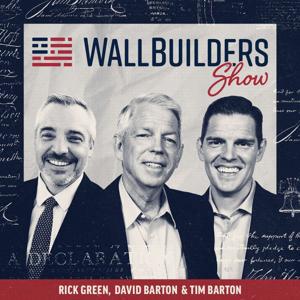

Money talks, but what happens when it's all digital? In this riveting exploration of currency, constitutional design, and education philosophy, the WallBuilders team tackles urgent questions about America's founding principles and their modern applications.
When a listener asks about eliminating the penny, the conversation quickly expands into a fascinating examination of monetary freedom. While Trump's cost-cutting approach makes financial sense (we're losing $179 million annually on penny production), the hosts reveal a more concerning trend: the push toward Central Bank Digital Currency. This global movement threatens individual financial freedom, prompting numerous states to pass legislation protecting physical currency and even adopting gold as transactional currency. Surprisingly, these protective measures are gaining bipartisan support, revealing widespread concern about inflation and government overreach across political lines.
The discussion then shifts to constitutional design when a listener questions whether senators should prioritize state or national interests. Through a fascinating historical lens, the hosts explain how the Senate was originally designed as the states' bodyguard against federal encroachment – a design altered by the 17th Amendment and progressive policies. This fundamental shift explains much about today's governance challenges and federal overreach into state domains.
Perhaps most eye-opening is the exploration of education philosophy, where the hosts contrast modern teaching methods with the founders' vision. Early American education built upon three hierarchical pillars: religion, morality, and knowledge – in that specific order. Christianity provided the ethical foundation before academic knowledge was introduced, and students were taught how to think critically rather than simply memorizing information. This profound difference explains many contemporary educational struggles and offers a roadmap for educational reform rooted in founding wisdom.
Join us for this thought-provoking journey through America's constitutional principles and discover how they illuminate today's most pressing challenges. Whether you're concerned about monetary freedom, governmental design, or educational philosophy, this episode provides historical context that transcends partisan talking points.
Support the show
 View all episodes
 By Tim Barton, David Barton & Rick Green

4.8
21322,132 ratings
Money talks, but what happens when it's all digital? In this riveting exploration of currency, constitutional design, and education philosophy, the WallBuilders team tackles urgent questions about America's founding principles and their modern applications.
When a listener asks about eliminating the penny, the conversation quickly expands into a fascinating examination of monetary freedom. While Trump's cost-cutting approach makes financial sense (we're losing $179 million annually on penny production), the hosts reveal a more concerning trend: the push toward Central Bank Digital Currency. This global movement threatens individual financial freedom, prompting numerous states to pass legislation protecting physical currency and even adopting gold as transactional currency. Surprisingly, these protective measures are gaining bipartisan support, revealing widespread concern about inflation and government overreach across political lines.
The discussion then shifts to constitutional design when a listener questions whether senators should prioritize state or national interests. Through a fascinating historical lens, the hosts explain how the Senate was originally designed as the states' bodyguard against federal encroachment – a design altered by the 17th Amendment and progressive policies. This fundamental shift explains much about today's governance challenges and federal overreach into state domains.
Perhaps most eye-opening is the exploration of education philosophy, where the hosts contrast modern teaching methods with the founders' vision. Early American education built upon three hierarchical pillars: religion, morality, and knowledge – in that specific order. Christianity provided the ethical foundation before academic knowledge was introduced, and students were taught how to think critically rather than simply memorizing information. This profound difference explains many contemporary educational struggles and offers a roadmap for educational reform rooted in founding wisdom.
Join us for this thought-provoking journey through America's constitutional principles and discover how they illuminate today's most pressing challenges. Whether you're concerned about monetary freedom, governmental design, or educational philosophy, this episode provides historical context that transcends partisan talking points.
Support the show
1,405 Listeners

2,569 Listeners
26,060 Listeners

172 Listeners

1,042 Listeners

5,431 Listeners

2,205 Listeners

65,579 Listeners

1,572 Listeners

1,554 Listeners

2,460 Listeners

694 Listeners
388 Listeners
13,189 Listeners
896 Listeners