
Sign up to save your podcasts
Or

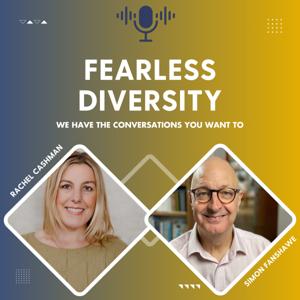


CRISIS OF TRUST: HOW TO FIX WHAT'S BROKEN IN BRITAIN'S BOARDROOMS, BEDROOMS AND BEYOND
Trust is in dangerously short supply these days. From politics to once-dependable institutions and even within close-knit teams, confidence is fast evaporating. Trust is easy to lose and hard to earn. It’s built over time but lost in an instant - whether in personal relationships, businesses or in the corridors of power.
In this week’s episode, Rachel and Simon discuss and debate how we built it, lose it, regain it and cope with it - starting with the individual. Want people to trust you? It’s all about being the same on the inside as you are on the outside. “Trust starts in the mirror, not in the memo,” as Rachel puts it. When it comes to relationships is honesty is non-negotiable? Or can we carry a certain amount of mistrust? In business too, is trust all? Effective leaders know how to be straightforward with staff and the public, take personal responsibility for decisions and engage in authentic and transparent dialogue. Does building trust in teams or organisations demands honest self-assessment, clear purpose, and a willingness to engage constructively with conflict?
And when trust is lost in politics, rebuilding competence is what’s needed. Not to be confused with PR or reputation management. The public expects politicians to act not spin. From the Post Office scandal to grooming gangs, from Ratner calling products ‘crap’ to BP CEO pretending the spread of the oil spill is negligible, trust in public bodies crumbles when facts are swept under the carpet and victims’ voices are denied. Ordinary people can cope with uncertainty, but they won't stomach dishonesty or hypocrisy, and when leaders bury the truth, it's not just the direct victims who lose faith - the whole public suffers.
Key takeaways
· Self before system: inner alignment beats performative signalling.
· Rupture is inevitable; repair is a skill (truth + accountability + consistency).
· Don’t confuse comms with credibility; behaviour is the message.
· Values work only when tied to observable behaviours and consequences.
· In high-stakes issues, be trauma-informed, not optics-led.
Practical actions for leaders
· Schedule one “repair conversation” you’ve been avoiding; name the rupture and propose a path back.
· Replace one all-staff email with 10 targeted 1-1s that rebuild credibility.
· Translate your values into two columns: “Looks like / Doesn’t look like” and use it in PDRs.
· In contentious debates, separate transparency (honest facts) from disclosure-dumping (deflection).
· Adopt “listen to hear → reflect → respond” as your process for dialogue.
BOSTON CONSULTING TRUST INDEX
https://shorturl.at/zmmzQ
REBUILDING TRUST
https://shorturl.at/XOVT7
For more about Rachel: Who Is The Fearless Facilitator? - Fearless Facilitator
For more about Simon: Who We Are – Diversity by Design
Hosted on Acast. See acast.com/privacy for more information.
This week, Simon & Rachel get gloriously uncomfortable.
It’s a rollicking debate with sharp edges, full-throttle disagreement in part, and one very live question who’s it actually worth arguing with anymore?
Simon’s just back from the Battle of Ideas, where he shared space with people he vehemently disagrees with and has mixed feelings as a result. Rachel, on the other hand, reckons the whole thing’s just too right-wing for her vibe, recognising she may be reinforcing her own biases, and worries about the reputational risk of legitimising certain viewpoints. So, it’s a conversation of the wrestle with our own tensions about who to talk to about when and when.
Is the real dividing line today Left versus Right or liberals versus authoritarians, on both sides?
And what if, whisper it, the Right might actually be right that Britain’s true clash is between the elite and the people?
New research from More in Common and Arch 10 reveals just how out of touch the progressive and public-sector “elites”, including many driving diversity and inclusion, have become from the wider public, especially on sex, gender, patriotism, and free speech.
Battle of Ideas had everything: a panel on the Supreme Court judgment, disbelief that trans people even exist, a tweet labelling DEI “a virus,” and yet a surprisingly diverse audience and a bromance brewing between Simon and Andrew Doyle in over Simon’s taste in coloured couture.
In the end, the duo agrees on one thing: it’s time to move past the culture wars.
What we need are Fearless Diversity gatherings with rosé, civility, and the courage to disagree well. Who wants to join us?
Fearless Diversity where nuance still has the mic.
RESOURCES
Arch10 “Two Britains”
https://shorturl.at/TC89q
More in Common – “Progressive Activists”
https://shorturl.at/eLwW6
Battle of Ideas
https://www.battleofideas.org.uk/
Ben Cooper (one of the KCs who represented in the Supreme Court) explainer on the Supreme Court judgement in For Women Scotland
https://shorturl.at/0QRCX
For more about Rachel: Who Is The Fearless Facilitator? - Fearless Facilitator
For more about Simon: Who We Are – Diversity by Design
Hosted on Acast. See acast.com/privacy for more information.
Fearless Diversity: Identity, Civility, and the Courage to Disagree
At a time when public debate feels less like dialogue and more like a contest over whose feelings matter most, Simon and Rachel take a breath, and a stand, for nuance, empathy, and civility.
Because identity whether shaped by sex, gender, class, ethnicity, or belief has become both the lens through which we see the world and, too often, the wall that divides us.
In this episode, they explore what happens when politics becomes a battle of tribes rather than a search for solutions. From the far-reaching debates at the recent FiLiA conference, Europe’s largest feminist gathering, to boardrooms wrestling with diversity data, the same question runs through it all: how do we honour difference without hardening into division?
Rachel argues that class still defines how women experience both oppression and opportunity, and Simon challenges the orthodoxy of identity politics itself. Together, they unpack how leaders can use diversity data not as a flag to wave but as a lens for understanding asking, what are we really trying to learn here?
Because perhaps, in an age of permanent outrage, the most radical act isn’t shouting louder it’s listening better.
If you enjoy listening to us, please do like and share
Resources:
FILIA. https://www.filia.org.uk/
Fire Service Black Members - National Conference 2025 https://shorturl.at/A92tV
Black Excellence in Governance https://shorturl.at/lHFn3
For more about Rachel: Who Is The Fearless Facilitator? - Fearless Facilitator
For more about Simon: Who We Are – Diversity by Design
Hosted on Acast. See acast.com/privacy for more information.
Recorded on Tuesday 7 October 2025, this episode confronts the murders at Heaton Park on Yom Kippur and the sharp rise in antisemitism in the UK. We name the harm plainly and we hold the line between free speech and incitement.
We don’t posture; we do the hard work of sense-making. We explore why silence from institutions and politicians corrodes trust, how slogan-chanting lands as eradication to Jewish citizens, and why leaders must support protest rights clearly and also enforce the law on incitement consistently, not selectively. We acknowledge parallel harms, including arson at a Sussex mosque and the daily experience of British Muslims facing prejudice. But we don’t take refuge in the false comfort of “whataboutery”.
This is a practical conversation for people who run things CEOs, headteachers, council leaders, community organisers. We offer three commitments you can enact now:
1. Curiosity with backbone: seek understanding across difference without surrendering facts. Try to find agreement not just disagreement.
2. Even-handed moral clarity: condemn antisemitism and Islamophobia without purity tests or exemptions.
3. Local dialogue, real guardrails: create forums where disagreement is safe, and incitement is not.
4. In everyday conversation commit to civility – only ever try to explore and at best convince but not to win.
Not virtue. Not theatre. Leadership. We have the conversation you want to. Please do listen, like and share.
For more about Rachel: Who Is The Fearless Facilitator? - Fearless Facilitator
For more about Simon: Who We Are – Diversity by Design
Hosted on Acast. See acast.com/privacy for more information.
In this episode of Fearless Diversity, Rachel Cashman - the fearless facilitator - and Simon Fanshawe - the diversity dissident - tackle one of the most contentious policy revivals in years: the return of the digital ID card.
From dinner parties to football terraces the argument is dividing Britain. Are ID cards a slick, modern tool to cut red tape and to create a sense of Britishness - or the threat of Big Brother made real, of a society where our lives are one barcode away from state control and all-day surveillance. Is the BritCard a massive invasion of privacy or the key to our national identity?
Although aren’t we being a bit hypocritical? Why are we so bothered about government having limited info on us so we can get benefits when we’ve already surrendered everything about ourselves to Google and Facebook?
And can government actually pull it off? HS2 or the Edinburgh trams anyone? What will ID cards give us that we don’t already have? Ands what about Auty Betty who’ll never have an iphone so she’ll never go digital? If you’re an illegal immigrant you’ve already escaped the system so why will the BritCard stop you being in the UK?
Will digital IDs streamline Britain’s services, build trust, cement values and create belonging or instead, in a country where only 12% of the population trust government, just be felt as another state overreach? Will the BritCard bind us closer - or drive us further apart?
Fearless Diversity doesn’t just chew over politics—it digs into how policies shape the lives we live, the work we do, and the society we want to be part of. Enjoy, listen and share.
For more about Rachel: Who Is The Fearless Facilitator? - Fearless Facilitator
For more about Simon: Who We Are – Diversity by Design
Hosted on Acast. See acast.com/privacy for more information.
Simon and Rachel wade into flags, patriotism and nationality.
At the moment flags are everywhere – at football matches, street parties, protests, Pride and, lately, at the heart of raging debate about what it means to be British. This week we try and understand the hope, the pride and the worry wrapped up in every St George’s Cross and Union Jack.
A flag isn’t just a flag. For some, it’s a badge of pride, shared in the roar of the crowd when England scores. For others, it brings darker memories and fears of division.
The left and right claim love and shame of country. But has the left abandoned patriotism, ceding the flag to extremists? And does the right use language of nationhood just to exclude?
But we all know moments when flags precisely symbolise moments of joy and optimism - the Olympics, royal occasions, football and rugby - when the Union Jack and the St George’s flag unite communities of every colour, faith and background. Is it just lazy branding of ordinary flag-wavers to call them ‘racists’? Have too many leaders in public institutions got it wrong when they shut down conversations instead of listening to the real emotions behind the flags?
Instead of labelling we need to create space for talking, listening and understanding. We should take care not to jump to judgement but stay curious. Can we understand what flags mean to each of us and talk to the issues rather than demonising each other. If we get it right, can flags unite rather than divide us?
For more about Rachel: Who Is The Fearless Facilitator? - Fearless Facilitator
For more about Simon: Who We Are – Diversity by Design
Hosted on Acast. See acast.com/privacy for more information.
Fearless Diversity — Series Two Premiere
Title: “Words, Violence, and the Tribe: Beyond the Workplace”
Series Two is here. Rachel Cashman, your Fearless Facilitator, and Simon Fanshawe, the Diversity Dissident, are back. This season we’re stepping past the office door. Fearless Diversity now lives in life and work because the tensions shaping our feeds, families, and friendships don’t clock off at 6pm. We’ll go where others swerve, holding space for difference without collapsing into silence or dogma. We have the conversations you want to have.
Episode 1: “Words, Violence, and the Tribe”
We open with a hard conversation: the assassination of Charlie Kirk and the chaotic 48-hour whirlpool that followed. Not a hot-take; a cool-head. We examine why it’s crucial to condemn political violence without equivocation, the effect of social-media virality in real time (yes, teens seeing it minutes after it happened on TikTok), and how “words are violence” became a cultural reflex that is just a step away from meeting wordswith violence. We probe Christian identity and movement-building, algorithmic tribalism, why the right lurches towards authoritarianism and the left embraces a fearsome illiberalism. And what it would mean to rebuild a norm where free speech is a value - not a thing we do but a way we do things.
Along the way: compassion that isn’t contingent, the difference between dialogue and conversion, Sister Helen Prejean’s radical humanism, MLK’s non-violence as both means and end, and the old-school discipline of checking sources before you hit “post.” We’re honest about the personal, too health scares, kids’ digital lives, and an insight for episode two on what leaders (in teams, communities, and homes) can do on Monday morning when rival protests meet around the same table.
Why listen (and why now):
Join us: Follow, rate, and share. Drop us your “yes, but…” and we’ll feature sharp listener questions in upcoming Q&As and bring guests who disagree with us well. Fearless Diversity, Series Two: beyond work now—because culture happens everywhere, and so does courage
For more about Rachel: Who Is The Fearless Facilitator? - Fearless Facilitator
For more about Simon: Who We Are – Diversity by Design
Hosted on Acast. See acast.com/privacy for more information.
In the week that Parliament decided to give the vote to sixteen year olds, welcome back to Fearless Diversity, the podcast where age isn’t just a tick-box in the census, it’s the parent, the baby, and the teenage activist in the room. Join Simon, your resident digitally Bewildered Baby Boomer, living proof that you can survive a childhood without Wi-Fi or oat milk and Rachel stuck between Millennials’ optimism and Greta Thunberg’s existential despair.
Age is a minefield for managers and leaders. The young are idealised, patronised or indulged at work, while older people’s experience is either venerated or wasted and at worst consigned to the scrap heap. Some execs think their teenage children understand the world better than they do, young people reverse JFK’s exhortation and demand what the company can do for them and everybody disagrees about phone use, social media and how to communicate.
Rachel and Simon navigate the generational maze using their practical experience with clients and the latest scientific research. Neuroscience tells us that brains just aren’t fully cooked until at least 25. Executive function, the bit that helps you plot revolution or file taxes are still developing during your teens and early twenties. So, do children need parents, young people need older people and indignation need experience?
With age, discrimination goes both ways. In politics and workplaces, society is still wrestling with whose voice matters and whose is discounted. The generational divide is real, awkward, and much like our podcast, refuses to fit into a single, easy narrative.
So grab a cup of tea, an oat latte (God forbid), or just a tepid mug of nostalgia, and join us as we slice, dice, and deconstruct what age really means in a rapidly changing UK.
Equality Act – age discrimination and exceptions
https://shorturl.at/yolHi
Prof Sallie Baxendale - profile
https://shorturl.at/08fv7
Law Society of Scotland - Brain not fully developed until age 25, research reveals
https://shorturl.at/32aPn
Understanding the Teen Brain - University of Rochester
https://shorturl.at/uXvwK
The Power of Difference
Pp 201 – 204 and p208
https://shorturl.at/hvrfm
John Allen / CBI
https://www.thetimes.com/business-money/article/carolyn-fairbairn-on-cbis-really-good-culture-despite-sex-allegations-qhcmzc75s
Resolution Foundation report on young people’s mental health
https://www.resolutionfoundation.org/publications/weve-only-just-begun/
Harmful stereotypes of young people fuelling record numbers to fall out of work
https://shorturl.at/y6saT
For more about Rachel: Who Is The Fearless Facilitator? - Fearless Facilitator
For more about Simon: Who We Are – Diversity by Design
Hosted on Acast. See acast.com/privacy for more information.
Let’s Be Honest: The conversation on immigration is neither neat nor simple.
So in this episode, Rachel and Simon wade straight into the mess of history, aspiration, personal fear, good intentions and the fear of getting it wrong which make it so complicated.
Simon unpacks the historical waves of immigration since the War and the reaction which exposes public ambivalence and ingrained biases, caught between welcoming diversity and grappling with the underlying uncertainties which for so many reflects reality in UK workplaces. Born in Australia, Rachel tells how she was compelled every year to show up Britain’s intimidating immigration hub in Croydon, until she could finally become officially British in front of a cardboard cut-out of the Queen. Meanwhile,
The discussion challenges simplistic, binary views on race, identity, and integration. Behind every headline statistic and heated debate are real human stories, the personal experiences of immigrants. Central to the conversation is the crucial role that curiosity and language play in shaping inclusive workplaces.
As Simon explores the changes to Dagenham since his family owned it in the 16th and 17th centuries and the initial peculiarity of some loo signage at Edinburgh University, they confront serious questions: What role does language really play in integration? How do we move past simplistic narratives about race and identity to foster genuine workplace cohesion? Why questions of race may be morally black and white, but practically they are more complicated. And who wore Union Jack shoes at a citizenship ceremony?
The episode invites listeners to view immigration not as a monolithic policy matter but as a multifaceted human challenge requiring thoughtful integration over assimilation, inquiry over offence, and fact-driven conversations over fear-driven narratives.
Expect laughter and a healthy dose of fearless candour as they untangle myths, misconceptions, and the genuine anxieties that shape Britain’s diverse workplaces.
Official immigration stats
https://shorturl.at/Sw9W6
NHS staff stats
https://shorturl.at/SPNPB
King’s Fund reports on immigrants and health
https://shorturl.at/9flnL
Social Attitudes Survey
https://natcen.ac.uk/publications/british-social-attitudes-41-national-identity
Attitudes to race – IPSOS
https://www.ipsos.com/en-uk/attitudes-race-and-inequality-great-britain
EVENS (Evidence for Equality National Survey) 2023 (Guardian article)
https://shorturl.at/pAUyv
Tomiwa Owolade critique of the EVENS
https://shorturl.at/xvT5H
Instructing Animosity: How DEI Pedagogy Produces The Hostile Attribution Bias (Rutgers 2024)
https://networkcontagion.us/wp-content/uploads/Instructing-Animosity_11.13.24.pdf
For more about Rachel: Who Is The Fearless Facilitator? - Fearless Facilitator
For more about Simon: Who We Are – Diversity by Design
Hosted on Acast. See acast.com/privacy for more information.
After explosive scenes at Glastonbury and two alarming reports detailing “cancellation” and fear sweeping through both publishing and the arts, Fearless Diversity dives into the complex world of artistic freedom, censorship and public outrage.
Simon wrestles with whether there are any limits to what artists can say and whether Rod Stewart should just shut up about Gaza and Farage, and stick to singing “Maggie May”. Meanwhile Rachel tries (and fails) to keep the chat away from her beloved football, Edinburgh and her horror at the antisemitism at Glastonbury.
We’re not afraid to tackle the big issues:
· Should Glastonbury—or any promoter—gag their artists?
· Did the BBC go too far by airing those incendiary performances live to millions?
· Should festival boss Emily Eavis have shown more caution in her line-up?
We explore the issues around those hounded out of publishing and the arts simply for voicing their views. And we ask: Should museums tell us what to think, or should the public be trusted to make up their own minds?
From “Queers for Palestine” banners to Marilyn Manson’s headline-grabbing antics - and even the shocking appearance of a Hitler flag at Glasto - nothing is off limits as we explore the blurry line between free speech, the freedom of artists, outrage, hostility and moral responsibility or the law. Was Rushdie right when he said "The moment you limit free speech it's not free speech'.
Plus, find out why Simon’s mother protested at Scotland’s smartest retailer Jenner’s and how Rachel was brought up by an elephant.
This week’s show is bold, provocative and just serious enough to keep us on air. We hope this episode prompts us all to ask: what exactly is artistic freedom for?
Tune in, shout at your speaker or nod in agreement and let's thrash it out together. At Fearless Diversity we are always up for a difference of opinion.
RESOURCES:
Freedom In The Arts (FITA) report
https://shorturl.at/hs3UI
Every Day Cancellation in Publishing Report
https://sex-matters.org/wp-content/uploads/2025/06/Everyday-cancellation-in-publishing-Sex-Matters.pdf
The First Writers' Congress of Donald Trump – David Aaronovitch
https://shorturl.at/Q5ZGO
Rachel Rooney - My Body Is Me – attacked
https://shorturl.at/HVjSV
Buy it:
https://shorturl.at/HyoT1
Letter to Sadler’s Well re Barclays sponsorship
https://shorturl.at/Sex2J
Letter re Manchester Royal Exchange’s production of A Midsummer Night’s Dream
https://shorturl.at/tEl1H
Report on letter to PEN opposing the Award to Charlie Hebdo
https://www.theguardian.com/books/2015/apr/29/writers-join-protest-charlie-hebdo-pen-award
For more about Rachel: Who Is The Fearless Facilitator? - Fearless Facilitator
For more about Simon: Who We Are – Diversity by Design
Hosted on Acast. See acast.com/privacy for more information.
From the publisher's feed
Leaders are faced with dilemmas every day that flow from human interactions at work. And they are so often disruptive, time-consuming, potentially create division among your staff and test you as a…
Rachel brings real-world, high-level implementation experience - expertise that CEOs and managers can trust, learn from, and enlist when they need results and to ensure their teams perform at their best. Simon adds his clout as a highly respected broadcaster, author, and inclusion specialist. They don’t always agree — and that’s the point. Rachel and Simon argue, disagree, and explore different perspectives, and always with resolution and insight – modelling the difficult conversations leaders need to have. It’s a podcast for thoughtful leaders who want to reflect, rather than shout or be shouted at. Fearless Diversity is the place to think differently about today’s trickiest human issues at work.
Hosted on Acast. See acast.com/privacy for more information.