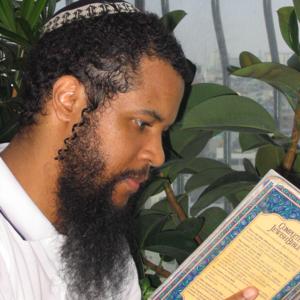
Sh'mini Atzeret "The Eighth Day of Assembly" (Part A)
Torah Teacher Ariel ben-Lyman HaNaviy
Download
pdf
Simchat Torah
*Updated: October 13, 2006
“ADONAI said to Moshe, “Tell the people of Isra’el: ‘The
designated times of ADONAI which you are to proclaim as holy convocations are
my designated times.” (Leviticus 23:1, 2)
הַשְּׁמִינִי יוֹם Sh’mini
Atzeret - The Eighth Day of Assembly
*Also known as Simchat Torah “Rejoicing in the Torah”
“ADONAI said to Moshe, “Tell the
people of Isra’el, ‘On the fifteenth day of this seventh month is the feast of
Sukkot for seven days to ADONAI. On the first day is to be a holy
convocation; do not do any kind of ordinary work. For seven days you are
to bring an offering made by fire to ADONAI; on the eighth day you are to have
a holy convocation and bring an offering made by fire to ADONAI; it is a day of
public assembly; do not do any kind of ordinary work.” (Leviticus 23:33-36)
Written Torah: “Torah Shebikh’tav”
Oral Torah: “Torah Sheb’al-Peh”
A Summary of the Purposes of These Two Covenants
Is Conversion Required for non-Jews?
Torah: Negative, Neutral, or Positive?
eighth day of Sukkot (called Sh’mini Atzeret) is a Biblically mandated assembly
time, complete with festivities (also see Numbers 29:35). The Eighth Day is
also known as Simchat Torah. Technically Simchat Torah is not one of the biblically
prescribed feasts; it is not one of the Mikra’ey Kodesh (Holy Convocations,
Leviticus Chapter 23). The Torah commands us to observe The Eighth Day
but tradition has supplied us with the ceremony called Simchat Torah. So
what is Simchat Torah? Actually, it is a rather practical solution to an
otherwise semi-mundane chore. According to custom, the final reading of
the book of Deuteronomy had just taken place, and a reading from the first
chapter of the book of Genesis immediately followed; the Torah scroll needed to
be re-rolled to facilitate another year’s worth of reading and study.
Much work was involved (re-rolling a Torah scroll was no easy task!), so the
rabbis decided to turn this time into a reason to rejoice—we have gracefully
completed another complete reading of God’s Holy Torah! As
was the tradition since before the Common Era, the yearly cycle of reading was
completed and restarted at this time also. The root word “samach xmX,” from where we get
“Simchat,” means, “to rejoice.”[1]
following rabbinic saying (from Pirke Avot) is quite appropriate for our study:
"Ben Bag Bag said: Turn it [The Torah] and
turn it over and over again and again, for everything is in it, study it
thoroughly, grow old and gray in its study, do not stir from it for you can
have no better measure than this."
so many other practices in Judaism, the rabbis have also standardized the
suggested reading schedule for this minor festival. The usual p’sukim
(verses) are: Genesis 1:1-2:3; Numbers 29:35-31:1; Deuteronomy 33:1-34:12 (Parashah:
V’Zot HaBrachah); and Joshua 1:1-18. If you have a Complete Jewish
Bible, translation by David H. Stern, he recommends the following portions from
the B’rit Chadashah (New Covenant): Matthew chs. 5-7 (especially 5:17-20); Mark
12:38-34; Romans chs. 7-8; and Revelation 21:1-22:5. I want to break with
tradition and midrashically look at this pasuk (verse): 2 Timothy 2:15.
HaShem’s order, acceptance is based on identity: Who are you? Are you a
genuine and lasting covenant member? This question is of great
significance to the Jew especially, but equally to the Gentile (Romans
1:16b). If you are Jewish must you leave Judaism and embrace
Christianity and the Church to be accepted by HaShem? If you are
non-Jewish, must you convert to Judaism before God will extend covenant
study of the Torah will reveal the identity of both Jew and non-Jew. To
be sure, misunderstanding who you are according to the Torah can have
detrimental results. I want to start by briefly examining the meaning of
the word
“Torah,” and it’s definitions.
Torah hrwt =
Law, direction, instruction[2];
from the root Hebrew word “yarah” hry meaning “to shoot an arrow” or “to hit the mark.”[3]
Properly used, the word “torah” means, “[the] teaching.”
have stated this concept elsewhere in my commentaries but it is helpful to
understand theologically, that the primary purpose in HaShem's giving of the Torah,
as a way of making someone righteous, only achieves its goal when the person,
by faith, accepts that Yeshua is the promised Messiah spoken about
therein. Until the individual reaches this conclusion, his familiarity of
the Torah is only so much intellectual nutrition. Only by believing in
Yeshua will the person be able to properly understand HaShem, and consequently,
broad sense, Torah is the revelation of HaShem to His people.
Within this framework, and depending on the context, the term “Torah” can mean:
plus the Prophets and the Writings;
plus the Oral Torah, which includes the Talmud and
plus all religious teaching from the rabbis,
ethical and “aggadic” materials; or
of the above as understood and interpreted in light
what
Yeshua the Messiah and the rest of the New
Scriptures have said about it.
For the most part we will be using definitions 1, 2, and 5
to God’s Torah, there are at least two very important covenants that both Jews
and Gentiles need to understand.
Avrahamic: (Genesis 12:2, 3;
13:14-18; chapter 15; 17:9-14; Matthew 1:1-16; Romans chapter 4; Galatians
Moshaic: (Exodus 34:27;
Deuteronomy 29:1; Psalm chapter 119; Matthew 5:17-20; 23:1-3; Acts 21:19-26)
How shall we as Jews and Gentiles understand our roles in such covenants?
Before we answer this important question, let us turn our attention to a
somewhat comprehensive examination of the Torah and its components. Such
an examination will lay the necessary framework needed to understand our
roles. We shall provide an answer to our question near the end of this
Written Torah: “Torah Shebikh’tav”
much assistance from various Internet resources collated by myself down through
the years (some of which I no longer recall) let us thoroughly examine the two
main Judaic perspectives of this Torah.
term "Law" in the English Bible derives from the Greek word “nomos,”
and nomos itself is a translation of the Hebrew word “torah.” In the
Hellenistic period that extended from the third century B.C. to the first
century B.C. onward, the original Hebrew word Torah was rendered by nomos,
which was the Greek word for "Law." The Septuagint (usually
represented by the Roman numeral LXX) is the most important Greek version of
the Hebrew Bible coming from the Hellenistic period, and it constantly
translates the word Torah as nomos. Because the early Greek-speaking Jews and
Christians used the Septuagint as their Scriptures, its impact on Jewish and
Christian Greek documents is beyond description.
Law also meant the "Law of the LORD" (Luke 2:23, 24, 39). It is the
will of the LORD; the Law is not simply a legal code but a totality of the
revelation of HaShem. It gives the people of God instructions on how they
should live justly and how they should carry on their ordinary lives by showing
mercy to their neighbors. Among other functions, the Law was designed to
provide detailed instructions about how the ancient Isra’elites should prepare
and offer sacrifices to their God. It also showed them how to make distinctions
between clean and unclean foods and other things, and it taught them how to
deal with criminal justice in their community. Moreover as Yeshua summarized so
well, "The weightier matters of the Law" are "justice and mercy
and faith" (Matt 23:23). Of course the Pentateuch does contain legal
codes. What is more, they are to be understood as the Will or Teachings
of HaShem. “Shebikh’tav” refers to “that which was written.”
we look back into the history of the Bible, it is evident that the Scriptures
have had a long process of development. Judaism makes reference to the
entire corpus of ancient Scriptures by use of a moniker called the “TaNaKH” (an
acronym formed from the three Hebraic sections of the “Old Testament,” namely
“Torah,” “Nevi’im,” and “Ketuvim,” viz “Law,” “Prophets,” and “Writings.”
First the Torah came into existence; the prophetic writings and then the rest
of the TaNaKH books, technically referred to as the Hagiographa, followed the
Torah. The Torah was recognized as Scripture much sooner than the
Prophets and the Hagiographa. At the time of Yeshua the last section of the
TaNaKH did not yet enjoy canonical status; it was only late in the first
century A.D. that we Jewish people recognized the Hagiographa as part of our
Gospels, therefore, constantly mention "the Law and Prophets" when
they refer to the Scriptures. That phrase was synonymous with the Bible at the
time of Yeshua. "After the reading of the Law and the Prophets, the
officials of the synagogue…" (Acts 13:15), "do not think that I have
come to abolish the Law or the Prophets" (Matt 5:17), and "on these
two commandments hang all the Law and the Prophets" (Matt 22:40) are just
a few examples. There are eight other instances in the B’rit Chadashah where
the expression Law and Prophets is used to denote the Bible of that time:
Matthew 7:12; 11:13; Luke 16:16; 24:44; John 1:45; Acts 24:14; 28:23; Romans
3:21. Quite often, however, either Law or Prophets is shown to be standing
alone and still conveying the same meaning, viz, the Scriptures. For instance,
in the New Testament there are passages like "have you not read in the Law
that…" (Matt 12:5) and "so that the Scriptures of the prophets may be
fulfilled…" (Matt 26:56). Similar instances are also found in Matthew
2:23; 5:18; 12:5; Luke 2:22, 23; 16:29; 18:31; 24:27; and John 6:45.
purpose and meaning of the Written Law or Torah, now codified in the
Pentateuch, emanates from the Ten Commandments, which specify the covenant
relationship between God and ‘Am Isra’el. The "covenant code" or the
"book of the covenant" (Ex. 24:7) immediately follows the giving of
the Ten Commandments (Exodus 20). The Covenant Code (Ex. 21:23) generally deals
with civil and criminal laws, and consequently the literary form of the code
takes a familiar legalistic structure.
Casuistic and Apodictic
are two forms in the legal code: casuistic and apodictic. The casuistic form is
found in the first section of the Covenant Code (Ex. 21:1-22:17), and the
apodictic form is found in the second section (Ex. 22:18-23). The casuistic
form first states a condition (the technical term for this is
"protasis") and normally begins with words like "if" or
"when." The protasis describes the circumstances or conditions that
prompt the consequential injunctions. The second part, that is, the injunction,
is called "apodosis." It contains a statement of legal consequences
that may or may not begin with the word "then." Here are two
examples: "When a man sells his daughter as a slave, she shall not go out
as the male slaves do" (Ex. 21:7) and "If someone’s ox hurts the ox
of another, so that it dies, then they shall sell the live ox and divide the
price of it" (Ex. 21:35).
apodictic form, usually found in the second part of the Covenant Code, states
commands in the second person "you." It gives commandments or
prohibitions in direct forms without any description about circumstances. For
example, we read in Exodus 22, "You shall not permit a female sorcerer to
live. Whoever lies with an animal shall be put to death" (vv. 18:19) and
"You shall not revile God, or curse a leader of your people" (v. 28).
This apodictic form is most common in other legal codes like the Priestly and
Priestly Code is another legal document found in parts of Exodus, Numbers, and
Leviticus. It specifically deals with matters related to religious concerns and
ritual procedures. Perhaps the oldest and most distinct section of this code is
the Holiness Code in chapters’ 17-26 of Leviticus. The basic theological thrust
of this code is stated in the following passage, "You shall be holy, for I
the LORD your God am holy" (Lev 19:2).
book of Deuteronomy, as the name indicates (it means the "second
Law"), contains legal codes pertaining to kingship, human relations,
family life, and civil and cultic matters. It is a comprehensive guide to every
aspect of community life, even though it constantly reminds the readers about
the history of HaShem’s dealings with Isra’el. The core of this book became the
source of King Josiah’s reform in 621 B.C. The Written Torah reflects not only
the nomadic life before the settlement in the Promised Land, but it also
presupposes the social milieu of Isra’el during the times of the kingdoms.
Oral Torah: “Torah Sheb’al-Peh”
the Written Torah seems to be precise in its description of legal codes and
commandments, it would be impossible to write down every conceivable human
behavior and ascertain whether or not the Torah allowed each one. Concerning
the prohibition of work on the Sabbath, for example, we notice that nowhere in
the Torah is there a definition of what constitutes labor (Heb: melachah) on
the Sabbath and what does not. Amos (8:5) and Jeremiah (17:21-24) mention
keeping the Sabbath in concrete terms—forbidding trading and bearing a
burden—but it is impossible to enumerate all the probable behaviors and
circumstances and give judgment as to whether or not they violate the Sabbath.
This became more of a problem as time went on and the historical and cultural circumstances
changed in later periods. The violation of the Sabbath is a very serious
offense for Jewish people everywhere (a capital offence in ancient times), but
the absence of a precise definition of working on the Sabbath in the Pentateuch
has been a persistent problem. Unless people have a clear definition of what
constitutes labor on the Sabbath, they cannot objectively observe it. Even for
contemporary pious Christians, this is a serious problem. Like Amos and
Jeremiah, the believing community had their own understanding about the
Sabbath, and that became the tradition of the community. Since the time of Ezra
in the post-exilic period, many experts on the Law (scribes, Sofrim) were
interpreting the Torah in and for their covenant community, and the community
regarded their words as having the same binding authority as the Written Torah.
traditional interpretations of the Torah by the experts on the Torah as well as
those of the Chazal (Our Rabbis of Blessed Memory), particularly after
the destruction of Jerusalem in A.D. 70, became the “Torah Sheb’al-Peh” (Torah
from the mouth), also known as unwritten or Oral Torah. The Oral Torah gained
equal footing and took on the same kind of binding authority as the Written
Torah. The function of the Oral Torah is to "make a fence for the
Law" (Avot 1.1). The Written Torah is to be protected by keeping and
observing the tradition (Oral Torah). Consequently, Judaism has been able
“keep” the Written Torah merely by observing the Oral Torah. By obeying the
tradition in concrete terms (no business on the Sabbath, for instance), they
could observe the commandment about the Sabbath.
the highlight of the period of Rabbinic Judaism it was believed that HaShem
revealed his Will not only through the Written Torah, but through unwritten
traditions as well. The rabbis claimed that the Oral Torah, which was
transmitted by word of mouth, was also given to Moshe at Mount Sinai, teaching
that it had in fact existed side by side along with the Written Torah ever
since. "Moshe received the Law (written and unwritten) from
Sinai (from God) and transmitted it to Joshua, and Joshua to the elders,
and the elders to the prophets, the prophets transmitted it to the men of Great
Assembly" (Avot 1.1). This unwritten Torah was eventually written down
and collected in the voluminous book referred to as the Talmud. The Mishnah,
which was compiled by Rabbi Judah the Prince (born in A.D. 135), is the most
important tradition in the Talmud.
Neusner has compiled a most helpful rendition of the Talmud, available both in
print as well as on CD-ROM. In the introduction to the material he makes
these insightful comments about the formulation of the Talmud:
The Mishnah of 200 C.E. and the
Gemara of 600 C.E. mark two of the four major stages in the history of the
formation of normative Judaism that begins with Scripture and makes its
authoritative statement in the Talmud.
The first stage finds its
complete presentation in the Pentateuch, the Five Books of Moses, which came to
closure, it is commonly supposed, in ca. 450 B.C.E. The Pentateuch defined both
the foundations of law and the master-narrative of Judaism.
The second stage is comprised
by the long period of oral tradition ca. 450 B.C.E. to 200 C.E. that followed
the closure of the Pentateuch and ended with the first steps in the formation
of the Mishnah, taken in the first century of the Common Era. During this
period oral traditions augmented the laws of the Pentateuch by covering topics
not treated in the written part of the Mosaic revelation. This stage is a
matter of surmise because we have no surviving written documents in the
tradition of the ancient Rabbinic sages deriving from the period between the
close of the writing of the Pentateuch and the writing of the Mishnah. We return
to this second stage in a moment.
The third stage, that of the
formation of the Mishnah as we know it, in the first two centuries of the
Common Era, came to realization in particular with the setting down to writing
of the Mishnah, ca. 200 C.E. The Mishnah and its companion supplementary
collections* organized and systematized the oral traditions that accompanied
the written law of the Torah contained in the Pentateuch. These topical
expositions will be described, and the religious system for Israel’s social
order that they constructed will be defined, below.
*The Mishnah fits together with
supplementary collections of laws (the Tosefta) and of scriptural exegesis
(Midrash) with special reference to legal passages of Scripture.
The fourth stage, that of the
Gemara or Talmud, resulted in the systematic clarification and amplification of
the Mishnah by the two Talmuds, along with collections of the exegesis of
passages of Scripture important in synagogue life. These two works are the
Talmud of the Land of Israel (in the Roman Empire) ca. 400 C.E. and the
Babylonian Talmud (in the Iranian Empire) ca. 600 C.E. Of the two Talmuds, the
Babylonian Talmud (Bavli) provides the conclusive statement of rabbinic
not think this practice to be strange. We find this phenomenon in other
religions as well. Islam has the Hadith and Christianity (Catholic and
Orthodox) has the apostolic traditions. The Protestant churches do not
recognize the apostolic traditions as authoritative as the written Bible, yet
they do recognize their importance for theology.
have taken the time to elaborate on the detailed components of the Torah so
that we might better appreciate the next section dealing with those two
important covenants mentioned earlier. What of the Avrahamic and Moshaic
covenants? How shall we as Jews and Gentiles understand our roles in such
covenants? It is to this next section that we turn in an attempt to
A Summary of the Purposes of These Two Covenants
following explanation was taken from Torah Rediscovered, Ariel and
D’vorah Berkowitz, FFOZ Publications)
: ‘A person cannot appropriate the full blessings of the
covenant with Moshe (the Torah) unless he first enters into the
covenant with Avraham. The latter is done by faith and faith alone.
The covenant of promise (through Avraham) gave Israel the physical
promises. Not only are these physical promises a reality; they are also
pictures of the spiritual relationship we have with HaShem.
Moreover they are illustrative of the spiritual promises of inheritance
obtained by
all believers through faith in
Yeshua.
those who trust HaShem for the promises, the proper order for faith and
obedience is set by the sequence in which the covenants were given. In
other words, faith must precede obedience. But the kind of faith
accepted by HaShem is one that naturally flows into obedience. True
obedience never comes before faith, nor is it an addition to faith. It is
always the result of true biblical faith. To rephrase this in terms of
the covenants: the covenant of promise (Avraham) must come before the
covenant of obedience (Moshe). If we were to put Moshe first,
attempting to secure those promises by obedience, we would be going against HaShem’s
order. (This, by the way, is the key to unlocking the difficult
midrash used by Sha’ul in Galatians 4:21-31.) All we could hope for would
be a measure of physical protection and a knowledge of spiritual things.
But we could not receive justification or a personal relationship with the
Holy One through obedience to the Torah; it all had to start with faith.
Avraham came before Moshe, but Moshe did not cancel out Avraham! The two
complemented each other—as long as they came in the proper order.’[5]
does this mean for the Jew as well as the Gentile? Apart from a being
well reasoned theological argument for combating legalism, the concept taught
here defines our identity, as, not only being grounded in the Torah—but it
is who we are in Messiah! If the blood of the Sinless One has
redeemed us from sin and unrighteousness, then we now have been clothed in his
holiness! We now have a new identity—the righteousness of HaShem!
The old man has died with the death of our Messiah; the new man has been raised
unto life everlasting just like him (2 Corinthians 5:17-21)! And all of
these promises are secured for us within the pages of God’s Torah!
Shomer Mitzvot
Judaism, safeguarding and keeping the Torah is central to performing the will
of HaShem.[6]
Indeed, as properly understood from HaShem’s point of view, the whole of Torah
was given to bring its followers to the "goal" of acquiring the kind
of faith in HaShem that leads to placing one’s trusting faithfulness in the One
and only Son of HaShem, Yeshua HaMashiach.[7]
To this end, the Torah has prophesied about him since as early as the book of
Genesis (3:15), and continues to speak of him until its conclusion in
Revelation (22:20). In this capacity, the Torah hrwt acts like its etymological counterpart hry "yarah"[8]
(an archery term) in that it "teaches" its adherents how to properly
identify with HaShem by helping them to "reach the mark.” To be sure, one
of the most common Hebrew verbs used to identify "sin" atx “chatah” literally
means, "to miss the mark.”[9]
to the Torah has long since been an oft-misunderstood subject, both in the
Jewish community and the Christian one. To be sure, in the 1st
century Judaisms, the prevailing theology sincerely—albeit incorrectly—believed
that genuine and lasting covenant status was granted to Isra'el and Isra'el
alone. Tim Hegg captures this concept well in his book The Letter
literature contains at least some expression of the general viewpoints of 1st
Century Pharisaism, then it is safe to say that the prevailing Pharisaic view
of Paul’s day was that every Israelite was secured a place in the world to
All Isra'el have a portion
in the world-to-come, for it is written, Your people are all righteous; they
shall inherit the land forever, the branch of my planting, the work of my
hands, that I may be glorified.
[11]verse referenced in the Talmud above (“for it is written”) is taken from
Yesha’yahu (Isaiah) 60:21, which reads:
Thy people also shall be all
righteous; they shall inherit the land forever, the branch of my planting, the
work of my hands, that I may be glorified (ASV).
Hebrew of the relevant phrase, “Thy people also shall be all righteous”
is וְעַמֵּךְ כֻּלָּם צַדִּיקִים, which woodenly translates “And your
people all of them [are] righteous [ones].” The translator’s insert
of “shall be all” is not in the text, however the future context of the
passage lends to this choice of wording, of which I agree. Nevertheless,
this statement of the prophet’s lead the Sages to adopt a position similar to
the one listed in the Talmud, viz, Isra'el exclusively shall be
righteous. In this capacity the Sages imagined that Torah does not
function to lead the individual to an imputed righteousness (the way the
pedagogue leads the boy-student to the Teacher of Righteousness in Galatians
3:24), rather, the Torah is given to the person who is righteous either by
birth or by conversion. We shall be examining this view in subsequent
commentaries to this series, particularly my “Exegeting Galatians”
is my understanding that the errors surrounding one’s relationship to Torah can
be corrected once a person resolves the issues surrounding identity and
legalism, begins to understand the intended nature and function of the Torah in
the first place, and then faithfully applies it to their own lives. Because the
Messiah has already come, the Torah is now a document meant to be lived out in
the life of a faithful follower of Yeshua, through the power of the Ruach
HaKodesh, to the glory of HaShem the Father. It should not be presumed that it
could be obeyed mechanically, automatically, legalistically, without having
faith, without having trust in HaShem, without having love for HaShem or man, and
without being empowered by the Ruach HaKodesh. To state it succinctly, Torah
observance is a matter of the heart, always has been[12],
Is Conversion Required for non-Jews?
non-Jews (i.e. Christians) have historically argued that since Christianity has
been defined as a separate entity apart and distinct from Isra'el then the
issues of [Old Testament] Torah are not relevant for their everyday
lives. What is more, the question of Torah obedience among said
Christians likewise becomes an archaic discussion. After all, the
argument goes, since I am not “Isra'el” then all of those passages in the Old
Testament do not even speaking to me as a New Testament Christian anyway.
In fact, the argument continues, if I really wanted to get into Isra'el… If I
really wanted to become “Jewish” wouldn’t I have to convert anyway?
the introduction to my Yahoo! groups weekly parashah I make this critical
distinction concerning the biblical identity of Jews and Gentiles in the
corporate body known as Isra'el:
In his letter to Rome, Sha'ul
wrote in Romans 3:28 that a person is considered righteous by God on the
grounds of trusting which has nothing to do with the Torah (or as in KJV “deeds
of the law”). On the surface this seems problematic for my own teachings
that consider Torah observance to be of great significance. Yet, the
problem here is really more a matter of context than of theology. What
Sha’ul is really talking about when he employs the Greek phrase “ἔργων νόμου ergon nomou,” translated as “deeds/works of Law,” is
in actuality a technical phrase that the Judaisms of Sha’ul’s day employed to
speak of the socio-religious and ethnic boundary markers that separated Jews
from Gentiles and which undergirded covenant membership and group sectarianism.
Indeed, the prevailing view of
the sages of the 1st Century held to the common belief that Jewish
Isra'el and Jewish Isra'el alone shared a place in the world to come (Mishnah
Tractate Sanhedrin 10:1, which references Isaiah 60:21). Thus, in their
way of thinking, if a non-Jew wished to enter into HaShem’s covenant blessings
and promises, such a person had to convert to Judaism first (take on legal
Jewish status, which granted covenant membership), and then exercise
“maintenance” of existing covenant membership by ongoing loyalty and obedience
to the Torah. To be sure, this is also one of the primary arguments
delineated in the letter to the Galatians.
‘man-made" conversion policy existed in Scripture!
By contrast, Sha'ul taught most
assuredly that Gentiles were grafted into the Remnant of Isra'el the same way
that Avraham was counted as righteous by God in B’resheet (Genesis) chapter 15:
faith in the promised Word of the LORD, viz, Yeshua. Thus, the original
Greek phrase translated as “works of Law” has a Hebrew counterpart: ma’asei
haTorah. What meaneth ma’asei haTorah? The Dead Sea Scrolls used
this phrase as well, and particularly in those manuscripts we have now come to
know that it refers to “some of the precepts of the Torah,” as adjudicated by
each sectarian halakhah, and implemented by the various communities wielding
the most influence over any given group (i.e., Essenes vs. Pharisees,
etc.). Dead Sea Scrolls, 4QMMT, section C 25-32.
To be sure, the common social
perspective of 1st century religious Isra'el that taught Gentile
inclusion into covenant Isra'el only by way of conversion (read most often as
“circumcision,” viz, Jewish identity in Galatians 5:2) was naturally at odds
with the True Gospel of Gentile inclusion into the community of Isra'el by
faith in Yeshua plus nothing! If we understand that quite likely Sha'ul’s
socio-religious use of the term circumcision in Galatians 5:2 is actually
shorthand for “the man-made ritual that sought to turn Gentiles into Jews
before they could be counted as covenant members” then the letter begins to
make more sense Hebraically and contextually.
With this knowledge at hand we
are now prepared to better interpret Sha'ul’s pasuk in Romans 3:28, “a
person is considered righteous by God on the grounds of trusting which has
nothing to do with the Law…” as really a paraphrase stating, “a person
is considered forensically righteous by God on the grounds of trusting in
Yeshua, which has nothing to do with the conversion policy that seeks to make
Gentiles into Jews first and then make them follow after Torah!”
God is the God of both Jews and
Gentiles! One need not change his station in life before God can accept him.
What is more, the real change that takes place in a person’s life is effected
by the Ruach HaKodesh when, because of Yeshua’s bloody, sacrificial death, the
sinner takes on the status of righteous! A conversion to Judaism (a.k.a.
circumcision), in Sha'ul’s mind, added nothing to those wishing to be counted
as true Isra'elites in the Torah Community. To Sha'ul, their genuine faith in
the Promised Word of HaShem, as evidenced by the genuine working of the Spirit
among them, was all the "identity" they would ever need! Once counted
as righteous by the Righteous One Himself, all the new [Gentile] believer
needed to do was begin to walk in that righteousness, a walk already described
in the pages of the Written Torah, a walk formerly impossible due to the
deadness of flesh and bondage to sin.
conversion is not a Scriptural requirement for inclusion into
Isra'el, it is my desire that this continuing series of teachings will assist
the average non-Jewish believer, or new Messianic Jewish believer in his desire
to become a more mature child of God. Our primary identity marker is in
Christ, not in some man-made ritual! The ground is level at the foot of
the cross! Jew and Gentile are equal in Messiah!
want you—the follower of Messiah Yeshua—to read the following passage, keeping
in mind that the moniker “Isra'el” is really a term describing both Jews and
Israel, what does the LORD your God ask of you but to fear the LORD your God,
to walk in all his ways, to love him, to serve the LORD your God with all your
heart and with all your soul, and to observe the LORD's commands and decrees
that I am giving you today for your own good? To the LORD your God belong the
heavens, even the highest heavens, the earth and everything in it. Yet the LORD
set his affection on your forefathers and loved them, and he chose you, their
descendants, above all the nations, as it is today. Circumcise your hearts,
therefore, and do not be stiff-necked any longer" (Deuteronomy 10:12-16,
that Isra'el is comprised of Jews, as well as Gentiles who have joined
themselves to the LORD, causes this passage to take on a whole new meaning
doesn’t it? Suddenly, for the Christians described above, Torah is now
something valuable, relevant, and worthy of study! Legalism and
ethnic-driven identity both melt away in the light of the Truth of God’s
Unchanging Word! To be sure, physical sons of Jacob can now begin to
correctly understand and accept those grafted in from the nations around them!
Torah: Negative, Neutral, or Positive?
opinions of Paul and his letters should first and foremost be influenced by the
raw data found within the Scriptures themselves, since it only stands to reason
that historically when his letters were penned, the TaNaKH was the only
inspired corpus of literature available to him. Thus, it is reasonable to
presume that Paul would also expect his readers, particularly his Jewish ones,
to hold similar views of the TaNaKH. “And just what view would that
Negative, as in the prevailing Christian view, that
Torah was given merely to contain and limit transgressions so that man did not
become excessively sinful?
Neutral, as in the Messianic Jewish view, that
Torah was given to expose sin for what it really was, namely the transgression
of God’s perfect standard of holiness?
Positive, as in recent Pauline authorship, that
Torah was given to provide the means by which an existing covenant member might
have his sins covered, with an ultimate view towards the coming eternal
Sacrifice, Yeshua the prophesied Messiah?
from the biblical principle of presenting two or three witnesses to strengthen
an argument, I will cite two from the 5 Books of Moshe, two from the Prophets,
and two from the Writings. We will then allow these TaNaKH witnesses to
either buttress Paul’s statement about the Law, or to pale in comparison to his
conclusion in Galatians. So that no “foul play” accusations may be
leveled, in my choice of verses from the Chumash, I selected only verses that
refer to the written Torah, as it pertains to its historical revelation, viz,
“Sinai” (post Avraham, post Egyptian Exodus):
Look, I have taught you laws
and rulings, just as ADONAI my God ordered me, so that you can behave
accordingly in the land where you are going in order to take possession of it.
Therefore, observe them; and follow them; for then all peoples will see you as
having wisdom and understanding. When they hear of all these laws, they will
say, 'This great nation is surely a wise and understanding people.' For what
great nation is there that has God as close to them as ADONAI our God is,
whenever we call on him? What great nation is there that has laws and rulings
as just as this entire Torah which I am setting before you today? (Deuteronomy
happen only if you pay attention to what ADONAI your God says, so that you obey
his mitzvot and regulations which are written in this book of the Torah, if you
turn to ADONAI your God with all your heart and all your being. For this
mitzvah which I am giving you today is not too hard for you, it is not beyond
your reach. It isn't in the sky, so that you need to ask, 'Who will go up into
the sky for us, bring it to us and make us hear it, so that we can obey it?'
Likewise, it isn't beyond the sea, so that you need to ask, 'Who will cross the
sea for us, bring it to us and make us hear it, so that we can obey it?' On the
contrary, the word is very close to you - in your mouth, even in your heart;
therefore, you can do it! (Deuteronomy 30:10-14)
Only be strong and very bold
in taking care to follow all the Torah which Moshe my servant ordered you to
follow; do not turn from it either to the right or to the left; then you will
succeed wherever you go. Yes, keep this book of the Torah on your lips, and
meditate on it day and night, so that you will take care to act according to
everything written in it. Then your undertakings will prosper, and you will
has given rest to his people Isra'el, in accordance with everything he
promised. Not one word has failed of his good promise, which he made through
Moshe his servant. May ADONAI our God be with us, as he was with our ancestors.
May he never leave us or abandon us. In this way he will incline our hearts
toward him, so that we will live according to his ways and observe his mitzvot,
laws and rulings which he ordered our fathers to obey. May these words of mine,
which I have used in my plea before ADONAI, be present with ADONAI our God day
and night, so that he will uphold the cause of his servant and the cause of his
people Isra'el day by day. Then all the peoples of the earth will know that
ADONAI is God; there is no other. So be wholehearted with ADONAI our God,
living by his laws and observing his mitzvot, as you are doing today."
(M’lakhim Alef [1 Kings] 8:56-61)
perfect, restoring the inner person. The instruction of ADONAI is sure, making
wise the thoughtless. The precepts of ADONAI are right, rejoicing the heart.
The mitzvah of ADONAI is pure, enlightening the eyes. The fear of ADONAI is
clean, enduring forever. The rulings of ADONAI are true, they are righteous
altogether, more desirable than gold, than much fine gold, also sweeter than
honey or drippings from the honeycomb. Through them your servant is warned; in
obeying them there is great reward. (Tehillim [Psalms] 19:8[7]-12[11])
For the mitzvah is a lamp,
Torah is light, and reproofs that discipline are the way to life. (Proverbs
the witness of the Apostle Paul himself in books other than Galatians:
So the Torah is holy; that
is, the commandment is holy, just and good. (Romans 7:12)
But you, continue in what
you have learned and have become convinced of, recalling the people from whom
you learned it; and recalling too how from childhood you have known the Holy
Scriptures, which can give you the wisdom that leads to deliverance through
trusting in Yeshua the Messiah. All Scripture is God-breathed and is
valuable for teaching the truth, convicting of sin, correcting faults and
training in right living; thus anyone who belongs to God may be fully equipped
for every good work. (2 Timothy 3:14-17)
Within the context of Galatians 3:19, have you the reader decided which view of
the Torah you think Sha'ul held to? Negative, neutral, or, positive?
Conclusion: Our Response
Observance is a matter of the heart. It always has been and always
will be. The Torah Proper (first Five Books of Moshe) instructed the
people of Isra’el to “love ADONAI your God with all their heart, all your being
and all your resources” (Deuteronomy 6:5). This is where “shomer
mitzvot” begins—by loving HaShem, and accepting Him on His terms. By
this, I mean accepting His means of covenant obedience. For today, this
means acceptance of Yeshua, His only Son, for Jew and non-Jew alike.
require a response on the part of the follower. HaShem, for His part, has
provided the “promise of inheritance” for all those who participate in the
Avrahamic Covenant. The response to this covenant is “faith.” The
nature of the Moshaic Covenant is “blessing, maintenance, and enjoyment of
promise.” For them that wish to participate, the response to this
covenant is “obedience.” It’s that “easy.”
can study the Torah year after year, but if we fail to grasp this central
truth, then our study is in vain! It was never HaShem’s desire to
have his children study the Torah as a means unto itself! To be sure,
many well-meaning people, Jew and Gentile alike, are doing just that. In
my opinion, this is tantamount to idolatry. How dare we turn God’s Holy
Word into something it was not intended to be! I would like to challenge
the reader not to fall into this very easy and dangerous trap. We as
believers should be worshipping the God of the Torah, and his Messiah—not the
in the Torah?” Yes, by all means! In Messiah, there certainly is
something to rejoice about! “Study to shew thyself approved…”? You
bet! The goal or aim of the Torah is the Messiah (Romans 10:4)! How
else are we to recognize who we are?
“Baruch atah YHVH, Eloheynu, Melech ha-‘Olam,
uv’suraht-yeshu-ah l’amo Yisra’el
ul’chol ha-amim al-yadey bano Yeshua HaMashiach,
(Blessed are you O’ LORD, our
God, King of the Universe,
who gives the Torah of truth,
and the Good News of salvation
and to all the peoples through
his son Yeshua the Messiah, our Lord.)
May your study of Torah be filled with blessing and
Torah Teacher Ariel ben-Lyman HaNaviy [email protected]
[1] Brown, Driver, Briggs (BDB), xmX.
[2] Brown, Driver, Briggs (BDB), hrwt.
[4] Jacob Neusner, The Babylonian Talmud
(Hendrickson Publishers, 2005 CD-ROM), p. 3.
[5] Ariel and D’vorah Berkowitz, Torah Rediscovered
[7] Luke 24:27, 44-47; Romans 10:4.
[10] Tim Hegg, The Letter Writer (FFOZ
Publications, 2002), p. 85.
[11] m. Sanhedrin 10:1, the gemara is b. Sanhedrin
[12] Deuteronomy 6:6; 10:16; 30:6; Jeremiah 31:33;Ezekiel
36:25-27; Romans 7:22; Hebrews 8:10; 10:16.
[13] A general-purpose Yiddish word meaning variously,
“Well?” “So?” “Indeed!” “I challenge you,” or “If not that, then what?” with
many possible inflections and overtones.