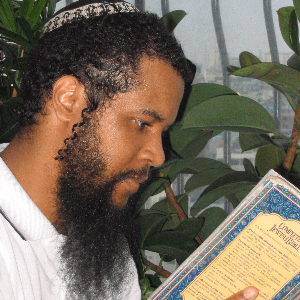
Chanukkah (Part A) - Festival of Dedication - 1 and 2 Maccabees; John 10:22-39
Torah Teacher Ariel ben-Lyman HaNaviy
Download
pdf
Chanukkah
Minor Festivals: חֲנֻכָּה Chanukkah - The Festival of Dedication
“Study to shew thyself approved
unto God, a workman that needeth not to be ashamed, rightly dividing the Word
of Truth!” 2 Timothy 2:15 (KJV)
Excursus: Sukkot-Chanukkah
Hebrew word “chanukkah” (say “chah-noo-kah) literally means “dedication.”
It is from this word that the minor holiday known as Chanukkah gets its
name. This festival is not one of the seven festivals found in Leviticus
chapter 23, but in its original concept, it is free from pagan trappings.
The familiar 9-branched candlestick that so many of you are used to seeing is
known as a “chanukkiah.” I don’t claim to be an historian, and the story
of how Chanukkah came to be is somewhat familiar to most folks anyway, so I
want to avoid retelling the entire story and instead shift my teaching to focus
on the meaning of “dedication.” I believe just a small background briefer
History Lesson
the few hundred years prior to the Common Era (C.E.), the Hellenistic (Greek)
armies of Alexander marched throughout the Middle East in a conquest to control
the civilized world. For the most part, they were successful, as their
rule spanned approximately 330 B.C.E (Before the Common Era) until they were
finally defeated themselves by a stronger and more militant army known as the
Romans in 63 B.C.E. It was during this time period that the Land of
Palestine (Isra'el) was caught up in the middle of these intense power
Hellenistic armies, led by prominent General Antiochus Epiphanies IV, sought to
eliminate all traces of alien culture (alien to Hellenism) by fierce methods of
assimilation. They enforced strict anti-Torah policies, particularly, the
forbidding of circumcision and public and private Torah reading. As could
be expected, the Judeans resisted, and conflicts with the Hellenists were
frequent. As it came to pass, Antiochus eventually seized complete
control of the Temple itself, and in a public display of triumph and mockery,
he decided to sacrifice a swine upon the altar itself, pouring swine urine on
the Temple furniture and holy things. He also enforced the strict
Hellenization of Palestine by setting up a gymnasium in Yerushalayim,
compelling Jews to attend. Eventually the proverbial straw broke the
camel's back and a resistance led by the Maccabean family (of the Hasmonean
Dynasty) began to fight back.
the Temple was eventually recaptured by the Judeans, it was in shambles.
Apart from being ritualistically defiled by Antiochus' armies, it was in a
horrific state of disuse. During the three years that he occupied it, the
Temple priests were forbidden to perform their proper duties, therefore, it
would take quite a bit of work to repair the once beautiful structure. It
was decided that before any reconstruction and repair could commence, the House
itself had to be rededicated back to HaShem. This was an act to signify
that the Judeans wanted the Holiness of the Holy One to return to his Holy Temple.
set out to accomplish this task, but when it came time to rekindle the Menorah
(the seven-branched lamp-stand that resided in the Temple) they discovered that
the olive oil supply had been depleted. It usually took up to eight days
to manufacture enough oil to keep the lamp properly lit. According to
tradition, miraculously they also discovered one container of oil with enough
supply to light just a single lamp (think of it as just one candle of the
seven). The miraculous took place when upon lighting the menorah during
the rededication ceremony, instead of it lasting only a few hours, it lasted
for the duration of the eight days that it took to produce more oil! The
Judeans interpreted this as a supernatural sign the Holy One, Blessed be He,
was well pleased that they had defeated the Greek Armies for now, and that he
was ready to “move back into his home.”
or not the all the elements in the above story are factual or not, history does
record that the Temple was rededicated unto HaShem after the defeat of
Antiochus Epiphanes IV, by the family known as the Maccabees. In fact,
the story is somewhat recorded for us in the Apocryphal books known as the
Maccabees (found in a Bible containing the Deuterocanonicals, usually a Catholic
version). Because the festival of Chanukkah originated from a remembrance
of this historic occasion, we can read about it also in our New Covenant book
of John, chapter 10, verse 22.
K’dushah (Holiness)
Chanukkah is about holiness.
It has been stated that holiness is not metaphysical; our
concept of holiness does not define what is holy. Only the Holy One
himself can fully define—as well as embody holiness. To be sure, the
phrase ‘I am ADONAI,’ or its equivalent ‘I am ADONAI your God’ appears sixteen
times in Leviticus chapter nineteen alone! Chapter twenty sees another
four uses of these phrases. The lesson is obvious:
ADONAI alone defines holiness among men; only he has the
power and authority to set the standard of holiness—for he alone is the fullness
of holiness—for he alone is ADONAI!
So what happens when humanity meets holiness?
HaShem is intimately interested in our redemption.
Likewise, he is our deliverer from the unholy. That is why he masterfully
planned for one man to become the perfect embodiment and display of his
holiness. Only this man would be able to showcase the fullness of the
holiness of God to such a degree that to look at this man was to look at
God! Only this man would be able to perfectly imitate God—for only this
man was and is perfectly God.
And he sets the standard!
Because of our new life in Messiah, we have inherited the
holiness that HaShem intended for us to possess all along. When we place
our trusting faithfulness in the perfect Man of God, our holiness (or lack
thereof) becomes the holiness of the Father! Our constitution changes and
we are no longer deemed ‘unholy’, for his riches in glory—which includes his
holy standard of being—are transferred to our account! We must grasp this
central truth and begin to live according to it!
We are holy because Yeshua has made us holy!
Just as unrighteous Avraham became righteous when he placed
his complete faith in HaShem, so we too inherit the righteousness and holiness
of the Holy One when we place our unreserved trust in his Son. But
holiness is also a duty. What do I mean?
Walking in K’dushah
Apart from being an attribute of God—one that we inherit
intrinsically with our trusting faithfulness in the Messiah, holiness is also
meant to be a lifestyle. This is why I like to use the phrase ‘trusting
faithfulness’ rather than simply ‘faith’. The latter implies a one-time
action on our part, which forever sets into motion a spiritual truth that will
be fully actualized at the return of our LORD. Notice the candor of the
phrase, “I place my trust in Yeshua.” However, the former carries the
aspect of a daily motion, which permeates every movement of our new-creation
lives! “I place my trusting faithfulness in Yeshua.” Do you notice
the subtle difference? To live by ‘trusting faithfulness’ rather than
just by ‘faith’ alone characterizes our moment-by-moment thought process as
well as our actions. The former carries our faith into action! In
other words, this new life in Messiah is an ever constant, ever-growing
relationship with the Holy One of Isra’el; a demonstration of the miraculous on
a level that can and should be measured in even the smallest areas of our
lives. Trusting faithfulness is ongoing! It is not some unmoving,
monumental event which took place sometime in our lives—it is the ongoing
monumental process that overtakes our lives—for the rest of our lives—which was
enacted when we first had a genuine encounter with the divine holiness!
Holiness implies dedication and “set-apart-ness.”
To dedicate something is to consecrate it for a set-apart
function. To be set-apart unto HaShem is the fullest meaning of the word
dedication. Along with the word “chanukkah,” is the familiar word “kadosh,”
meaning “holy.” This also conveys the sense of something being “separated” from
the ordinary, “separated” unto the Holy. If something is not set aside unto the
holy, then it is not properly set aside. One more word that will help to
clarify these concepts is the word “shuv,” meaning to “return.” We get the
Hebrew word “t'shuvah,” meaning “repentance” from this word. Torah-true
repentance involves turning from that which is unrighteous and returning to
that which is righteous. Like chanukkah, and kadosh, t'shuvah implies both
The Temple represented the seat of HaShem's dwelling with
mankind. It was here that the “Ah-ron HaKodesh” (Ark of the Covenant) dwelt; it
was in the Temple that the “Sh'khinah” (manifested Glory of God) resided.
Therefore it was necessary to consider this place Holy unto God and separated
for a specific purpose. When the Temple became defiled with pagan influences
and pagan rituals, it had to be rededicated in order to be considered “clean.”
The New Covenant Scriptures indicate that, as believers in
Messiah Yeshua, our bodies are now (since the Second Temple has now been
removed) the Temple of the Holy Spirit of HaShem (the Ruach HaKodesh). We have
become his dwelling place in the earth today. As his dwelling place, we need to
keep his “temple” cleansed. How does it become defiled?
When we allow our activities to put us into the kinds of
situations that the Torah forbids, when we use our temple in ways that are
unethical, immoral, indecent, unjust, unloving, unkind, and just plain
unscriptural, we defile his Temple! Lying, cheating, stealing, adultery,
fornication, deceiving, backbiting, jealousy, quarrelling, lack of self
control, lack of moral fortitude—these are some of the things that render our
temple unusable to HaShem, and consequently, these are the things that will
remove us from being “holy.” Ultimately, these are the types of things that
will destroy us. How do we rededicate ourselves?
Holiness is not something that we should just “put on and
off” when it is convenient to us. It is a state that we should be constantly
existing in! How do we do what HaShem expects us to do? By faithfully trusting
in his Power and in his Word to work in and through our lives to produce a
temple that is useable and dedicated. We do what the Torah tells us to do, and
allow HaShem to make good on his promises that as we are doing what the Torah
tells us to do, he is reshaping our thoughts and desires to conform to the
image of his Holy Son. Holiness is not just something that we sit around and “dream”
about; it is more than a “revelation” or a feeling! It is a call to action!
What I have been discussing here is not some new and modern
twist on religion. It is the standard that HaShem has expected since the
creation of man. We in the twenty-first century are geared towards wanting the
latest and the greatest, but sometimes the “old wine is better.” This year as
Chanukkah takes place, take a moment to reflect on the reality of “who you are
in Messiah.” You don’t need to be some hyper-spiritual person to accomplish the
task of holiness! You are a dedicated, holy temple, set apart from the ordinary
(the world and its system), and set apart unto a life of praise and obedience
to God Almighty! This is an identity of preeminence! This is a position of
honor! And the greatest reality is that this was accomplished, not because you
or I deserved to be called “holy.” Rather, it was because the Father chose to
demonstrate his intense love for us by sending his Son to become the means of
attaining holiness in the first place! Our holiness finds its purpose and
meaning in the sacrificial death, burial, and resurrection of our LORD Yeshua!
His Ruach (Spirit) empowers us to live a life that is pleasing to HaShem, and
at the same time, gives us the boldness and opportunity to share our testimony
with those who do not yet know Yeshua personally.
and holiness should not strike you as unattainable character traits that only
the “super spiritual” should possess. Simply placing your trusting faithfulness
in Yeshua, and consequently allowing him to have control of your thoughts,
actions, emotions, and your will, accomplishes the purposes of HaShem. You can
start today. You should pursue it until the Messiah returns to take you unto
himself! After all, “chanukkah” is not just for the Jews.
Excursus: Grafted Into Isra'el
1900 years ago, the Apostle Paul (a.k.a. Sha'ul) found himself being challenged
by the risen Yeshua on a most important mission. Our LORD chose to
commission this Pharisaic Jew with an urgent message to the Gentiles:
those of you who are Gentiles I say this: since I myself am an emissary sent to
the Gentiles, I make known the importance of my work… But if some of the
branches were broken off, and you - a wild olive - were grafted in among them
and have become equal sharers in the rich root of the olive tree, then don't
boast as if you were better than the branches! However, if you do boast,
remember that you are not supporting the root, the root is supporting you.”
most wonderful truth is being discussed here. What does it mean for
Sha'ul to say that the ‘wild olive tree’ (the Gentiles) is grafted into the
‘cultivated olive tree’? The plain sense of the text should not be easily
Through the efficacious ministry of the Messiah Yeshua, Gentile believers are
covenant-bound to ‘Father Abraham’s Olive Tree’—Isra'el—thereby making
them fellow citizens and full-participants with the Commonwealth of
Isra'el (Eph. 2), thus granting them the divine privilege of following the
whole of the Torah.
We believe that YHVH has written this very same Torah upon the hearts of those, Jews and Gentiles,
who have placed their trusting faithfulness in Yeshua (Jer. 31:31-34; Heb.
8:7-12).
We believe that this same Torah is a foundational revelation of the
righteousness of HaShem and serves as a description (along with the rest
of the Scriptures) of the lifestyle of the Redeemed Community (James
1:16-27).
Furthermore, ‘grafted in’ bespeaks of our affirmation to our true identity as a
people—Jew and Gentile—that is securely rooted in the Finished Work of
Yeshua HaMashiach.
The Righteousness of God
his letter to Rome, Sha'ul wrote in 3:28 that God considers a person righteous
on the grounds of trusting, which has nothing to do with the Torah (or as in
KJV “deeds of the Law”). On the surface this seems problematic for my own
teachings that consider Torah observance to be of great significance.
Yet, the problem here is really more a matter of hermeneutics than of
theology. What Sha’ul is really talking about when he employs the Greek
phrase “ergon nomou,” translated here as “works of Law” is in actuality a
technical phrase that the Judaisms of Sha’ul’s day employed to speak of the
halakhah, that is, the proper way in which a Jew is to walk out Torah.
Indeed, the prevailing view of the sages of the 1st Century held to
the common belief that Isra'el and Isra'el alone shared a place in the world to
come. Thus, if a non-Jew wished to enter into HaShem’s blessings and
promises, such a person had to convert to Judaism first. To be sure, this
is one of the primary arguments delineated in the letter to the Galatians.
for Sha’ul no such ‘man-made” conversion policy existed in Scripture!
contrast, Sha'ul taught most assuredly that Gentiles were grafted into Isra'el
the same way that Avraham was counted as righteous by God in B’resheet
(Genesis) chapter 15: faith in the promised Word of the LORD. Thus, the
phrase “works of Law” has a Hebrew counterpart: ma’asei haTorah. What
meaneth ma’asei haTorah? The Dead Sea Scrolls used this phrase as well,
and since the discovery of those manuscripts we have now come to know that it
refers to “some of the precepts of the Torah,” as adjudicated by the halakhah
and by the particular community wielding the most influence. To be sure,
the halakhah that teaches Gentile inclusion only by way of conversion (read
most often as “circumcision” in Galatians) was naturally at odds with the True
Gospel of Gentile inclusion by faith in Yeshua plus nothing! If we
understand that quite often Sha'ul’s use of the term circumcision in Galatians
is actually shorthand for “the man-made ritual that seeks to turn Gentiles into
Jews” then the letter begins to make more sense Hebraically and contextually.
this knowledge at hand we are now prepared to better interpret Sha'ul’s pasuk, “a
person is considered righteous by God on the grounds of trusting which has
nothing to do with the Torah…” as really saying, “a person is considered
righteous by God on the grounds of trusting which has nothing to do with the
conversion policy that seeks to make Gentiles into Jews first!”
Law vs. Grace?
is the God of both Jews and Gentiles! One need not change his station in
life before God can accept him. What is more, the real change that takes
place in a person’s life is effected by the Ruach HaKodesh when, because of
Yeshua’s bloody, sacrificial death, the sinner takes on the status of
righteous! Man cannot add to that which God perfects. A conversion
to Judaism (a.k.a. circumcision), in Sha'ul’s mind, added nothing to those
wishing to be counted as true Israelites in the Torah Community. To
Sha'ul, their genuine faith in the Promised Word of HaShem, as evidenced by the
genuine working of the Spirit among them, was all the “identity” they would
ever need! Once counted as righteous by the Righteous One Himself, all
the new [Gentile] believer needed to do was begin to walk in that
righteousness, a walk already described in the pages of the Written Torah, a
walk formerly impossible due to the deadness of flesh and bondage to sin.
“freedom” is not a license to walk away from Torah! Biblical “freedom” is
liberation to walk into Torah and into the righteousness that HaShem envisioned for
us all along! Thus, positional righteousness always results in behavioral
righteousness. Put plainly, Torah submissiveness is the natural result of
being set free from sin and set free unto Yeshua!
ages-old “Law vs. Grace” argument is a dead argument. Truthfully, there
exists no incongruity between God’s Law and God’s Grace. The two are
complimentary. To be sure, God’s grace is what actually empowers the
saint to walk into Torah obedience!
Conclusion
to continue in genuine trusting faithfulness for either Jew or Gentile
participants invited God to place them in a position that Sha’ul called “broken
off.” In other words, natural branches (Jews) could be broken off because
of lack of trust, and grafted-in branches (Gentiles) could also be broken off
due to lack of trust (read Romans chapter 11)! Far from purporting that
some “ethnic-driven” halakhah secured one’s place in the ‘olam haba (Age to
Come), the native born Jew, the convert Jew, and the good old fashioned
Gentiles all faced the same penalty for remorseless lack of faith: spiritual
we see that the Torah is the universal document for both peoples and it
outlines God’s plan for all mankind, both Jews and Gentiles.
the Gospel” is that Isra'el is actually comprised of both Jews and
Gentiles! To be grafted into the family of God is to join oneself to a
Jewish Olive Tree without having to succumb to any kind of man-made conversion
policy whatsoever! To this end, one becomes submissive to the
instructions and righteousness of God, and inherits the blessings of God,
whether he is of Gentile or Jewish stock!
walk in disobedience and lack of trust is to invite God’s punishment and
withholding of blessing. To belong to the family is to mentally,
spiritually, and physically accept the family rules. To this end, both
Jews and Gentiles are expected to practice Torah submissiveness within their
hearts and within their communities. To submit to God is to desire and
allow his Holy Spirit (Ruach HaKodesh) to continually mold a person’s life into
the example of the Son of God, who vividly displayed a Torah-obedient and
submissive life! This is the responsibility of a believer.
suppose that faith outside of resulting action alone is pleasing to God is to
misunderstand the valuable lesson explained by Ya’akov. Such faith is
barren and of no value to God. Conversely, to mistakenly replace the
genuine faith that the Torah teaches with halakhic rules designed to regulate
one’s identity with God, is to misunderstand Sha’ul’s valuable lesson.
Such actions also prove to be displeasing to God and unacceptable as righteous.
atah YHVH, Eloheynu, Melech ha-‘Olam,
ha-amim al-yadey bano Yeshua HaMashiach, Adoneinu.”
(Blessed are you O’ LORD, our God, King of the
who gives the Torah of truth,
and the Good News of salvation to his people Isra’el
and to all the peoples through his son Yeshua the
Teacher Ariel ben-Lyman HaNaviy [email protected]
Excursus: Sukkot-Chanukkah Connection
*Ariel’s note: I cannot recall exactly where I
obtained this excursus… perhaps another e-friend sent it to me. However,
the information contained herein is fascinating. To be sure, the
composition is not my own. I have, nonetheless, decided to attach it as
an excursus onto the end of my commentary to Chanukkah. Enjoy.
all heard the story of Chanukkah about Judah Maccabee and his army liberating
the temple but finding just the single jar of oil that was only enough to last
for 1 day, when somehow “miraculously” the oil lasted for 8 days. So where does
this story come from? And what else do we know about the “Festival of Lights”?
First off, a number of historians believe that the reason
for the eight-day celebration was that the first Chanukkah was in effect a
belated celebration of the festival of Sukkot, the Feast of Tabernacles. During
the war the Jews were not able to celebrate Sukkot properly. Sukkot also lasts
for eight days, and was a holiday in which the lighting of lamps played a
prominent part during the Second Temple period (Suk.v. 2-4). Lights were also
kindled in the household, and the popular name of the festival was, therefore,
according to Josephus. It has been noted that Jewish festivals are connected to
the harvesting of the Biblical seven fruits, which Israel was famed for. Pesach
is a celebration of the barley harvest, Shavu’ot of the wheat, Sukkot of the
figs, dates, pomegranates and grapes, and Chanukkah of the olives. The olive
harvest is in November and olive oil would be ready in time for Chanukkah in
December. The origins of Chanukkah are probably even earlier and more basic.
Three main religions have festivals immediately after the winter solstice: The
Christian Christmas, the Hindu Diwali and the Jewish Chanukkah are all
reality, the historical tale of Chanukkah is not nearly so “magical.” The
“miraculous” story of the Chanukkah oil, with which we are so familiar, comes
straight from the Babylonian Talmud (tractate Shabbat, page 21b). It is
important here to recall that the Babylonian Talmud dates to about 550CE. But
Chanukkah is mentioned at least two other times in pieces of Jewish holy
literature that precede the Talmud.
facts you will need to recall to follow this story:
Chanukkah begins on the 25th day of the Hebrew month of Kislev. Kislev is
toward the beginning of winter.
The pilgrimage festival of Sukkot is 8 days long, and is the only one of the
three pilgrimage festivals that is celebrated for 8 days.
The Apocrypha is the set of holy books that were canonized into the Catholic
Old Testament, but were not canonized into the Hebrew Bible (and therefore
not into the Protestant Old Testament, which follows the Hebrew Bible).
The Book of Antiquities is a book purportedly written by Josephus Flavius, a
Jew who worked for the Romans as a historian during the time of the
destruction of the 2nd Jerusalem Temple (73CE). This book was not
canonized into any Bible, but remains an important source of historical
information.
we find reference in the Second Book of Maccabees, which is part of the Apocrypha,
(chapter 10, verses 1-8) to an event on the 25th of Kislev, in the year 165BCE,
which sounds extremely familiar:
When Maccabeus and his companions under the leadership
of God, had recovered the temple and the city, they destroyed the altars erected
by the Gentiles in the marketplace and the sacred enclosures. After purifying
the temple, they made a new altar. Then, with fire struck from flint, they
offered sacrifice for the first time in two years, burned incense, lighted the
lamps, and set out the holy bread. When they had done this they bowed down and
begged God that they might never again fall into such misfortunes, and that if
they should sin at any time, God might chastise them with moderation and not
hand them over to the blasphemous and barbarous Gentiles. On the anniversary of
the day on which the temple had been profaned by the Gentiles, that is, the
25th of the Kislev, the purification of the temple took place.
Book of Maccabees then continues with a description of what happened during
this “purification” of the temple:
The Jews celebrated joyfully for eight days as on the
feast of Booths, remembering how, a little while before, they had spent the
feast of Booths living in caves on the mountains like animals. Carrying rods
entwined with leaves, green branches, and palms, they sang psalms of grateful
praise to the one who had brought about the purification of The Holy Place.
Wait a second! What's this description? There's nothing here about lighting
menorahs or playing dreydl! Celebrating as on the Feast of Booths? The Feast of
Booths is the fall pilgrimage festival of Sukkot! Carrying rods with green
branches and palms? That's a lulav, the most sacred ritual object of Sukkot!
And psalms of grateful praise? That's Hallel, the set of psalms Jews sing only
on pilgrimage festivals and on the first day of each month! So what are we
reading here? The Jews celebrated the re-dedication of the Temple by
celebrating Sukkot 3 months late! Why? The text tells us, ‘because they were
stuck living in caves on Sukkot, and couldn't celebrate the holiday properly
(which would involve sacrifices at the Temple and the whole bit)’. Why was it
so important to celebrate Sukkot? Well, Sukkot was called “HeChag-The Holiday,”
probably because it was the holiday when prayers for rain were issued in
anticipation of the coming rainy season.
By public edict and decree they prescribed that the
whole Jewish nation should celebrate these days every year.
Book of Maccabees also contains a letter dated forty years later than the
The Jews in Jerusalem and in the land of Judea send
greetings to their brethren, the Jews in Egypt, and wish them true peace!…We
are writing to remind you to celebrate the feast of Booths in the month of
second historical reference comes to us from the Book of Josephus-Jewish
Antiquities, chapter 7 (75 CE):
And so Judah and his fellow citizens celebrated the
restoration of sacrifices in the temple for eight days, omitting no form of
pleasure, but feasting on costly and splendid sacrifices. And while honoring
God with songs of praise, the playing of harps at the same time delighted them.
So much pleasure did they find in the renewal of their customs and in
unexpectedly obtaining the right to have their own service after so long a time
that they made a law that their descendants should celebrate the restoration of
the temple service for eight days. And from that time to the present we observe
this festival, which we call the festival of Lights: giving this name to it, I
think, from the fact that the right to worship appeared to us at a time when we
hardly dared hope for it.
Now the festival has a name! The “Festival of Lights.” Josephus seems unsure
where this name originated, but he seems to confirm the story about the 8 days
of Chanukkah reflecting a celebration Kislev of the renewed opportunity to
offer the sacrifices of the Sukkot holiday. Josephus' phrase “omitting no form
of pleasure” is another confirmation that the holiday reflects a pilgrimage
festival, since “omitting no form of pleasure,” though it sounds somewhat lewd
to our modern ear, likely refers to the accepted halakhah that on festival
days, mourning on other somber customs and laws are prohibited.
unsubstantiated editorial note: On the last day of Sukkot, there is a practice
called Simchat Bet HaShoeva-the Water-Drawing Festival. In ancient times, at
the end of the last day of Sukkot, water was carried from the storage pools at
the lowest part of the ancient City of David (the Shiloam pool, if you visited
Jerusalem) up to the Temple Mount and was poured on the altar as part of the
prayers for rain. I offer that during the winter, if one were recreating
Sukkot, it would be dark by the time the Water-Drawing Festival occurred. Those
who have been to Jerusalem will recall that the City of David lay on a “camelback,”
the ridge of a hill that leads up to the Temple Mount. This “camelback” can be
seen from all around. I can just picture a parade from the Shiloam pool up to
the Temple Mount in the middle of December in the dark, trudging up this
camelback, guided now by torches. I could easily envision someone calling
that “the festival of lights.”