
Sign up to save your podcasts
Or

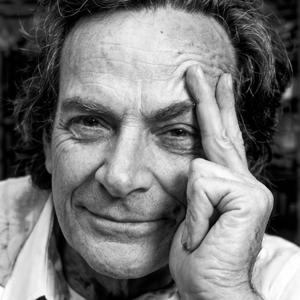


Gravity is the weakest force in the universe. So what's the worst that could happen if it disappeared for just one second?
You'd float for a moment, sure. But that's where most people stop thinking — and where the real physics begins. In that single second, the atmosphere starts leaking into space, the oceans fizz like champagne, tectonic faults slip, the Sun shudders, and time itself flattens across the entire universe. Then gravity snaps back, and the whole planet rings like a bell.
In this video, we peel back the layers of gravity's invisible work — starting from a coffee cup on a table and ending at the unsolved frontier of quantum gravity — Feynman-style. The physics draws from his masterful treatment of gravitation in The Feynman Lectures and his lifelong fascination with why general relativity and quantum mechanics refuse to merge.
Uploaded 21-02-26
📚 SOURCES:
The Feynman Lectures on Physics, Vol. I — Richard P. Feynman, Robert B. Leighton, Matthew Sands (1963), Chapters 7–9 (The Theory of Gravitation, Motion, Newton's Laws of Dynamics)
The Feynman Lectures on Physics, Vol. II — Chapter 42 (Curved Space)
The Character of Physical Law — Richard P. Feynman (1965), Chapter 1 (The Law of Gravitation)
Six Easy Pieces — Richard P. Feynman (1995), Chapter 5 (The Theory of Gravitation)
Misner, Thorne and Wheeler, Gravitation (1973) — gravitational time dilation, free oscillations of the Earth
Anderson and Dziewonski, "Preliminary Reference Earth Model," Physics of the Earth and Planetary Interiors (1981) — Earth interior structure and seismic velocities
🎬 CREDITS: Script: AI-generated lecture inspired by Richard Feynman's teaching style Voice: AI-synthesized narration Visuals: AI-generated Channel: The Physics Confessional
TIMESTAMPS: 00:00 — How many things is gravity doing to you right now? 02:30 — You float. But not the way you think. 05:15 — Your coffee becomes a perfect sphere 06:00 — The atmosphere starts leaking into space 09:30 — The ocean fizzes like champagne 13:00 — Earth's crust whispers in tiny earthquakes 16:15 — Volcanoes lose their lid — briefly 17:45 — The orbit barely notices 19:30 — The Sun flinches 21:00 — Gravity isn't a force. It's the shape of spacetime. 23:30 — For one second, every clock in the universe synchronizes 26:00 — Gravity snaps back — and the planet rings like a bell 28:00 — The weakest force in nature builds every structure in the cosmos 30:00 — We still don't know what gravity actually is
💬 If the weakest force in the universe holds everything together, what other quiet, invisible forces might you be overlooking in your own life?
⚠️ WARNING: [This video is AI-generated (synthetic voice and visuals). It is an original, fictional lecture inspired by Richard Feynman's teaching style and public ideas, and is not an authentic recording, endorsement, or statement by Richard Feynman or his estate. Any resemblance is for educational/creative purposes]
Learn more about your ad choices. Visit megaphone.fm/adchoices
You've been told your whole life that your brain "flips" the upside-down image in your eye. Sounds neat. Sounds clean. It's also completely wrong — and the real explanation reveals something deeply unsettling about everything you've ever seen.
In this video, we explore what actually happens between the inverted image on your retina and your conscious experience of sight, drawing on the optics, neuroscience, and philosophy that Feynman loved to weave into his public lectures. We cover the homunculus problem, George Stratton's famous 1896 inverting-goggle experiment, saccadic suppression, the patchwork illusion of high-resolution vision, and why perception is construction — not reception.
Uploaded 23-02-26
📚 SOURCES:
Richard P. Feynman, "The Feynman Lectures on Physics," Volume I, Chapter 35: "Color Vision" and Chapter 36: "Mechanisms of Seeing" (1963)
George M. Stratton, "Some Preliminary Experiments on Vision Without Inversion of the Retinal Image," Psychological Review, Vol. 3, No. 6 (1896)
Richard L. Gregory, "Eye and Brain: The Psychology of Seeing," 5th Edition (1997)
David Hubel, "Eye, Brain, and Vision," Scientific American Library (1988)
David Hubel and Torsten Wiesel, Nobel Prize-winning research on visual processing in the primary visual cortex (1981)
🎬 TIMESTAMPS: 00:00 — The image in your eye has never once been right-side up 02:15 — Why "the brain flips it" is a logical dead end 04:30 — A magnifying glass proves how lenses invert everything 06:45 — The moment the image stops being an image 09:45 — You only see in HD through a pinhole 12:15 — The blind spots your brain paints over every second 14:45 — Stratton's wild week wearing the world upside down 17:30 — "Up" is a conclusion, not a given 20:15 — Color, sound, and the models we mistake for reality 23:00 — What we still honestly don't know about seeing 25:30 — The invisible construction happening inside your skull right now
🎙️ CREDITS: Written and produced by The Physics Confessional AI-generated narration and visuals Not affiliated with the Feynman estate
If everything you see is a model your brain built — how would you ever catch it making an error?
⚠️ WARNING: [This video is AI-generated (synthetic voice and visuals). It is an original, fictional lecture inspired by Richard Feynman's teaching style and public ideas, and is not an authentic recording, endorsement, or statement by Richard Feynman or his estate. Any resemblance is for educational/creative purposes]
Learn more about your ad choices. Visit megaphone.fm/adchoices
🔗 https://oxadow.com/?v=ZHc1ZS8APpk — The Physics of Everything: gravity, light, time, quantum mechanics and the invisible world of electromagnetism, explained step by step. Explore all three illustrated PDF books in The Complete Library.
Uploaded 16-10-26
🔗 https://oxadow.com/mail/?v=ZHc1ZS8APpk — The Physics Letter: interesting physics news, remarkable discoveries and clear explanations, delivered to your inbox. Free to join.
Energy can't be created. You've heard it a hundred times. So who had it first? Follow the energy in your breakfast backward, through the sun, through gravity, all the way to the first minutes of the universe, and the law you learned in school starts to bend in a place almost nobody talks about.
00:00 The question your teacher never answered
01:28 Your breakfast is secretly old sunlight
04:44 Energy is not a thing (here's what it really is)
12:34 Why the "energy crisis" isn't about energy
17:22 The missing fuel that solved the sun's age fight
20:46 Gravity's strange negative pocket
25:45 The Tuesday machine: why energy is conserved at all
35:12 The light that lost energy crossing the universe
42:10 Did the universe cost nothing to make?
SOURCES
Richard P. Feynman, Robert B. Leighton, Matthew Sands, The Feynman Lectures on Physics, Vol. I, Chapter 4 "Conservation of Energy" (1963)
Richard P. Feynman, The Character of Physical Law, Lecture 3 "The Great Conservation Principles" (1965)
Emmy Noether, "Invariante Variationsprobleme," Nachrichten von der Gesellschaft der Wissenschaften zu Göttingen (1918)
Hans A. Bethe, "Energy Production in Stars," Physical Review, Vol. 55 (1939)
Arthur S. Eddington, The Internal Constitution of the Stars, Chapter 11 "The Source of Stellar Energy" (1926)
Arno A. Penzias and Robert W. Wilson, "A Measurement of Excess Antenna Temperature at 4080 Mc/s," Astrophysical Journal, Vol. 142 (1965)
Steven Weinberg, The First Three Minutes, Chapter 3 "The Cosmic Microwave Radiation Background" and Chapter 5 "The First Three Minutes" (1977)
Edward P. Tryon, "Is the Universe a Vacuum Fluctuation?" Nature, Vol. 246 (1973)
⚠️ WARNING:
[This video is AI-generated (synthetic voice and visuals). It is an original, fictional lecture inspired by Richard Feynman's teaching style and public ideas, and is not an authentic recording, endorsement, or statement by Richard Feynman or his estate. Any resemblance is for educational/creative purposes]
Learn more about your ad choices. Visit megaphone.fm/adchoices
Right now, as you read this, you are being accelerated upward at nearly ten meters per second squared. You are not sitting still. You are not at rest. The floor is shoving you. And every feeling of "weight" you have ever had in your life is a lie your senses tell you about what is actually happening.
Newton was wrong. Beautifully, spectacularly, usefully wrong — for two and a half centuries.
In this video, Feynman dismantles the idea that gravity is a force, using Einstein's most dangerous thought experiment — the falling house painter — and rebuilds the entire picture from the ground up. We trace the journey from Newton's apple to the equivalence principle, from the 1919 eclipse that bent starlight to the satellite clocks that prove Einstein is still right every single day, and finally to the strangest truth of all: most of gravity isn't bent space. It's bent time.
Uploaded 22-04-26
📚 SOURCES:
Richard P. Feynman, Six Not-So-Easy Pieces — Chapter 5: "Curved Space" (1963 Caltech lectures, published 1997)
Richard P. Feynman, The Feynman Lectures on Physics, Vol. II — Chapter 42: "Curved Space" (1964)
Richard P. Feynman, Lectures on Gravitation — Caltech graduate lectures, 1962–63 (published 1995)
Albert Einstein, "On the Relativity Principle and the Conclusions Drawn from It" (1907) — the equivalence principle paper
Einstein, "The Field Equations of Gravitation" (1915) — Mercury's perihelion resolved
Eddington, Dyson and Davidson, "A Determination of the Deflection of Light by the Sun's Gravitational Field" — Philosophical Transactions of the Royal Society (1920)
Hafele and Keating, "Around-the-World Atomic Clocks" — Science, Vol. 177 (1972)
TIMESTAMPS: 00:00 — "And he was wrong." 02:10 — Newton's Magnificent Rooster 05:45 — The One Number That Shouldn't Match 08:30 — Einstein's Happiest Thought 11:15 — The Elevator That Broke Physics 14:00 — The Day Starlight Bent 16:40 — Forget the Rope 19:20 — Why Falling Is Really About Time 22:30 — The Satellites That Prove Einstein Right Every Day 25:45 — You Are Being Accelerated Right Now
CREDITS: Script and concept: Feynman Reborn Voice and visuals: AI-synthesized Produced with care for the spirit of Feynman's teaching
One question before you go: if gravity is just the shape of spacetime, then what do you actually think a force is? Share your guess below.
⚠️ WARNING: [This video is AI-generated (synthetic voice and visuals). It is an original, fictional lecture inspired by Richard Feynman's teaching style and public ideas, and is not an authentic recording, endorsement, or statement by Richard Feynman or his estate. Any resemblance is for educational/creative purposes]
Learn more about your ad choices. Visit megaphone.fm/adchoices
🔗 https://oxadow.com/?v=qXBMGx-t7-8 — The Physics of Everything: gravity, light, time, quantum mechanics and the invisible world of electromagnetism, explained step by step. Explore all three illustrated PDF books in The Complete Library.
Uploaded 24-10-26
🔗 https://oxadow.com/mail/?v=qXBMGx-t7-8 — The Physics Letter: interesting physics news, remarkable discoveries and clear explanations, delivered to your inbox. Free to join.
How can light travel billions of years across the universe without running out of energy? Every second, photons from distant galaxies cross unimaginable distances through empty space. Some have been traveling for over 13 billion years, yet they still reach our telescopes today. Why doesn't their energy simply run out?
In this video, we explore the fascinating physics of light, photons, and energy conservation. Discover why light doesn't need fuel to keep moving, how photons survive journeys across billions of light-years, and why the expansion of the universe causes ancient light to lose energy through cosmological redshift.
From Einstein's theory of relativity to the oldest light in the universe, the cosmic microwave background, we'll uncover one of the most remarkable properties of light and what it reveals about the nature of space, time, and energy.
Topics covered: Photons, speed of light, conservation of energy, cosmological redshift, expanding universe, Einstein's relativity, cosmic microwave background, and astrophysics.
#Physics #Light #Photons #Universe #Cosmology #Einstein #Space #Science
Learn more about your ad choices. Visit megaphone.fm/adchoices
You've probably seen the launch footage a hundred times. The fire, the smoke, the rocket climbing into a clear sky. That's the part everyone celebrates. But what if the real danger isn't leaving Earth — it's slamming back into it at 25,000 mph with a heat shield that nobody fully understands?
In this video, we explore the physics of lunar reentry through Richard Feynman's signature lens — building from simple energy principles to the jaw-dropping complexity of what happens when a spacecraft hits Earth's atmosphere at 32 times the speed of sound. From ablation chemistry to the reentry corridor problem to the Artemis I heat shield mystery, this lecture breaks down why returning from the Moon remains one of the hardest unsolved challenges in aerospace engineering.
Uploaded 17-02-26
📚 SOURCES:
"The Feynman Lectures on Physics," Richard P. Feynman, Robert B. Leighton, Matthew Sands, 1963 — thermodynamics, energy conservation, and fluid dynamics principles
"Surely You're Joking, Mr. Feynman!" Richard P. Feynman, 1985 — teaching philosophy and problem-solving approach
NASA Artemis Program Mission Reports and Heat Shield Investigation Findings, 2022–2026
"An Evaluation of Ablation Mechanisms for the Apollo Heat Shield Material," AIAA Journal of Spacecraft and Rockets
NASA Technical Note TN D-6725, "Apollo Experience Report — Guidance and Control Systems: Entry Guidance"
Lockheed Martin Orion Aerosciences Division, "Skip Entry Technical Overview," 2022
Prof. Iain Boyd, CU Boulder Department of Aerospace Engineering Sciences — reentry physics and hypersonics commentary, 2022
"Multi-scale Thermal Response Modeling of an AVCOAT-like Thermal Protection Material," International Journal of Heat and Mass Transfer, 2019
🎬 CREDITS: Script and Production: [Channel Name] Voice: AI-generated (inspired by Richard Feynman's teaching style) Research and Fact-checking: [Channel Name] team
⏱️ TIMESTAMPS: 00:00 — Something is wrong with the heat shield 03:45 — Why 25,000 mph is not "a little faster" than orbit 09:10 — Threading a paper-thin needle from 240,000 miles away 14:50 — The air in front of you becomes hotter than the Sun 19:30 — The shield that saves you by destroying itself 25:15 — 330,000 honeycomb cells, filled one at a time 30:40 — The clue nobody's computer model predicted 36:20 — Skipping stones: two entries instead of one 41:55 — You can't fix the shield — so fix the trajectory 47:30 — 670 billion joules: the energy dump problem 52:15 — Why coming home is harder than getting there 56:40 — The last ten minutes are the real test
💬 What surprised you most — the speed, the corridor, or the gas entrapment problem? Drop your answer below.
⚠️ WARNING: [This video is AI-generated (synthetic voice and visuals). It is an original, fictional lecture inspired by Richard Feynman's teaching style and public ideas, and is not an authentic recording, endorsement, or statement by Richard Feynman or his estate. Any resemblance is for educational/creative purposes]
Learn more about your ad choices. Visit megaphone.fm/adchoices
There's an equation that fits on a t-shirt. Four lines of math that describe almost everything in the known universe. Every force. Every particle. Every interaction. It's called the Standard Model Lagrangian, and it's the most precisely tested equation in the history of science. But here's the catch: it only explains about 5% of the universe. What about the other 95%?
This seems like it should bother more people than it does.
In this video, we explore how one equation emerged from a single principle — the Principle of Least Action — and how symmetry alone dictates the forces of nature. We trace the path from Newton's F=ma to the Standard Model Lagrangian, from Feynman's path integral to the Higgs mechanism, and confront the enormous gaps the equation leaves behind: gravity, dark matter, dark energy, and 19 unexplained numbers.
Uploaded 08-02-26
📚 SOURCES:
Richard P. Feynman, "The Feynman Lectures on Physics," Volume II, Chapter 19: "The Principle of Least Action" (Addison-Wesley, 1964)
Richard P. Feynman, "The Character of Physical Law," Messenger Lectures at Cornell University, Chapter 2: "The Relation of Mathematics and Physics" and Chapter 4: "Symmetry in Physical Law" (MIT Press, 1965)
Richard P. Feynman, "QED: The Strange Theory of Light and Matter" (Princeton University Press, 1985)
Richard P. Feynman and Albert R. Hibbs, "Quantum Mechanics and Path Integrals" (McGraw-Hill, 1965)
Martinus Veltman, "Diagrammatica: The Path to Feynman Diagrams" (Cambridge University Press, 1994)
Woithe, J., Wiener, G. J., and Van der Veken, F. F., "Let's have a coffee with the Standard Model of particle physics!", Physics Education, Volume 52, Number 3 (2017)
Thomas D. Gutierrez, "Standard Model Lagrangian" transcription, derived from Veltman's Diagrammatica (UC Davis)
🎬 CREDITS: Written and produced by Oxadow AI-generated voice and visuals Inspired by the lectures and writings of Richard P. Feynman
⏱️ TIMESTAMPS: 00:00 – One equation to rule them all 01:45 – Why does a ball follow that path? 05:30 – The Principle of Least Action explained 10:15 – Three ways to state Newton's law 14:00 – What is a Lagrangian, really? 18:30 – The Standard Model: particles, forces, symmetry 26:00 – How symmetry creates forces 31:45 – The Higgs field and the origin of mass 36:20 – The path integral: every possible route at once 42:00 – What the equation leaves out: gravity, dark matter, dark energy 48:15 – The impossible dream of unification 53:30 – Why not knowing is the best part
💬 If you could add one thing to the Standard Model, what would it be? Share your answer below.
⚠️ WARNING / DISCLAIMER: This video is AI-generated (synthetic voice and visuals). It is an original, fictional lecture inspired by Richard Feynman's teaching style and public ideas, and is not an authentic recording, endorsement, or statement by Richard Feynman or his estate. Any resemblance is for educational/creat
Learn more about your ad choices. Visit megaphone.fm/adchoices
Right now, hundreds of invisible signals are passing through your body.
Radio waves. Wi-Fi. Cell signals. X-rays from distant galaxies. You can't see them. You can't feel them. And yet they're all made of the same stuff—the same "invisible web" that holds your atoms together, makes light travel, and lets you read these words.
This seems obvious, right? Electricity and magnetism are connected. Everyone knows that.
But here's what's strange: they're not just "connected." They're literally the same force viewed from different angles. Move fast enough, and what looks like pure electricity transforms into magnetism. Einstein used this exact puzzle as one of the clues to discover relativity.
In this video, we explore electromagnetism through the eyes of Richard Feynman—the physicist who could make quantum mechanics feel like common sense. Drawing from his legendary Feynman Lectures on Physics, particularly Volume II on electromagnetism, this lecture builds intuition from everyday experiences: magnets, static electricity, light itself. By the end, you'll understand why nearly everything you've ever touched, seen, or felt is really the electromagnetic field in disguise.
Uploaded 06-02-26
📚 SOURCES
• The Feynman Lectures on Physics, Volume II: Mainly Electromagnetism and Matter — Richard P. Feynman, Robert B. Leighton, Matthew Sands (1964)
• QED: The Strange Theory of Light and Matter — Richard P. Feynman (1985)
• The Character of Physical Law — Richard P. Feynman (1965)
• James Clerk Maxwell's original papers: "A Dynamical Theory of the Electromagnetic Field" (1865)
🎬 CREDITS
Written with inspiration from Feynman's original lectures and writings
AI-generated voice and visuals
Educational/creative tribute—not an official Feynman recording
⏱️ TIMESTAMPS
0:00 — The invisible web you've never noticed
2:15 — Magnets, balloons, and the mystery of action at a distance
7:40 — What is a "field" anyway? Two analogies that click
14:20 — The Feynman Check: could a 12-year-old follow this?
16:45 — Why electricity and magnetism are secretly the same thing
23:30 — Einstein's clue: how your motion changes what you see
28:15 — Thought experiment: shake an electron, make light
35:40 — Radio waves, X-rays, starlight—all the same ripple
42:10 — Why you don't fall through your chair (it's not what you think)
48:30 — Maxwell's four equations in plain English
54:20 — What is the field made of? The honest answer
58:45 — Why this changes everything about how you see reality
💬 What everyday experience would YOU most like explained in terms of the electromagnetic field? Drop it below—the weirder, the better.
⚠️ WARNING / DISCLAIMER
This video is AI-generated (synthetic voice and visuals). It is an original, fictional lecture inspired by Richard Feynman's teaching style and public ideas, and is not an authentic recording, endorsement, or statement by Richard Feynman or his estate. Any resemblance is for educational/creative purposes.
Learn more about your ad choices. Visit megaphone.fm/adchoices
Most people think the sky is quiet because nobody is home. The physics says something much worse. If a single civilization in the entire thirteen-billion-year history of our galaxy had decided to spread — at a crawling one percent of light speed, with basic self-replicating machines — the galaxy should be colonized right now. Filled with outposts. Glowing in infrared. Audible on every frequency. It isn't. And the reason physics gives for that silence is the one nobody wants to say out loud.
In this lecture, Feynman takes Fermi's 1950 lunch-table puzzle and builds it up with the tools he actually used at Caltech and Cornell: thermodynamics, kinetic energy, exponential growth, and the geometry of information under the speed-of-light limit. Drawing on his personal memories of Fermi, Dyson, and von Neumann, he walks through every comfortable answer — rare life, self-destruction, the mature-and-quiet civilization, the galactic zoo — and dismantles each one. What's left is the game-theoretic conclusion the physics actually points toward.
Uploaded 23-04-26
⏱️ TIMESTAMPS 00:00 — The Sky Is Silent (and That Should Bother You) 01:38 — The Day Fermi Stopped Eating His Lunch 03:55 — One Civilization Fills the Galaxy in 60 Cosmic Seconds 07:42 — Von Neumann's Machines Should Already Be Here 11:20 — The Waste Heat No Civilization Can Hide 14:55 — Why "They Destroyed Themselves" Doesn't Add Up 17:30 — The Zoo That Cannot Exist 19:45 — The Rock Moving at Half the Speed of Light 22:40 — Why Silence Is the Only Rational Strategy 25:20 — What You Should Think About Tonight
📚 SOURCES and INSPIRATION
Richard P. Feynman, The Feynman Lectures on Physics, Vol. 1, Ch. 44–46 (Ratchets, Entropy, the Second Law), 1963–1965
Richard P. Feynman, The Character of Physical Law, Ch. 5 "The Distinction of Past and Future," 1965
Richard P. Feynman, Surely You're Joking, Mr. Feynman!, sections on Los Alamos, Fermi, and von Neumann, 1985
Enrico Fermi's lunch conversation at Los Alamos, recounted by Emil Konopinski, Edward Teller, and Herbert York, 1950
Freeman J. Dyson, "Search for Artificial Stellar Sources of Infra-Red Radiation," Science, 1960
Freeman J. Dyson, Disturbing the Universe, Ch. on interstellar engineering, 1979
John von Neumann, Theory of Self-Reproducing Automata (ed. Arthur Burks), 1966
Frank D. Drake, "Project Ozma" and the Drake Equation, Green Bank, 1961
Michael H. Hart, "An Explanation for the Absence of Extraterrestrials on Earth," Quarterly Journal of the Royal Astronomical Society, 1975
Carl Sagan, The Cosmic Connection, 1973, and Cosmos, Ch. 12 "Encyclopaedia Galactica," 1980
🎬 CREDITS ✍️ Script: Feynman Reborn editorial team 🎙️ Narration: Synthetic voice inspired by archival Feynman lectures 🎞️ Animation and Visuals: Feynman Reborn production team 🎵 Music: Licensed cinematic library
💭 Which answer do you find most likely — the rarity of life, universal self-destruction, the quiet listening forest, or something we haven't yet thought of? Share your instinct below.
⚠️ WARNING: [This video is AI-generated (synthetic voice and visuals). It is an original, fictional lecture inspired by Richard Feynman's teaching style and public ideas, and is not an authentic recording, endorsement, or statement by Richard Feynman or his estate. Any resemblance is for educational/creative purposes]
Learn more about your ad choices. Visit megaphone.fm/adchoices
You're warm right now. 98.6°F. That warmth is energy — and the laws of physics guarantee it can never be destroyed. So when you die, where does it actually go? Not poetically. Not spiritually. Physically. Every joule, every atom, every trace. The answer takes you from the jiggling molecules in your hand to the core of a dying star to the first seconds after the Big Bang.
In this video, we trace the complete energy budget of a human body — thermal, chemical, nuclear, and mass-energy — through death, decomposition, and back into the cosmos. Drawing from the thermodynamic principles Feynman explored in The Feynman Lectures on Physics and the vivid intuition-first teaching of his public talks, this lecture follows a single question to its deepest physical conclusion.
Uploaded 12-02-26
📚 SOURCES:
Richard P. Feynman, Robert B. Leighton, Matthew Sands — The Feynman Lectures on Physics, Volume I (1963), Chapters 3 ("The Relation of Physics to Other Sciences"), 4 ("Conservation of Energy"), and 44–46 (Thermodynamics and the Laws of Thermodynamics)
Richard P. Feynman — Six Easy Pieces: Essentials of Physics Explained by Its Most Brilliant Teacher (1995), "Conservation of Energy"
Richard P. Feynman — The Character of Physical Law (1965), Chapter 3: "The Great Conservation Principles"
Albert Einstein — "Does the Inertia of a Body Depend Upon Its Energy Content?" (1905), Annalen der Physik
🎬 CREDITS: Script: AI-generated, inspired by the teaching voice of Richard Feynman Voice: AI-generated (synthetic TTS narration) Production: Oxadow
🕐 TIMESTAMPS: 00:00 – The warmth in your hand 03:45 – Heat is just molecules jiggling 08:20 – Your body runs on captured starlight 14:10 – The energy molecule you burn through daily 19:30 – What decomposition really is (it's chemistry, not mystery) 25:45 – The nuclear energy vault inside your atoms 31:00 – Einstein's equation and the arsenal in your body 37:15 – The sealed room thought experiment 41:50 – The second law: why structure doesn't survive 47:30 – You are a whirlpool, not a thing 53:00 – 14 billion years of borrowed energy
💬 Here's what we want to know: does understanding that your energy can never be destroyed change how it feels to be alive right now? Drop your answer below.
⚠️ WARNING: [This video is AI-generated (synthetic voice and visuals). It is an original, fictional lecture inspired by Richard Feynman's teaching style and public ideas, and is not an authentic recording, endorsement, or statement by Richard Feynman or his estate. Any resemblance is for educational/creative purposes]
Learn more about your ad choices. Visit megaphone.fm/adchoices
From the publisher's feed