
Sign up to save your podcasts
Or



Ava Wallace, sports reporter at The Washington Post, is in France to report on the Summer Games — and eat a lot of croissants. Join her through the entire run of the games, for several episodes a week as she captures the highs, the lows and the Paris of it all, along with other Post colleagues.
Follow The Sports Moment podcast on Apple Podcasts, Spotify, Amazon Music or YouTube.
Sign up for The Sports Moment: Olympics Edition newsletter here.
Grenada’s Black revolutionary leader, Maurice Bishop, was executed in a coup in 1983, along with seven others. The whereabouts of their remains are unknown. Now, The Washington Post’s Martine Powers uncovers new answers about how the U.S. fits into this 40-year-old Caribbean mystery.
“The Empty Grave of Comrade Bishop” is an investigative podcast that delves into the revolutionary history of Grenada, why the missing remains still matter and the role the U.S. government played in shaping the fate of the island nation.
Listen and follow the show here.
Established in 1980, Gates of the Arctic marked a radically different way of thinking about what a national park should be. Compared to previously established parks, it’s hard for the public to access. This park is truly undeveloped — there are no roads or infrastructure. And it’s immense. You could fit Yosemite, Glacier, Everglades, White Sands, Death Valley and the Grand Canyon all within its borders and still have room to spare.
But even here, in one of the most remote and least visited of the national parks, the outside world is finding its way in.
Ten miles west of the park, mining companies are drilling for copper. The metal is necessary for a number of green technologies, including electric vehicles, solar panels and wind turbines. The mines could support President Biden’s goals to reduce the use of fossil fuels and beef up domestic sources of critical minerals.
To access these mines, the state has proposed an access road that would cut through 211 miles of Arctic tundra. Twenty-six miles of the road would cross through Gates of the Arctic. Biden has pledged to conserve nearly a third of U.S. land and water by 2030, and his administration has stopped similar mining projects. Environmentalists and some Native groups are also fighting to have the wilderness preserved.
In this episode of “Field Trip,” Washington post reporter Lillian Cunningham travels north of the Arctic Circle to ask: Is the dent these metals would put in climate change worth the harm to the surrounding wilderness?
We have incredible photos for this series. You can see them and find more on the National Parks here.
“Field Trip” would not have been possible without the support of Washington Post subscribers. If you’re not yet a subscriber, you can unlock a special deal as a listener to this series. Your first four weeks are free when you sign up here.
White Sands National Park contains a geological rarity: the largest field of gypsum sand dunes anywhere on earth. The blinding white dunes stretch for miles in every direction, dazzling tourists, inviting selfies and sled rides.
But there’s much more to this park than meets the eye. White Sands National Park, one of the newest in the system, is embedded within White Sands Missile Range, the largest military installation in the country. Today the missile range is a testing ground for cutting-edge weapons. It’s also home to the Trinity site, where the first test of an atomic bomb was conducted in 1945. In that instant, the sand beneath the bomb fused into greenish glass. And life changed forever for people living in communities nearby.
That same sand also holds evidence of humanity’s origins on this continent. One observant park ranger at White Sands National Park has spent years uncovering footprints delicately preserved in the shifting sand. Those tracks have painted a picture of prehistoric families living alongside mammoths and giant ground sloths. They’ve also raised new questions about just how long ago the first people might have crossed into North America.
In this episode of “Field Trip,” Washington post reporter Lillian Cunningham visits these two very different sites in the New Mexico desert and asks why this landscape has been both safeguarded and sacrificed.
We have incredible photos for this series. You can see them and find more on the National Parks here.
“Field Trip” would not have been possible without the support of Washington Post subscribers. If you’re not yet a subscriber, you can unlock a special deal as a listener to this series. Your first four weeks are free when you sign up here.
Many people mistake the landscape of Everglades National Park for a swamp, full of mosquitos and razor-sharp sawgrass. Technically it’s a wetland, home to a stunning array of wildlife and beloved by visitors and conservationists alike. But that view of the Everglades as a treacherous and hostile place informed more than a century of efforts to tame and transform the landscape in ways that are still playing out today.
In this episode of “Field Trip,” Washington Post reporter Lillian Cunningham tells the story of how the water flow through South Florida was radically altered to make the region more habitable for people. Then, how that unintentionally disrupted one of the country’s most important ecosystems. And finally, why we’re racing to unravel those mistakes today.
We’ll meet Jerry Lorenz, an Audubon Society scientist who’s spent more than three decades trying to protect his beloved roseate spoonbills and other species of birds.
We’ll journey by fan boat across the marshes with Houston Cypress, a member of the Otter Clan in the Miccosukee Tribe of Indians of Florida and an advocate for Everglades restoration, and Durante Blais-Billie, an environmental and Indigenous rights advocate from the Seminole Tribe of Florida.
We’ll learn about the legacy of environmentalist Marjory Stoneman Douglas and how groups like the National Parks Conservation Association and the Captains for Clean Water are following in her footsteps today.
And we’ll hear from Eva Velez of the U.S. Army Corps of Engineers about what went wrong originally and what it now means to approach engineering “with nature.”
We have incredible photos for this series. You can see them and find more on the National Parks here.
“Field Trip” would not have been possible without the support of Washington Post subscribers. If you’re not yet a subscriber, you can unlock a special deal as a listener to this series. Your first four weeks are free when you sign up here.
This episode has been updated.
All 63 national parks sit on Indigenous ancestral lands. They’re places Native people called home for thousands of years. But for more than 100 years, these places have also been public lands, intended to benefit all Americans. Sometimes, that puts Native tribes and the National Park Service into conflict.
That’s particularly true in Glacier National Park, where members of the Blackfeet have fought to preserve their deep connection to the land in the nearly 130 years since the tribe ceded it to the U.S. government.
In this episode of “Field Trip,” Washington Post reporter Lillian Cunningham takes listeners on an immersive journey, as she drives off the park’s Going-to-the-Sun Road and onto the Blackfeet reservation. Because in order to get inside the heart of Glacier today, you have to go outside it.
We’ll hear the story of how Ed DesRosier challenged park officials for the right to tell his people’s story inside Glacier; meet two women, Rosalyn LaPier and Theda New Breast, who practice their families’ traditions on both sides of the park border; and talk to Ervin Carlson about a plan, years in the making, to return free-roaming buffalo to the park.
We’ll also take a detour to Washington, D.C., where we’ll hear from Charles Sams III, the first Native person to helm the National Park Service, about what the future of collaboration between parks and tribes could look like.
You can see incredible photos of Glacier and find more on the national parks here.
Subscribe to The Washington Post with a special deal for podcast listeners. Your first four weeks are free when you sign up here.
California’s Sierra Nevada is home to a very special kind of tree, found nowhere else on Earth: the giant sequoia. For thousands of years, these towering trees withstood the trials of the world around them, including wildfire. Low-intensity fires frequently swept through groves of sequoias, leaving their cinnamon-red bark scarred but strengthened, and opening their cones to allow new seeds to take root.
But in the era of catastrophic wildfires fueled by climate change, these ancient trees are now in jeopardy. And Yosemite National Park is on the front lines of the fight to protect them.
In the first episode of “Field Trip,” Washington Post reporter Lillian Cunningham takes listeners inside this fabled landscape — from the hush of the Mariposa Grove to the rush of the Merced River — to explore one of America’s oldest and most-visited national parks.
We’ll hear from Yosemite forest ecologist Garrett Dickman on the extreme measures he’s taken to protect iconic trees; from members of the Southern Sierra Miwuk working to restore Native fire practices to the park; and from Yosemite superintendent Cicely Muldoon about the tough choices it takes to manage a place like this.
We’ll also examine the complicated legacies that conservationist John Muir, President Abraham Lincoln and President Theodore Roosevelt left on this land.
The giant trees of Yosemite kick-started the whole idea of public land preservation in America. Join us as we visit the place where the idea of the national parks began — and ask what the next chapter might look like.
You can see incredible photos of Yosemite and find more on the national parks here.
Subscribe to The Washington Post with a special deal for podcast listeners. Your first four weeks are free when you sign up here.
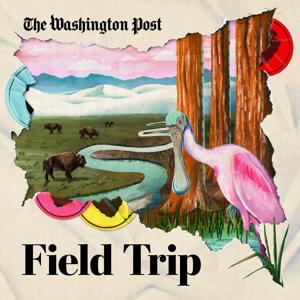
Journey through the messy past and uncertain future of America’s national parks. The Washington Post’s Lillian Cunningham ventures off the marked trail to better understand the most urgent stories playing out in five iconic landscapes today.
“Field Trip” is a new podcast series that will transport you to five national parks: Yosemite, Everglades, Glacier, White Sands and Gates of the Arctic.
More on the national parks:
• Journey into awe-inspiring landscapes
• A comprehensive guide to the America’s national parks
• Expert tips for visiting a national park
From the publisher's feed

90,954 Listeners

21,769 Listeners

43,840 Listeners

37,987 Listeners

43,332 Listeners

26,826 Listeners

9,198 Listeners

3,646 Listeners

1,381 Listeners

4,446 Listeners

111,875 Listeners

56,420 Listeners
2,478 Listeners

106 Listeners

5,225 Listeners

16,337 Listeners
2,779 Listeners

2,369 Listeners

15,919 Listeners

232 Listeners

294 Listeners

1,665 Listeners

1,241 Listeners
597 Listeners

405 Listeners

341 Listeners

167 Listeners

57 Listeners

32 Listeners

240 Listeners