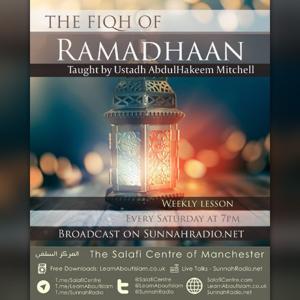
Fiqh of Ramaḍān – Ustādh Abdul Hakeem Mitchell

Fiqh of Ramaḍān – Ustādh Abdul Hakeem Mitchell

By Learn About IslamSociety & Culture
Download on the App Store

Fiqh of Ramaḍān – Ustādh Abdul Hakeem Mitchell episodes

  • Lesson 1 – Fiqh of Ramaḍān – Ustādh Abdul Hakeem Mitchell – The Definition, Wisdoms and Legislation of Fasting
    Kitāb aṣ-Ṣiyām (the Book of Fasting) of ʿUmdatul Aḥkām by al-Ḥāfiẓ ʿAbd al-Ghanī al-Maqdisī (raḥimahullāh), with the explanation of Shaykh Ibn ʿUthaymīn (raḥimahullāh), taught by Ustādh Abdul Hakeem Mitchell (hafidhahullāh)

    • Opening a series of lessons on the rulings and virtues of the month of Ramaḍān, continuing from the earlier ʿUmdatul Aḥkām lessons, now with the Book of Fasting

    • The linguistic meaning of ṣiyām: imsāk, to withhold from something

    • Its meaning in the Sharīʿah: withholding from food, drink and everything that breaks the fast, from the second (true) Fajr until sunset, as an act of worship for Allāh

    • The intention is required: leaving food and drink without intending worship is not a fast

    • Fasting was prescribed for the nations before us, a sign of its greatness; it shows the servant's love and glorification of his Lord

    • A wisdom of fasting: it reminds the servant of Allāh's blessing of food and drink, since things become clear by their opposites

    • The stages of its legislation: first a choice between fasting and feeding, with fasting better, then made obligatory, with the concession for the sick and the traveller to make up the days later

    Streamed LIVE online on SunnahRadio.net on 17/4/21
    19 min
  • Lesson 2 – Fiqh of Ramaḍān – Ustādh Abdul Hakeem Mitchell – Who Must Fast, Those Excused and What Breaks the Fast
    Kitāb aṣ-Ṣiyām (the Book of Fasting) of ʿUmdatul Fiqh by Ibn Qudāmah al-Maqdisī (raḥimahullāh), with the explanation of Shaykh ʿUbayd al-Jābirī (raḥimahullāh), taught by Ustādh Abdul Hakeem Mitchell (hafidhahullāh)

    • After the definition of fasting in the previous sitting, the rulings of the fast taken from different sources, here ʿUmdatul Fiqh of Ibn Qudāmah

    • Fasting Ramaḍān is obligatory on every Muslim who has reached puberty, is sane and is able to fast; children are commanded to fast when able, so that they become used to it

    • The crescent: the testimony of one trustworthy witness for entering Ramaḍān and two for leaving it, with Shaykh ʿUbayd's explanation of the difference

    • The four categories who break the fast: the sick and the traveller (breaking is better, and the fast counts if they fast); the woman in menses or post-natal bleeding (she must not fast and makes the days up); the pregnant or breastfeeding woman who fears for herself or her child (she makes up, and feeds a poor person for each day when the fear is for the child); the elderly and the chronically ill, who feed a poor person for each day

    • What breaks the fast, and what does not: forgetfulness or compulsion, dust or a fly entering the throat, water reaching the throat when rinsing the mouth, thoughts, and vomiting that overcomes a person

    • Whoever eats thinking it is still night, and it turns out to be day, must make up that fast

    Streamed LIVE online on SunnahRadio.net on 24/4/21

    26 min

About Fiqh of Ramaḍān – Ustādh Abdul Hakeem Mitchell

From the publisher's feed

Fiqh of Ramaḍān – Ustādh Abdul Hakeem Mitchell