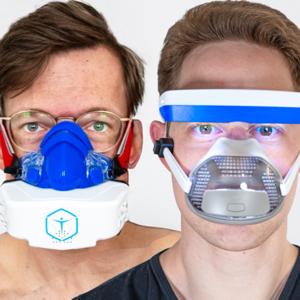
Rob and Stephan evaluate current AI features in wearables, break down a revolutionary paper predicting diseases from a single night of sleep, and discuss the future of medical integration into wearables.
📝Summary
In this episode, biological data scientists Rob and Stephan critically assess the current use of AI in the wearable market, ranging from the practical limitations of Oura and Whoop coaches to the potential of Google’s Gemini and Withings’ biomarker-tracking devices. The central scientific discussion focuses on "SleepFM," a groundbreaking foundation model published in Nature Medicine that utilizes self-supervised learning on polysomnography data to predict over 130 diseases, biological age, and mortality risk from a single night of sleep with unprecedented accuracy. The hosts speculate on how this technology could bridge the gap between clinical sleep labs and consumer wearables, potentially transforming preventive medicine through longitudinal tracking and non-invasive sensors.
⏳Chapters
00:00:00 AI in wearables and their current capabilities
00:01:21 AI Coaches: Testing the limits of Oura, Whoop, and Garmin
00:12:24 The Smart Toilet: Withings U-Scan and the value of waste biomarkers
00:23:00 Environmental Health: PVC off-gassing and vinyl records
00:28:15 Generative AI: ChatGPT Health and Claude for Life Sciences
00:37:17 SleepFM: A multimodal sleep foundation model for disease prediction
00:43:00 Self-Supervised Learning: How foundation models learn from sleep data
00:51:00 Disease Prediction: Predicting 130 conditions with unseen accuracy
00:59:46 The Future: Translating clinical models to consumer wearables
01:19:25 Community Feedback
📚Resources
Introducing Oura Advisor (not Coach)
WHOOP Coach Powered by OpenAI
Active Intelligence With Garmin Connect+
U-Scan Nutrio
News: Withings latest smart scale (‘longevity station’)
Withings Intelligence
Body Scan
Ketone bodies
Ketosis: Definition, Benefits & Side Effects
Keto Breath (“dragon breath”)
Air Quality Measurement Device
VINYL: Maybe it's time we had an intervention.
Introducing ChatGPT Health
Segment about AI in health(care)
Claude in healthcare and the life sciences
Clarification: Anthropic's product is called Claude with three differently sized models named Haiku, Sonnet, and Opus.
ICD-10 and ICD-11 Codes: International Classification of Diseases (ICD)
Understanding ICD-10 | Johns Hopkins Medicine
Healthcare Spending - Our World in Data
Federated learning
Swarm Learning
SleepFM - Nature Medicine paper
Code
Stanford Sleep Bench v1.0
Foundation model
Attention Is All You Need (Transformers)
Self-supervised learning
ImageNet
Fine-tuning
Reinforcement learning from human feedback (RLHF)
Polysomnography
Recurrent neural network (LSTM)
Long short-term memory (RNN)
C-index: Evaluating Survival Models
Best Wearables for Sleep: Scientific Rankings (2024-05)
Best Wearables for Sleep: Scientific Rankings (2025-10)
Philips Somnolyzer 24x7 for automated sleep staging
Whoop listened(?) and is looking for a VP for Foundation AI
AUROC of blood pressure to predict ASCVD ~0.80
Podcast Recommendation: Drug Story
Atorvastatin (Lipitor)
Life expectancy: Netherlands (82.2) vs Austria (82.0)
Diagnostic and Statistical Manual of Mental Illnesses (DSM-5)
Mechanism does not imply outcome. Outcome implies mechanism. - Layne Norton
No Biological Free Lunches
🎙️About
Fit For Science is a deep-dive podcast hosted by two biological data scientists, Rob and Stephan, exploring the intersection of research, health tech, and data-driven lifestyle design. The hosts provide evidence-based systems, layered with practical "N=2" personal experimentation, to cut through the noise in the health and fitness industry.
Learn more and subscribe on your favorite platforms:
YouTube
Spotify
Apple Podcasts
Amazon Music
⚠️Disclaimer: This podcast represents our own opinions and is for informational purposes only. It does not constitute medical or financial advice or a professional relationship.