
Sign up to save your podcasts
Or

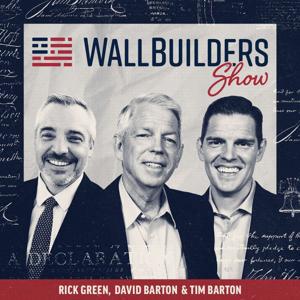

Flag Day isn’t a modern, made-up observance. It reaches back to a wartime decision on June 14, 1777, when the Second Continental Congress chose a national flag in the middle of the American Revolution. We walk through that origin story, why Francis Hopkinson belongs in the center of it, and how the familiar Betsy Ross claim shows what happens when legend outruns documentation. If you care about American history, the founding era, and civic literacy, this timeline changes how you see the symbol flying outside your home, school, or church.
Our friend Bill Federer joins us to lay out the surprisingly clear chain from the flag to the Pledge of Allegiance: early drafts in the late 1800s, public school adoption, and Woodrow Wilson’s 1916 declaration of National Flag Day. We also dig into presidential language around faith and freedom, including how leaders framed liberty of conscience and religious liberty as core American principles rather than optional extras.
Then we tackle the Cold War turning point: the 1954 addition of “one nation under God,” the role of the Knights of Columbus, and the story of a pastor who challenged President Eisenhower with a simple question, what truly makes America different from regimes that can mouth the same words about “liberty and justice.” We connect that to a bigger conversation about where rights come from, what happens when a nation forgets its past, and why education shapes culture. If this helped you, subscribe, share it for Flag Day, and leave a review so more people can find the show.
Support the show
 View all episodes
 By Tim Barton, David Barton & Rick Green

4.8
21322,132 ratings
Flag Day isn’t a modern, made-up observance. It reaches back to a wartime decision on June 14, 1777, when the Second Continental Congress chose a national flag in the middle of the American Revolution. We walk through that origin story, why Francis Hopkinson belongs in the center of it, and how the familiar Betsy Ross claim shows what happens when legend outruns documentation. If you care about American history, the founding era, and civic literacy, this timeline changes how you see the symbol flying outside your home, school, or church.
Our friend Bill Federer joins us to lay out the surprisingly clear chain from the flag to the Pledge of Allegiance: early drafts in the late 1800s, public school adoption, and Woodrow Wilson’s 1916 declaration of National Flag Day. We also dig into presidential language around faith and freedom, including how leaders framed liberty of conscience and religious liberty as core American principles rather than optional extras.
Then we tackle the Cold War turning point: the 1954 addition of “one nation under God,” the role of the Knights of Columbus, and the story of a pastor who challenged President Eisenhower with a simple question, what truly makes America different from regimes that can mouth the same words about “liberty and justice.” We connect that to a bigger conversation about where rights come from, what happens when a nation forgets its past, and why education shapes culture. If this helped you, subscribe, share it for Flag Day, and leave a review so more people can find the show.
Support the show
1,404 Listeners

2,572 Listeners
26,060 Listeners

181 Listeners
1,041 Listeners
5,434 Listeners

2,200 Listeners

65,560 Listeners

1,573 Listeners
1,558 Listeners

2,458 Listeners

691 Listeners
389 Listeners
13,198 Listeners
894 Listeners