Forest For The Future - Podcasts

Forest For The Future - Podcasts

By FSC InternationalTechnology
Download on the App Store

Forest For The Future - Podcasts episodes

  • Episode 89: Can Managed Forests Help Canada Meet Its 30x30 Conservation Goal?
    Title: Episode 89: Can Managed Forests Help Canada Meet Its 30x30 Conservation Goal?
    Author(s): Worm, Loa Dalgaard
    Description: Conservation is often associated with national parks and protected areas. But what about places that are delivering benefits for biodiversity while being managed for other purposes? In this episode of Forest for the Future, we return to Canada to explore Other Effective Area-Based Conservation Measures, or OECMs, and their potential contribution to the country’s 30x30 conservation goal.
    Host Loa Dalgaard Worm is joined by conservation expert Alison Woodley, Megan Lafferty, Director of Area-based Conservation at Nature Conservancy of Canada and Co-Chair of the IUCN World Commission on Protected Areas’ OECM Specialist Group, and Vivian Peachey, Director of Climate and Landscape Solutions at FSC Canada. Together, they unpack what OECMs are, how they differ from protected areas, and where FSC-certified forests could play a role.
    Drawing on a project involving FSC Canada, Ontario Nature and Environment and Climate Change Canada, the conversation explores the opportunities within conservation area networks in certified forests. It also examines the practical challenges of competing land uses, shared responsibilities and ensuring that conservation lasts beyond a forest management licence. The guests explain why FSC certification alone does not establish OECM recognition, and why Indigenous rights, leadership and free, prior and informed consent are foundational to this work.
    The episode also looks at FSC’s Verified Impact tool and its potential to connect measurable conservation outcomes with financial support for forest managers and their conservation partners, including Indigenous communities. Throughout the conversation, the focus is on what happens beyond the numbers: the quality of conservation, the people involved, and the arrangements needed to sustain biodiversity over time.
    52 min
  • Episode 88 – Fueling the Future — or the Fire? Biofuels, Energy Security and the Pressure on Forests
    Title: Episode 88 – Fueling the Future — or the Fire? Biofuels, Energy Security and the Pressure on Forests
    Author(s): Worm, Loa Dalgaard
    Description: In this episode of Forest for the Future, we step a little outside the forest itself and into the world of energy policy. With oil prices volatile and supply routes like the Strait of Hormuz under pressure, governments around the world are racing to secure their energy supply. One of the tools many are turning to is biofuels, blended into diesel and petrol and often produced from crops such as palm oil, soy, sugarcane and maize.
    That can sound like a climate win. But it can also mean new pressure on forests, peatlands, food systems and the communities who depend on them.
    Host Loa Worm is joined by Patrick Schröder, Senior Research Fellow at Chatham House, to explore whether biofuels can really deliver energy security without driving deforestation. From Indonesia’s move from B40 to B50, to Brazil’s ethanol experience, India’s blending programmes and the challenge of indirect land-use change and deforestation, the conversation looks at how today’s political decisions on energy can ripple all the way into the forest.
    The episode also explores the role of certification systems such as FSC, RSPO and ISCC. Patrick explains why certification can be a genuine safeguard, but not a political shortcut. Biofuels are neither a silver bullet nor a villain. It all depends on how they are governed.
    37 min
  • Episode 87: The New AI Frontier in Forestry: Inside UPM’s Arnibot
    Title: Episode 87: The New AI Frontier in Forestry: Inside UPM’s Arnibot
    Author(s): Worm, Loa Dalgaard
    Description: Artificial intelligence is rapidly entering the world of forestry. But what does that mean in practice?
    In this episode of Forest for the Future, we explore UPM’s AI-powered assistant, Arnibot, and what it reveals about the digital transformation of forest management. How can an AI agent support decision-making in complex forest operations? How do you ensure reliability, prevent hallucinations, and maintain alignment with standards and procedures? And what role could certification systems like FSC play in the future development of such tools?
    Host Loa Dalgaard Worm is joined by Joonas Palonen, AI Architect from UPM’s AI Center of Excellence, who unpack how Arnibot was developed, who uses it, and how it is continuously evaluated and improved. The conversation also looks ahead to what comes next—from multimodal interfaces and image recognition to potential applications in planning and certification contexts.
    This is a forward-looking conversation about technology, trust, and the evolving interface between artificial intelligence and responsible forest management.
    44 min
  • Episode 86: Climate Change and FSC – Managing for Climate Impacts featuring Christian Messier, Amy Cardinal, and Vivian Peachy
    Title: Episode 86: Climate Change and FSC – Managing for Climate Impacts featuring Christian Messier, Amy Cardinal, and Vivian Peachy
    Author(s): Worm, Loa Dalgaard
    Description: Climate change is no longer a distant risk for forests — it is already reshaping ecosystems, livelihoods, and forest management decisions across Canada and the world. In this final episode of the Climate Change and FSC mini-series, we turn our attention to managing forests for climate impacts.
    Host Loa Dalgaard Worm is joined by Christian Messier, Professor of Forest Ecology at UQO and UQAM, Amy Cardinal, Senior Fire Advisor at the Indigenous Leadership Initiative, and Vivian Peachy from FSC Canada. Together, they explore how climate-driven disturbances such as wildfire, insect outbreaks, drought, and flooding are increasing in frequency and intensity, and what this means for biodiversity, carbon storage, forest health, and community safety.
    The conversation examines how forest management practices may need to evolve in response to these impacts, drawing on ecological science, Indigenous knowledge, and practical experience from the ground. Topics include wildfire as both a natural process and a growing risk, the role of forest diversity and resilience, the difference between carbon storage and carbon sequestration, and the real risk of forests shifting from carbon sinks to net carbon sources under increasing disturbance.
    The episode also looks at how FSC Canada is working to adapt forest management standards to a changing climate, the challenges of balancing multiple forest values, and how tools such as climate vulnerability assessments, adaptive management, and collaboration across sectors can support climate-resilient forest stewardship.
    This episode concludes the three-part series developed in collaboration between FSC Canada and FSC Denmark, exploring how climate adaptation, science, and governance can come together to shape the future of responsible forest management.

    1 hr 5 min
  • Episode 85: Climate Change and FSC – What Is a Climate Vulnerability Assessment? Featuring Dr. Sheri Andrews-Key and Kevin Gillis
    Title: Episode 85: Climate Change and FSC – What Is a Climate Vulnerability Assessment? Featuring Dr. Sheri Andrews-Key and Kevin Gillis
    Author(s): Worm, Loa Dalgaard
    Description: Climate change is often described as uncertain and complex, yet forest managers still need to make decisions today. In this second episode of the Climate Change and FSC mini-series, we move from framing the challenge to exploring one of the key practical tools used to support climate adaptation in forestry: climate vulnerability assessments.
    Host Loa Dalgaard Worm is joined by Dr. Sheri Andrews-Key from the University of British Columbia and Kevin Gillis from Mistik Management Ltd. Together, they unpack what a climate vulnerability assessment is, why it has become an important tool for climate adaptation, and how it can be applied in real-world forest management.
    Drawing on hands-on experience and a detailed case study from Mistik Management, the conversation explores how vulnerability assessments help identify climate risks such as wildfire, extreme weather, and operational disruption, and how they can be embedded into existing forest management systems, certification requirements, and long-term planning. The episode also looks at how these processes support better decision-making, accountability, and engagement with communities and Indigenous knowledge, while remaining useful in the face of ongoing uncertainty.
    This episode is part of a three-part series examining how FSC Canada is working to integrate climate adaptation into forest management standards and to develop practical tools that support forest owners and managers in responding to climate change.
    57 min
  • Episode 84: Climate change and FSC – Setting the stage, featuring Subhra Bhattacharjee, Director General at FSC International, and Valarie Courtois from the Indigenous Leadership Initiative
    Title: Episode 84: Climate change and FSC – Setting the stage, featuring Subhra Bhattacharjee, Director General at FSC International, and Valarie Courtois from the Indigenous Leadership Initiative
    Author(s): Worm, Loa Dalgaard
    Description: Climate change is already reshaping forest ecosystems around the world, with profound implications for how forests are managed, governed, and protected. In this first episode of the Climate Change and FSC mini-series, we set the stage by zooming out and exploring why climate change matters for forests — and why systems like FSC must adapt in response.
    Host Loa Dalgaard Worm is joined by Subhra Bhattacharjee, Director General at FSC International, and Valarie Courtois from the Indigenous Leadership Initiative. Together, they unpack how FSC understands climate change as both a mitigation and an adaptation challenge, and why accounting for climate risks is becoming essential for sustainable forest management and for societies more broadly.
    The conversation explores how climate change is already affecting forests on the ground, from increasing wildfire and insect outbreaks to changes in wildlife behaviour and ecosystem stability. It also examines the difference between climate mitigation and adaptation in a forestry context, the economic and social costs of inaction, and the role of incentives, markets, and certification in supporting climate-resilient forest stewardship.
    Drawing on Indigenous knowledge systems and global perspectives, this episode highlights why planning for climate change is no longer optional, and how collaboration, leadership, and action across sectors are needed to safeguard forests and the communities that depend on them.
    This episode opens a three-part series focusing on how climate adaptation is being integrated into forest management standards and on-the-ground practice.
    52 min
  • Episode 83: While we wait for EUDR - what could be done to get ready?
    Title: Episode 83: While we wait for EUDR - what could be done to get ready?
    Author(s): Worm, Loa Dalgaard
    Description: The EU Deforestation Regulation is entering a period of uncertainty, with discussions around timing and implementation still ongoing. Recorded just one day after a major announcement about a possible additional delay, this episode of Forest for the Future focuses on what companies, authorities, and supply chain actors can do while we wait for EUDR.
    Rather than revisiting headlines, the conversation moves into the practical realities of readiness. Drawing on insights from a high-level FSC-hosted webinar, the episode explores what competent authorities are likely to check in audits, what due diligence looks like beyond documentation, and where companies are struggling most in practice. You’ll hear directly from enforcement authorities with hands-on experience, legal experts unpacking why uniform implementation matters, and global perspectives on how producer countries and supply chains are adapting.
    The episode also looks at why systems such as FSC remain essential during this waiting period. Certification, traceability tools, and risk assessments are discussed not just as compliance mechanisms, but as ways to build credible due diligence systems and prepare for long-term forest-positive impact.
    While EUDR may be delayed or debated, the direction of travel is clear. This episode offers concrete guidance on how to use this time productively — to strengthen systems, reduce risk, and be better prepared for what comes next.
    Featuring insights from:
    – EU Commission: Gabor Lovasi
    – Forest Stewardship Council (FSC): Trevor Armel and Matteo Mascolo
    – EUDR Dutch Competent Authority: Jessica van Zetten
    – ClientEarth: Michael Rice
    – World Bank: Melvin Spreij
    1 hr 1 min
  • Episode 82: Reclaimed Materials & Circular Models in FSC: What’s Next for Chain of Custody? (Episode 2 of 2)
    Title: Episode 82: Reclaimed Materials & Circular Models in FSC: What’s Next for Chain of Custody? (Episode 2 of 2)
    Author(s): Worm, Loa Dalgaard
    Description: In this second episode of our two-part mini-series on the revision of the FSC Chain of Custody standard, we turn our focus toward one of the most forward-looking elements of the revision: reclaimed materials and circular business models. Circularity is rapidly becoming a central part of how companies think about sustainability, and FSC is now taking major steps to make sure the certification system can support models such as leasing, take-back, repair, and reuse.
    Host Loa Worm is joined by Morten Brodde, Senior Specialist and Analyst at the FSC Circularity Hub, and Doug Patterson, Director at Renewable Strategies and member of the Chain of Custody Working Group. Together they explore what FSC is doing to enable circularity, why this transition is happening now, and how new requirements on reclaimed materials could reshape the experience of certificate holders and create new opportunities in the market.
    The discussion covers the types of circular models FSC is evaluating, the challenges of bringing them into a certification system, and what companies may need to adapt in order to meet future expectations. The conversation also touches on pre-consumer wood, the proposals under consultation, and the debate around whether salvaged wood from urban contexts should be included in the standard.
    This episode provides a clear, practical overview of how circularity may become a bigger part of FSC — and what stakeholders should pay attention to as the first round of consultation opens.
    41 min
  • Episode 81: What Is Next in FSC Chain of Custody? A Glimpse Into the Revision Process (Episode 1 of 2)
    Title: Episode 81: What Is Next in FSC Chain of Custody? A Glimpse Into the Revision Process (Episode 1 of 2)
    Author(s): Worm, Loa Dalgaard
    Description: In this episode of Forest for the Future, we explore one of the most significant ongoing developments in the FSC system: the full revision of the FSC Chain of Custody standard. This framework ensures that materials carrying the FSC label are tracked responsibly through every step of the supply chain, and the current revision may introduce some of the most meaningful updates in more than a decade.
    Host Loa Worm is joined by César Gonçalves, Programme Manager for Controlled Wood and Chain of Custody at FSC and lead on the revision process, and Emily White, Policy Manager for the same area focusing especially on social requirements. Together they unpack why FSC is revising the standard now, how topics for revision are selected, and which of the proposed changes may have the biggest impact on companies, auditors and the system as a whole.
    The conversation explores topics including simplification of the system, increased use of risk-based approaches, the potential merging of several standards into one, expanded flexibility for multi-site and group certification, updates to the treatment of pre-consumer materials, and a strengthened approach to workers’ rights. Emily provides a deep dive into the evolution of the social requirements, why further alignment with global labour expectations is needed, and how FSC aims to balance ambition with practicality for companies.
    The episode also guides listeners through the current public consultation: how to participate, what to expect from the process, and how stakeholder input directly shapes the next iteration of the standard.
    If you would like to participate in the consultation, find out more here: https://connect.fsc.org/chain-custody-certification/revision-chain-custody-standards
    This is the first of two episodes on the Chain of Custody revision. In the next episode, we turn to reclaimed materials and FSC’s work to support circular business models with high innovation potential.
    40 min
  • Episode 80 – Circular economy in a volatile world: Building resilience through circular systems
    Title: Episode 80 – Circular economy in a volatile world: Building resilience through circular systems
    Author(s): Worm, Loa Dalgaard
    Description: In this special episode of Forest for the Future, we dive into the intersection of circular economy, forest resources, and global resilience.
    Host Loa Worm, in her role as leader of the FSC Circularity Hub, convenes an expert panel to discuss how circular thinking can strengthen resource security in an era of geopolitical volatility.
    Guests include Luisa Santiago from the Ellen MacArthur Foundation, Nina Grießhammer, Sebastian Mandiola of Arauco, and FSC’s own Fabian Farkas—each bringing a unique perspective on how industries, NGOs, and certification systems must evolve to drive a regenerative, bio-based future.
    The discussion touches on everything from the 45% of emissions linked to production and consumption patterns to the urgent need to use wood more wisely and the pivotal role of FSC in enabling circular transformation.
    This episode is an honest, forward-looking conversation about how collaboration, innovation, and leadership can turn the circular economy from theory into action.
    Topics Covered
    • The key role of forestry and agriculture in building economic resilience
    • How companies like Arauco are turning circular principles into practice
    • The risks of overreliance on virgin wood—and how to rethink its use
    • Policy gaps and the need for better alignment on circularity incentives
    • The role of FSC’s Circularity Hub as a driver of systems change
    42 min

About Forest For The Future - Podcasts

From the publisher's feed

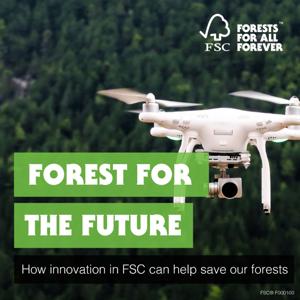
How innovation in FSC can help save our forests

More shows like Forest For The Future - Podcasts

The Daily by The New York Times

The Daily

111,875 Listeners

The Ezra Klein Show by New York Times Opinion

The Ezra Klein Show

15,919 Listeners