
Sign up to save your podcasts
Or

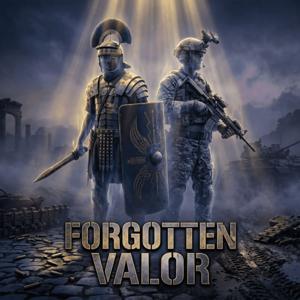


What did it actually feel like to stand inside an ancient Greek shield wall when thousands of armored men collided in close formation?
This episode explores the brutal mechanics and hidden human experience of hoplite warfare in ancient Greece, where heavily armed infantry formations may have engaged in far more physically intense combat than many historians once believed.
At the center of the debate is the concept of othismos, often translated as the “push” or “shoving phase” of battle. For decades, scholars have argued over whether this was a metaphorical description of battlefield pressure or a literal, crushing physical force where soldiers drove into each other in tightly packed formations. Recent interpretations combining experimental archaeology, biomechanics, and military reconstruction suggest the latter may have been far more physically extreme than traditionally assumed.
We examine how the hoplite panoply—the bronze helmet, bell cuirass, greaves, and especially the distinctive round shield—may have been engineered not only for protection from weapons, but to survive the compressive forces generated in mass infantry collisions. Some researchers propose that these designs reflect a practical response to the risk of suffocation, crushing pressure, and battlefield immobility within dense formations.
The episode also traces the evolution of early Greek warfare from the more individualized combat traditions of the Mycenaean period to the highly organized phalanx system that defined classical Greece. This transformation did not just change tactics—it reshaped the physical and psychological demands placed on soldiers.
Beyond the mechanics of battle, we also explore the human cost of this style of warfare. Fighting inside a shield wall meant limited visibility, restricted movement, intense noise, and overwhelming sensory pressure. Modern interpretations suggest that hoplite combat may have produced forms of acute psychological and physiological trauma that were never recorded in surviving historical texts, but are increasingly inferred through experimental reconstruction.
By combining historical sources with modern scientific analysis, this episode investigates whether ancient Greek warfare was not only a tactical system, but also a physically engineered environment designed around survival under extreme mechanical stress.
Ancient Greece, Hoplite warfare, Shield wall, Phalanx formation, Othismos, Ancient combat, Military history, Experimental archaeology, Bronze Age warfare, Mycenaean warfare, Greek soldiers, Ancient battlefield tactics, Combat trauma, Military biomechanics, Ancient armor design, Bronze cuirass, Historical warfare, Ancient psychology, Classical Greece, War history podcast, Ancient military engineering
#AncientGreece #MilitaryHistory #Hoplite #Phalanx #AncientWarfare #Archaeology #CombatHistory #ExperimentalArchaeology #HistoryPodcast #AncientSoldiers
Delta Force selection, SAS inspiration, JSOC operations, and the Long Walk—this is the story of America’s most secretive Tier 1 special operations unit.
In this deep dive, we explore the origins of the 1st Special Forces Operational Detachment-Delta (Delta Force), founded by Colonel Charles Beckwith after observing the British SAS and recognizing a critical gap in U.S. counterterrorism capability.
We break down the brutal selection process known as the “Long Walk,” a grueling endurance and psychological assessment designed to eliminate all but the most capable operators. Only a fraction of candidates survive the transition into full Operator Training Course status.
The episode also examines Delta Force’s role within JSOC alongside SEAL Team 6, highlighting differences in culture, recruitment, mission specialization, and operational secrecy. From hostage rescue and direct action missions to modern counterterrorism deployments, Delta Force remains one of the most classified units in the world.
We also cover the evolution of modern special operations equipment, including the development of platforms like the HK416 and the influence of figures such as Larry Vickers in shaping close-quarters combat weapon systems.
This is not just military history—it is the architecture of modern special operations warfare.
00:00 What is Delta Force? Origins and purpose
03:42 Charles Beckwith and the SAS influence
07:18 Why the U.S. needed a counterterrorism unit
11:05 Formation of 1st SFOD-D in 1977
15:30 The Long Walk selection explained
19:40 Psychological screening and Operator Training Course
24:10 SEAL Team 6 vs Delta Force differences
28:35 JSOC and Tier 1 special operations structure
32:50 Real-world missions and counterterrorism evolution
37:15 Weapons development and the HK416 program
41:00 Larry Vickers and CQB modernization
44:20 Culture of secrecy inside Delta Force
47:30 Why Delta Force remains unknown to the public
Delta Force explained, Charles Beckwith Delta Force, SAS inspiration Delta Force, Long Walk selection Delta Force, SEAL Team 6 vs Delta Force, JSOC operations explained, Tier 1 special operations units, HK416 development history, Larry Vickers Delta Force, US Army special forces Delta, counterterrorism units USA, hostage rescue units, elite military selection process, special operations history, classified military units, modern warfare special forces, Delta Force training pipeline, black ops units explained, Awebound Adventures military history
#DeltaForce #JSOC #MilitaryHistory #SpecialForces #SEALTeam6 #USArmy #SpecialOperations #CounterTerrorism #HK416 #LongWalk #AweboundAdventures #MilitaryDocumentary #EliteUnits #WarHistory #Defense
Pax Mongolica, Silk Road trade, Mongol Empire economy, and early globalization—this is how one of history’s most powerful war machines unintentionally built the foundations of the modern global economy.
In this deep historical analysis, we explore how the Mongol Empire transformed Eurasia after the collapse of the Khwarazmian Empire following the Otrar diplomatic crisis. What began as one of the most violent expansions in history evolved into an unprecedented system of continental stability known as the Pax Mongolica.
Under Mongol rule, the Silk Road was not only reopened but structurally reinforced through state protection, regulated trade corridors, and a highly efficient postal relay network known as the Yam system. Merchants moved across vast distances with standardized travel permissions resembling early passports, while financial risk was redistributed through partnerships such as the Ortoq system, which connected local merchants with imperial capital.
While earlier historical narratives emphasized destruction and collapse, modern interpretations increasingly highlight the economic infrastructure the Mongols built across Central Asia. Archaeological and environmental research suggests that many regional urban changes were also influenced by climate variation and demographic shifts, not solely military action.
The result was a connected trade system stretching from China to the Mediterranean, accelerating the flow of goods, ideas, technologies, and capital across continents. In many ways, Pax Mongolica represents one of the earliest forms of organized globalization.
00:00 Pax Mongolica and why it matters
03:12 The Mongol conquest of Khwarazmia
06:48 The Otrar crisis and diplomatic breakdown
10:25 From conquest to imperial stabilization
14:10 The Silk Road before Mongol unification
17:36 Rebuilding continental trade routes
21:22 The Yam postal relay network
25:48 Early passport systems and travel control
29:12 The Ortoq merchant partnership system
33:18 Security, logistics, and caravan protection
37:02 Reinterpreting Mongol destruction narratives
40:18 Environmental and demographic influences
Pax Mongolica explained, Mongol Empire trade system, Silk Road economy history, Ortoq system explained, Mongol postal system Yam, Khwarazmian Empire fall, Otrar incident history, medieval global trade networks, Silk Road infrastructure, Mongol globalization, Central Asia trade history, early globalization origins, Genghis Khan economic legacy, steppe empire trade routes, medieval finance systems, Eurasian commerce history, Mongol Empire administration, world history documentary, Awebound Adventures
#PaxMongolica #MongolEmpire #SilkRoad #WorldHistory #GlobalTrade #EconomicHistory #CentralAsia #GenghisKhan #MedievalHistory #TradeRoutes #HistoryDocumentary #AweboundAdventures #Geopolitics #AncientEconomy #Education
Mongol conquests, Nishapur destruction, and the fall of Kiev—this is how medieval Eurasia was rewritten through fire and empire.
In this deep historical analysis, we explore the sweeping expansion of the Mongol Empire across Eurasia, focusing on two of its most devastating and transformative impacts: the siege and destruction of Nishapur and the collapse of key Russian principalities including Kiev.
Once a thriving intellectual and commercial hub on the Silk Road, Nishapur represented the height of Persian urban culture—until it was violently erased during Mongol expansion. Meanwhile, in Eastern Europe, the invasion of Kiev marked a turning point that reshaped governance, trade networks, and military strategy across Slavic regions.
We also break down how contemporary sources referred to the Mongols as “Tartars,” and how this identity shaped early European perceptions of the steppe empires.
Ultimately, this episode reveals how a single wave of conquest fundamentally transformed urban civilization, trade infrastructure, and political systems across Persia and Eastern Europe.
00:00 The Mongol expansion across Eurasia
03:25 Who were the “Tartars” in medieval chronicles
07:10 Nishapur before the Mongol conquest
11:45 The destruction of Nishapur explained
16:30 The Silk Road and its collapse
20:15 The siege of Kiev and Russian principalities
24:40 Urban devastation across Eurasia
29:05 How Mongol warfare changed governance
33:20 Cultural and religious impact of conquest
37:10 Rebuilding after total destruction
40:45 Long-term legacy of Mongol expansion
Mongol conquests, Nishapur history, siege of Kiev, Tartars history explained, Silk Road collapse, Mongol Empire expansion, medieval Eurasia history, destruction of Nishapur, Kiev invasion Mongols, Persian cities Mongol destruction, Russian principalities history, steppe empire warfare, Genghis Khan legacy, medieval trade networks, Eurasian history documentary, Mongol warfare tactics, historical city destruction, Silk Road cities fall, Awebound Adventures history
#MongolEmpire #History #SilkRoad #Nishapur #Kiev #MedievalHistory #Documentary #AweboundAdventures #WorldHistory #AncientEmpires #Geopolitics #HistoryExplained #Eurasia #GenghisKhan #Education