
Sign up to save your podcasts
Or

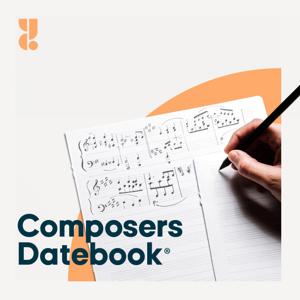

Because it's often played at weddings, the Trumpet Voluntary is one piece of Baroque music that just about everyone has heard. Once attributed to famous 17th century British composer Henry Purcell, this music was, in fact, composed by Purcell’s slightly younger and not-so-famous contemporary Jeremiah Clarke.
Clarke was born around 1674 and sang as a boy soprano in London’s Chapel Royal. After his voice changed, he became a choir director and rejoined the Chapel Royal as an organist in 1700. Tragically, on December 1, 1707, Clarke shot himself — according to some contemporary accounts as the result of a hopeless love affair.
And speaking of such things: also on today’s date — in 1886 — the American premiere of Tristan Und Isolde, Richard Wagner’s classic opera of ill-fated passion, took place at the Metropolitan Opera in New York. Anton Seidl, a protégé of Wagner, conducted. While composing Tristan, Wagner wrote to his lover, Mathilde Wesendonck: “Child! This Tristan is turning into something fearsome ... the opera will probably be banned ... only mediocre performances can save me! Good performances will drive people mad!”
If not driven mad, American audiences in 1886 were at least remarkably enthusiastic. The Musical Courier reported that “the audience filled every available seat and listened to the performance, which lasted until nearly midnight, with an attention and genuine enthusiasm unequaled in the musical history of this land.”
Jeremiah Clarke (ca. 1674-1707): Trumpet Voluntary (Prince of Denmark March); Maurice André, trumpet; Jane Parker-Smith, organ; EMI 64899
 View all episodes
 By American Public Media

4.7
176176 ratings
Because it's often played at weddings, the Trumpet Voluntary is one piece of Baroque music that just about everyone has heard. Once attributed to famous 17th century British composer Henry Purcell, this music was, in fact, composed by Purcell’s slightly younger and not-so-famous contemporary Jeremiah Clarke.
Clarke was born around 1674 and sang as a boy soprano in London’s Chapel Royal. After his voice changed, he became a choir director and rejoined the Chapel Royal as an organist in 1700. Tragically, on December 1, 1707, Clarke shot himself — according to some contemporary accounts as the result of a hopeless love affair.
And speaking of such things: also on today’s date — in 1886 — the American premiere of Tristan Und Isolde, Richard Wagner’s classic opera of ill-fated passion, took place at the Metropolitan Opera in New York. Anton Seidl, a protégé of Wagner, conducted. While composing Tristan, Wagner wrote to his lover, Mathilde Wesendonck: “Child! This Tristan is turning into something fearsome ... the opera will probably be banned ... only mediocre performances can save me! Good performances will drive people mad!”
If not driven mad, American audiences in 1886 were at least remarkably enthusiastic. The Musical Courier reported that “the audience filled every available seat and listened to the performance, which lasted until nearly midnight, with an attention and genuine enthusiasm unequaled in the musical history of this land.”
Jeremiah Clarke (ca. 1674-1707): Trumpet Voluntary (Prince of Denmark March); Maurice André, trumpet; Jane Parker-Smith, organ; EMI 64899

6,924 Listeners

38,783 Listeners

8,791 Listeners

9,231 Listeners

5,801 Listeners

929 Listeners

1,389 Listeners

1,293 Listeners
3,148 Listeners

1,976 Listeners
525 Listeners
182 Listeners

13,760 Listeners
3,074 Listeners

246 Listeners
28,168 Listeners

435 Listeners

5,489 Listeners
2,188 Listeners

14,130 Listeners

6,423 Listeners
2,517 Listeners

4,837 Listeners

577 Listeners

250 Listeners