
Sign up to save your podcasts
Or



Send us Fan Mail
Conjugate Your Future: 50 Essential French Verbs for Success in a French Country
This unique learning podcast targets newcomers to Canada (or any other french countries) who want to master essential French verbs for successful integration. Unlike traditional methods, every exercise uses real immigration situations: job searching, community integration, administrative procedures, and Canadian daily life.
What you'll discover:
Proven pedagogical format: Listen to the sentence with the infinitive, conjugate mentally during the pause, then check with immediate correction.
Perfect for beginner to intermediate learners who want to progress effectively while familiarizing themselves with immigration vocabulary.
Key Features:
Whether you're preparing for job interviews, citizenship exams, or simply want to communicate more confidently in your new home, this podcast provides the linguistic foundation you need for successful integration into Canadian society.
Duration: ~15 minutes | Level: A2-B1
----------------------------------------------------------------------------------------------------------
Nous proposons 50 exercices de conjugaison au présent de l'indicatif avec les verbes les plus essentiels des trois groupes. Ces verbes pratiques sont sélectionnés pour leur utilité dans vos conversations quotidiennes et votre parcours d'intégration.
• Exercices sur les verbes du premier groupe (-ER) comme parler, chercher, étudier
• Pratique des verbes du deuxième groupe (-IR) comme choisir, finir, réussir
• Entraînement aux verbes irréguliers du troisième groupe (être, avoir, faire)
• Phrases contextualisées autour de l'expérience d'immigration et d'intégration
• Méthode d'apprentissage: écouter, réfléchir, répéter
• Récapitulatif des particularités de chaque groupe de verbes
Continuez à pratiquer et n'oubliez pas: chaque petit progrès vous rapproche de votre objectif d'intégration réussi. Je vous souhaite le plus beau des succès dans votre intégration en français. Ne lâchez surtout pas!
Support the show
Francisation Réussie Avec Annie - YouTube
Pour vous aider à approfondir votre Français.
Ressources disponibles.
Send us Fan Mail
Ready to conquer the final frontier of French verbs?
Master the 20 Most Essential French Irregular Verbs!
6 Simple Families That Unlock ALL French Irregular Verbs.
How to Memorize 20 Irregular Verbs in One Week (Day-by-Day Plan Included)
In this complete Episode 77, you'll master the mysterious 3rd group - those tricky irregular verbs that native French speakers use every single day!
What You'll Learn:
✅ The 20 most essential irregular verbs for daily French communication
✅ 6 smart verb families that make irregulars predictable
✅ The 4 absolute pillars: être, avoir, aller, and faire
✅ Memory tricks and patterns to never forget conjugations
✅ Complete 7-day practice plan with daily exercises
Why This Matters: These aren't just "grammar rules" - these are the verbs that unlock natural, fluent French conversation. From "je suis" to "nous allons," these irregular verbs appear in 80% of everyday French sentences!
Perfect For:
• Intermediate French learners ready for the next level
• Students who've mastered 1st and 2nd group verbs
• Anyone frustrated with irregular verb conjugations
• Learners who want to sound more natural and confident
Bonus Features:
🎯 Interactive conjugation practice
🎯 Real-life sentence examples
🎯 Mental exercises you can do anywhere
🎯 Professional tips from 150+ years of French teaching tradition
Complete your French verb journey and speak with the confidence of a native speaker!
----------------------------------------------------------------------------------------------
Nous nous attaquons au défi ultime de la conjugaison française : les verbes du troisième groupe au présent de l'indicatif. Ces verbes irréguliers, bien que représentant seulement 10% des verbes français, sont les plus fréquemment utilisés dans la communication quotidienne.
• Les verbes du troisième groupe incluent tous les verbes qui ne sont ni du premier groupe (er régulier) ni du deuxième groupe (ir avec i-s-s-o-n-s)
• Classement en six familles pour faciliter l'apprentissage : verbes en IR type partir, verbes en OIR, verbes en ANDRE, super irréguliers essentiels, verbes de communication, verbes d'action quotidienne
• Focus sur 20 verbes essentiels incluant être, avoir, aller, faire, voir, savoir, pouvoir, prendre, comprendre
• Identification des irrégularités récurrentes comme la perte de consonnes finales au singulier pour certains verbes
• Exercices pratiques pour maîtriser la conjugaison : phrases à compléter, chasse aux erreurs, speed challenge
• Stratégie d'apprentissage avec un programme sur 7 jours pour mémoriser efficacement tous les verbes présentés
La semaine prochaine, nous explorerons le futur proche, un temps composé qui se conjugue avec le verbe aller. Pour progresser rapidement, procurez-vous le Bescherelle Conjugaison, l'outil indispensable que je recommande à tous mes étudiants.
Support the show
Francisation Réussie Avec Annie - YouTube
Pour vous aider à approfondir votre Français.
Ressources disponibles.
Send us Fan Mail
Canada is changing its immigration rules in 2025, and it's scary? Don't panic!
The Canadian dream isn't dead, it just needs a new strategy. We're giving it to you!
In this episode, we break down TOGETHER the new Canadian immigration policies without complicated jargon. You'll discover why these changes actually create a GOLDEN opportunity for certain people... and how YOU can be one of them!
What you'll learn:
✅ The REAL numbers behind the new restrictions (explained simply)
✅ Why being already in Canada gives you a HUGE advantage
✅ 3 concrete actions to take TODAY if you have temporary status
✅ Why French becomes your superpower in Quebec
✅ The 3-step action plan to master French
✅ Magic phrases that open all doors in Quebec
🚀 BONUS: Discover how to get PAID $200/week to learn French!
😀 Learning French in Québec👉 Francisation Québec
👉 Impact du projet de loi 96 sur les Cégeps
Canada is changing its immigration rules following a record influx of newcomers in 2023, creating both challenges and opportunities. These changes favor individuals already in Canada with temporary status, giving special priority to those who speak French—especially in Quebec.
Whether you're an international student, temporary worker, or preparing your immigration project, this episode gives you the keys to transform uncertainty into a winning action plan.
-------------------------------------------------------------------------------------------------------
Le Canada modifie ses règles d'immigration suite à un afflux record de nouveaux arrivants en 2023, créant à la fois défis et opportunités. Ces changements favorisent les personnes déjà présentes sur le territoire canadien avec un statut temporaire, accordant une priorité particulière à ceux qui maîtrisent le français, surtout au Québec.
😀 Apprendre le Français au Québec👉 Francisation Québec
👉 Impact du projet de loi 96 sur les Cégeps
• Explication des nouvelles restrictions d'immigration : un ralentissement stratégique plutôt qu'un arrêt complet
• Opportunité majeure pour les résidents temporaires déjà au Canada : 40% des résidences permanentes leur seront réservées
• Trois conseils pratiques : organisation des documents, étude des programmes d'immigration, validation de l'expérience professionnelle
• L'importance cruciale du français pour s'installer au Québec, avec 75% des cours en français requis pour le PEQ
• Ressources gratuites comme Francisation Québec et stratégies d'immersion quotidienne pour apprendre le français
• Réponses aux questions fréquentes sur les délais, renouvellements de permis et perspectives d'avenir
N'
Support the show
Francisation Réussie Avec Annie - YouTube
Pour vous aider à approfondir votre Français.
Ressources disponibles.
Send us Fan Mail
We explore French second group verbs, essential in daily communication despite their limited number. These verbs are recognized by their -IR ending and the addition of "ISS" syllables in certain conjugations.
Get yourself the Bescherelle Conjugation guide. It’s the secret French people use to never make mistakes with verbs.
For over 150 years, it’s been THE go-to reference every French speaker relies on to master their verbs."
• Clear definition of second group verbs (-IR ending and "ISSONS" with nous)
• Conjugation method in the present indicative with specific endings
• Presentation of the 20 most used second group verbs, organized into 4 categories
• Practical exercises to master conjugation (sentence completion, opposites game, dialogues)
• Tips for regular practice and integrating these verbs into your daily French
• Benefits of mastering first and second group verbs that cover the majority of situations
Keep practicing and don't hesitate to listen to this lesson again to consolidate your learning. Thank you for choosing to practice your French with me, and see you next week for a new episode on third group verbs. I wish you the greatest success in your French integration.
--------------------------------------------------------------------------------------------------------------
Nous explorons les verbes du deuxième groupe en français, essentiels dans la communication quotidienne malgré leur nombre limité. Ces verbes se reconnaissent à leur terminaison en -IR et à l'ajout des syllabes "ISS" dans certaines conjugaisons.
• Définition claire des verbes du deuxième groupe (terminaison en -IR et "ISSONS" avec nous)
• Méthode de conjugaison au présent de l'indicatif avec les terminaisons spécifiques
• Présentation des 20 verbes du deuxième groupe les plus utilisés, organisés en 4 catégories
• Exercices pratiques pour maîtriser la conjugaison (phrases à compléter, jeu des contraires, dialogues)
• Conseils pour pratiquer régulièrement et intégrer ces verbes dans votre français quotidien
• Avantages de maîtriser les verbes du premier et du deuxième groupe qui couvrent la majorité des situations
Continuez à pratiquer et n'hésitez pas à réécouter cette leçon pour bien consolider ces apprentissages. Merci de choisir de pratiquer votre français avec moi et à la semaine prochaine pour un nouvel épisode sur les verbes du troisième groupe. Je vous souhaite le plus beau des succès dans votre intégration en français.
Support the show
Francisation Réussie Avec Annie - YouTube
Pour vous aider à approfondir votre Français.
Ressources disponibles.
Send us Fan Mail
From Immigration to Integration: Your Child's School Journey in Quebec!
Learn Quebec's school system, enrollment steps & success strategies. 30 min of gold! 🎒📚Every child deserves to thrive in their new home!
Welcome to a special episode of our francization series with Annie!
This 30-minute guide is designed specifically for immigrant families navigating Quebec's education system for the first time.
Whether you're a parent trying to enroll your child or a student preparing for your academic journey, this episode covers everything you need to know for a successful school year. We walks you through the Quebec school system, from kindergarten to secondary school, explaining the unique services available to newcomers.
Discover the step-by-step enrollment process, required documents, and what to expect during your child's evaluation. Learn about specialized welcome classes (classes d'accueil) and SASAF services that help children integrate while learning French. We'll share practical tips for parents on supporting their children's academic success, even when studying in a different language than spoken at home.
This episode also highlights valuable resources like Alloprof, community organizations, and school support services that make the transition smoother for immigrant families. From homework strategies to cultural integration, we cover the essential habits that lead to academic achievement.
Join thousands of families who have successfully integrated into Quebec's welcoming education system. Your child's bright future starts here!
Allo Prof
Centre de services Scolaires de Montréal
Direction de l'intégration linguistique et de l'éducation interculturelle Ministère de l'Éducation du Québec 600 rue Fullum, 10e étage, Montréal (Québec) H2K 4L1
Perfect For:
•Parents preparing to enroll their children in Quebec schools
•Families arriving mid-school year
•Students transitioning to Quebec's education system
•Community workers supporting immigrant families
•Anyone wanting to understand Quebec's approach to educational integration
Special Features:
•Real-world enrollment dialogue between immigrant parent and school official
Because every child deserves to thrive in their new home!
--------------------------------------------------------------------------------------------------------
Et si l'école devenait votre meilleur allié d'intégration
Nous plongeons dans le système scolaire québécois pour les familles immigrantes, expliquant comment transformer la rentrée en une expérience positive d'intégration. Cet épisode détaille toutes les ressources et stratégies pour naviguer avec confiance dans cette nouvelle réalité éducative.
• Le système scolaire québécois est gratuit, accessible à tous les enfants résidant au Québec indépendamment du statut d'immigration
• L'inscription peut se faire à tout moment de l'année, pas seulement en septembre
• Les classes d'accueil (SASAF) offrent un tremplin linguistique et culturel pour les enfants allophones
• Les parents jouent un rôle crucial même sans maîtriser parfaitement le français
• Maintenir la langue maternelle à la maison est un atout, pas un obstacle
• De nombreuses ressources gratuites existent : Alloprof, bibliothèques municipales, organismes communautaires
• Une organisation structurée, une routine stable et l'encouragement à la lecture favorisent la réussite
• Chaque
Support the show
Francisation Réussie Avec Annie - YouTube
Pour vous aider à approfondir votre Français.
Ressources disponibles.
Send us Fan Mail
🤯 Did you know there are 8 ways to write the "é" sound in French? And why do "roi" and "froid" not rhyme with "droit"?
In episode 73, we demystify it all!
YouTube Link for the "Oi" et "è" sounds
✅ The trick to telling the "è" sound and the "oi" sound apart.
✅ The secret list of the 8 spellings for the "é" sound.
An essential episode to perfect your French.
We explore two essential sounds that give French its unique musicality: the "é" and "oi" sounds. These characteristic diphthongs are the key to developing an authentic and natural French accent.
Repeat this magic sentence ten times every day to rapidly improve your pronunciation: "Moi, j'ai choisi d'apprendre un français parfait" (I have chosen to learn perfect French).
-----------------------------------------------------------------------------------------------------
Nous explorons deux sons essentiels qui donnent au français toute sa musicalité: les sons "é" et "oi". Ces diphtongues caractéristiques sont la clé pour développer un accent français authentique et naturel.
• Le son "oi" (wa) est une diphtongue où la bouche bouge de "o" vers "a"
• Technique pour prononcer "oi": commencer bouche presque fermée (o) puis ouvrir vers (a)
• Les mots courants avec "oi": moi, toi, trois, fois, voix, bonsoir, au revoir
• Le son "é" peut s'écrire de huit façons différentes en français
• Les principales graphies du son "é": ai (maison), è (père), ê (fête), ei (reine), et (poulet)
• Attention aux combinaisons ain/aim qui produisent un son nasal différent
• Exercices pratiques pour maîtriser ces sons: répétition de mots, phrases, conversations simulées
• Conseils: pratiquer devant un miroir, s'enregistrer, écouter des natifs
Répétez chaque jour dix fois cette phrase magique: "Moi, j'ai choisi d'apprendre un français parfait" pour améliorer rapidement votre prononciation.
Support the show
Francisation Réussie Avec Annie - YouTube
Pour vous aider à approfondir votre Français.
Ressources disponibles.
Send us Fan Mail
From Zero to French Hero: Conquering First Group Verbs Made Easy
In this episode, discover the secrets of first group verbs, the most numerous and regular verbs in the French language! Representing nearly 90% of all French verbs, these -ER verbs are essential for mastering conjugation.
You will learn to recognize and easily conjugate everyday verbs like étudier (to study), regarder (to watch), téléphoner (to call), jouer (to play), chanter (to sing), danser (to dance), travailler (to work), and many others. Through practical and interactive exercises, you will discover simple conjugation rules that will allow you to express yourself confidently in the present indicative tense.
Discover how to automatically conjugate thousands of verbs by simply learning a few endings.
• First group verbs are all verbs ending in -er in the infinitive (except "aller" which is irregular)
• The magic formula for conjugating: take the infinitive, remove -er and add the endings (e, es, e, ons, ez, ent)
• Presentation of the 20 most commonly used first group verbs in daily life
• Special cases to know: verbs ending in -ger (add an e before o), verbs ending in -cer (c becomes ç), verbs with accents, verbs ending in -eler/-eter, verbs ending in -yer
• Practical exercises to automate conjugations
• Tips for regular practice to naturally integrate these conjugations
Next week, we will explore second group verbs (verbs ending in -ir like finir) and see how their conjugations differ from and resemble first group verbs.
-----------------------------------------------------------------------------------------------------
Nous plongeons dans l'univers de la conjugaison française en nous concentrant sur les verbes du premier groupe qui représentent 90% de tous les verbes français. Découvrez comment conjuguer automatiquement des milliers de verbes en apprenant simplement quelques terminaisons.
• Les verbes du premier groupe sont tous les verbes qui se terminent par -er à l'infinitif (sauf "aller" qui est irrégulier)
• La formule magique pour conjuguer: prendre l'infinitif, enlever -er et ajouter les terminaisons (e, es, e, ons, ez, ent)
• Présentation des 20 verbes du premier groupe les plus utilisés au quotidien
• Particularités à connaître: verbes en -ger (ajouter un e avant le o), verbes en -cer (c devient ç), verbes avec accent, verbes en -eler/-eter, verbes en -yer
• Exercices pratiques pour automatiser les conjugaisons
• Conseils pour pratiquer régulièrement afin d'intégrer ces conjugaisons naturellement
La semaine prochaine, nous explorerons les verbes du deuxième groupe (verbes en -ir comme finir) et verrons comment leurs conjugaisons diffèrent et se ressemblent avec les verbes du premier groupe.
Support the show
Francisation Réussie Avec Annie - YouTube
Pour vous aider à approfondir votre Français.
Ressources disponibles.
Send us Fan Mail
YouTube Link
🎯 FINALLY master the trickiest French sounds! Learn to pronounce O, AU, EAU, ON, and OM like a native speaker in just 20 minutes with Annie's proven method.
📚 What you'll learn in this lesson:
✅ The difference between open O [ɔ] and closed O [o]
✅ When to write AU, EAU, or O (with clear rules!)
✅ How to pronounce nasal vowels ON and OM correctly
✅ Common mistakes that make you sound like a beginner
✅ Practice exercises with real French words
✅ Memory tricks that actually work
🚀 Perfect for: Beginners, intermediate learners, and anyone struggling with French pronunciation
🔥 STOP sounding like a tourist! This 20-minute lesson will transform your French pronunciation forever.
The problem: Most French learners struggle with O, AU, EAU, ON, and OM sounds, making them sound unnatural and hard to understand.
🎯 What makes this different: → Clear explanations (no confusing phonetic symbols!) → Real-world examples you'll actually use → Practice exercises that stick → Common mistakes revealed (avoid these!) → Memory tricks from a professional teacher
⚡ Quick wins you'll get:
✅ Sound more natural in conversations
✅ Build confidence speaking French
✅ Understand French pronunciation rules
✅ Impress native speakers with your accent
Don't waste years struggling with pronunciation. Watch this lesson now and start speaking French with confidence!
📚 Recommended for:
• A2-B2 French learners
• Students preparing for DELF/DALF exams
• Anyone wanting to improve French accent
• Teachers looking for pronunciation resources
👆 SUBSCRIBE for weekly French lessons that actually work!
----------------------------------------------------------------------------------------------------
Nous explorons les phonèmes ON et O du français, deux sons qui posent souvent des difficultés aux apprenants mais qui sont essentiels pour une prononciation authentique. L'accent est mis sur les techniques précises pour maîtriser ces sons, ainsi que sur leurs différentes orthographes et règles de prononciation.
• Le son ON est une voyelle nasale où l'air passe simultanément par la bouche et le nez
• Technique pour maîtriser le son ON: partir du O et ajouter la vibration nasale
• Orthographe du ON: généralement "on", mais "om" devant P et B (sauf "bonbon")
• Une voyelle n'est nasale que si N ou M n'est pas suivi d'une autre voyelle
• Le son O peut être ouvert (comme dans "homme") ou fermé (comme dans "beau")
• Orthographe du O: "au" (O fermé), "o" seul (généralement O ouvert), "eau" (O fermé), "ô" (O fermé)
• Pratique extensive avec des exercices de répétition et un quiz
• Conseils pratiques: écoute active, enregistrement de votre voix, pratique devant un miroir
• 90% des apprenants prononcent correctement les sons en moins de 3 mois avec une pratique régulière
Si cette leçon vous a plu, pensez à vous abonner au podcast Francisation réussie avec Annie et à laisser un commentaire. Vos retours m'aident énormément à créer du contenu qui vous correspond.
Support the show
Francisation Réussie Avec Annie - YouTube
Pour vous aider à approfondir votre Français.
Ressources disponibles.
Send us Fan Mail
Are you ready to pass the Canadian Citizenship Test? Put your knowledge to the test with this complete exam simulation!
In this episode, we guide you through a mock exam designed to imitate the real conditions of the official test. It's the perfect tool to evaluate your level, identify your weak spots, and build your confidence before the big day.
► 20 questions based on the official "Discover Canada" guide.
► A realistic format: I'll ask the question, give you a few seconds to answer, and then provide the correct answer with a brief explanation.
► A wide range of topics: History, geography, the political system, rights and responsibilities, Canadian symbols... we cover it all!
► Practical tips** to help you approach the exam stress-free.
So, grab a pen and paper, get comfortable, and let's see if you can get a passing grade!
Good luck, future citizen!
Government of Canada official resources
1. Guide "Découvrir le Canada" Le guide officiel gratuit "Découvrir le Canada : Les droits et responsabilités liés à la citoyenneté" est disponible sur le site d'Immigration, Réfugiés et Citoyenneté Canada
Canada.ca
2. Tests pratiques officiels La page officielle de préparation à l'examen se trouve sur le site d'Immigration Canada
Se préparer à l’examen pour la citoyenneté - Canada.ca
--------------------------------------------------------------------------------------------------
Nous simulons l'examen de citoyenneté canadienne avec 20 questions authentiques pour vous aider à réussir cette étape cruciale de votre parcours d'intégration.
• Étudier le guide officiel "Découvrir le Canada" disponible gratuitement en ligne
• Se familiariser avec les principaux thèmes: histoire, géographie, politique, droits et culture
• Pratiquer régulièrement avec des tests similaires pour identifier ses points faibles
• L'examen réel comprend 20 questions à choix multiples avec un seuil de réussite de 75%
• Stratégies pour le jour de l'examen: arriver en avance, lire attentivement, rester calme
• Questions d'histoire couvrant les peuples autochtones, la Confédération et les guerres mondiales
• Questions de géographie sur les provinces, océans, fleuves et&
Support the show
Francisation Réussie Avec Annie - YouTube
Pour vous aider à approfondir votre Français.
Ressources disponibles.
Send us Fan Mail
In this episode, Annie and Anastasia dive into the subtle art of expressing disagreement politely in French. They liken it to a strategic game of chess—where every word matters and one wrong move can shift the tone entirely.
If this episode inspired you, subscribe so you never miss one—and share it with a friend, colleague, or loved one learning French. Together, let’s make French feel alive, accessible, and human.
---------------------------------------------------------------------------------------------------
Annie et Anastasia explorent l'art subtil d'exprimer son désaccord poliment en français, comparant cette compétence à un jeu d'échecs où chaque mot compte et une seule mauvaise phrase peut tout faire basculer. Elles présentent une hiérarchie de formulations allant du simple au sophistiqué pour exprimer une opinion divergente tout en maintenant une communication respectueuse et constructive.
• Trois niveaux d'expression du désaccord: du basique au sophistiqué
• Le désaccord "soft" avec des expressions comme "Je ne partage pas tout à fait cette opinion"
• Le désaccord "nuancé" au niveau intermédiaire: "Permettez-moi d'avoir un point de vue différent"
• Les formulations élégantes pour experts: "Bien que votre proposition soit séduisante..."
• Une structure en trois étapes: reconnaître la valeur de l'idée, introduire sa nuance, proposer une alternative
• Exemples de dialogues dans différents contextes (travail, vie quotidienne)
• L'importance d'oser exprimer son opinion pour éviter frustrations et malentendus
• La différence entre les cultures dans l'expression du désaccord
Si vous vous êtes senti inspiré par cet épisode, abonnez-vous pour n'en manquer aucun et partagez-le avec un ami, un collègue ou un proche qui apprend le français. Ensemble, on rend le français vivant, accessible et humain.
Support the show
Francisation Réussie Avec Annie - YouTube
Pour vous aider à approfondir votre Français.
Ressources disponibles.
From the publisher's feed
Coaching individuel TEF avec moi
Je suis Annie, enseignante diplômée en Français Langue Seconde (Université de Montréal) et examinatrice certifiée TEF par la Chambre de Commerce et…
Tu prépares ton TEF Canada ou TEF Québec?
Je propose du coaching personnalisé 1-à-1 en visioconférence.
📅 Réservation: https://calendly.com/annie-francisation-reussie/coaching-tef-1-a-1-avec-annie-60-min
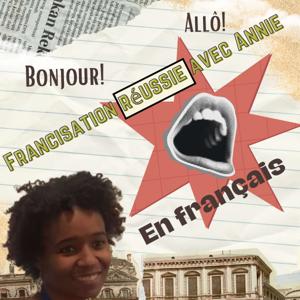
Par ailleurs, Je suis enseignante en classe d'accueil au Québec depuis plus de 10 ans, de ce fait, je suis en première ligne pour observer les nombreux défis auxquels sont confrontés les nouveaux parents et enfants immigrants. Ils doivent non seulement s'adapter à un tout nouveau système d'éducation, mais aussi surmonter une multitude d'ajustements culturels et sociaux afin de s'intégrer dans leur nouveau pays. Ces défis vont de la compréhension des attentes scolaires à la navigation entre les langues, en passant par la gestion des émotions et des différences culturelles. Mon expérience me permet de témoigner de ces obstacles, mais aussi des réussites et du potentiel immense que chaque famille apporte avec elle dans cette nouvelle aventure. Ce podcast leur rend hommage et se veut une ressource essentielle, offrant des capsules d'apprentissage du français ainsi que des conseils pratiques, directement applicables pour faciliter leur intégration. En plus de fournir des outils concrets, il véhicule un message d'espoir, rappelant que malgré les obstacles, l'adaptation est non seulement possible, mais que chaque enfant et adulte a la capacité de réussir dans ce nouveau pays d'accueil, riche en opportunités.
Grâce à cet espace d’apprentissage collectif, nous allons ensemble développer des compétences linguistiques tout en explorant les aspects pratiques et culturels de cette belle langue.
Rejoignez notre communauté bienveillante et enrichissante pour trouver des réponses à vos questions, et découvrir les possibilités infinies qui vous attendent sur ce chemin d'apprentissage et de croissance.
Apprenons le français ensemble pour bâtir une communauté d'apprentissage solidaire. En travaillant ensemble, nous pouvons partager nos expériences, progresser à notre rythme, et soutenir mutuellement nos parcours d'apprentissage. Ensemble, nous renforçons notre maîtrise de la langue tout en créant un espace inclusif où chacun peut s’épanouir et réussir.