
Sign up to save your podcasts
Or

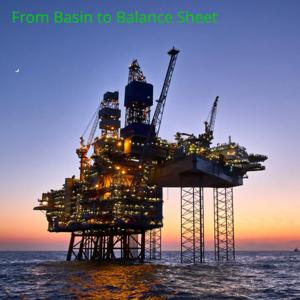


How much longer can a field keep going? When will the cost of operating it exceed the value of the oil it produces? And what will it cost to dismantle a structure that took years and billions of pounds to build?
Because even on the day that last barrel is produced, the work is far from over.
Deep beneath the seabed, wells must be permanently sealed. Miles of pipelines must be cleaned and made safe. Thousands of tonnes of steel and concrete must be dealt with. And an entire offshore installation, which has stood against a harsh operating environment for decades, must eventually be retired.
It's the remarkable final act in the life of an oil field. After years spent finding hydrocarbons, building facilities and maximising production, the industry's attention turns to bringing everything safely to a close.
One of the realities of working in oil and gas is that the industry is cyclical, and those cycles can be severe.
I’m going to talk about why this industry repeatedly creates moments like these and what happens to us when the future we expected suddenly changes. This episode is a little more personal than the others, exploring how I think we can begin to respond in a way that gives us some influence over what comes next.
Transactions are a fundamental part of the upstream life cycle. Companies merge. They buy competitors or individual assets. They combine parts of their portfolios into joint ventures. They sell fields that no longer fit their strategy, sometimes to companies whose entire business model is built around precisely that type of asset.
And that raises an interesting question. If two competent companies can look at the same field and reach opposite conclusions—one deciding to sell and the other deciding to buy—how can they both be right?
Decline is not just the passive final slope on a production graph. It is a sequence of choices. The team can drill between existing wells, repair damaged completions, improve sweep, remove processing constraints or connect nearby discoveries. Each action may add reserves, accelerate production or reduce cost. It may also consume capital that could earn a better return elsewhere.
The commercial task is to distinguish a genuine opportunity from an attempt to preserve yesterday’s production at any price. A mature field must still compete for money, people and equipment. Its history may explain why the facilities exist, but only future cash flow can justify the next investment.
A project is sanctioned using the best description available at the time combined with a statistical understanding of what our experiences elsewhere have taught us: seismic, a handful of wells, fluid samples and engineering assumptions, along with risk events to look out for with appropriate surveillance. Production then becomes a full-field experiment. Every pressure, rate and equipment failure adds evidence. The commercial challenge is to turn it into better decisions quickly enough to protect production, control cost and improve economic recovery.
That is field management: not simply keeping the plant running, but continually reconciling reservoir potential, well performance, facility capacity, operating cost, contractual commitments and organisational capability. It is how the value promised at sanction is either delivered, improved—or quietly lost.
Petroleum economics brings the consequences of substantial expenditure and significant uncertainty together in a common language. So when we say that a project is worth five hundred million dollars, or has an IRR of twenty-five per cent, there is a whole physical and commercial story sitting underneath that number.
And understanding it matters because almost every major upstream decision eventually becomes a comparison between different streams of future cash.
Should the field have a large standalone facility, or a smaller development tied back to existing infrastructure? Should it be built around twenty wells or twelve? Does it need large water-injection capacity from first oil?
These are detailed engineering questions. But more importantly, they are development-choice questions.
Get them broadly right, and good project execution can turn the concept into a successful asset.
Get them badly wrong, and excellent execution may simply build the wrong thing very efficiently.
I’m Jeff Parke, and this is From Basin to Balance Sheet—the integrated story of how a geological possibility becomes an investment, a producing asset and, eventually, a retirement obligation.
This is the life for which the field must really be designed. Development planning and construction may occupy five or six years, but the facilities can operate for twenty-five years or more. Over that period, the undiscounted cost of operating and maintaining them may exceed the original capital investment. A design that looks efficient on the project schedule can therefore become an expensive burden if it is difficult to operate, hard to inspect or dependent on equipment that cannot be maintained without shutting down production.
This isn’t about facility start-up and operations on day one of commissioning. It is about the how frontline staff operate the asset safely, reliably and economically as the reservoir declines, the fluid mix changes and the equipment grows older.
I’m Jeff Parke, and this is From Basin to Balance Sheet — the integrated story of how a geological possibility becomes an investment, a producing asset and, eventually, a retirement obligation.
The facility is where the development becomes physically visible. Steel vessels, pipework, compressors, pumps, tanks and control systems occupy a desert site, rise above the sea on a platform, or sit inside the crowded topsides of a floating production vessel. Their purpose is straightforward to describe but difficult to achieve: accept whatever the reservoir and wells deliver, separate the useful fluids, remove what the customer or regulator will not accept, and keep doing it safely as rates, pressures and compositions change.
Facilities are therefore not simply the equipment placed downstream of a finished subsurface design. Their capacity, flexibility, weight, cost and location can change which wells are drilled, how quickly production ramps up, how much of the resource can be recovered and whether the project makes money at all.
I’m Jeff Parke, and this is From Basin to Balance Sheet — the integrated story of how a geological possibility becomes an investment, a producing asset and, eventually, a retirement obligation.
The well is the point where geology becomes production capacity. Its productivity determines how many wells must be drilled, how large the facilities need to be, how quickly the field reaches plateau and how soon revenue begins to repay the investment. Its behaviour can also determine how much water must be processed, how much reservoir energy is wasted and how much oil is ultimately left behind.
From the publisher's feed
Things I'm thinking about