
Sign up to save your podcasts
Or



What happens when a plant or mushroom seems to find you before you ever go looking for it?
In this episode, I’m joined by Dr. Michelle Rigling for a winding conversation about Amanita muscaria, Baba Yaga, folklore, intuition, and the ways we come to know plants and mushrooms through story and lived experience. Michelle and I share some of our own experiences with Amanita, how this unmistakable mushroom entered each of our lives, and the strange and sometimes unexpected threads that can unfold when we choose to follow our curiosity.
We talk about some of the folklore surrounding Amanita muscaria, the mushroom's connection with Baba Yaga, and a bit of scientific information that may surprise people. But much of our conversation wanders into something harder to capture in a materia medica: the knowledge held in stories.
How do stories change the way we understand a plant or mushroom? What can we learn through direct experience that we can’t always learn from a book? And what happens when we allow mystery, imagination, intuition, and relationship to have a place alongside research and practical knowledge?
BIO
Dr. Michelle Rigling is a Transpersonal Counselor, Psychedelic Guide, and the director of 3 conferences: The Wild Medicine Conference in AL, The Midsouth Women's Herbal Conference in TN, and the Appalachian Death Care and Grief Tending Conference in TN. Before Michelle was a Counselor, she was a wild child, rambling through the woods and telling tall tales to whomever would listen. During the first several years of her career as a social worker, she struggled to stick to a conventional approach, knowing that some things were missing: nature, soul, and intuition to name a few of them! Today she supports others who also know there is something more, something deeper, something mysterious and rich underneath the surface of our lives. Those who work with her learn to reconnect with their intuition, reclaim imagination, and navigate mystical experiences such as dreams and altered states of consciousness that occur in connection with nature, plants, and mushrooms. Her private practice is The Cavewoman Way, located in Chattanooga, TN.
LINKS
www.thecavewomanway.com
www.wildmedicineconference.com
www.midsouthwomensherbalconference.com
www.appalachiandeathcare.com
We appreciate every review.
If you enjoyed this episode and want to learn more, follow Danielle at:
www.instagram.com/rootandwandercollective
www.rootandwandercollective.com
For questions about the episodes, please send an email to [email protected]
Hosted on Acast. See acast.com/privacy for more information.
Learning herbalism can feel like a LOT. There are hundreds of plants to learn, preparations to understand, new terminology everywhere, and no shortage of opinions about what you should know before you can call yourself an herbalist.
In this episode, I’m sharing some of the most common mistakes I see beginner herbalists make, including quite a few I made myself. We’re talking about trying to learn too many herbs at once, memorizing instead of understanding, searching for the “best” herb for everything, overcomplicating formulas, buying all the things, navigating herbal information, and more.
This isn’t about doing herbalism perfectly. It’s about building a practice that helps you actually understand the plants, make thoughtful decisions, and grow your confidence through both study and experience.
Whether you’re brand new to herbalism or you’ve been learning for a while but still feel like you’re drowning in information, this one’s for you.
Mentioned in this episode:
So You Want to Be an Herbalist by Danielle Galvin
Available at www.rootandwandercollective.com/herbal-book
We appreciate every review.
If you enjoyed this episode and want to learn more, follow Danielle at:
www.instagram.com/rootandwandercollective
www.rootandwandercollective.com
For questions about the episodes, please send an email to [email protected]
Hosted on Acast. See acast.com/privacy for more information.
August is usually one of the busiest times in an herbalist’s year. The garden is overflowing, wild plants are ready to harvest, medicine is being made, and the apothecary shelves are slowly filling for the seasons ahead. Except… that hasn’t really been my experience this year. An unusually hot, wet summer has meant harvesting far less than I expected, and it’s forced me to rethink some of the ways I measure a “successful” growing season.
In this episode, I’m taking you with me through my late-summer garden and apothecary. We’ll talk about what I’m wildcrafting right now (hello, passionflower and goldenrod), what’s happening in my garden, what medicine I’m making, and how I’m beginning to prepare for the transition into autumn.
And somewhere along the way, this episode becomes about a lot more than what’s ready to harvest in August.
We get into the complicated parts of harvesting, our relationships with the plants we tend, what it means to take from the land, and some feelings I honestly wasn’t expecting to have while recording this one.
It’s a little raw, a little rambly, and probably a pretty accurate representation of what late August actually looks like around here.
Come wander through the garden with me.
We appreciate every review.
If you enjoyed this episode and want to learn more, follow Danielle at:
www.instagram.com/rootandwandercollective
www.rootandwandercollective.com
For questions about the episodes, please send an email to [email protected]
Hosted on Acast. See acast.com/privacy for more information.
What if the greatest barrier to foraging isn't a lack of edible plants, but a lack of confidence?
In this episode, I sit down with wild food educator, creator of Feral Foraging, and founder of Gather: The Foraging App, Jesse, to explore what it really takes to begin building a relationship with wild food.
Together, we discuss why so many people feel intimidated by foraging, how toxicity myths have shaped our perception of edible plants and mushrooms, and the practical skills that help us move from fear to confidence when learning the plants around us.
Jesse shares his journey into the world of wild food, why identification is about understanding relationships between plants rather than memorizing endless species, and how thoughtful gathering and preparation can deepen our connection to the landscapes we live in.
Known for his in-depth educational content, Jesse is passionate about making foraging approachable for everyone. Through clear, evidence-based education, he encourages curiosity over fear and reminds us that wild food isn't something reserved for experts; it's an invitation to reconnect with the abundance growing all around us.
Whether you're just beginning your foraging journey or looking to deepen your knowledge of edible plants and mushrooms, this conversation offers practical insights, thoughtful perspectives, and plenty of encouragement to step outside with fresh eyes.
Follow & learn from Jesse:
https://youtube.com/@feralforaging
https://get.gatherapp.co/O5xE/FERAL
Bio:
Jesse is a wild food educator best known for his YouTube channel, Feral Foraging, where more than 500,000 subscribers learn practical, in-depth approaches to foraging. He is also the creator of Gather: The Foraging App, designed to make identifying and learning about wild food more accessible.
Passionate about developing better methods for gathering and processing wild foods, Jesse is dedicated to debunking toxicity myths that have wrongly vilified many edible plants and mushrooms. More than anything, he wants to create clear, approachable education that empowers people to confidently reconnect with the abundance of wild food growing around them.
We appreciate every review.
If you enjoyed this episode and want to learn more, follow Danielle at:
www.instagram.com/rootandwandercollective
www.rootandwandercollective.com
For questions about the episodes, please send an email to [email protected]
Hosted on Acast. See acast.com/privacy for more information.
Have you ever noticed that certain plants seem to find their way back into your life?
Sometimes it's a plant you've worked with for years but suddenly see through new eyes. Other times it's a plant you never paid much attention to until, seemingly out of nowhere, you can't stop thinking about it.
In this episode, I'm sharing two plants that have been asking for my attention this season: mountain mint and raspberry. Their stories couldn't be more different, yet both have reminded me that our relationships with plants are never static. They deepen, evolve, surprise us, and often reveal something about ourselves along the way.
Together, we'll explore what it means to return to a familiar plant, why our understanding of medicinal herbs changes over time, and how slowing down to revisit a plant can become one of the greatest teachers in our herbal journey.
Whether you're just beginning to explore herbalism or have been walking this path for years, I hope this conversation encourages you to look again at the plants growing around you, and perhaps to return to one that's been quietly waiting for your attention.
We appreciate every review.
If you enjoyed this episode and want to learn more, follow Danielle at:
www.instagram.com/rootandwandercollective
www.rootandwandercollective.com
For questions about the episodes, please send an email to [email protected]
Hosted on Acast. See acast.com/privacy for more information.
What does it take to actually stay well when summer turns up the heat, not just survive it, but work with the season instead of against it?
In this episode, I'm sharing my herbalist's summer toolkit: the plants and preparations getting me through a proper Tennessee heatwave. We talk about why water alone doesn't actually hydrate you, how my first aid kit shifts once I'm spending more time barefoot in the garden, and the herbs I reach for when summer's big, buzzy energy makes it hard to wind down at night.
This is also an invitation to treat your summer herbal practice like play instead of a prescription, to experiment, to sip your way through the season, and to slow down enough to notice what's blooming (and buzzing) right outside your door.
We appreciate every review.
If you enjoyed this episode and want to learn more, follow Danielle at:
www.instagram.com/rootandwandercollective
www.rootandwandercollective.com
For questions about the episodes, please send an email to [email protected]
Hosted on Acast. See acast.com/privacy for more information.
What if your cycle wasn't something to fight against, but something to learn from?
In this episode, I sit down with clinical herbalist, fertility awareness educator, and founder of Eclipsic Herbs, Denise Rodriguez, to explore the intersection of herbalism, body literacy, and cycle health.
Together, we discuss why our menstrual cycles are more than just a reproductive function, how cycle tracking can become a powerful tool for understanding overall health, and the ways herbal medicine can support hormonal balance throughout different phases of life.
Denise shares her perspective on fertility awareness, common misconceptions about cycle health, and how learning to understand the body's natural rhythms can help us make more informed decisions about our wellbeing.
Rooted in both bioregional herbalism and her Colombian herbal tradition, Denise brings a thoughtful and empowering approach to women's health that encourages us to see our cycles not as a burden, but as a source of valuable information and insight.
Whether you're curious about cycle tracking, hormonal health, fertility awareness, or herbal support for women's wellness, this conversation offers a grounded introduction to understanding the body through a new lens.
Follow & work with Denise:
https://www.Instagram.com/eclipsicherbs/
https://www.eclipsicherbs.com/
Bio:
Denise is a clinical herbalist, cycle and sexual health educator. She is the owner of Eclipsic Herbs, where she teaches in-depth cycle tracking and personalized cycle health support. Denise's work focuses on bridging together body literacy and plant medicine. She believes that our cycle is not our shackle, it is our compass. That our cycles go beyond just for reproduction, it's core to our health and wellbeing.
Her formal education and experience is rooted in bioregional herbalism in North Eastern America incorporating her Colombian herbal tradition. She is certified as a Fertility Awareness educator, with a focus on hormonal imbalances
We appreciate every review.
If you enjoyed this episode and want to learn more, follow Danielle at:
www.instagram.com/rootandwandercollective
www.rootandwandercollective.com
For questions about the episodes, please send an email to [email protected]
Hosted on Acast. See acast.com/privacy for more information.
Summer offers a different rhythm.
The plants are abundant, the days are longer, and many of us feel the pull to spend more time outdoors, move more slowly, and engage with our herbal practices in ways that feel nourishing rather than productive.
In this episode, I share some of my favorite ways to live with the plants during the summer months, including herbal drinks, infused body oils, plant meditations, and simple seasonal rituals that help deepen relationship with the natural world.
Whether you're looking for new ways to connect with the plants or simply seeking inspiration for your summer herbal practice, this episode is an invitation to slow down, pay attention, and savor the season.
Grab a cup of tea and join me for a conversation about creating a summer filled with plant connection, curiosity, and everyday herbal magic.
We appreciate every review.
If you enjoyed this episode and want to learn more, follow Danielle at:
www.instagram.com/rootandwandercollective
www.rootandwandercollective.com
For questions about the episodes, please send an email to [email protected]
Hosted on Acast. See acast.com/privacy for more information.
What does it mean to move beyond consuming herbal information and into true relationship with the plants?
In this episode, we explore the philosophy of reciprocal herbalism, a slower, more relational approach to learning plants rooted in stewardship, attentiveness, observation, and coexistence. Together, we’ll discuss information overload in modern herbalism, ethical relationship with the land, and the subtle ways working with plants can begin reshaping how we move through the world itself.
From deer eating elderberries to rescuing worms from the driveway after rainstorms, this conversation reflects on the quiet shifts that happen when we begin seeing ourselves as part of an ecosystem rather than separate from it.
This episode is an invitation to slow down, notice more deeply, and remember that herbalism is not just something we study: it's something we live.
If this conversation resonates with you, I am about to open enrollment for the Reciprocal Herbalism program, a 15-week relationship-based herbal learning container rooted in slow study, sensory learning, seasonal rhythm, and deeper relationship with the plants.
Learn more here: https://www.rootandwandercollective.com/reciprocal-herbalism-program
We appreciate every review.
If you enjoyed this episode and want to learn more, follow Danielle at:
www.instagram.com/rootandwandercollective
www.rootandwandercollective.com
For questions about the episodes, please send an email to [email protected]
Hosted on Acast. See acast.com/privacy for more information.
In this episode, I’m joined by fellow herbalist Amelia Andrade for a conversation rooted in the wild edges of spring.
We explore the role of bitters in herbal practice, not just as a category of taste or action, but as something that invites us back into relationship with our bodies. Together, we talk about wild weeds, especially Dandelion, and the quiet, persistent ways these plants support digestion, movement, and renewal.
This conversation moves between the medicinal and the energetic: how bitters wake things up in the body, how spring asks us to shift and soften, and how working with common plants can become a daily, lived practice rather than something abstract or occasional.
We also reflect on nourishment this time of year, what it means to support ourselves gently as we come out of winter, and how paying attention to what’s growing around us can guide that process.
If you’ve ever felt drawn to the plants growing just outside your door, or are curious about how to work with herbs in a more grounded, relational way, this episode is an invitation to begin.
Check out Amelia's Free Bitter Support Guide:
'A beginner’s guide to offer you support in introducing bitters back into your life, expanding your palate & developing an appreciation for this forgotten flavor.'
https://darling-dandy-botanicals.myflodesk.com/wwdlamgq83
Follow Amelia:
instagram.com/amelia_the_wildflower
https://bio.site/amelia_the_wildflower
Bio:
Amelia Andrade is a folk herbalist and mystical muser. Drawing from the Wise Woman Tradition of Healing, her passion is nourishing the sacred and wild relationship between people and plants. While also exploring the world and wisdom of bitter botanicals, inspired by her devotional relationship to the dandelion.
We appreciate every review.
If you enjoyed this episode and want to learn more, follow Danielle at:
www.instagram.com/rootandwandercollective
www.rootandwandercollective.com
For questions about the episodes, please send an email to [email protected]
Hosted on Acast. See acast.com/privacy for more information.
From the publisher's feed
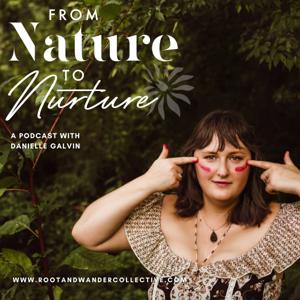
Welcome to From Nature to Nurture, where herbal medicine meets folklore, personal wisdom, and modern science. This is a space for curious souls, plant lovers, and holistic seekers…
Hosted by Danielle Galvin, each episode offers a blend of solo storytelling and bite-sized herbal lessons, alongside heartfelt conversations with herbalists, holistic practitioners, and plant people from all walks of life. Together, we’ll uncover the spirit, science, and stories behind the plants that hold such a deep space in our hearts.
Whether you've been walking the plant path for years or just beginning to brew your first cup of nettle tea, you’ll find inspiration, insight, and connection here.
For more information on Danielle's work and herbal school, visit www.rootandwandercollective.com and instagram.com/rootandwandercollective.
Cover Photo by Abigail Reffitt Imagery.
Hosted on Acast. See acast.com/privacy for more information.