
Sign up to save your podcasts
Or

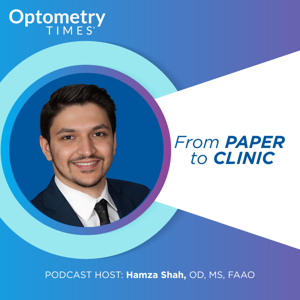


In Episode 8 of From Paper to Clinic, "Dynamic Muscle Stimulation and the Blink Physiology Behind Dry Eye," Cory Lappin, OD, MS, FAAO, of The Dry Eye Center of Ohio, joins the show to unpack a paper examining dynamic muscle stimulation of the periorbital area (DMST) as a treatment for dry eye disease. The conversation centers on an underappreciated driver of dry eye—lower lid laxity and impaired blink mechanics—and how a non-surgical device-based approach can restore normal blink function.
For decades, lower lid laxity has been treated as a surgical problem: a mechanical defect addressed only with horizontal lid-tightening procedures. The paper anchoring this episode challenges that framing by targeting the muscle of Riolan and the orbicularis oculi directly, using dynamic electrical muscle stimulation to retrain the lid's contractile function rather than surgically shortening it. The result is a treatment aimed at the root cause of an incomplete or poorly apposed blink—rather than only its downstream tear-film consequences.
The paper inspiring this discussion is the "Dynamic Muscle Stimulation of the Periorbital Area for Improvement of Blinking in Dry Eye Patients" by James G. Chelnis and Alexandra Chelnis, published in Clinical Ophthalmology.
In Episode 7 of From Paper to Clinic, "GLP-1 Receptor Agonists and Idiopathic Intracranial Hypertension," host Hamza Shah, OD, is joined by Leonard Messner, OD, FAAO, vice president and professor of optometry at the Illinois College of Optometry, joins the show to explore what a landmark randomized trial on exenatide reveals about the underlying mechanisms of IIH—and what it means for how optometrists manage the disease today.
For ODs managing or comanaging IIH, Messner's diagnostic framework is as instructive as the pharmacology. He emphasizes the case history, not just current BMI, but the trajectory of weight gain—and the 2 symptoms he drills down on above all others: chronic daily headaches and synchronous pulsatile tinnitus. OCT remains central, but not just for RNFL thickness—the morphology of the optic nerve on B-scan, specifically the inward displacement of Bruch's membrane complex at the lamina cribrosa, is among the most clinically meaningful findings. So is the ganglion cell complex, which he treats as the critical indicator of how much time the clinician has. "It's the glaucoma of the brain," he notes of IIH—progressive, trackable, and consequential in ways that only become clear with consistent visual field monitoring.
The paper inspiring this discussion is "The Effect of GLP-1RA Exenatide on Idiopathic Intracranial Hypertension: A Randomized Clinical Trial," by Mitchell and colleagues, published in Brain.
In Episode 6 of From Paper to Clinic, “The Window to the Brain: OCT and OCTA,” host Hamza Shah, OD, sits down with Andrew Rixon, OD, FAAO, to unpack a systematic review on retinal biomarkers for early Alzheimer disease detection and what it means for everyday optometric care. Rixon starts by cleaning up our language regarding dementia as a broad clinical syndrome versus Alzheimer disease as a specific pathologic subtype characterized by beta-amyloid deposition and phosphorylated tau. From there, the pair explore why catching patients at the preclinical or very early symptomatic stage matters—when biomarkers may be detectable 10-15 years before overt decline, but current therapies remain only modestly effective. This naturally leads to the “retina as a window to the brain.” Shah and Rixon walk through the shared neuroectodermal origin of the retina and CNS, parallels in vascular and barrier systems, and emerging data showing amyloid and tau in ocular tissues, including retinal ganglion cells and even aqueous humor at levels comparable to CSF.
The discussion then shifts from theory to OCT and OCT angiography (OCTA) at the slit lamp. Shah and Rickson review the paper’s heterogeneous OCT/OCTA findings—some studies showing thickening and increased vascular density, others thinning and rarefaction—and explain how early inflammatory or vascular changes could precede later neurodegeneration, making simple “thick vs thin” heuristics unreliable in isolation. Rickson outlines how OCTA actually works in clinic, why it does not replace dye-based angiography, and where it shines today: detecting quiescent, non-exudative macular neovascular membranes in AMD and complementing ultra-widefield imaging rather than supplanting it. They also touch on the still-evolving role of OCTA in glaucoma—particularly in suspected normal-tension glaucoma phenotypes—while underscoring the current lack of robust normative vessel-density databases. Throughout, Shah pushes the conversation toward what clinicians can do now: using OCT/OCTA judiciously rather than reflexively, avoiding overpromising on Alzheimer “screening” from a single scan, and preparing for a future where higher-resolution imaging and AI may finally bring that sci-fi-style, noninvasive neurodegeneration assessment closer to reality.
The paper inspiring this discussion is "Retinal biomarkers for early Alzheimer's detection: a systematic review of optical coherence tomography (OCT) findings," by Lepoittevin and colleagues, published in BMJ Open Ophthalmology.
In Episode 5 of From Paper to Clinic, “Reframing Myopia Management: Atropine, Axial Length, and Engaging Young Patients,” host Hamza Shah, OD, sits down with Brianna Rue, OD, to reframe myopia as a looming public health crisis rather than a routine refractive error. Rue highlights striking projections: by 2050, up to 90% of some Asian populations and more than 60% of Americans may be myopic, with epigenetic and environmental factors driving much of this surge. She connects these epidemiologic trends to real-world economic and human costs—from lost productivity estimated at $250 billion globally to the lifelong burden of complications such as retinal detachment, myopic maculopathy, glaucoma, and cataract.
The conversation then moves from population-level data to chairside strategy. Rue argues that clinicians must stop thinking in diopters and start thinking in millimeters, emphasizing axial length as the true determinant of structural risk. Using the analogy of a fitted bed sheet stretching over a mattress to describe the retina under axial elongation, she explains why even small changes in millimeters matter. Shah and Rue dig into practical management: age- and phenotype-based atropine concentration selection, the pitfalls of relying on spectacles that kids won’t wear enough hours per day, and the advantages of dual-focus soft lenses and Ortho-K in real-world adherence. Rue also shares communication strategies for engaging both parents and children in behavior change—especially around device use and outdoor time—and makes a strong case for prophylactic treatment in at-risk 6- and 7-year-olds. The episode closes with a call for more clinicians to build robust myopia management programs, charge for their expertise, and see myopia control as both a professional responsibility and a key practice growth opportunity.
The paper inspiring this discussion is "Myopia Progression Management: Current Trends and Future Directions" by Zhang and colleagues, published in Clinical & Experimental Ophthalmology.
In Episode 4 of From Paper to Clinic, “Retire 'Artificial Tears': A Call for Updated Terminology in Eye Care,” Kaleb Abbott, OD, MS, joins the show to challenge the entrenched language and assumptions in dry eye care. He argues that the term “artificial tears” is fundamentally misleading—based on an outdated 1988 FDA monograph and bearing less than 1% similarity to true human tears—while natural tears themselves form an extraordinarily complex, biologically active “rainforest” of thousands of proteins, lipids, vitamins, growth factors, and mucins. The pair also critiques other misnomers such as “dry eye” and even “ocular surface disease."
They also spoke to the clinical management of these patients, exploring common pitfalls such as underestimating patients’ motivation for relief, being too conservative with treatment intensity, and failing to identify the true origin of discomfort—whether evaporative or aqueous-deficient disease, meibomian gland dysfunction, or non-ocular neuropathic pain. Abbott highlighted underutilized therapies like blood-derived products (autologous serum and platelet-rich plasma tears), which more closely approximate natural tear composition, while Shah underscored the value of amniotic membranes as a powerful “reset button” for severely compromised ocular surfaces.
The paper inspiring this discussion is "It's time to retire the terms artificial tears and rewetting drops: A call for accurate terminology and updated clinical usage in eye care" by Abbott and Andrew D. Pucker, OD, PhD, published in The Ocular Surface.
In Episode 3 of From Paper to Clinic, “AI in Eye Care: From Diabetic Retinopathy to the Clinic of the Future,” Michael Twa, OD, PhD, joins the show to discuss artificial intelligence (AI). In the conversation, the pair discusses how AI is reshaping eye care, beginning with its success in retinal image analysis for diabetic retinopathy and expanding to more complex conditions like AMD, where challenges in sensitivity, specificity, and nuanced image interpretation become more pronounced.
They also discuss how AI can primarily serve as a decision-support tool rather than a standalone diagnostician, emphasizing the inevitability of false positives and negatives and the importance of clinician oversight, as well as the rise of chatbots and agentic AI, from tools handling routine post–cataract surgery follow-ups to future systems that could coordinate appointments, labs, referrals, and population-level outcome analysis via EHR-integrated AI.
The paper inspiring this discussion is "A Review of Recent Developments in Artificial Intelligence and Big Data Technologies for Ophthalmology Referrals and Clinical Practice" by Paredes et al, published in Medical Science Monitor.
In Episode 2 of From Paper to Clinic, host Hamza Shah, OD, MS, FAAO, is joined by Raman Bhakhri, OD, FAAO, to discuss geographic atrophy. In their conversation, they discuss the theory that peripheral retinal pigment epithelium (RPE) cells might contribute to macular geographic atrophy (GA) by migrating inadequately.
They also discuss the analogy with limbal stem cells in the cornea and the importance of monitoring the peripheral retina. Bakri highlights the limitations of current research, such as the lack of clinical trials and the applicability of animal studies to humans, and the pair explores potential new therapeutic strategies and the role of optometrists in patient care, emphasizing the importance of preventive medicine and low-vision assistance.
The paper inspiring this discussion is "Is geographic atrophy a peripheral retinal disease?" from Del Priore, published in Ophthalmology: Retina.
In Episode 1 of From Paper to Clinic, host Hamza Shah, OD, MS, FAAO, is joined by Austin Lifferth, OD, FAAO, to discuss interventional glaucoma. In their conversation, they emphasize a proactive approach over only traditional topical treatments, highlighting the benefits of procedural treatments like selective laser trabeculoplasty (SLT), which offers better disease control, reduced productivity loss, and improved patient outcomes.
They also discuss the importance of goniotomy as an initial step and the need for optometrists to adopt interventional glaucoma practices. Lifford also outlines the stages of glaucoma and the frequency of follow-ups, stressing the importance of correlation between tests. They collectively predict a future shift towards more procedural treatments, aiming for a proactive approach to glaucoma management.
The paper inspiring this discussion is the "Interventional glaucoma consensus treatment protocol" from Funke et al, published in Expert Review of Ophthalmology.
Welcome to From Paper to Clinic, a podcast focused on evidence-based eye care and real-world clinical decision-making, hosted by Dr. Hamza Shah, OD, MS, FAAO, a faculty member at the University of Houston College of Optometry. His work spans clinical patient care, education, and mentoring, and his clinical interests include ocular disease, dry eye, perioperative care, and—above all—the challenge of translating information into meaningful patient outcomes.
The premise of From Paper to Clinic is rooted in a familiar tension in eye care. Clinicians are constantly exposed to new studies, evolving guidelines, and emerging technologies, yet applying those insights in a busy clinic—often with complex patients and imperfect circumstances—is rarely straightforward. Too often, discussions on these resources end with what was published, without addressing how that information fits into real clinical workflows or nuanced decision-making.
New episodes of the podcast will premiere on the first Monday of each month, with each episode taking a different approach. Rather than reciting study methods or statistics, From Paper to Clinic uses a recent publication as a catalyst for deeper conversation. Together with his expert guests, Shah examines how published ideas influence clinical thinking, how they are adapted in practice, and where gray areas or limitations still exist. These conversations acknowledge that medicine is rarely binary—and that judgment remains essential.
The series will feature experts from across eye care, including glaucoma, retina, myopia management, ocular surface disease, perioperative care, and emerging areas such as artificial intelligence in ophthalmology and optometry. Whether you are a practicing clinician, resident, or student, the goal is to provide conversations that are relevant, grounded, and immediately applicable to day-to-day care.
>>Episode 1 coming Monday, March 2, at 8 AM EST<<
The first full episode of From Paper to Clinic will debut in early March and will feature Austin Lifferth, OD, FAAO, Dipl AAO, focusing on glaucoma and the evolving concept of interventional treatment strategies. Listeners are invited to join the conversation as the series explores how evidence moves… from paper to clinic.
From the publisher's feed