
Sign up to save your podcasts
Or

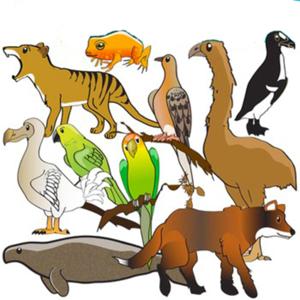


Haast's eagle is one of the lesser known megafauna. Its unique diet and lifestyle in New Zealand represent one of the more interesting creatures from prehistoric times, and its downfall highlights the importance to protect keystone predators and fragile ecosystems in the face of the Anthropocene.
*Note: Maori tools made out of eagle bone have been found, suggestive of direct eagle hunting.*
Resources/Additional Reading:
First Description by Julius Haast: https://books.google.com/books?id=Po42AQAAIAAJ&pg=PA193#v=onepage&q&f=false
https://ui.adsabs.harvard.edu/abs/2014QSRv..105..126P/abstract
https://www.nzgeo.com/stories/terror-of-the-forest/
https://www.nzbirds.com/birds/hokioi.html
http://rsnz.natlib.govt.nz/volume/rsnz_25/rsnz_25_00_004750.pdf
https://web.archive.org/web/20090325235703/http://www.notornis.org.nz/free_issues/Notornis_34-1987/Notornis_34_2.pdf
http://rsnz.natlib.govt.nz/volume/rsnz_10/rsnz_10_00_000530.html
https://collections.tepapa.govt.nz/topic/1360
https://web.archive.org/web/20090228152921/http://www.bbc.co.uk/nature/wildfacts/factfiles/3044.shtml
http://notornis.osnz.org.nz/system/files/Notornis_39_4_239.pdf
https://www.sciencedirect.com/science/article/abs/pii/S1055790318306328?via%3Dihub
https://www.ncbi.nlm.nih.gov/pmc/articles/PMC539324/
https://collections.tepapa.govt.nz/topic/1360
Worldwide, tiger populations have gone into a free fall, occupying 4% of their historic range in the wild. Of the nine subspecies, four have gone extinct, leaving nothing but a phantom emptiness of what once prowled in the shadows. One such case was the Indonesian island of java
The Javan tiger was officially listed as extinct around 2003, despite likely dying off decades prior. Its demise is a stark reality and a lesson to learn from, as the same scenario plays out across various other species on the brink of extinction.
Sources:
https://www.academia.edu/5407176/A_Tiger_in_the_Heart_the_Javanese_Rampok_Macan
https://www.smithsonianmag.com/smart-news/island-tiger-thought-extinct-may-have-been-spotted-180964920/
Javan tiger - Wikipedia
http://www.catsg.org/index.php?id=570
https://repository.si.edu/bitstream/handle/10088/8206/71440cc3-e3f8-487f-981f-2c9a3309783e.pdf
https://www.ncbi.nlm.nih.gov/pmc/articles/PMC4406268/
https://www.sciencedirect.com/science/article/abs/pii/0006320793900556
https://www.jstor.org/stable/1178941?Search=yes&resultItemClick=true&searchText=javan%20tiger&searchUri=%2Faction%2FdoBasicSearch%3FQuery%3Djavan%2Btiger%26filter%3D&ab_segments=0%2Fbasic_search%2Fcontrol&refreqid=fastly-default%3A6387bc5efa2119c5efbfde30f30e4c74
https://www.jstor.org/stable/20071663?Search=yes&resultItemClick=true&searchText=javan%20tiger&searchUri=%2Faction%2FdoBasicSearch%3FQuery%3Djavan%2Btiger%26filter%3D&ab_segments=0%2Fbasic_search%2Fcontrol&refreqid=fastly-default%3A6387bc5efa2119c5efbfde30f30e4c74
https://www.independent.co.uk/voices/comment/save-the-tiger-7-saddening-facts-about-the-extinction-of-javan-tigers-9630717.html
https://animalstime.com/javan-tiger-facts/
https://www.extinctanimals.org/javan-tiger.htm
https://factsofindonesia.com/facts-of-javan-tigers
https://www.quora.com/What-is-the-habitat-of-the-Javan-tiger-like\
https://www.awely-tigers.org/why-did-the-javan-tiger-disappear/
http://www.lairweb.org.nz/tiger/javan.html
https://www.thoughtco.com/javan-tiger-1093096
sources
https://en.wikipedia.org/wiki/Carolina_parakeet#Behavior_and_diet
Early Records of the Carolina Paroquet on JSTOR
Lazarus ecology- Recovering the distribution and migratory patterns of the extinct Carolina parakeet
The last Carolina Parakeet - John James Audubon Center at Mill Grove
https://archive.org/details/cihm_35450
https://archive.org/details/birdsensewhatits0000birk/page/123/mode/2up
https://www.jstor.org/stable/4071042?seq=5#references_tab_contents
https://www.smithsonianmag.com/science-nature/why-carolina-parakeet-go-extinct-180968740/
https://www.nationalgeographic.com/animals/2019/12/carolina-parakeets-extinction-birds-united-states/
https://www.cell.com/current-biology/fulltext/S0960-9822(19)31438-1?_returnURL=https%3A%2F%2Flinkinghub.elsevier.com%2Fretrieve%2Fpii%2FS0960982219314381%3Fshowall%3Dtrue
Additional reading if you're interested
https://www.leonardodicaprio.org/never-forget-the-stellers-sea-cow/
https://books.google.com/books?id=VtJY90BJ1yMC&pg=PA79#v=onepage&q&f=false
https://en.wikipedia.org/wiki/Steller%27s_sea_cow#cite_note-orcutt2003-26
https://www.theatlantic.com/science/archive/2017/04/pleistoseacow/522831/
https://coffeeandcreatures.co.uk/2019/08/29/stellers-sea-cow-facts/
https://archive.org/details/beringrussiandis0000fros/page/262/mode/2up
https://books.google.com/books?id=7pQgAwAAQBAJ&pg=PAfront#v=onepage&q&f=false
The hunting method used to kill steller's sea cows was similar to whaling (p20 quote 2.2 last link). So in case the way old people speak is above your head, here's what happened. Five men row on a boat and find a sea cow. One man stabs it with a harpoon, which has a rope connected to it. 40 men on shore haul on the rope, tiring it out, and then the men on the boat stab it to death with bayonets.
Due to their size and buoyancy, sea cows weren't good divers and inhabited coastal flats where they could graze. However, gently munching on sea grass and kelp near a horde of armed and starving sailors doesn't bode well. Their blubbery hot dog like physique also meant they were unable to outrun or hide from hunters. One account described the killing of a female sea cow. The male chased and repeatedly rammed the boat, and hovered by the shore while they sliced up his mate. He too was killed. Toward the twilight days of the sea cow, hunting parties would find herds of sea cows, and take advantage of their peaceful nature to stab them with harpoons. They would then let them bleed out and wait for the bodies to wash up on shore. This method was incredibly wasteful, and for every 5 sea cows harpooned, only one was ever eaten. The rest of the killed ones were lost.
However, the demise of the sea cow may be more complex. Their primary diet consisted of kelp and seaweed, a diet shared by sea urchins. Hunters and trappers quickly learned that sea otter pelts could sell for a pretty penny, and their population in the region crashed. The urchins which they preyed upon exploded in numbers, and hence the sea cow may have been out competed for food. Urchin destruction of kelp forests is a phenomenon also playing out in southern California due to the extinction of native otters.
In summary, a slow, peaceful sea mammal built like an oversized seal with the build of a couch potato and the double chins to match, without a fear of humans shuffled its way around the north pacific before being harpooned, deep fried, and starved as a side effect of otter hunting.
When Steller first sailed across the waters of the northern pacific, he shared the common belief that the sea was inexhaustible, and extinction an impossible phenomenon. However, that presumption was slowly debunked as the human population ballooned, coming into conflict with the natural world. The sea cow's demise can be seen as a reminder to own up to the consequences of our own actions, and that extinction isn't a long drawn out process. It can be quick and brutal, and it's happening with other species right before your eyes.
It's been almost 100 years since the extinction of the state animal. Tune in to hear the crappily narrated, awkward sounding, and poorly delivered story of California's apex predator.
Some things I forgot to mention in the intro:
My name is Matthew Bian, I'm 15 years old, and live in La Jolla, CA. I don't have much of an official background in zoology/ethology. I just read whatever I can get my hands on to learn more. Sorry if the quality is terrible, I still have lots of room to grow as a podcaster.
Episode summary:
Most people unintentionally turn a blind eye to wildlife because they don't know about the present issues and the situation that biodiversity is facing in light of humans. The goal of this podcast is to educate.
Each episode features a species that went extinct due to human actions
From the publisher's feed