VIDEO NOTES:
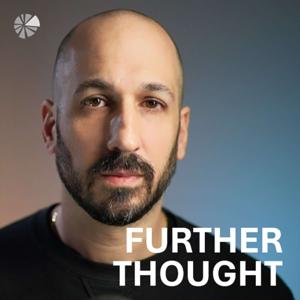
In this episode of Further Thought, Angelo D’Amico speaks with philosopher Dr. Ellen Nora Burns about AI consciousness, human intelligence, and whether the conceptual framework behind much of the current AI debate is starting in the wrong place. The conversation begins with the mind-body problem and examines how Descartes, Newton, and Noam Chomsky complicate our understanding of what we mean by the “mental” and the “physical.” From there, the discussion explores the Hard Problem of consciousness, experience, anthropomorphic language in AI, and whether terms such as “reasoning,” “thinking,” and “intelligence” accurately describe what artificial intelligence is doing.
The conversation then turns to whether humans and AI can be considered intelligent in the same way despite arriving at similar outputs through fundamentally different processes. Along the way, the discussion examines embodiment, functionalism, substrate independence, the limits of behavioural evidence for consciousness, and whether reproducing the complete function of the human brain might eventually require reproducing something increasingly similar to the brain itself. Finally, the conversation confronts the moral consequences of artificial consciousness: if an AI could genuinely suffer, what would humans owe it, and should human interests still come first?
Ultimately, the episode asks a deeper question: Before deciding whether artificial intelligence thinks, understands, or experiences the world as we do, how well do we actually understand ourselves?
EPISODE TOPICS INCLUDE:
• The mind-body problem and why it still matters
• Descartes, Newton, and the meaning of the “physical”
• Noam Chomsky on mind and body
• Whether there really is a “Hard Problem” of consciousness
• Experience versus consciousness
• Anthropomorphism and the language used to describe AI
• Whether AI actually reasons, thinks, or understands
• Human intelligence versus artificial intelligence
• Embodiment and the biological basis of intelligence
• Functionalism and substrate independence
• Whether replicating brain function could require replicating the brain
• How we could recognize consciousness in artificial systems
• The moral consequences of AI suffering
• Human interests versus artificial moral status
• What AI can teach us about the human brain
Further Thought is a long-form conversation series exploring ideas that shape how we think and live, and what happens when those ideas are taken seriously.
GUEST LINKS
Dr. Ellen Nora Burns
SubStack: https://substack.com/@ellennoraburns
Instagram: https://www.instagram.com/aiwithoutminds
CONNECT:
Website: angelodamicocanada.com
SOCIAL LINKS:
Instagram: @angelodamicocanada
LinkedIn: Angelo D’Amico
CONTACT:
Business Email: [email protected]