
Sign up to save your podcasts
Or



In this episode, we speak with Sarah Al-Sarraj about her new speculative audio work The Mandjet. Our conversation explores resistance movements, the process of building this imagined world, and the histories and political struggles that inform it. We also consider how radio, humour, folklore, and ideas of borderlessness shape both the narrative and the wider artistic practice behind the project.
In this episode we talk to Mumbai-based artist and UCLA assistant professor Sahej Rahal, whose practice spans sculpture, video games, AI simulations, film, and painting. Starting from three excerpts of Rahal's text Hallucination Stream we discuss how the micro-fictions of Simulation, Story and Rumour explore caste as a mythology sustained through narrative, hallucination, and political performance
In this episode we talk to the Phantasmagoria exhibition curator Sean Ketteringham. Moving between folk art histories, sculptural practices, affect theory, hauntology, horror, and memetic culture, we discuss what functions as contemporary folklore, questioning what sculpture becomes when it exists through circulation and interaction rather than static objects.
Emily Roderick is the fourth and final guest of our ‘as a chorus’ mini series, sharing recordings, interviews with family members, and field research inside bell towers from her ongoing project Can You Call A Touch. In this episode, we focus on her research around bell ringing, a deeply social, intergenerational practice that sits somewhere between music, ritual and public communication.
What conditions do we gather in, can this exist without hierarchy, or even a physical space? Most Dismal Swamp joins our mini series ‘as a chorus’ sharing audio extracts from The Bastard Fields. A mixtape of 3 sketches that builds on the language of historical preachers, reddit forums and social media commentary, weaving a world which asks about the nightmares that instil our need to come together
Can choirs be a form of protest and what kinds of resistance could they provide in the midst of climate crises?
Our mini-series ‘as a chorus’ begins with Niamh Schmidtke’s work, CHANTER (Aughinish). Their 15 minute audio introduces us to an aluminium refinery and it’s impact on the local population. Together we discuss how the work incites forms of direct action, and the need for collective making
Black Holes Act 1 is a 40-minute radio play by Suley, which examines the UK after last year’s race riots. A re-imagining of Derrick Bell’s 1992 ‘Space Traders’, this is a work of speculative fiction where aliens offer the UK vast riches in exchange for its Black citizens. This two-part episode asks if progress for racial justice happens only when it aligns with the interests of a White majority.
Black Holes Act 1 is a 40-minute radio play by Suley, which examines the UK after last year’s race riots. A re-imagining of Derrick Bell’s 1992 ‘Space Traders’, this is a work of speculative fiction where aliens offer the UK vast riches in exchange for its Black citizens. This two-part episode asks if progress for racial justice happens only when it aligns with the interests of a White majority.
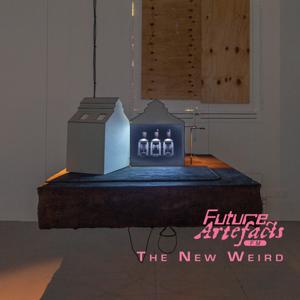
What is the next New Weird? How might ‘weirding’ help generate spaces which resist cultural binaries? For this episode, we recap the 4 artist works featured on our New Weird mini-series, revisiting questions of how the tools of this literary genre might provide emancipatory places to build new worlds from.
From the publisher's feed
Future Artefacts FM is a bi-monthly talk show hosted by Nina Davies, Niamh Schmidtke and Rebecca Edwards, featuring speculative fiction audio works such as radio plays, short stories, fictional interviews and podcasts.
Nina Davies is an interdisciplinary artist living and working in London. Using moving image, sound, text and fiction her practice aims to further critical discussion around dance by observing how it intersects with language and where it begins to take on commodified or material forms.
Rebecca Edwards is a London based curator, writer and producer. Her interests include cultivating experimental curatorial methods, interweaving fluid approaches to production, dissemination and representation of artwork, and exploring the nested fields of technology, digital aesthetics and internet culture.
Niamh Schmidtke is a visual artist based in London with Irish and Swedish heritage. She uses object making, installation and writing, to explore the social and political complications of ‘being green’. She completed her MFA at Goldsmiths, University of London in 2021.