Game Fish

Game Fish

Download on the App Store

Game Fish episodes

  • "Agencies Unveil Multimillion-Dollar Initiatives to Bolster Fish and Wildlife Conservation Nationwide"
    Game and Fish agencies across the United States have unveiled new initiatives and policy updates in recent days as they work to address challenges facing native fish and wildlife. The U S Fish and Wildlife Service, together with its partners, announced more than 23 million dollars in funding for fish habitat conservation in 2025. This allocation, delivered through the National Fish Habitat Partnership, will support 53 on the ground projects in 29 states, with substantial additional contributions from nongovernmental organizations and state agencies. These projects are designed to restore and reconnect fish habitats, improve water quality, and strengthen local fish populations. Efforts will range from removing barriers to fish passage and restoring stream banks to addressing drought-related impacts and closely monitoring conservation needs across the country, including in urban, suburban, and tidal wetland areas from Alaska to Vermont. This funding also ensures continued coordination of habitat partnerships and the establishment of national conservation priorities according to the Service
    Another major development comes from the U S Fish and Wildlife Service’s ongoing work to strengthen its Endangered Species Act section ten program, which aims to balance the needs of conservation with those of private landowners and industry. The Service is currently inviting public comment and information about ways to improve the process of issuing permits and developing habitat conservation plans. These efforts are designed to incentivize voluntary conservation and streamline compliance for those whose activities may unintentionally affect protected species. Public input will help shape how the agency protects vulnerable fish and wildlife while working collaboratively with local communities and stakeholders
    In state news, the Arizona Game and Fish Department has begun the process of amending regulations related to live wildlife management, following a comprehensive five year review. The proposed changes are intended to clarify existing rules, ensure regulatory consistency with state and federal laws, and simplify processes for the public. Arizona residents have until early July to submit comments on the proposals, and the department will also host a public meeting in Eagar this September for oral input
    Several other states are focusing on targeted issues. Florida recently held hearings on reinstating a limited black bear hunting season, citing scientifically based management to restore ecological balance. In Colorado, wildlife officials addressed livestock predation by gray wolves, opting for lethal removal in a specific incident in Pitkin County. Meanwhile, in Wyoming, officials are seeking information related to the illegal killing of pronghorn, highlighting ongoing concerns about wildlife crime
    The U S Fish and Wildlife Service has also distributed over 55 million dollars in wildlife grants to state agencies as part of the State Wildlife Grant Program,
    This content was created in partnership and with the help of Artificial Intelligence AI.
    5 min
  • Streamlining Wildlife Regulations, Boosting Conservation Efforts Across the U.S.
    This week saw a flurry of major developments in the United States surrounding game and fish conservation, management, and regulatory updates. In Arizona, the Arizona Game and Fish Department announced a newly proposed rulemaking for Article Four, which covers live wildlife rules. This process, launched after a comprehensive five-year review, aims to streamline regulations, make them more accessible, and clarify language without adding new regulatory burdens. The department is now accepting public comments on the proposal until July fifth, with another opportunity for oral comments at a public meeting scheduled for early September in Eagar. Arizona’s commission will hold its next public meeting on June thirteenth in Payson, providing stakeholders another forum to discuss wildlife management priorities.
    Meanwhile, New Mexico is preparing for its own State Game Commission meeting in Red River on June thirteenth. The agenda and briefing materials for this gathering focus on wildlife management updates and invite significant public participation, both in person and virtually, reflecting an ongoing commitment to transparency and community engagement.
    In California, the Department of Fish and Wildlife highlighted a pressing deadline for applications for big game tags, including elk, pronghorn antelope, bighorn sheep, and premium deer. The submission cutoff was June second. California is also considering further regulatory changes, particularly in response to the need for emergency measures like the extended catch-and-release regulations for white sturgeon, which remain under candidacy for endangered status. The state’s Fish and Game Commission is reviewing amendments to fisheries rules, with updates expected in the coming months.
    At the national level, the U.S. Fish and Wildlife Service announced it will allocate more than fifty-five million dollars to state agencies through the State Wildlife Grant Program. According to the Wildlife Society, this funding will bolster states’ abilities to protect and manage at-risk species, support recovery efforts for those already listed as threatened or endangered, and maintain healthy populations of top-priority game and fish species. The grant amounts are determined by state population size and geographic area and must align with each state’s wildlife action plan.
    Across these developments, a pattern emerges of increasing efforts to refine and clarify wildlife rules, broaden public involvement in conservation, and dedicate substantial resources to the future of America’s fish and game populations. The focus remains on strategic planning, emergency responses to species in crisis, and a strong partnership between federal agencies and state commissions to ensure effective stewardship of wildlife resources nationwide.
    This content was created in partnership and with the help of Artificial Intelligence AI.
    4 min
  • "Massive Funding, Regulatory Updates, and Seasonal Opportunities Dominate Game and Fish News Across the U.S."
    In the United States, Game and Fish news this week has centered on significant funding, regulatory changes, and seasonal opportunities across several states. The U.S. Fish and Wildlife Service announced the allocation of over 55 million dollars to state fish and wildlife agencies through the State Wildlife Grant Program. This funding is designed to help states protect and manage species of conservation need, promote recovery of threatened or endangered wildlife, and conserve habitats. According to The Wildlife Society, the grants are distributed based on a formula considering population size and geographic area, supporting actions outlined in each State Wildlife Action Plan. These plans identify top conservation priorities and aim to proactively avoid future federal listings of threatened species while keeping populations healthy for future generations. Since the year 2000, this grant program has invested over 1.3 billion dollars across the United States, emphasizing research, habitat management, and restoration.
    The California Department of Fish and Wildlife put into effect new regulations for the 2025 ocean salmon fishing season following decisions made by the California Fish and Game Commission earlier in May. These align with federal recommendations and impact both commercial and recreational salmon fishing along the California coast. The department also held calendar events this month, such as spring turkey hunting seasons and educational programs at wildlife areas like Gray Lodge and North Table Mountain Ecological Reserve. These initiatives offer a combination of hunting opportunities and conservation education, highlighting efforts to balance recreation and resource protection. The department continues to caution hunters and outdoor enthusiasts to check for closures due to wildfires or storm damage before planning trips this season.
    In Arizona, the deadline for the fall 2025 hunt permit applications is rapidly approaching. The Arizona Game and Fish Department is encouraging hunters to submit their applications for deer, turkey, javelina, bighorn sheep, bison, and sandhill crane hunts by June third. The department provides customer service support and online resources to guide applicants through the process, stressing the importance of valid licenses and correct customer information. Additionally, Arizona’s Game and Fish Commission held a public meeting in Kingman to discuss hunting regulations, conservation priorities, and public engagement.
    Internationally, while most headlines remained domestic, ongoing discussions in North America and Canada addressed policies for safe electrofishing practices to minimize harm to aquatic species. Montana and Alberta continue to lead with stringent policies, while the U.S. Fish and Wildlife Service requires training and recordkeeping for staff engaged in such activities to protect sensitive species.
    A common thread across this week’s Game and Fish developments is the focus on proactive conservation,
    This content was created in partnership and with the help of Artificial Intelligence AI.
    4 min
  • U.S. States Boost Conservation Efforts with New Fishing Regulations, Funding, and Public Engagement
    In the past week, the United States has seen significant activity and decisions from Game and Fish agencies across several states, reflecting both ongoing conservation efforts and adjustments to regulations that impact anglers, hunters, and wildlife enthusiasts. The California Department of Fish and Wildlife announced that new ocean salmon fishing regulations for 2025 are now in effect, following recent votes at the state’s Fish and Game Commission meeting. These regulations conform California’s policies with federal requirements, focusing particularly on the Central Valley and Klamath Basin areas, and were put in place to ensure sustainable fisheries management following concerns about salmon population fluctuations in recent seasons, according to official updates from the California Department of Fish and Wildlife.
    On the national stage, the U.S. Fish and Wildlife Service revealed the distribution of over fifty-five million dollars in funding to state fish and wildlife agencies. These grants, provided through the State Wildlife Grant Program, are allocated to every state, territory, and the District of Columbia using a formula based on population and geographic area. The funds are intended to help these agencies protect and manage species of conservation need, facilitate species recovery initiatives, and conserve critical habitats nationwide. Paul Souza, acting director of the U.S. Fish and Wildlife Service, emphasized that this initiative aims to prevent new federal listings of threatened and endangered species and to ensure robust wildlife populations for future generations. The funds must be targeted toward each state’s highest conservation priorities, as outlined in their individual State Wildlife Action Plans, and require a nonfederal matching contribution, reinforcing a collaborative approach between local and federal agencies.
    At the state level, the Arizona Game and Fish Commission held a public meeting in Kingman, Arizona on May ninth, continuing its tradition of open engagement with the public regarding policy and management decisions that influence hunting, fishing, and wildlife stewardship statewide. Similarly, the Arkansas Game and Fish Commission convened for its scheduled meeting on May twenty-second, a regular event for discussing policy updates, regulatory changes, and conservation program progress.
    In California, community engagement also included interactive programs such as wetland meet-and-greet events at the Gray Lodge Wildlife Area, educational walks at North Table Mountain Ecological Reserve, and continued efforts to manage both invasive plants and native wildlife populations. These activities highlight a growing emphasis on public involvement and education in conservation.
    Taken together, the latest developments suggest a pattern of increasing alignment between state and federal regulations, a continued focus on funding conservation through collaborative grant programs, and an expanding role for community and stake
    This content was created in partnership and with the help of Artificial Intelligence AI.
    4 min
  • "Millions Invested in State Wildlife Conservation: A Nationwide Effort to Protect Species and Habitats"
    In the past week, the U.S. Fish and Wildlife Service has announced the distribution of more than $55 million to state fish and wildlife agencies through the State Wildlife Grant Program. This funding aims to protect and manage species of conservation need, promote wildlife recovery, and conserve habitats nationwide. Since 2000, the program has invested over $1.34 billion in partner agency efforts addressing various conservation needs including research, wildlife surveys, species restoration, and habitat management.
    Paul Souza, Acting Director of the U.S. Fish and Wildlife Service, emphasized that the program supports conservation actions aimed at preventing new federal listings of threatened and endangered species, recovering already listed species, and ensuring healthy populations of each state's priority wildlife species for future generations.
    In Pennsylvania, the 2025-26 migratory game bird seasons have been set with two significant changes to waterfowl seasons. The regular season daily bag limit for Canada geese in the Atlantic Population Zone has decreased from three to one due to declining breeding pair estimates in northern Quebec. Additionally, for northern pintail, there will be a flat daily bag limit of three. These changes were announced on May 27th.
    The Arizona Game and Fish Department is currently accepting applications for 2025 hunt permit-tags issued through the draw process for deer, turkey, javelina, bighorn sheep, bison, and sandhill crane. The deadline for applications is 11:59 p.m. Arizona time on Tuesday, June 3, 2025. New for fall 2025 are one-horned bighorn sheep ram seasons specifically for Pioneer license holders, which are residents aged 70 and older who have lived in Arizona for at least 25 years.
    Meanwhile, the South Dakota Game, Fish and Parks is seeking comments on its Draft Wildlife Action Plan, as announced on May 16th. These state wildlife action plans represent each state's highest conservation priorities and are developed based on input from state leadership, agency partners, and the public, creating a nationwide system of conservation priorities.
    These developments come against the backdrop of concerning reports from February about mass firings of U.S. Fish and Wildlife Service employees, which wildlife conservation groups warned could impact the agency's ability to protect and manage America's 573 national wildlife refuges.
    This content was created in partnership and with the help of Artificial Intelligence AI.
    3 min
  • U.S. Wildlife Conservation Receives $55 Million Boost: Protecting Species and Habitats Nationwide
    In the past week, significant developments have emerged in the U.S. wildlife conservation landscape. The U.S. Fish and Wildlife Service has announced the distribution of more than $55 million to state fish and wildlife agencies across the country through the State Wildlife Grant Program. This substantial funding aims to protect and manage species of conservation need, promote wildlife recovery, and conserve habitats nationwide.
    Acting Director Paul Souza emphasized that the program supports conservation actions designed to prevent new listings of threatened and endangered species while ensuring healthy populations of each state's priority wildlife species. The grants are allocated to all states, commonwealths, U.S. territories, and the District of Columbia based on population size and geographic area.
    Since its inception in 2000, the State Wildlife Grant Program has invested over $1.34 billion in conservation efforts. States must use these funds to address conservation needs outlined in their State Wildlife Action Plans, which represent each state's highest conservation priorities developed with input from state leadership, partners, and the public.
    In Arizona, the Game and Fish Department is now accepting applications for 2025 fall hunt permit-tags through their draw process for deer, turkey, javelina, bighorn sheep, bison, and sandhill crane. The application deadline is June 3, 2025. New for fall 2025 are one-horned bighorn sheep ram seasons specifically for Pioneer license holders, who must be Arizona residents aged 70 or older with at least 25 years of residency.
    The Arkansas Game and Fish Commission held their latest meeting on May 22, continuing their regular governance of wildlife resources in the state.
    These developments come against a backdrop of challenges in federal wildlife management. Earlier this year, approximately 370 U.S. Fish and Wildlife Service employees were terminated in a Department of Interior-wide action that disproportionately affected biologists and natural resource professionals. The National Wildlife Refuge Association expressed alarm over these firings, noting that the cuts further strain an already understaffed system responsible for managing 573 national wildlife refuges spanning 95 million acres of land and 750 million acres of marine habitat.
    These current conservation funding efforts represent ongoing work to balance wildlife protection with responsible resource management across the United States.
    This content was created in partnership and with the help of Artificial Intelligence AI.
    3 min
  • Mastering the Art of Steelhead Fishing: Tudor Hook-n-Nook Seminar 2024
    Angling enthusiasts, mark your calendars! The highly anticipated 2024 Tudor Hook-n-Nook Steelhead Seminar is gearing up to take place at the sport shop on 10543 Old Lake Road in Lake City. Whether you're a seasoned pro or just starting on your steelhead fishing journey, this seminar promises to be the ultimate guide to mastering the art of fishing for this prized game fish.
    Steelhead, a variety of rainbow trout that migrates to the ocean and returns to freshwater to spawn, offer a thrilling challenge for anglers. Known for their fighting spirit and impressive acrobatics, landing a steelhead is an accomplishment many fishers dream of. So, how exactly does one go about catching these elusive and spirited fish in Lake Erie?
    Enter Jeff Blood, one of the seminar's star presenters. Blood, an innovative angler and the creator behind some of the most effective steelhead fishing gear, brings a wealth of knowledge and tips to the table. His expertise will cover everything from the best times and spots to fish on Lake Erie to the specific gear and techniques that maximize your chances of success.
    Steelhead fishing requires a careful blend of skill, patience, and the right equipment. Here are some golden nuggets of wisdom from the upcoming seminar:
    1. **Timing is Everything**: Steelhead start entering the Lake Erie tributaries in the fall, with peak runs occurring from late October through early April. Early mornings and late afternoons are prime times for steelhead fishing.
    2. **Location, Location, Location**: Focusing on the tributaries of Lake Erie is crucial. Popular spots include Elk Creek, Walnut Creek, and Twenty Mile Creek. Each has its unique features, so don’t be afraid to explore them all.
    3. **Essential Gear**: Invest in a good-quality spinning or fly rod, about 8-10 feet in length. Using a reel with a smooth drag system is vital to handle the steelhead's powerful runs. Don’t forget your waders, too—getting into the water can often make all the difference.
    4. **Bait and Lures**: Steelhead can be picky eaters. Common baits include spawn sacs, single eggs, minnows, and worms. When it comes to lures, try spinners, spoons, or even plug baits. Varying your approach and observing what works best on a given day is key.
    5. **Reading the Water**: Pay close attention to water conditions. Steelhead prefer water temperatures between 50 and 60 degrees and are often found in deep pools, faster runs, and riffles. Clear waters can make steelhead skittish, so stealth is essential.
    The Tudor Hook-n-Nook Seminar offers more than just technical advice; it's a community event where you can swap stories, share experiences, and even engage in hands-on demonstrations. Learning from experts like Jeff Blood not only sharpens your skills but also gets you pumped for the upcoming fishing season.
    In addition to instructional segments, there will be opportunities to win fantastic prizes, from top-tier fishing gear to sponsored trips. The event is designed to be fun
    This content was created in partnership and with the help of Artificial Intelligence AI.

    4 min
  • The Incredible Migration of Salmon -Navigating Nature's Obstacles
    This episode dives deep into the extraordinary life journey of salmon. From their birth in pristine river streams to their epic migration across vast oceans and back to their natal grounds to spawn, we explore the incredible obstacles these resilient fish face. Discover the diverse habitats crucial to their survival, both in freshwater and marine environments, and learn about vital conservation efforts to protect salmon populations for future generations. Get ready for an immersive look at one of nature's most remarkable life cycles.
    This content was created in partnership and with the help of Artificial Intelligence AI.
    14 min
  • The Epic Life Journey of Trout - Birth to Spawning Migration
    This immersive episode takes a deep dive into the fascinating life cycles of trout species like rainbow, brown, and brook trout. From birth and early development to the incredible migration patterns and spawning journeys, discover the epic journey these remarkable fish undertake. Explore their diverse habitats, challenges faced, and the important roles they play in aquatic ecosystems. Get an in-depth look at the biology, behaviors, and adaptations that enable trout to thrive in their environments. Whether you're an angler, naturalist, or simply an admirer of these iconic fish, this comprehensive narrative will leave you with a profound appreciation for the trout's life story.
    This content was created in partnership and with the help of Artificial Intelligence AI.
    38 min

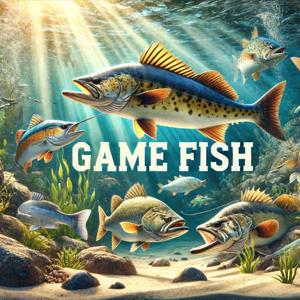
About Game Fish

From the publisher's feed

Dive into the fascinating world of game fish with "Game Fish" a podcast dedicated to the thrill of sport fishing. Each episode explores the habitats, behaviors, and techniques for catching popular game fish such as marlin, bass, trout, and salmon. Join expert anglers, marine biologists, and fishing enthusiasts as they share their stories, tips, and knowledge about these remarkable species. Whether you're a seasoned angler or a curious beginner, "Game Fish Adventures" offers an in-depth look at the exciting pursuit of game fishing, highlighting conservation efforts and sustainable practices to ensure these magnificent fish thrive for generations to come. Tune in and embark on an aquatic adventure filled with insights, challenges, and the joy of the catch.