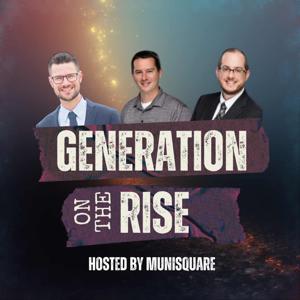
As producer and publisher here at Substack, today’s post is hard to write… we have decided to bring this show to a close, at least for now. Dave, Brandon and I start off with a little light bantor today before we make our way to the core message which concerns the absence of Eden.
I am going to post the entirety of my message here because I think it warrants some reflection. I know I will be thinking about this moment for a long time to come. In his response, Brandon speaks to the enduring nature of the work we have done that radiates out to others, and offers that endings also lead to beginnings, while Dave offers a positive outlook and some of the most robust advice I have ever heard him speak.
Do not miss the fullness of their words in this recording.
I could not be more appreciative of the talents of this generation coming into their own. For that reason, I am hopeful. But I think this episode provides food for thought, wherever you are in your career.
Here is my statement (recorded this morning):
We have made the decision this week to bring this chapter of this show to a close. The reasons are public and I will speak to them directly.
I am on with Dave and Brandon to talk about what comes after Generation on the Rise. We began roughly seven months ago with a vision of engaging young voices in the field of professional municipal management. We are saying goodbye to you, our dear listeners and want to share what is on our hearts and minds.
I will begin with the difficult decision this week to ask Eden to step down. He has been an important force from the beginning of the show and has fulfilled my hopes that we can bring minds together, disagree, debate, and build relationships at the same time.
"We do not have all the facts and cannot speak in more detail. Neither does the public or Eden, by his own account, who was not given the findings of the investigation. That is not a small thing to say, and it is not an exoneration. It is simply the truth of what we know and do not know."
However, as you may have learned, Eden was recently asked to leave his position as a municipal manager. Here is what is public. On April 13, the Middletown Township Board of Supervisors voted unanimously to terminate Eden, less than a year into his tenure. The Board declined to share the reasons, citing personnel policy.
This, by itself, is the very stuff of this podcast. Municipal managers have difficult and challenging milieus to work in, and unexpected exits take a heavy toll on the profession. We have touched on the various factors that can lead to abrupt departures and the uncertainty that comes with leadership.
“Employees do not come forward without great risk and cost. We understand it is the employees who create value in an organization and respect their efforts to be heard.”
However, on Monday, May 11th, AT A public Board meeting, a senior municipal employee made a weighty decision to represent and speak for employees to better inform the community as to why the Board asked him to leave. He stated that employees were targeted, unfairly treated and harassed. Although the Board did not assign cause at the time of his departure, this public testimony required us, on this podcast, to take stock of what it meant for a show built on the central role of professional management in local government.
We do not have all the facts and cannot speak in more detail. Neither does the public or Eden, by his own account, who was not given the findings of the investigation. That is not a small thing to say, and it is not an exoneration. It is simply the truth of what we know and do not know.
"The venue in which this account was delivered was a public meeting, after a Board had bound itself to silence, is itself worth pausing on. It is not the way personnel matters typically come to public view, and it is not the way many of us in this field would wish them to."
However, that the venue in which this account was delivered was a public meeting, after a Board had bound itself to silence, is itself worth pausing on. It is not the way personnel matters typically come to public view, and it is not the way many of us in this field would wish them to. But it is what happened. And it requires us to respond.
Employees do not come forward without great risk and cost. We understand it is the employees who create value in an organization and respect their efforts to be heard. While this is a difficult dilemma for us, the recovery of the organization is paramount and will be a much greater challenge.
We will move on, each in our own way. We walk away from this podcast with greater depth of understanding of the nuances of building in public, which is what we have been doing, and the vulnerability that comes with it. I have been extremely impressed with the work and achievements of this podcast crew, from the beginning.
We may have reached a closure, but go forward, we will. My hope is that we find a way to continue to lift and give support to the voices of the generation coming into their own in this profession.
Although this podcast stream will be quiet for a while, we will return with something new. We don’t know what this is yet, but we hope you will return too. We have no greater gratitude than to you, the listener. You have made this show a community.
Take care of each other.
MuniSquare is a reader-supported publication. To receive new posts and support our work, consider becoming a free or paid subscriber.
Get full access to MuniSquare at munisquare.substack.com/subscribe