
Sign up to save your podcasts
Or

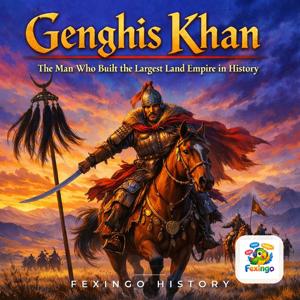


Long before the Reformation, Genghis Khan established a policy of religious freedom across his vast empire. This episode explores how the Mongol Empire protected Buddhism, Islam, Christianity, Taoism, and shamanism alike — a radical departure from the religious wars of their time. We examine the Yassa laws guaranteeing freedom of worship, the role of advisors like the Taoist Qiu Chuji, and how this tolerance helped the Mongols govern a multicultural empire. From Nestorian Christians in Karakorum to Muslim administrators in Persia, we see how Genghis Khan's pragmatic approach to religion shaped the Silk Road and beyond. We also discuss the limits of this tolerance and its legacy in later empires like the Yuan Dynasty under Kublai Khan.
#GenghisKhan #MongolEmpire #ReligiousTolerance #Yassa #QiuChuji #Karakorum #NestorianChristianity #Taoism #Buddhism #Islam #Shamanism #SilkRoad #KublaiKhan #YuanDynasty #WorldHistory #SteppeHistory #FexingoHistory #History
Keep every episode free: buymeacoffee.com/fexingo
In this episode, Lucas and Luna explore a pivotal but often overlooked chapter of Genghis Khan's rise: his conquest of the Naiman confederation and the crucial role that encounter played in shaping the Mongol Empire's administration. At the Battle of Chakirmaut in 1204, Temüjin defeated the Naiman khan Tayang and captured his uyghur scribe, a literate advisor named Tatar-Tonga (or Ta-Ta-T'ung-a). That scribe carried the Uyghur script, which Temüjin immediately adapted to write the Mongolian language — creating the first unified Mongol script. Lucas explains how this moment transformed Mongol governance, enabling written laws (the Yassa), diplomatic letters, and eventually the Secret History of the Mongols itself. The episode also covers Temüjin’s early rivalry with Jamukha, the symbolic meaning of the nine-tailed white banner, and the cultural implications of adopting a foreign alphabet. Luna asks about the fate of the Naiman people and whether the script was ever replaced. Lucas closes by reflecting on how the Mongols, often seen as destroyers, also absorbed and repurposed the technologies of the conquered — especially writing.
#GenghisKhan #NaimanConfederation #MongolScript #UyghurAlphabet #BattleOfChakirmaut #TatarTonga #Temüjin #Jamukha #Yassa #SecretHistoryOfTheMongols #MongolEmpire #CentralAsianHistory #SteppeHistory #1204 #Linguistics #WritingSystems #History #FexingoHistory
Keep every episode free: buymeacoffee.com/fexingo
In this episode, Lucas and Luna explore the Mongol tumen, the legendary decimal military unit that made Genghis Khan's conquests possible. They focus on the Battle of Yehuling in 1211, a decisive clash against the Jin Dynasty where Mongol tactics of feigned retreat, mobility, and archery shattered a massive Chinese army. Lucas explains how Genghis Khan reorganized the steppe tribes into a disciplined force of 10,000-man tumens, each led by loyal nökör commanders. The battle near Zhangjiakou saw the Mongols lure the Jin army into a trap using their signature feigned retreat, then encircle and annihilate them. This victory opened the door to northern China and changed the course of history. Lucas also touches on the role of scouting, the composite bow, and the contrast between Mongol and Jin military structures. The episode provides a ground-level view of Mongol warfare without rehashing sieges or broader campaign narratives covered in prior episodes.
#GenghisKhan #MongolEmpire #Tumen #BattleOfYehuling #JinDynasty #MongolMilitary #FeignedRetreat #CompositeBow #Nokor #SteppeWarfare #Zhongdu #Zhangjiakou #1211 #MongolConquests #History #FexingoHistory #MilitaryHistory #CentralAsia
Keep every episode free: buymeacoffee.com/fexingo
In this episode, Lucas and Luna explore how Genghis Khan transformed the Mongol Empire through economic innovation. They discuss the introduction of paper currency, the chao, by Yelü Chucai, the establishment of the yam relay system for trade and communication, and the use of paizi as diplomatic passes. The episode delves into the Silk Road's revival under Mongol protection, the ortogh merchant partnerships, and how the empire's unified trade routes fostered cultural exchange. It also examines the Mongol policy of religious tolerance, which attracted merchants and scholars from diverse backgrounds, and the role of cities like Karakorum as commercial hubs. The conversation highlights the paradox of a nomadic empire fostering settled commerce and how these policies outlasted the Mongol conquests, influencing global trade for centuries.
#MongolEmpire #GenghisKhan #EconomicHistory #SilkRoad #Yam #Paizi #Chao #Ortogh #Karakorum #YelüChucai #PaperCurrency #Trade #Commerce #CentralAsia #History #FexingoHistory #Podcast #13thCentury
Keep every episode free: buymeacoffee.com/fexingo
In this episode, Lucas and Luna delve into the remarkable story of Alakhai Bekhi, Genghis Khan's daughter who ruled the Uyghur kingdom as a regent and managed the Silk Road trade. They discuss how she wielded a golden paiza, commanded armies, and implemented the Yam postal system long before the famous Mongol invasions of Europe. The episode highlights her diplomatic marriage to the Uyghur Idiqut Barchuk, her role in integrating conquered peoples, and her legacy as one of the most powerful women in Mongol history. Drawing on the Secret History of the Mongols and Persian chroniclers like Juvayni, they explore how Alakhai balanced politics, trade, and warfare on the steppe. The conversation also touches on the broader implications of Mongol daughters governing client states, challenging Western perceptions of women in medieval Asia. A fresh angle on Genghis Khan's empire through the lens of a forgotten princess.
#AlakhaiBekhi #GenghisKhan #MongolEmpire #UyghurKingdom #SilkRoad #paiza #Yam #SecretHistoryOfTheMongols #Juvayni #Idiqut #Barchuk #Karakorum #SteppePolitics #WomenInHistory #MedievalAsia #MongolQueens #GoldenPaiza #FexingoHistory
Keep every episode free: buymeacoffee.com/fexingo
In this episode of Fexingo History, Lucas and Luna explore the remarkable story of Alakhai Bekhi, Genghis Khan's daughter who ruled the Silk Road as a powerful queen and diplomat. We trace her journey from the Mongolian steppe to the oasis city of Turfan, where she governed the Uyghur kingdom on behalf of her father. Learn how Alakhai wielded the paiza, a silver tablet granting authority over the vast Mongol communication network, and how she managed trade and tribute along the ancient trade routes. Discover the role of Nestorian Christianity in her court, the challenges she faced as a woman in a patriarchal society, and how her legacy endured long after Genghis Khan's death. Drawing on the Secret History of the Mongols and the writings of Persian historian Juvayni, we separate fact from legend and reveal the political acumen of one of history's most overlooked rulers.
#AlakhaiBekhi #GenghisKhan #SilkRoad #MongolEmpire #Uyghur #Turfan #paiza #Yam #Nestorian #SecretHistoryoftheMongols #Juvayni #MongolWomen #Karakorum #Yassa #CentralAsia #History #FexingoHistory #Podcast
Keep every episode free: buymeacoffee.com/fexingo
In this episode, Lucas and Luna explore the Mongol postal relay system, the Yam, and its connection to Genghis Khan's legal code, the Yasa. They discuss how the Yam functioned as a vast network of horse stations stretching across the empire, with fresh horses and riders ready at every post. Lucas explains the paiza, the metal tablets that gave travelers authority, and how merchants, diplomats, and spies used the system. They also cover how Ögedei Khan expanded the Yam after Genghis's death, and how the system influenced later empires, including the Persian and Russian postal systems. The episode touches on the Yasa's provisions for the Yam, including harsh punishments for those who damaged the system, and how the relay network enabled rapid communication that held the Mongol Empire together. Specific figures mentioned include Genghis Khan, Ögedei, and the Persian historian Juvayni. The discussion also covers the importance of the Yam in military intelligence and the integration of Chinese, Persian, and Uyghur administrative practices.
#GenghisKhan #MongolEmpire #Yam #Yasa #PostalRelay #ÖgedeiKhan #Paiza #MongolPostalSystem #History #FexingoHistory #CentralAsia #Steppe #Juvayni #MongolCommunication #SilkRoad #MongolAdministration #HorseRelay #EmpireBuilding
Keep every episode free: buymeacoffee.com/fexingo
Episode 48 of Fexingo History's Genghis Khan series explores how Mongol khans adopted Chinese-style bureaucracy to administer their sprawling empire. Lucas and Luna discuss the role of Khitan and Uyghur advisers like Yelü Chucai, who persuaded Ögedei Khan to tax rather than slaughter conquered populations. The episode covers the founding of the Secretariat (Zhongshu Sheng), the use of census registers, paper currency (chao), and the implementation of the civil service exam under Kublai Khan. It also examines tensions between Mongol nomadic traditions and settled Chinese governance, including the debate over converting farmland to pasture. Listeners will learn about the Department of State Affairs, the Censorate, and how the Yuan Dynasty's reliance on foreign administrators shaped its legacy.
#GenghisKhan #MongolEmpire #YuanDynasty #YelüChucai #ÖgedeiKhan #KublaiKhan #ChineseBureaucracy #ZhongshuSheng #Khitan #Uyghur #PaperCurrency #CivilServiceExam #Census #Censorate #SteppePolitics #MongolHistory #FexingoHistory #History
Keep every episode free: buymeacoffee.com/fexingo
In this episode, Lucas and Luna explore the Mongol Empire's sophisticated communication network—the Yam system—and how it was codified in Genghis Khan's law code, the Yasa. They discuss the origins of the Yam under Genghis, its expansion by Ögedei Khan, and how relay stations with fresh horses and riders allowed messages to travel hundreds of miles per day. Lucas explains the role of the paiza (a passport of sorts), the use of mounted archers as messengers, and how the Yam facilitated both military coordination and civilian trade along the Silk Road. They also touch on the Yasa's strict penalties for harming messengers or failing to maintain stations, and how these rules kept the empire connected. The episode highlights how the Yam system was so efficient that it was later adopted by the Russian tsars and even influenced modern postal services. Listeners will come away with a clear understanding of how the Mongols managed their vast territory through an early form of high-speed communication.
#GenghisKhan #MongolEmpire #Yam #Yasa #MongolPostalSystem #Paiza #ÖgedeiKhan #SilkRoad #History #FexingoHistory #CommunicationHistory #MedievalCommunications #MongolMessengers #SteppeEmpire #MongolLaw #PostalRelay #MongolInnovations #EmpireBuilding
Keep every episode free: buymeacoffee.com/fexingo
In this episode, Lucas and Luna explore the kheshig, the elite imperial guard of Genghis Khan that was far more than a bodyguard unit. Learn how Temüjin transformed a small band of loyal nökör into a fearsome force of 10,000 warriors that served as hostages, administrators, and enforcers of the Yassa. Discover how the kheshig included archers, swordsmen, and even engineers, and how it became the model for later elite units like the Janissaries. The episode also covers the kheshig's role in the purge of the shaman Teb Tengri and its influence on Mongol command and control. Tune in for a deep dive into the institution that held the Mongol Empire together.
#GenghisKhan #Kheshig #MongolEmpire #ImperialGuard #Nokor #Yassa #TebTengri #Temüjin #MongolArmy #SteppeWarriors #EliteGuard #CentralAsia #MilitaryHistory #HostageSystem #MongolConquests #Karakorum #History #FexingoHistory
Keep every episode free: buymeacoffee.com/fexingo
From the publisher's feed