
Sign up to save your podcasts
Or

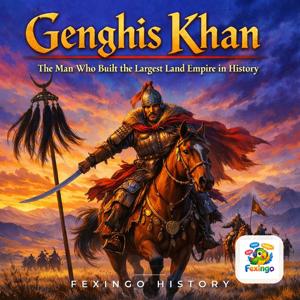


In this episode of Fexingo History, Lucas and Luna explore the Mongol Yam — the remarkable postal and intelligence network that held the largest land empire in history together. Learn how Genghis Khan and his successors built a system of relay stations stretching from the Black Sea to the Pacific, using horse-mounted couriers who could travel up to 200 miles a day. Discover the paiza pass system, the urton merchants who used the Yam for trade, and how the Silk Road flourished under Mongol rule. We also discuss the Mongol siege of Bukhara in 1220, where Genghis Khan used psychological warfare to break the city's defenses, and the role of Chinese siege engineers in Mongol conquests. This episode covers the practical logistics of empire-building — the roads, stations, and riders that enabled Mongol armies to move with unprecedented speed and coordination.
#MongolYam #GenghisKhan #SilkRoad #Paiza #Urton #MongolEmpire #Bukhara #SiegeOfBukhara #ChineseEngineers #MongolLogistics #PaxMongolica #HorseArchers #SteppeHistory #CentralAsia #MongolCouriers #YamStations #History #FexingoHistory #SteppeWarriors #YassaCode
Keep every episode free: buymeacoffee.com/fexingo
In this episode of Fexingo History, Lucas and Luna explore the logistical and communication systems that enabled Genghis Khan to build and command the largest contiguous land empire in history. They delve into the Yam — the Mongol relay station network — which allowed messages to travel up to 200 miles per day across the steppe. The discussion covers the role of the kheshig, or imperial guard, in managing communications, the use of paiza tablets as passes, and the integration of Chinese siege engineers and Persian administrators. They also touch on the controversial practice of population displacement and how the Mongols leveraged logistics to maintain control. Specific terms include Yam, paiza, kheshig, tamgha, and the Silk Road trade routes. This episode stands alone but builds on prior shows about the Yassa and Mongol military tactics.
#Yam #Paiza #Kheshig #MongolLogistics #GenghisKhan #SilkRoad #MongolEmpire #Tamgha #Karakorum #Steppe #History #FexingoHistory #MilitaryLogistics #Communication #SiegeEngineering #PopulationDisplacement #PaxMongolica #CentralAsia #SteppeWarriors #YassaCode
Keep every episode free: buymeacoffee.com/fexingo
Before he united the Mongol tribes and built the largest land empire in history, Genghis Khan was a boy named Temüjin, born into a world of shifting alliances, brutal feuds, and survival on the harsh steppe. In this episode, Lucas and Luna explore the formative years of the future conqueror: his disputed ancestry tracing back to the legendary gray wolf and fallow doe, the murder of his father Yesügei by the Tatars, the abandonment of his family by their clan, and the brutal resource-scramble that followed. They examine the bond—and bitter rivalry—with his blood brother Jamukha, the kidnapping and rescue of his wife Börte from the Merkit, and the first hints of the leadership and ruthlessness that would define his reign. Drawing on the Secret History of the Mongols and later chronicles, they separate myth from fact, including the legend of Temüjin killing his half-brother Behter and the divine mandate from the sky god Tengri. This episode sets the stage for everything that followed.
#GenghisKhan #Temujin #MongolEmpire #SteppeHistory #SecretHistoryOfTheMongols #Yesugei #Borte #Jamukha #Merkit #Tatars #Tengri #MongolUnification #EarlyLife #CentralAsia #WarriorCulture #History #FexingoHistory #Podcast #SteppeWarriors #YassaCode
Keep every episode free: buymeacoffee.com/fexingo
In this episode, Lucas and Luna explore the Mongol siege of Nishapur in 1221, a brutal chapter in Genghis Khan's campaign against the Khwarezmian Empire. Following the death of Genghis's son-in-law Tokuchar at the hands of the Nishapuris, Genghis ordered a ruthless reprisal. His youngest daughter, the fierce warrior-princess Alakhai Bekhi, may have played a role in overseeing the city's total destruction. We examine the siege tactics, the use of Chinese engineers and siege engines, the massacre that followed, and the grim legacy of Mongol terror as a calculated military strategy. We also discuss the figure of Tokuchar and the ongoing debate among historians about the extent of Alakhai's involvement. This episode delves into the personal and political dimensions of Mongol warfare, revealing how vengeance and empire-building intertwined on the steppe.
#MongolEmpire #GenghisKhan #Nishapur #Siege #Tokuchar #AlakhaiBekhi #KhwarezmianEmpire #MongolWarfare #SiegeWarfare #ChineseEngineers #MongolTerror #Vengeance #History #MedievalHistory #CentralAsia #Persia #FexingoHistory #Podcast #SteppeWarriors #YassaCode
Keep every episode free: buymeacoffee.com/fexingo
In this episode, Lucas and Luna explore the founding and development of Karakorum, the first real capital of the Mongol Empire, established by Genghis Khan in 1220 on the Orkhon River in present-day Mongolia. They discuss how it grew under his son Ögedei into a cosmopolitan hub where Chinese craftsmen, Persian scholars, and Nestorian Christians lived alongside Mongol nomads. The city's design included a palace with a giant silver tree fountain that dispensed wine and kumis, and a Buddhist monastery but also a church and mosque—testament to the empire's religious toleration. Lucas explains how Karakorum served as a logistical base for campaigns, a center for tribute redistribution, and a symbol of Mongol authority, contrasting with the later shift to Khanbaliq under Kublai. The episode also touches on the city's decline after the collapse of the Yuan dynasty and its rediscovery in the 20th century by Russian and Mongolian archaeologists who found evidence of trade goods from as far as Persia and China. Luna asks about daily life, the fate of the silver tree, and whether any ruins remain today.
#Karakorum #GenghisKhan #MongolEmpire #OrkhonRiver #GedeiKhan #MongolCapital #MedievalCities #CentralAsiaHistory #Mongolia #SilkRoad #SilverTree #PaxMongolica #YuanDynasty #Archaeology #NomadicEmpire #WorldHistory #History #FexingoHistory #SteppeWarriors #YassaCode
Keep every episode free: buymeacoffee.com/fexingo
In 1227, Genghis Khan died while leading a campaign against the Tangut kingdom of Xi Xia. His death set off a succession crisis that nearly tore the Mongol Empire apart before it had even fully consolidated. This episode explores the final months of the Great Khan's life, the political maneuvering among his sons and wives, and the mechanisms — including the kurultai and the yassa — that eventually elevated Ögedei to power. We also look at the competing claims of Jochi, Chagatai, and Tolui, and how the decision reshaped Mongol history. Along the way, we consider the historical sources: the Secret History of the Mongols, the work of Rashid al-Din, and later Chinese chronicles. The episode also touches on the myth of Genghis's hidden tomb and the ongoing search for it. This isn't a retread of earlier episodes; it's a focused look at the pivotal transition from founder to successor, the first real test of the empire's political institutions.
#GenghisKhan #MongolEmpire #SuccessionCrisis #Gedei #Jochi #Chagatai #Tolui #Kurultai #Yassa #XiXia #Tangut #SecretHistoryOfTheMongols #RashidAlDin #TombOfGenghisKhan #1227 #SteppePolitics #History #FexingoHistory #SteppeWarriors #YassaCode
Keep every episode free: buymeacoffee.com/fexingo
In 1260, Hulagu Khan, grandson of Genghis Khan, marched into Syria at the head of a Mongol army that had already devastated Baghdad. The Siege of Aleppo was a brutal six-day affair that pitted Mongol siege engineers against the ancient fortifications of the Ayyubid dynasty. This episode follows the fall of Aleppo, the subsequent capture of Damascus, and the diplomatic dance with the Crusader states. It explores how the Mongol advance was finally halted at the Battle of Ain Jalut by the Mamluks under Qutuz and Baibars, a turning point that saved the Islamic world from complete Mongol domination. We also discuss the role of the Armenian king Hethum I and the Mongol alliance with the Crusaders, and how internal succession struggles after Mongke's death left Hulagu short of reinforcements, changing the course of history.
#MongolSiegeOfAleppo #HulaguKhan #Ayyubids #BattleOfAinJalut #Mamluks #Qutuz #Baibars #CrusaderStates #HethumI #MongolCampaigns #Syria1260 #MongolSiegeTactics #SilkRoad #Ilkhanate #MongkeKhan #Kitbuqa #MedievalWarfare #FexingoHistory #GenghisKhan #MongolEmpire
Keep every episode free: buymeacoffee.com/fexingo
In this episode, Lucas and Luna explore how Genghis Khan deliberately cultivated a reputation for merciless cruelty to break enemy resistance before battle even began. They discuss the Mongol strategy of offering surrender with stark choices—submit and be spared, or resist and face annihilation. Lucas recounts the sack of Nishapur and the use of human shields at Nishapur and other sieges. He explains the role of Chinese engineers in Mongol siegecraft, the use of terror as psychological warfare, and the way Genghis Khan integrated fear into his Yassa code. The episode also touches on how the Mongols used fleeing refugees as a tool to spread panic, and how this reputation for ferocity sometimes backfired, prolonging sieges. Lucas and Luna consider the ethics of terror warfare from a historical perspective, noting that the Mongols were not uniquely cruel by the standards of their time, but were uniquely efficient at weaponizing their reputation. The conversation ends with a reflection on the gap between reputation and reality in Genghis Khan's legacy.
#GenghisKhan #MongolEmpire #TerrorWarfare #PsychologicalWarfare #SiegeWarfare #Nishapur #Yassa #MongolArmy #ChineseEngineers #HumanShields #MedievalHistory #CentralAsia #Warfare #Brutality #PaxMongolica #SteppeHistory #History #FexingoHistory #SteppeWarriors #YassaCode
Keep every episode free: buymeacoffee.com/fexingo
Before Genghis Khan conquered the world, he first had to unite the fractious Mongol tribes of the steppe. This episode dives into the brutal and brilliant process that transformed a landscape of warring clans into a unified nation. We follow Temüjin's rise from a fugitive to a charismatic leader who defeated rivals like Jamukha and Toghrul Khan of the Kereyid. Lucas and Luna explore the pivotal Battle of Dalan Balzhut, the formation of the nökör system of sworn companions, and the crucial role of the kurultai in forging a new Mongol identity. We examine how Genghis Khan's early alliances and military innovations—like the decimal army organization—laid the groundwork for his later empire. The episode also touches on the controversial incorporation of the Tatars and the elimination of the Merkit threat. From the Kerülen River to the Burkhan Khaldun mountain, this is the story of how a scattered people became a conquering force.
#GenghisKhan #MongolEmpire #Temujin #Jamukha #Kereyid #Tatars #Merkit #BattleOfDalanBalzhut #Kurultai #Nokor #SteppeTribes #Unification #MongolHistory #SecretHistoryOfTheMongols #CentralAsia #12thCentury #FexingoHistory #History #SteppeWarriors #YassaCode
Keep every episode free: buymeacoffee.com/fexingo
In this episode of Fexingo History, Lucas and Luna explore Genghis Khan's final campaign — the destruction of the Tangut-led Xi Xia kingdom. While earlier episodes covered the Mongols' wars against the Jin, Khwarezm, and the famous siege of Nishapur, this story is different: it's personal, costly, and shrouded in mystery. Lucas explains why the Xi Xia, once vassals, provoked Genghis's wrath by refusing troops, and how the Tangut script — a unique, complex writing system — became a symbol of resistance. We follow the brutal five-year campaign, the fall of the capital Yinchuan, and the devastating blow Genghis took at the Battle of the Yellow River. Most intriguing is the legend of his death: did a Tangut princess kill him? Or did he fall from his horse? Lucas unpacks the evidence — or lack of it — from the Secret History of the Mongols and later chronicles. We also discuss the fate of the Tangut people: cultural erasure so complete that their language was lost for centuries. The episode closes with a reflection on how even the greatest conqueror's end can be a mystery — and how the Xi Xia's story is a reminder that history belongs to the victors, but also to those who write it.
#GenghisKhan #XiXia #Tangut #Yinchuan #MongolEmpire #TangutScript #BattleOfTheYellowRiver #SecretHistoryOfTheMongols #Yassa #Kurultai #Helanshan #SilkRoad #CentralAsia #SteppeHistory #Conquest #MilitaryHistory #History #FexingoHistory #SteppeWarriors #YassaCode
Keep every episode free: buymeacoffee.com/fexingo
From the publisher's feed