
Sign up to save your podcasts
Or



In this episode, we look at how Gino Parin was remembered in the years following his death and some exhibitions that featured his art after 1945.
.
.
.
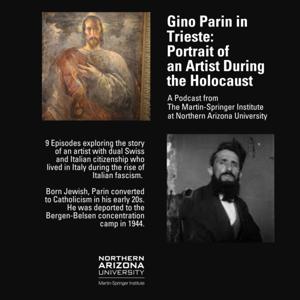
The painter Gino Parin lived in the port city of Trieste before and during the rise of Italian fascism. Born Jewish, he converted to Catholicism. When Nazi Germany occupied Trieste, Parin was arrested and deported to a concentration camp in Germany, where he died. In this series, we encounter a life full of nuances and complications during the upheavals of the early twentieth century.
Learn more: https://in.nau.edu/martin-springer/
In this episode, we look at the history of the camp before and after Parin was a prisoner there.
.
.
.
The painter Gino Parin lived in the port city of Trieste before and during the rise of Italian fascism. Born Jewish, he converted to Catholicism. When Nazi Germany occupied Trieste, Parin was arrested and deported to a concentration camp in Germany, where he died. In this series, we encounter a life full of nuances and complications during the upheavals of the early twentieth century.
Learn more: https://in.nau.edu/martin-springer/
In this episode, we talk about Italian camps that imprisoned Jews, like Gino Parin, during the German occupation of Italy.
.
.
.
The painter Gino Parin lived in the port city of Trieste before and during the rise of Italian fascism. Born Jewish, he converted to Catholicism. When Nazi Germany occupied Trieste, Parin was arrested and deported to a concentration camp in Germany, where he died. In this series, we encounter a life full of nuances and complications during the upheavals of the early twentieth century.
Learn more: https://in.nau.edu/martin-springer/
In this episode, we will encounter Gino’s self-portrait and a skull; Freud will make a short appearance, too.
.
.
.
The painter Gino Parin lived in the port city of Trieste before and during the rise of Italian fascism. Born Jewish, he converted to Catholicism. When Nazi Germany occupied Trieste, Parin was arrested and deported to a concentration camp in Germany, where he died. In this series, we encounter a life full of nuances and complications during the upheavals of the early twentieth century.
Learn more: https://in.nau.edu/martin-springer/
In this episode, we look at Gino Parin’s relationships with three important women in his life: Ella Auler, Fanny Tedeschi, and Magda Springer.
.
.
.
The painter Gino Parin lived in the port city of Trieste before and during the rise of Italian fascism. Born Jewish, he converted to Catholicism. When Nazi Germany occupied Trieste, Parin was arrested and deported to a concentration camp in Germany, where he died. In this series, we encounter a life full of nuances and complications during the upheavals of the early twentieth century.
Learn more: https://in.nau.edu/martin-springer/
In this episode, we unpack the concept of citizenship as it pertains to Parin’s life.
.
.
.
The painter Gino Parin lived in the port city of Trieste before and during the rise of Italian fascism. Born Jewish, he converted to Catholicism. When Nazi Germany occupied Trieste, Parin was arrested and deported to a concentration camp in Germany, where he died. In this series, we encounter a life full of nuances and complications during the upheavals of the early twentieth century.
Learn more: https://in.nau.edu/martin-springer/
In this episode, Gino Parin’s Christ painting in Cottonwood takes us back to Trieste.
.
.
.
The painter Gino Parin lived in the port city of Trieste before and during the rise of Italian fascism. Born Jewish, he converted to Catholicism. When Nazi Germany occupied Trieste, Parin was arrested and deported to a concentration camp in Germany, where he died. In this series, we encounter a life full of nuances and complications during the upheavals of the early twentieth century.
Learn more: https://in.nau.edu/martin-springer/
.
.
.
The painter Gino Parin lived in the port city of Trieste before and during the rise of Italian fascism. Born Jewish, he converted to Catholicism. When Nazi Germany occupied Trieste, Parin was arrested and deported to a concentration camp in Germany, where he died. In this series, we encounter a life full of nuances and complications during the upheavals of the early twentieth century.
Learn more: https://in.nau.edu/martin-springer/
In this episode, we visit a painting in a church in Arizona and discover Gino Parin.
.
.
.
The painter Gino Parin lived in the port city of Trieste before and during the rise of Italian fascism. Born Jewish, he converted to Catholicism. When Nazi Germany occupied Trieste, Parin was arrested and deported to a concentration camp in Germany, where he died. In this series, we encounter a life full of nuances and complications during the upheavals of the early twentieth century.
Learn more: https://in.nau.edu/martin-springer/
From the publisher's feed