
Sign up to save your podcasts
Or

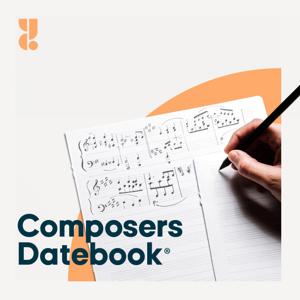

On today’s date in 1980, Satyagraha, an opera by the American composer Philip Glass had its premiere in Rotterdam by the Netherlands Opera.
Four years earlier, Glass’ first opera, Einstein on the Beach, had scored a big hit not only in Avignon, France, where it had premiered, but also at a special, non-subscription performance at New York’s Metropolitan Opera.
But Einstein had been written for Glass’s own electronic keyboard ensemble, while the new opera Satyagraha was written for the more traditional opera pit orchestra of strings, winds, and brass — in some ways, a new language for Glass to learn.
And speaking of new languages, for opera singers used to singing in Italian, French or German, the libretto for Satyagraha, crafted by Glass and Constance DeJong was to be sung in ancient Sanskrit, based on texts from the Bhagavad Gita.
“Satyagraha” is a Sanskrit word meaning “truth force.” While the text is ancient, the story of the opera is set in modern times and deals with Mahatma Gandhi's early years in South Africa and his development of non-violent protest as a political tool.
Satyagraha is the second in Glass’ opera trilogy about men who changed the world: Einstein, Gandhi and the ancient Egyptian pharaoh Akhnaten.
Philip Glass (b. 1937): Satyagraha; New York City Opera; Christopher Keene, conductor; Sony 39672
 View all episodes
 By American Public Media

4.7
176176 ratings
On today’s date in 1980, Satyagraha, an opera by the American composer Philip Glass had its premiere in Rotterdam by the Netherlands Opera.
Four years earlier, Glass’ first opera, Einstein on the Beach, had scored a big hit not only in Avignon, France, where it had premiered, but also at a special, non-subscription performance at New York’s Metropolitan Opera.
But Einstein had been written for Glass’s own electronic keyboard ensemble, while the new opera Satyagraha was written for the more traditional opera pit orchestra of strings, winds, and brass — in some ways, a new language for Glass to learn.
And speaking of new languages, for opera singers used to singing in Italian, French or German, the libretto for Satyagraha, crafted by Glass and Constance DeJong was to be sung in ancient Sanskrit, based on texts from the Bhagavad Gita.
“Satyagraha” is a Sanskrit word meaning “truth force.” While the text is ancient, the story of the opera is set in modern times and deals with Mahatma Gandhi's early years in South Africa and his development of non-violent protest as a political tool.
Satyagraha is the second in Glass’ opera trilogy about men who changed the world: Einstein, Gandhi and the ancient Egyptian pharaoh Akhnaten.
Philip Glass (b. 1937): Satyagraha; New York City Opera; Christopher Keene, conductor; Sony 39672

6,736 Listeners

38,841 Listeners

8,770 Listeners

9,195 Listeners

5,778 Listeners

926 Listeners

1,390 Listeners

1,285 Listeners
3,156 Listeners

1,974 Listeners

523 Listeners
183 Listeners
13,764 Listeners
3,086 Listeners

248 Listeners

28,129 Listeners

430 Listeners

5,467 Listeners
2,196 Listeners

14,142 Listeners

6,416 Listeners
2,514 Listeners

4,837 Listeners

575 Listeners

243 Listeners