
Sign up to save your podcasts
Or



Hello, hello!
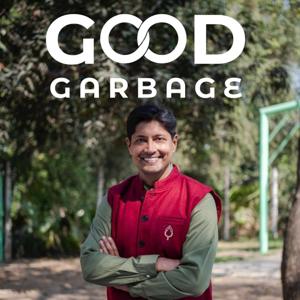
In this episode of the Good Garbage Podcast, host Ved Krishna sits down with sustainability content creator Aashima Aghi to explore how conscious living, mindful consumption, and everyday lifestyle choices can create a meaningful impact on both personal well-being and the planet.
Aashima shares her journey from being a curious child to becoming one of India's leading voices in sustainability content. From discovering healthier habits during the COVID lockdown to building a platform around sustainable living, she reflects on how small personal changes can inspire broader societal shifts. The conversation covers everything from conscious parenting and reusable products to consumer psychology, minimalism, and the growing commercialization of everyday life.
With practical examples and personal experiences, Aashima highlights why sustainability is not about perfection, but about making informed, mindful choices that work for both people and the environment.
🎙️ What This Episode Explores
This conversation goes beyond common sustainability advice and dives into the real behaviors that drive overconsumption. From the commercialization of childhood and disposable lifestyles to reusable alternatives and conscious consumerism, Aashima shares practical insights on how individuals can rethink their relationship with products, convenience, and consumption.
The discussion also explores how brands can make sustainability aspirational, how storytelling influences purchasing decisions, and why the future of sustainable living depends as much on mindset shifts as it does on innovative products.
If you've ever wondered:
• Can sustainability become a natural part of everyday life?
• Why do we continue to overconsume even when we know better?
• How can parents make more conscious choices for their children?
• Are reusable products actually better for our lifestyle and not just the environment?
• How can brands make sustainable choices more appealing to consumers?
This episode answers these questions with honesty, personal stories, and practical takeaways.
🧠 In This Episode, You'll Learn
• How Aashima's sustainability journey began during the COVID lockdown
• The connection between healthy habits, mindful living, and sustainability
• Why buying less is often the most sustainable choice
• The impact of overconsumption and the commercialization of childhood
• Practical approaches to conscious parenting and mindful purchasing
• The benefits and challenges of reusable products and sustainable alternatives
• How personal experience drives lasting behavioral change
• Why convenience culture fuels waste and overconsumption
• How brands can make sustainability more attractive through storytelling and design
• The growing importance of community-driven and purpose-led brands
• Why sustainability should be viewed as a lifestyle rather than a trend
Whether you're beginning your sustainability journey, looking to reduce waste in your daily life, or interested in understanding the psychology behind consumer behavior, this episode offers valuable perspectives on creating positive change- one mindful choice at a time.
🎬 Credits
Producer: Utsav Kurchania
Video Editor: Sargam Krishna
🌐 Follow & Listen
Aashima's Instagram: https://www.instagram.com/planetfirstplease?utm_source=ig_web_button_share_sheet&igsh=ZDNlZDc0MzIxNw==
Aashima's YouTube Channel: https://youtube.com/@sustainabilitywithaashima?si=vXRvJWiOW5N2zHGY
Listen on Spotify & Apple Podcasts
Instagram: @goodgarbagepodcast
LinkedIn: Good Garbage Podcast
💭 Let’s Talk
If you had to redesign packaging from scratch—
Would you choose biodegradable materials, plastic alternatives, or an entirely new system? Why?
Hello, hello!
In this episode of the Good Garbage Podcast, host Ved Krishna sits down with Vaibhav Anand, Founder & CEO of Bambrew, to unpack how sustainable packaging is being redefined in India through innovation in biodegradable materials and scalable design.
From building solutions for milk packaging to creating high-barrier compostable films, Vaibhav shares his journey from Jharkhand to leading one of India’s most exciting climate-tech startups. With deep insights into materials science, circular economy systems, and startup realities, this episode bridges the gap between sustainability theory and real-world execution.
🎙️ What This Episode Explores
This conversation goes beyond buzzwords like eco-friendly, biodegradable, and green packaging and dives into the real challenges of building sustainable alternatives that actually work at scale.
From flexible packaging and bioplastics to meta materials and compostable films, Vaibhav explains why the future of packaging isn’t about replacing plastic blindly—but about designing smarter, context-driven solutions.
If you’ve ever wondered:
- Can biodegradable packaging truly replace plastic in India?
- What makes milk packaging so difficult to innovate?
- How do startups scale sustainable materials in a price-sensitive market?
This episode answers it practically and honestly.
🧠 In This Episode, You’ll Learn
• Why sustainable milk packaging is a massive opportunity in India
• The science behind high-barrier compostable films
• What “meta materials” and “material agnosticism” really mean
• How COVID accelerated product innovation in climate-tech
• The biggest challenges in scaling eco-friendly packaging
• Why mindset and systems are as important as materials
• The role of bioplastics like PBAT in flexible packaging
• How Bambrew is building solutions for a circular economy
⏱️ Chapters
00:00 Introduction to Vaibhav Anand and Bambrew
00:43 The importance of sustainable milk packaging in India
04:26 Early influences and journey into ecopreneurship
10:04 Vaibhav's entrepreneurial ventures before Bambrew
14:03 Impact of COVID-19 on Bamboo's product development
18:26 Development of home compostable mailers during pandemic
22:14 Meet the co-founder Kunal and their collaboration
24:03 Bambrew's core innovation: high barrier, compostable films
27:47 Meta materials and material agnosticism explained
30:14 Challenges in bringing sustainable packaging to scale
33:48 Focus on staples packaging and other high-impact categories
35:52 Overcoming market and mindset challenges
39:48 Material innovations: biophil platform and bio-based materials
44:11 Key materials: PBAT and downstream solutions
51:08 Future applications and long-term vision
01:01:45 Reflections on growth, aspirations, and impact
01:06:20 What does good garbage mean? Building a community
01:08:15 Closing thoughts and call for eco-entrepreneurs
🎬 Credits
Producer: Tanishka Garg
Video Editor: Sargam Krishna
🌐 Follow & Listen
Vaibhav Anand: https://linkedin.com/in/vaibhav-anand
Bambrew: https://www.bambrew.in/
Listen on Spotify & Apple Podcasts
Instagram: @goodgarbagepodcast
LinkedIn: Good Garbage Podcast
💭 Let’s Talk
If you had to redesign packaging from scratch—
Would you choose biodegradable materials, plastic alternatives, or an entirely new system? Why?
Hello, hello!
In this episode of the Good Garbage Podcast, host Ved Krishna sits down with Sandeep Kulkarni, Founder of Kool Earth Solutions and a global expert in sustainable packaging.
With experience spanning PepsiCo’s Advanced Research team, packaging innovation, and circular economy systems, Sandeep brings a rare insider perspective into how materials, business realities, and sustainability intersect.
🎙️ What This Episode Explores
This conversation goes beyond buzzwords like eco-friendly and biodegradable — and dives into the real science, trade-offs, and economics behind packaging materials.
From paper bottles to plastic recycling, molded fiber, and biopolymers, Sandeep explains why there is no perfect material — only better decisions depending on context.
If you’ve ever wondered:
- Can paper really replace plastic?
- Is glass actually more sustainable?
- What happens to your plastic bottle after you throw it away?
This episode answers it — honestly.
🧠 In This Episode, You’ll Learn
• Why paper packaging isn’t as simple as it seems
• The real difference between plastic, glass, and paper
• How PepsiCo approached packaging innovation
• Why recycling systems matter more than materials
• The truth about bioplastics (PLA, PHA)
• Why molded fiber hasn’t scaled yet
• How barriers (oxygen, moisture) define packaging success
• Why there is no one-size-fits-all solution in sustainability
⏱️ Chapters
00:00 Introduction to Sandeep Kulkarni
01:30 Journey into PepsiCo & Advanced Research
04:50 Paper vs Plastic: Benefits & Challenges
07:45 Understanding hermetic sealing
09:40 Glass vs Plastic vs Paper comparison
17:30 Recycling systems: India vs global
21:30 What happens to plastic bottles
23:50 Chemicals in plastics explained
26:00 Evolution of paper packaging
28:40 Molded fiber: potential vs limits
31:30 Designing sustainable packaging
39:30 Why bioplastics struggle to scale
44:30 Starbucks Cup Challenge insights
50:30 Molded fiber cups: challenges
55:30 EPS vs paper debate
58:50 Reality of disposable chai cups
01:01:15 India’s recycled plastic policy
01:04:00 Multi-layer packaging challenges
01:08:00 Real-world failures in sustainable packaging
01:13:00 Designing the “perfect” wrapper
01:19:00 Can paper fully replace plastic?
01:23:00 Future of biopolymers
01:27:00 Purpose behind sustainability work
01:30:30 What gives hope for the future
🎬 Credits
Producer: Tanishka Garg
Video Editor: Sargam Krishna
🌐 Follow & Listen
Sandeep Kulkarni: http://linkedin.com/in/sandeepkulkarni1
KoolEarth Solutions: https://koolearthsolutions.com/
Listen on Spotify & Apple Podcasts
Instagram: @goodgarbagepodcast
LinkedIn: Good Garbage Podcast
Business/queries: [email protected]
💭 Let’s Talk
If you had to redesign packaging from scratch —
Would you choose paper, plastic, or something entirely new? Why?
Can you eat the packaging instead of throwing it away?
Hello, hello!
In this episode of the Good Garbage Podcast, host Ved Krishna sits down with Naama Nicotara, founder of NakedPak, to explore a radical rethinking of food packaging, one where the wrapper disappears entirely.
From her early inspiration to the material science behind algae-based films, Naama shares the journey of building NakedPak and challenging the very idea of what packaging should be. What began as a response to plastic pollution evolved into a bold innovation that merges food, material science, and design.
This conversation dives into the realities of building a breakthrough sustainability product. From behavioural shifts and market confusion to food safety certifications and scaling production, Naama explains what it truly takes to move from concept to consumer.
Together, Ved and Naama discuss:
• The origin story behind NakedPak
• Why algae became the material of choice
• How edible packaging is developed in the lab
• The science behind taste, shelf life, and food safety
• Consumer psychology and behavioural change
• Market positioning and the blurred line between meal and packaging
• Certifications and regulatory hurdles
• Accessibility, pricing, and commercial viability
• Collaboration and the future of zero waste food systems
• The episode closes with a reflection on what it really means to eliminate waste; not by replacing plastic with another material, but by questioning whether packaging is needed at all.
🎙️ Good Garbage features conversations with founders, scientists, and builders working to leave the planet cleaner — while asking one essential question: What is Good Garbage?
📌Chapters
00:00 Introduction to Naama Nicotara and NakedPak
03:12 The origin story and early inspiration
07:45 Why algae and edible materials?
12:20 Inside the lab: how the packaging is made
18:05 Taste, shelf life, and food safety concerns
24:30 Certifications and regulatory approvals
30:10 Market positioning: meal or packaging innovation
38:45 Pricing and accessibility
44:20 Consumer behaviour and comfort zones
52:15 Challenges in building a breakthrough idea
59:40 Collaboration and industry response
01:07:30 Scaling production and factory vision
01:15:00 The future of edible packaging
01:22:10 What is Good Garbage?
Naama's LinkedIn: https://www.linkedin.com/in/naama-nicotra-1b9232174/?originalSubdomain=il
NakedPak: https://www.nakedpak.com/
NakedPak LinkedIn: https://www.linkedin.com/company/nakedpak/
NakedPak Instagram: https://share.google/n03pqrTXGwcu7z9vv
Producer: Palakshi Aggarwal
Video Producer: Sargam Krishna
📺 Subscribe on YouTube: /@GoodGarbage
🎧 Listen on Apple Podcasts and Spotify
📸 Follow on Instagram /@goodgarbagepodcast
📩 Send us your questions: [email protected]
Hello, hello!
In this episode of the Good Garbage Podcast, host Ved Krishna sits down with Dr. Alexey Vishtal, a scientist and industry expert in pulp, paper, and sustainable packaging, to explore thematerial reality behind sustainability.
From growing up in Russia to building his career in Finland, Alexey shares the journey that led him into material science — including a PhD focused on the stretchability of paper and years working inside a global corporation like Nestlé. Along the way, he gained rare insight into how sustainability actually moves (or stalls) inside large systems.
This conversation goes beyond surface-level sustainability narratives and into the physics, constraints, and trade-offs that define packaging today. From water vapor barriers to economic viability, Alexey explains why materials — not intentions — ultimately decide what works.
Together, Ved and Alexey discuss:
Why paper performance is more complex than it seems
What stretchability, barriers, and material limits really mean
How regulation and consumer demand shape sustainability efforts
What working inside Nestlé revealed about innovation at scale
How nature offers clues for better material design
Why collaboration is essential for the future of sustainable packaging
The episode closes with a reflection on good garbage — and what it would take to design materials that truly belong in natural and industrial systems.
🎙️ Good Garbage features conversations with scientists, founders, and builders working to leave the planet cleaner — while asking one essential question: What is #GoodGarbage?
📌 Chapters
00:00 Introduction to Dr. Alexey Vishtal
03:04 From Russia to Finland: early influences
05:46 Discovering pulp & paper
09:00 The science of paper stretchability
12:10 Inside Nestlé: sustainability at scale
17:56 Regulation, consumers & real change
21:11 India, culture, and perspectives
29:52 Innovation in sustainable packaging
50:06 Why water vapor barriers are so hard
54:13 Learning from nature
01:01:20 The future of sustainable materials
01:24:19 Vision for the future of packaging
Producer: Adriana Sánchez Uebelhoer
Video Producer: Sargam Krishna
📺 Subscribe on YouTube: / @goodgarbage
🎧 Listen on Apple Podcasts & Spotify
📸 Follow on Instagram: / @goodgarbagepodcast
📩 Send us your questions: [email protected]
Hello, hello! In this episode of the Good Garbage Podcast, host Ved Krishna sits down with Neha Jain, Founder & CEO of Zerocircle, to explore how seaweed-based materials could transform the future of sustainable packaging.
Imagine a world where packaging doesn’t end up stranded on beaches, but instead safely dissolves back into nature. That’s the future Neha is working toward.
Neha shares her journey from working at Google to building Zerocirlce, a company focused on developing natural polymer materials from seaweed as an alternative to plastic packaging. This conversation dives deep into material science, the challenges of scaling sustainable packaging solutions, and why true sustainability must work commercially, not just environmentally.
Together, Ved and Neha discuss:
- How seaweed is used to create home-compostable packaging materials
- The science behind natural polymers and plastic alternatives
- Why collaboration is critical in the sustainable materials ecosystem
- What it takes to scale climate-positive solutions globally
- Why “good garbage” means designing systems where waste doesn’t exist
Zerocircle’s vision goes beyond packaging aiming to become a core material provider for manufacturers worldwide, helping reduce plastic waste at scale.
→ Find out more about Zerocirlce: https://www.zerocircle.in/
🎙️ Good Garbage features conversations with founders, scientists, and innovators working to leave the planet cleaner - while asking one essential question: What is #GoodGarbage?
📌 Chapters
00:00 Introduction to Neha Jain and Zero Circle
02:50 Early life, curiosity, and career path
09:24 Entrepreneurship lessons from Flyby Night
15:21 Discovering sustainability and material science
29:57 Founding Zero Circle
54:14 Why seaweed? Properties and potential
01:00:44 Extraction, processing, and scalability
01:10:13 Commercialization challenges
01:22:00 Investors and funding climate solutions
01:30:03 Collaboration in the seaweed ecosystem
01:34:08 The future of sustainable packaging
Neha’s LinkedIn: https://www.linkedin.com/in/nehajn/
Zerocircle’s LinkedIn: https://www.linkedin.com/company/zerocircle/
Instagram: https://www.instagram.com/zerocircle_in/
Producer: Adriana Sánchez Uebelhoer
Video Producer: Sargam Krishna
📺 Subscribe on YouTube: / @goodgarbage
🎧 Listen on Apple Podcasts & Spotif
y📸 Follow on Instagram: / @goodgarbagepodcast
📩 Send us your questions: [email protected]
Hello, hello! In this episode of the Good Garbage Podcast, host Ved Krishna sits down with Neha Jain, Founder & CEO of Zerocircle, to explore how seaweed-based materials could transform the future of sustainable packaging.
Imagine a world where packaging doesn’t end up stranded on beaches, but instead safely dissolves back into nature. That’s the future Neha is working toward.
Neha shares her journey from working at Google to building Zerocirlce, a company focused on developing natural polymer materials from seaweed as an alternative to plastic packaging. This conversation dives deep into material science, the challenges of scaling sustainable packaging solutions, and why true sustainability must work commercially, not just environmentally.
Together, Ved and Neha discuss:
Zerocircle’s vision goes beyond packaging aiming to become a core material provider for manufacturers worldwide, helping reduce plastic waste at scale. → Find out more about Zerocirlce: https://www.zerocircle.in/
🎙️ Good Garbage features conversations with founders, scientists, and innovators working to leave the planet cleaner - while asking one essential question: What is #GoodGarbage?
📌 Chapters
00:00 Introduction to Neha Jain and Zero Circle
02:50 Early life, curiosity, and career path
09:24 Entrepreneurship lessons from Flyby Night
15:21 Discovering sustainability and material science
29:57 Founding Zero Circle
54:14 Why seaweed? Properties and potential
01:00:44 Extraction, processing, and scalability
01:10:13 Commercialization challenges
01:22:00 Investors and funding climate solutions
01:30:03 Collaboration in the seaweed ecosystem
01:34:08 The future of sustainable packaging
Producer: Adriana Sánchez Uebelhoer
Video Producer: Sargam Krishna
📺 Subscribe on YouTube: / @goodgarbage
🎧 Listen on Apple Podcasts & Spotify
📸 Follow on Instagram: / @goodgarbagepodcast
📩 Send us your questions: [email protected]
Sammy Davies, Director of Sustainability & Brand at EcoSafe Zero Waste, is a regenerative leader who bridges the gap between high-level brand strategy and deep ecological advocacy. With over a decade of experience in cleantech, she brings a "systems change" mindset to the heart of the circular economy.
What if the secret to fixing our broken industrial systems isn't found in a boardroom, but in the ancient wisdom of the earth? We explore how a background in herbalism and ancestral medicine can fundamentally reshape our approach to environmental leadership and personal connection.
Modern waste management is full of promises, but how much of it is actually working? We take a closer look at the innovative tools driving real diversion and the specific household items that are quietly revolutionizing how we handle our daily footprint.
The journey toward zero waste is rarely a straight line. We dive into the uncomfortable truths regarding the "green" products we rely on and why true transformation requires us to fall in love with the very systems we often overlook.
Join host Ved Krishna as he learns from inspiring guests and experts in the industry of sustainable packaging about ways to leave the planet cleaner and answer what is #GoodGarbage?
Check out the Good Garbage podcast on YouTube, Spotify, Apple Podcasts and wherever you listen to podcasts about making the planet cleaner! Check out more on our journey! Get involved at pakka.com
#composting #sustainability #packaging #environment #compostable
Producer: Sargam Krishna
Subscribe to Good Garbage Podcast on Apple Podcasts
Subscribe to Good Garbage Podcast on YouTube: @goodgarbage
Follow us on Instagram: @goodgarbagepodcast
Good Garbage Podcast, Ved Krishna, Samantha Davies, EcoSafe Zero Waste, Sustainability, Circular Economy, Composting, Compostable Packaging, Regenerative Agriculture, Systems Change, India Sustainability, India's Future, Family Business, Innovation, Technology, Modernization, Legacy, Future Vision, Waste Diversion, Zero Waste, Environmental Advocacy, Cleantech, Climate Action, Sustainable Branding, Green Innovation, Soil Regeneration, Nature Connection, Ayurvedic Medicine, Herbalism, Waste Management, Growth Strategy, Global Sustainability
Hello, hello! This week - the Good Garbage podcast welcomes back the in-person interview - with Avantika Saraogi on the show! A visionary, Avantika is manufacturing PLA from sugarcane at BCML, where she is the executive director.
She doesn't only oversee PLA production but also heads the entire sugarcane operation. From sugarcane development, procurement, grower relations, strategy, technology, mechanization, down to digitalization of the entire value chain.
Avantika is dedicated to PLA because of it's compostability - especially in sustainable packaging.
She sat down with Ved to about her business and her vision for innovation and growth - through the lens of sustainability. But the two also beyond that - speaking on preserving her family's legacy, while also embracing new opportunities.
Join host Ved Krishna as he learns from inspiring guests and experts in the industry of sustainable packaging about ways to leave the planet cleaner and answer what is #GoodGarbage?
Check out the Good Garbage podcast on YouTube, Spotify, Apple Podcasts and wherever you listen to podcasts about making the planet cleaner! Check out more on our journey! Get involved at pakka.com
#composting #sustainability #packaging #environment #compostable #environmentalart
Producer: Alex Moore
Video Producer: Sargam Krishna
Subscribe to Good Garbage Podcast on Apple Podcasts:https://podcasts.apple.com/us/podcast...
Subscribe to Good Garbage Podcast on YouTube: / @goodgarbage
Follow us on Instagram: / goodgarbagepodcast
Send us your questions by texting us at 971-533-5338, or email [email protected]
Good Garbage Podcast, Ved Krishna,family business, innovation, growth, sustainability, technology, modernization, legacy, future vision, opportunities, commitment, India, India Sustainability, Good Garbage, composting, compostable packaging, regenerative agriculture
Hello, hello! It's Good Garbage News! Every month, in addition to our regular episodes with Ved's interviews, we'll post an industry update with the latest updates in both sustainable packaging and packaging regulations all across the world.
Never miss an episode by following us on all our socials by clicking on the link below!
https://linktr.ee/goodgarbagepodcast
Hosted by Alex Moore
#composting #sustainability #packaging #environment #innovation #compostable
Producer: Alex Moore
Video Producer: Sargam Krishna
Subscribe to Good Garbage Podcast on Apple Podcasts: https://podcasts.apple.com/us/podcast/good-garbage-with-ved-krishna/id1613337676
Subscribe to Good Garbage Podcast on YouTube: https://www.youtube.com/@GoodGarbage
Follow us on Instagram: https://www.instagram.com/goodgarbagepodcast/
Send us your questions by texting us at 971-533-5338, or email [email protected]
Environmental Art, Activism, Photography, Storytelling, Collaboration, Sustainability, Creative Process, Impactful Art, Climate Change, Personal Journey, composting, organic farming, chemical fertilizers, waste management, sustainability, soil health, compostable packaging, environmental impact, data collection, agricultural practices composting, US Composting Council, commercial composting, compostable packaging, soil health, organic waste recycling, composting industry, sustainable waste management, landfills, policy, packaging policy, garbage, garbage cleanup, beach clean up, India, waste collection, sustainable packaging podcast
From the publisher's feed