
Sign up to save your podcasts
Or

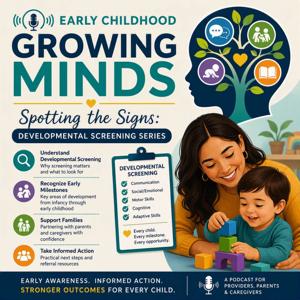


What can we learn from babies, and how can we help them get the best start? In this episode of Growing Minds, Spotting the Signs, Margaret Gillis, reflects on her career celebrating the potential of babies and guiding the professionals whose care helps shape their development. From her beginnings in childcare to her work as an early intervention provider, university faculty member and researcher, Margaret brings a unique perspective and deep love for helping babies thrive. Join us as we explore why enriching experiences matter for every baby, the importance of early screening for developmental delays or disabilities, and how early care providers can play an important role in recognizing concerns and connecting families to support. Whether you're caring for babies every day or supporting the professionals who do, this conversation will remind you that little humans have big possibilities, and the experiences and support they receive early on can make a lasting difference.
Margaret Gillis, PhD, conducts research and technical assistance to improve systems for identifying and serving young children with disabilities and their families; and to support the early learning and care workforce. She began her career as an infant teacher and considers infants and toddlers the most fun and challenging age group. She is also the project director for the Child Find ACCESS model demonstration project exploring identification and referral practices and barriers in North Carolina.
What does it look like to go from serving individual families in their home and communities to influencing early intervention systems nationwide? In this episode of Growing Minds, Spotting the Signs, Jamie Michaud shares her professional journey, the lessons she's learned along the way, and why keeping families at the heart of the work continues to guide her leadership, professional support and technical assistance to maximize impact for early intervention systems. Jamie shares how listening to families, colleagues and communities has been her greatest source of learning and growth. She reflects on the importance of staying grounded in sound screening and assessment practices, remaining open to challenging conversations, and approaching everything that affects infants, toddlers and families with humility and a spirit of service.
Jamie Michaud is an early childhood technical assistance and professional development specialist with more than 20 years of experience in early childhood special education. Drawing on extensive local and state-level early intervention leadership, including serving as Maine's Part C Coordinator, Jamie brings deep expertise in Part C of the Individuals with Disabilities Education Act (IDEA). Jamie is a nationally-recognized technical assistance provider for both the Collective Impact Model for IDEA Part C Child Find (CIMC) project and the Center for IDEA Fiscal Reporting (CIFR) at WestEd.
Learn more at www.wested.org and https://cifr.wested.org
What happens when personal experience and professional expertise come together in service of young children and families? In this episode of Growing Minds, Spotting the Signs Ine Jack shares her journey as a parent and early childhood professional, and why she believes early connection to services, supports and community-embedded resources can make a lasting difference for young children and families. Ine also talks about her experiences as a training and support specialist with the Beginning Together and California CSEFEL Teaching Pyramid projects.
Ine Jack brings over 15 years of experience as a Special Educator and preschool teacher to her current work at WestEd, where she supports professional development and implementation of inclusive early learning practices across California. Driven by her own childhood experience with dyslexia, Ine is committed to making sure every child has equitable access to high quality care and learning practices, social-emotional support and inclusive environments. She also speaks from the parent seat, navigating developmental screenings with her own toddler.
Learn more about Beginning Together: Caring for Young Children in Inclusive Settings resources, training events and certification at www.cainclusion.org/bt/ and www.wested.org/support/beginning-together/
How can we talk about early intervention in ways that help families feel supported about what to expect? In this episode of Growing Minds, Spotting the Signs, Hollin Buck shares insights from her career supporting infants, toddlers and families in Montana. She discusses how caregivers can better understand early development through screening processes, recognize when additional services may be needed, and build the confidence to help children thrive. Join us for an encouraging conversation about the lasting impact of early intervention for children and families.
Hollin Buck, MS is a former Montana Part C Family Support Specialist who has dedicated her career to serving young children and families. She currently provides professional development and programming support to mothers and caregivers in their parenting journey during the critically important first years. In her words, "The support we offer infants, toddlers and their families in the earliest years creates lifelong positive change. Families, caregivers and communities want the best for their children, and our role is to help them see what that looks like and to be in a place where they can provide it."
When parents have questions about their child's development, it's natural to wonder what comes next. In this episode of Growing Minds, Spotting the Signs, Britt Braun, preschool teacher and former state coordinator for preschool IDEA services, discusses how developmental screening can help families better understand their child's strengths and needs - ultimately connecting them to supports when appropriate. Through a compassionate and family-centered lens, Britt explains how screening is about gaining information, not assigning labels or intimidating parents, and how early support can help children thrive in preschool and beyond.
Britt Braun is an early childhood leader with extensive experience across classroom, state and national technical assistance roles. Her work focuses on strengthening systems to promote inclusive environments through supports such as developmental screening and fostering collaborative partnerships among families and educators. Her experience includes leading preschool and inclusive early childhood programs in District of Columbia and overseeing IDEA Part B preschool services at the Louisiana Department of Education.
What do babies need most to thrive? In this episode of Growing Minds, Spotting the Signs, Amber Morabito with the Program for Infant/Toddler Care (PITC) at WestEd shares how responsive caregiving and relationship-based practices create the foundation for supporting infants and toddlers and their families. Amber reflects on her pathway from early childhood provider to trainer and curriculum developer for the nationally recognized, evidence-based PITC curriculum. She discusses why everyday interactions matter -not just with infants and toddlers but with their parents too - and how caregivers can partner with families when questions or concerns about a child's development emerge.
Amber Morabito is a Regional Coordinator for California Region I with the Program for Infant/Toddler Care/Partners for Quality Project. She provides training and technical assistance (TA) to service providers who care for infants and toddlers. Amber coordinates the delivery of services in her region and supervises a team of Infant-Toddler Specialists who in turn provide training and TA throughout the region. Amber also supports the PITC Demonstration Program at Santa Rosa Junior College Children's Center and family childcare affiliates, ensuring quality is maintained and demonstrated for the community.
Learn more about PITC at https://www.pitc.org and www.wested.org
What helps babies develop the foundation for lifelong learning and well-being? In this episode of Growing Minds, Spotting the Signs, Lisa Terry an infant mental health specialist and leader in Virginia's early intervention service system, explores responsive relationships, family partnerships and how she embeds infant-early childhood mental health practices into her work with families and providers serving them.
Lisa Terry provides support for the design and implementation of professional development activities for early interventionists. She has worked in EI for over 15 years as an educator, service coordinator, and clinical supervisor. Lisa continues to provide direct services to families and hosts the podcast series: "Meaningful Moments." She is a certified trainer for the Growing Brain, a Zero to Three Curriculum and maintains endorsement as an Infant-Mental Health Mentor/Research-Faculty. Lisa is the co-facilitator for the Division of Early Childhood, Council for Exceptional Children nationally recognized infant mental health community of practice and an aRPy Ambassador.
How do young children learn to manage emotions, build friendships and develop confidence? In this episode of Growing Minds, Spotting the Signs, Ashley MacNish shares her journey from working directly with young children and families to becoming a Pyramid Model coach and trainer. Ashley reflects on the experiences that shaped her career, the lessons she learned supporting educators, caregivers and parents, and why social and emotional development is such an important foundation for lifelong learning and well-being.
Ashley is an educational consultant for Vanderbilt University. She began her early childhood journey in Pennsylvania before moving to Tennessee. In her role for the National Center for Pyramid Model Innovations (NCPMI) and Pyramid Model Consortium, Ashley provides training and technical assistance to states and programs implementing the Pyramid Model in early intervention. She uses her expertise to support product development and training for coaching, early intervention and family engagement.
How do you know when a child's development is on track? In this episode of Growing Minds, Spotting the Signs, IDEA Part C coordinator and early intervention provider Leah Davidson discusses developmental milestones, screening and how to have supportive conversations with families.
Leah Davidson has worked in state and local early intervention systems in Virginia and New Mexico. Leah is a career early childhood professional committed to working on behalf of families with very young children to maximize joy, growth and human potential while the brain is most malleable. Leah began her career in Part C/Early Intervention in Virginia. She worked as a Service Coordinator and then a Local System Manager in Arlington, VA for ten years before relocating to New Mexico where she has continued to support infants, toddlers, preschoolers and their families across a spectrum of early childhood programs, services and initiatives.
From the publisher's feed
The Growing Minds, Spotting the Signs series promotes understanding of routine developmental screening for infants, toddlers and preschoolers. We share strategies and approaches for talking with…