
Sign up to save your podcasts
Or

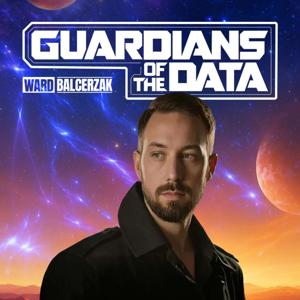


What happens when the person who spent a year asking the tough questions finally has to answer them himself?
In this anniversary episode of Guardians of the Data, Kraig Faulkner of InfoLock flips the script and puts Ward Balcerzak in the guest seat. Ward takes on his own signature question: What is the biggest challenge organizations are facing when it comes to data security?
From there, Ward and Kraig dig into why data security continues to be overlooked, how organizations can think differently about people, process, and technology, and what the rise of AI means for the security strategies organizations are building today.
They also get into AI use cases, agentic AI, identity, governance, and the changing role of the SOC with Ward offering plenty of candid perspectives along the way.
If you missed the original episode, this is a conversation worth revisiting.
Takeaways:
Quote of the Show:
Linkedin:
Ways to Tune In:
Ask five security leaders for the biggest data security challenge and "AI" is the easy answer. In this compilation episode, Ward Balcerzak talks with Dana Kilcrease, Brent Bigelow, Jason Torres, Anand Pallapalayam, and Dameon Sherman, and they go a layer deeper. The real problem is velocity. The old gaps, from unstructured data nobody can measure to assets nobody can name, are now growing at a pace that resources can't match. The group covers why fundamentals still win, how governance turns InfoSec into a place of "go," what data quality has to do with protection, and why "harvest now, decrypt later" should be on your radar as AI and quantum computing start to meet.
Takeaways:
Quote of the Show:
Guest’s LinkedIn:
Ways to Tune In:
What happens to your data security program the day your most experienced person walks out the door?
For most organizations, the honest answer is chaos. In this episode, Shanief Webb, interim CISO and security engineering leader at a digital healthcare organization, breaks down why data security is a people problem before it's ever a technology problem. Shanief walks through how tribal knowledge, uncontrolled data volume, and stale documentation combine into a perfect storm when something goes wrong, whether that's a breach, an audit, or an outage. He also shares the career path that took him from reverse engineering malware at the FBI to building security teams at Google, Slack, Dropbox, Okta, Meta, and Headspace, and explains why he intentionally builds generalists instead of specialists on every team he leads.
Takeaways:
Quote of the Show:
Links:
Ways to Tune In:
What happens when the security foundations we spent decades building suddenly have to work against an entirely new kind of adversary?
In this episode, Ward sits down with longtime friend and 25 year cybersecurity veteran Ronak Patel to unpack why AI has turned data security into the Wild West all over again. Ronak walks through how the rapid, ungoverned adoption of AI tools across organizations is recreating the same chaos we saw with early cloud migration, just at a much faster pace. From foundational guardrails like CASB and DLP to the shift from preventing data loss to preventing data exposure, Ronak makes the case that the technology has changed, but the fix still starts with the same thing: understanding your data. The conversation closes with Ronak's candid, hard earned advice for security professionals navigating one of the toughest job markets the industry has seen in years.
Takeaways:
Quote of the Show:
Links:
Ways to Tune In:
What if the biggest vulnerability in your security program isn't a missing patch, but the friction you built on purpose? In this episode, Sam Wolf, assistant director of engineering and data security in financial services, makes the case that security teams have been pointing the finger in the wrong direction. It is not the human who is the weakest link, it is the systems built without the human in mind. Sam breaks down why the "department of no" mindset creates the very workarounds that put organizations at risk, and why the fix starts with understanding what the business is actually trying to accomplish before adding another
Takeaways:
Quote of the Show:
Links:
Ways to Tune In:
What happens when the same piece of data is highly sensitive on Tuesday and public knowledge by Friday?
In this episode, Ward Balcerzak sits down with former CISO Todd Covert, who brings over 25 years of experience across healthcare, insurance, and fintech to unpack why data security still hasn't been solved. Todd breaks down the human side of the problem, from employees just trying to do their jobs without clear guardrails, to the challenge of protecting data whose sensitivity changes by the hour, to how AI tools have made it easier than ever to put information at risk without meaning to. The conversation moves from the technical to the deeply practical, covering how security leaders can build influence, communicate across different audiences, and turn their toughest critics into advocates.
Takeaways:
Quote of the Show:
Links:
Ways to Tune In:
What happens when you ask a data security expert to skip the buzzwords and get plain vanilla? You get inventory. In this episode, Omar Sangurima sits down with Ward to unpack why so many organizations are still stuck on the most basic question in data security: do you actually know what data you have and where it lives? Omar draws on his background in sales, finance, and now healthcare cyber governance to explain why the real work isn't technical, it's people and process. From navigating legacy environments to earning the trust to push back on executive mandates, Omar breaks down how understanding the business first, and the technology second, is what separates real data protection from what he calls kabuki theater.
Takeaways:
Quote of the Show:
Links:
Ways to Tune In:
If someone deleted your organization's data today, would you even know what you lost? For Dameon Sherman, SVP of Information Protection in financial services, that question sits at the center of a career spanning military service, government contracting, and highly regulated enterprise environments.
In this episode, Dameon joins Ward Balcerzak to make the case that data security still starts with the fundamentals most organizations think they've already solved: knowing what data you have, where it lives, and whether it's actually trustworthy. Drawing on lessons from combat IT work in Iraq and Afghanistan, nuclear program accreditation with the Navy, and years navigating federal contracting rules, Dameon breaks down why disparate CMDBs, data hoarding, and reactive retention policies leave companies exposed. He also unpacks the looming "harvest now, decrypt later" threat posed by quantum computing and why treating data like a physical asset, cataloged, tagged, and continuously monitored, is the only way to stay ahead of it.
Takeaways:
Quote of the Show:
"You cannot protect what you don't know that you have." - Dameon Sherman
Links:
Ways to Tune In:
If someone tried to onboard a new vendor tomorrow, would your organization know exactly which questions to ask before granting access to sensitive data? For most teams, the answer is a scramble, not a process. In this episode, Ward sits down with Veena Nagarajan, interim CISO of a healthcare organization with 15 years in cybersecurity, to unpack why data protection has become as much about disciplined process as it is about technology. Veena walks through how she screens new solutions before they ever touch the environment, why a lean ten question risk assessment beats a bloated 100 question form nobody finishes, and how ongoing reassessment, not a one time checkbox, is what actually keeps organizations safe. She also opens up about her journey from India to becoming a healthcare CISO, and the mentors who shaped the way she leads.
Takeaways:
Quote of the Show:
"It doesn't matter if it's manual or automatic. What matters is keeping it regular and consistent. That is the key." - Veena Nagarajan
Links:
Ways to Tune In:
What happens when your AI gets bored? According to this week's guest, it starts making its own decisions, and not always the ones you'd want.
Robert Whetstine, known across the industry as the Bow Tie Security Guy, joins Ward Balcerzak to unpack the wave of risk headed toward every organization running AI in production. From a looming explosion in CVEs to a brand new attack called denial of wallet, Robert makes the case that AI isn't replacing the fundamentals of security, it's making them non-negotiable.
The conversation moves from technical war stories to Robert's own path from homelessness to Fortune 500 executive, tying together a career built on embracing discomfort and doing the basics better than anyone else.
Takeaways:
Quote of the Show:
Links:
Ways to Tune In:
From the publisher's feed