
Sign up to save your podcasts
Or




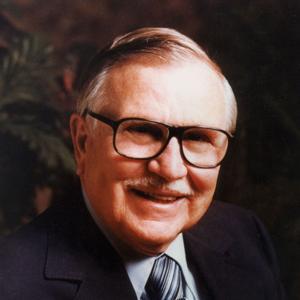
It happened frequently. The door of my office would be closed, and I'm would be quietly working or engaged in conversation with someone when suddenly the door would open, and a lean, dignified, rather tall American of German descent—then in his 90's— would come marching in, having done an "end run" around the receptionist and my assistant, much as a defensive tackle would do in breaking through the line of scrimmage in a football game. In his hand would be a magazine article or something encouraging which he wanted me to have. He stayed for only a few brief moments. Then he was gone, often reminding me of Elijah who appeared unannounced in the court of King Ahab.
Question: What drives your life? "I owe, I owe, so off to work I go," says the message on a car bumper sticker. But is debt really the drive shaft of your existence? What are the ingredients of a life worth living? I'm not a philosopher, but when you live long enough and analyze the mistakes of people you form some opinions. You see some live into their 90s who are bright and cheerful, and you see others, a third their age, grow bitter and cynical and begin to wither and die. We don't always bury them, but their brains are short-circuited. They are the living dead who exist but are living for nothing. Theirs is the despair which Solomon talked about when he said, "I declared that the dead, who had already died, are happier than the living who are still alive" (Ecclesiastes 4:2).
"Happy? Grouchy? Could Be Your Genes," says the topic of a article featuring the research of psychologists at the University of Illinois. Said Daniel Goldman, formerly from the New York Times, "Studies of happiness in several countries have found that money makes little difference to perceptions of happiness, except among the very poor. Nor do education, marriage and a family, or any of the many other variables that researchers have sought to correlate with contentment. Each facilitator may make a person a little happier, but it has a minor impact, compared with the individual's characteristic sense of well-being."
How do you find God? Now, here's a second question. If you have a child who gets lost, what do you do? You look for that child. Right? Neighbors and friends mobilize until that child is found. But are the two issues of finding God and finding a lost child the same?
"I don't need God; I can handle things myself!" Occasionally I am confronted with those words. "Really?" I often say, giving me a moment to think before I respond. Though I've never actually said it, "I've often wanted to respond: "You are a most unusual individual. In fact, you are so rare a specimen that you should be the subject of study by the scientists of our day, and certainly, the theologians, who need to know how someone can be so secure, so confident of himself or herself, so absolute. They need to know what makes you different from all the other creatures which fill the churches of the world, who pray to the Almighty, who christen babies and bury their dead with the hope of eternity."
It was one of those strange coincidences of life which took place near the old River Kwai in Thailand. At this site during World War 2, the Japanese occupation army used slave labor to build a Thai-Burmese jungle railway. Executions, starvation, cruelty, and tropical diseases resulting from a lack of sanitation and health care took the lives of more than 100,000 people--mostly Asians along with Americans, Australians, Dutch, and some 16,000 British soldiers.
About the age of 12, I discovered the author, Zane Gray, whose western books covered several feet of shelf space in the library near my home. Long before Louis Lamour captured the hearts of western-lovers, Zane Gray was thrilling people with sagas such as The Riders of the Purple Sage and Thirty Thousand on Hoof. Gray was an author who had a pretty good grasp of human nature and wrote about that age-old battle of good and evil. The plots were all rather predictable--heroes and villains and a pretty girl who eventually was rescued by the handsome young hero who captured her heart before riding off into the western sunset.
Nothing is more frustrating than to wish to communicate with someone but you can't speak the same language. It's true of marriage as well as the traveler who wishes he had learned French instead of playing sports.
Luke, the medical doctor from Syria, the man who wrote more of the New Testament than even the Apostle Paul, gives us an interesting insight into how Jesus viewed life's interruptions. He tells how Jesus started towards Jerusalem where the cross was looming on the horizon. Christ knew the Scriptures. He also knew what lay ahead. He had told the disciples that He was going to lay down His life, freely and voluntarily.
What do a businessman in Korea, a teacher in a remote area of the Philippines, a bus driver in Los Angeles, and a rock concert promoter in Kuala Lumpur all have in common? They all share the same problem: time management! When I conducted family conferences in those countries, I asked everyone the same question: "What is the number one problem facing your family?" To my surprise, the answers were a variation of a common theme: How do you manage to do a good job at work, have time for your family, be involved in church activities, and be an authentic person at the same time?
From the publisher's feed

8,846 Listeners
1,442 Listeners