HackedSelf

HackedSelf

By
Download on the App Store

All HackedSelf episodes

  • Did Rentosertib Reverse Aging or Just Treat Fibrosis?
    Did rentosertib reverse aging in humans? This design cannot answer that question, and it was never built to.
    Can a drug lower biological age? In patients with active disease, this trial shows a drug can lower a clock's output. What it cannot show is why the number fell.
    Decisive evidence is easy to specify and hard to fund: rentosertib measured in non-fibrotic or healthy cohorts, across multiple clock modalities at once, with a control arm and functional endpoints such as grip strength, gait speed, and lung function in people whose lungs were never the problem. Regulators already apply this logic elsewhere, insisting that a biomarker be validated before it can stand in for a clinical outcome under [surrogate endpoint standards](https://www.fda.gov/about-fda/innovation-fda/fda-facts-biomarkers-and-surrogate-endpoints). Biological age, in any modality, is nowhere near that validation bar, and no such trial results have been announced.
    ## A Six Point Checklist for the Next Aging Reversal Headline
    Six checks, each one tied to a failure mode you just watched this story survive. This is how to evaluate aging reversal claims in about sixty seconds.
    1. **Read the cohort, not the headline.** Healthy volunteers and diagnosed patients are different experiments. If the trial treated a disease, every aging readout inherits that disease as a confound.
    2. **Name the clock and its training target.** Chronological-age-trained, mortality-trained, and organ-trained clocks answer different questions. "Biological age" with no qualifier is a red flag, not a result.
    3. **Trace the inputs.** Ask which molecules steer the readout and whether the treated disease moves those exact molecules. Overlap means ambiguity, not discovery.
    4. **Count modalities, not instruments.** Six correlated proteomic clocks constitute one modality. Proteomic plus epigenetic plus functional change in the same people is the minimum pattern that starts to mean something.
    5. **Find the control arm.** Single-arm, before-and-after designs cannot separate drug effect from regression to the mean, seasonal variation, or placebo.
    6. **Follow the incentive.** A company with an aging narrative, a stock price, or a preorder funnel benefits from the rejuvenation reading. The data still has to earn it.
    ## Why No Supplement Buys This Signal and What Would Settle It
    The uncomfortable close for anyone running a stack: as of this writing, no legal supplement has demonstrated a validated reduction in proteomic or epigenetic biological age in a controlled human trial. Suggestive studies exist. None clears the bar this article just held rentosertib against, and rentosertib itself has not cleared it yet.
    Consumer tests do not close the gap. At-home biological age kits use different platforms, mostly methylation-based algorithms with proprietary tweaks, and none of them measures the research-grade plasma clocks used in this trial. A home kit score ticking downward is not this study's signal, cannot verify it, and is not comparable to it. If you track biomarkers, treat the consumer number as its own noisy instrument rather than a discount version of the science.
    What would settle the question is already specified above: non-fibrotic cohorts, multiple clock modalities, control arms, functional endpoints. Until those results exist, the honest summary of the rentosertib IPF story is smaller than the headline and more interesting. A drug designed for one disease produced a blood signature that aging research cannot yet cleanly claim, in a trial design that cannot cleanly separate the two.
    So keep your protocol. Nothing here adds a capsule. What it should subtract is the assumption that a moving age readout means the same thing in a patient as it would in you. Any decent disease therapy can move the right clock. The open question is whether anything can move several independent clocks, in the same direction, in people who have nothing to treat. That trial has not been run.]]>
    0 min
  • Training With Joint Pain After 40, a Lifter's Playbook
    Keep pain at or below 3 out of 10 during training.
    >
    > It should settle back to baseline within 24 hours.
    >
    > Week to week, the same load should hurt less.
    Break the first two and the load is too high. Obey all three while adding weight, and the tendon is remodeling, not deteriorating.
    ## Red Flag Joint Pain and When to Stop Lifting
    The substitution protocol has a genuine stop condition, and this is it. Get evaluated before training through any of the following:
    - **Night pain** that wakes you regardless of position or movement.
    - **Neurological symptoms**: numbness, tingling, pain radiating down a limb, or new weakness.
    - **Mechanical signs**: joint swelling, locking, or giving way.
    - **Acute trauma**: pain that began with a specific pop, tear, or fall.
    - **No improvement** after two full weeks of smart, modified loading.
    For low back pain in particular, clinicians work from established [red flag screening lists](https://www.consultant360.com/peer-reviewed/revisiting-red-flags-acute-low-back-pain), and the logic carries over to peripheral joints. None of these symptoms mean your training life is over. They mean the next decision belongs to someone who can image and palpate the joint, not to a substitution matrix.
    ## Reintroducing the Lift You Swapped Out
    Once the substitute is pain-free at full effort and the flare has stayed quiet for several sessions, climb back down the ladder you came up. Two weeks, three rungs.
    - **Week 1:** the original lift twice, at 40 to 50 percent of your old working weight, 3 sets of 8 to 10 at 4 to 5 RIR. It should feel conspicuously easy. That is the point.
    - **Week 2:** 60 to 75 percent, 3 to 4 sets at 2 to 3 RIR, and one set at 1 to 2 RIR if the joint stays silent.
    - **Throughout:** keep the substitute as a second movement until the original lift carries your old loads again.
    The re-flare rule mirrors the tendon rules: pain above 3 out of 10 during a session, or any symptom still present the next morning, drops you back one rung for a week. Progress in the lift you can recover from, not the one you can attempt.
    The quiet payoff is that there is almost nothing to rebuild. Because the swap kept effort high and the muscle loaded, the detraining clock barely started, and you are reintroducing weight to a muscle that never left. That is the whole argument for treating training with joint pain after 40 as a programming decision: the joint gets its modification, the muscle keeps its stimulus, and nothing about your training goes dark while the tissue heals.]]>
    0 min
  • Anticholinergic Burden Audit for Your Medicine Cabinet
    One-sentence rule: any single 3-point product taken nightly already puts you at the total where geriatric review guidance commonly recommends action, and a typical multi-product stack doubles it.
    Reading your number: in older adults, totals of 3 or more are where studies generally begin finding measurable dysfunction and where review thresholds sit. If your nightly sum is under 3, you are fine; stop adding.
    ## Five Cabinet Audits, Scored Item by Item
    | Profile | What's on the shelf | ACB math | Total |
    |---|---|---|---|
    | The gummy sleeper | ZzzQuil or doxylamine gummies nightly | Diphenhydramine or doxylamine 3 | 3 |
    | The PM user | Tylenol PM or Advil PM, 4 to 5 nights weekly | Analgesic 0 + diphenhydramine 3 | 3 on use nights |
    | Allergy season | Chlorpheniramine tabs daily plus nightly PM | 3 + 3 | 6 |
    | The traveler | Dimenhydrinate plus Unisom on trips | 3 + 3 | 6 on travel days |
    | The aging parent | Oxybutynin plus Nytol plus chlorpheniramine | 3 + 3 + 3 | 9 |
    Three patterns deserve comment.
    First, one product is enough. ZzzQuil's anticholinergic score is 3 on its own, and Tylenol PM's anticholinergic burden is contributed entirely by its PM ingredient; the acetaminophen adds zero. The additive logic is the story: the gummy sleeper who adds a chlorpheniramine tablet in hay fever season now carries a 6, review-triggering territory of the kind the NHS tool hunts for in 78-year-olds.
    Second, look at how the parent's cabinet reaches 9 without a single unusual drug. Three individually defensible products jointly create the polypharmacy risk profile the health system is now building tools to catch.
    Third, the traveler's 6 is real but intermittent. When two totals match, frequency is the honest tiebreaker.
    ## What the Dementia Evidence Actually Supports
    Start with the signal. Two large observational studies anchor the diphenhydramine dementia risk question. The [Adult Changes in Thought cohort](https://jamanetwork.com/journals/jamainternalmedicine/fullarticle/2091745) followed thousands of older US adults and found the highest cumulative users of strongly anticholinergic drugs had roughly a 50 percent higher rate of incident dementia than non-users. A [UK nested case-control analysis](https://jamanetwork.com/journals/jamainternalmedicine/fullarticle/2736353) covering tens of thousands of dementia cases found its highest cumulative-exposure group at roughly a 30 to 50 percent relative increase, with the strongest class-level signals from antidepressants and bladder medications.
    Now the critique. These are associations. Reverse causation is a live objection: prodromal dementia disrupts sleep and bladder control years before diagnosis, which drives prescriptions for exactly these drugs, so early disease may be causing the exposure rather than the reverse. Detection bias compounds it, since heavier medicators see doctors more and get diagnosed more. [Systematic reviews of causality](https://pubmed.ncbi.nlm.nih.gov/33933505/) treat the question as unresolved, not settled. Two findings keep the association alive: elevated risk persisted in analyses that excluded exposures in the years just before diagnosis, and the dose-response gradient is consistent across cohorts. Unproven is not the same as absent, and the doxylamine dementia risk question rides on this same evidence with the same caveats.
    What is firmer is the short end of the timeline. Falls, delirium, and next-day cognitive impairment are mechanistically direct and well established, which is why the NHS tool targets falls and delirium rather than dementia. The sleep evidence is also brutal on its own terms: placebo-controlled work found diphenhydramine 50 mg slid toward placebo within days as tolerance developed, and first-generation antihistamines suppress REM sleep while producing measurable [next-day psychomotor impairment](https://pmc.ncbi.nlm.nih.gov/articles/PMC12288571/). Nightly users are paying a real daily cost for a benefit that fades within roughly a week.
    ## The Swap Ladder for Sleep, Allergy, Motion Sickness, and Bladder
    ![Anticholinergic sleep aid alternatives such as melatonin, magnesium, and CBT-I can replace nightly sedating antihistamines without adding points to the score.](https://images.pexels.com/photos/4058359/pexels-photo-4058359.jpeg?auto=compress&cs=tinysrgb&h=650&w=940)
    Ranked by ease and impact. The rule up front: anything prescription goes through a prescriber. Everything below is OTC or behavioral.
    ### Allergy: the one clean swap
    Loratadine, cetirizine, and fexofenadine are the antihistamines with the lowest anticholinergic activity, scoring zero or minimal points depending on scale version because they barely enter the brain. Same indication, comparable efficacy for allergic rhinitis, none of the 3 points. If you change one thing, change this.
    ### PM painkillers: buy the plain version
    The PM suffix almost always means added diphenhydramine, so switching Tylenol PM for plain acetaminophen removes the product's entire ACB contribution. You lose nothing analgesic. You keep a sleep problem to solve honestly.
    ### Sleep: the drug is doing less than you think
    Because tolerance erodes the benefit within days, a nightly antihistamine is mostly ritual by week two. Anticholinergic sleep aid alternatives at zero points include melatonin (modest evidence, and less is more on dose), the glycine and magnesium stack many readers already run, and CBT-I, the actual first-line treatment for chronic insomnia. If you want a pharmaceutical bridge, ask a pharmacist for options that spare muscarinic receptors rather than re-dosing the same class.
    ### Motion sickness and bladder: two different problems
    No OTC motion-sickness option is free of this activity; dimenhydrinate, meclizine, and scopolamine all act on it. Treat travel as exposure budgeting, short bursts rather than nightly use, with ginger as a modestly supported low-burden adjunct. For bladder symptoms, oxybutynin is among the most CNS-penetrating drugs in its class, and lower-central-burden alternatives exist, but that swap belongs to a prescriber.
    ## The Aging Parent Audit the Tool Was Built For
    This is the use case the NHS machinery was actually designed for, and it is where a self-audit carries the highest stakes, because falls and delirium in a 78-year-old are not abstract endpoints.
    To audit an aging parent's medication list: photograph every box, prescription and self-purchased, including PM painkillers and sleep gummies they buy without telling anyone. Score each active ingredient, total the list, and write the number at the top. A high total is a conversation trigger, not a diagnosis.
    Then bring the scored list to a GP or pharmacist-led medication review rather than stopping anything unilaterally. Rebound insomnia, withdrawal, and flare of the underlying condition are real risks, and some of these drugs require tapering. Deprescribing anticholinergics is the explicit goal of exactly this kind of review, and [randomized deprescribing trials](https://pubmed.ncbi.nlm.nih.gov/38063254/) suggest pharmacist-led review can reduce anticholinergic exposure in older adults. The [2023 AGS Beers Criteria](https://agsjournals.onlinelibrary.wiley.com/doi/10.1111/jgs.18372) already advise prescribers to avoid first-generation antihistamines and other high-burden drugs in older adults, so you are walking in aligned with mainstream geriatric guidance, not against it.
    A script that works in a ten-minute appointment:
    > "I scored my mother's full medication list for anticholinergic burden and it totals nine, including three products she buys herself. Can we review whether each one is still needed, or whether lower-burden alternatives exist?"
    ## Where Self-Scoring Ends and a Clinician Starts
    Honest limits on the whole method. Anticholinergic scales disagree with each other; the same drug can score differently on the ACB scale, the Anticholinergic Risk Scale, and the Drug Burden Index, and ACB versions have drifted across updates. Combination products hide ingredients. The dementia question stays open pending better data.
    Red lines for the self-audit:
    - Never stop or taper a prescription based on your own arithmetic, yours or a parent's.
    - Escalate promptly if multiple prescription CNS-active drugs are in play, or after any fall or confusion episode.
    - A pharmacist review is quick and, in most systems, free. Use it.
    The longevity internet is an addition economy. This is the rare intervention that is pure subtraction, costs nothing, and shows up in your tracker within a week: drop a 3-point antihistamine and watch the morning readiness line. Your cabinet now has a number. Keep it under 3.]]>
    0 min
  • How Much Fiber Per Day? A Lifter's Dosing Protocol
    ), moving volunteers toward a high-protein, lower-carbohydrate pattern shifted colonic fermentation toward protein, raising markers such as ammonia, hydrogen sulfide, and branched-chain fatty acids.
    The cost is what disappears. Carbohydrate fermentation produces butyrate, the short-chain fatty acid that feeds the cells lining your colon. Reviews of [butyrate and gut barrier function](https://www.sciencedirect.com/science/article/pii/S221261981830007X) associate lower butyrate availability with reduced fuel for colonocytes and weaker barrier integrity, and short-chain fatty acids also carry appetite-relevant signaling through hormones like GLP-1 and PYY. A low-fiber, high-protein diet quietly reshapes gut bacteria to trade that machinery for protein-decay byproducts, and you feel none of it until something is already degraded.
    The carnitine pathway points the same direction. Meat-heavy diets supply plenty of carnitine, some gut microbes convert it to TMAO, and while the cardiovascular case against TMAO remains genuinely debated, some research suggests a fiber-fed, diverse microbiome blunts the conversion. Whatever the final verdict on TMAO, the pattern holds: the low-fiber half of your diet changes what your microbiome does with the high-protein half.
    ## How Much Fiber Per Day? Scale It to Calories
    Compute 14 grams per 1,000 calories at your current intake, and recompute whenever your calories move by 500 or more. This is fiber grams per 1,000 calories applied to your numbers rather than the population's:
    | Your intake | Context | Fiber target |
    |---|---|---|
    | 2,000 kcal | Aggressive cut | 28 g |
    | 2,800 kcal | Maintenance | ~39 g |
    | 3,300 kcal | Lean bulk | ~46 g |
    | 3,800 kcal | Massing | ~53 g |
    That is the honest answer to how much fiber per day you should eat: a number that moves with your calories, not a fixed checkbox. If you track protein more faithfully than calories, use 15 to 25 grams of fiber per 100 grams of protein as a working range, low end on a cut and high end on a bulk, and anchor on calories whenever possible. Protein scales with bodyweight; fiber scales with energy.
    One objection deserves airtime: does fiber on a high-protein diet interfere with protein absorption? The measured effects of [fiber and protein digestibility](https://www.sciencedirect.com/science/article/pii/S0268005X25011427) at realistic intakes appear modest, and they are not a reason to keep fiber low while eating 175 grams of protein a day. Get total protein right first, then set fiber density.
    > The rule in one line: fiber target = calories × 0.014, recalculated every time your intake changes meaningfully.
    ## Soluble vs. Insoluble, Matched to Cut or Bulk
    The soluble vs insoluble fiber distinction is functional, not botanical. Viscous soluble fibers (psyllium, beta-glucan from oats and barley, much of legume fiber) dissolve, form a gel, slow gastric emptying, and ferment into short-chain fatty acids. Insoluble fibers (wheat bran, potato and vegetable skins, leafy structure) mostly resist fermentation and add bulk. Neither is better. They do different jobs, and your goal phase decides the mix.
    On a cut, viscous soluble fiber is satiety per calorie, the cheapest adherence tool you have. Acute research on [viscous fiber and satiety](https://pmc.ncbi.nlm.nih.gov/articles/PMC10648557/) ties the gel effect to slower stomach emptying and to responses in appetite hormones such as GLP-1 and PYY. The psyllium vs vegetables question on a cut is really volume versus precision: vegetables bring water, micronutrients, and chewing time; psyllium brings doseable grams at close to zero net carbohydrate. Use vegetables as the base and psyllium to top off the final 10 grams your macro budget cannot fit.
    On a bulk the polarity flips. Early satiety is what makes 3,800 calories a chore, and stacking maximal fiber on top of it can displace the very calories and protein you are trying to eat. Keep fiber near the guideline number rather than above it, and bias toward calorie-dense, lower-bulk sources: oats, potatoes with skin, modest amounts of dried fruit, instead of mountains of raw vegetables.
    Starting split: roughly two-thirds soluble-leaning on a cut, roughly even at maintenance and on a bulk. Adjust by response, not by theory.
    ## The Ramp Schedule That Prevents GI Blowups
    The reason you quit fiber the first time is mechanical. Gas is the sound of fermentation capacity lagging fermentation load, and the microbial populations that process new substrate need weeks to scale up. This is why gastroenterology guidance says to [increase fiber gradually](https://clinicsjo.com/en/faq/increasing-dietary-fiber-gradually-avoid-bloating): abrupt large jumps commonly cause gas, bloating, and regret. The ramp that works for lifters adds 3 to 5 grams per day, holds each step for a week, and lets symptoms govern the pace. This is how to increase fiber without gas and bloating sinking the whole attempt.
    | Week | Daily target (from a 12 g baseline) | Instructions |
    |---|---|---|
    | 0 | Log 3 honest days | Your real intake, not your estimate |
    | 1 | 16 g | Add fiber at the meal farthest from training |
    | 2 | 20 g | Mild gas is normal and should fade within days |
    | 3 | 24 g | Hold here if bloating lasts past 48 hours |
    | 4 | 28 g | If gas accumulates, shift the mix toward insoluble |
    | 5 onward | +4 g per week | Continue to your computed target |
    One rule does most of the work: any week with bloating above baseline on two or more days gets repeated, not advanced. And before you blame fiber, audit the co-defendants. Sugar alcohols in protein bars (erythritol, sorbitol, maltitol) and cooked-then-cooled starches both ferment aggressively, and both hide in lifter diets. Cut those first, then judge the fiber.
    ## Timing Fiber Around Heavy Training
    ![Fiber timing before or after workout sessions, with the largest fiber doses kept hours clear of heavy barbell training.](https://images.pexels.com/photos/39219652/pexels-photo-39219652.jpeg?auto=compress&cs=tinysrgb&h=650&w=940)
    Viscous soluble fiber slows gastric emptying. A [double-blind psyllium trial](https://read.qxmd.com/read/9578335/effect-of-psyllium-on-gastric-emptying-hunger-feeling-and-food-intake-in-normal-volunteers-a-double-blind-study) demonstrated exactly that, along with reduced hunger, which is why the same fiber that helps a cut can sabotage a session. A stomach still draining gel is a stomach that produces heaviness, reflux risk, and mid-set negotiation. Sports nutrition practice generally keeps the immediate pre-exercise meal low in fiber for this reason.
    The timing rules:
    - Keep your largest fiber doses 2 to 3 hours or more clear of heavy training, with extra clearance on squat and deadlift days.
    - Order the day's meals from lowest fiber closest to the session to highest fiber farthest from it.
    - Use the pre-bed window for your biggest dose. Nothing interferes with it, and overnight is when the bulk work gets done.
    - On a cut, flip the logic: 5 to 10 g of viscous fiber taken 30 to 60 minutes before your hungriest window, which for most people is the evening.
    That answers the before-or-after question directly. Fiber after a workout is a non-issue; fiber before one needs the buffer. The best time of day to take fiber when lifting is whichever slot sits farthest from the bar, and that slot is almost always the last meal of the day.
    ## Psyllium, Troubleshooting, and a Sample Day
    Psyllium husk is nearly pure viscous soluble fiber with minimal net digestible carbohydrate, which makes it the one fiber source you can dose like a supplement. [Psyllium nutrition data](https://tools.myfooddata.com/nutrition-facts/100081487/wt1) puts a level tablespoon at roughly 4 to 5 grams of fiber for very few calories, and studied serving sizes typically run 5 to 10 grams. Start at 5 grams once daily in a full glass of water, ramp by 5 grams a week, and never take it dry or under-hydrated. Psyllium without enough water thickens into the opposite of what you want.
    Troubleshooting, in priority order:
    | Symptom | First move | If it persists |
    |---|---|---|
    | Gas and bloating | Hold the ramp at the current step for a week; audit sugar alcohols | Shift the mix toward insoluble sources |
    | Constipation | Check water first, then add 5 g of viscous fiber | Consider magnesium; see a doctor if severe |
    | Heaviness or reflux in sessions | Move fiber 2 to 3 hours away from training | Keep the pre-session meal under ~3 g of fiber |
    | Cannot hit bulk calories | Cap fiber at the guideline number; swap volume-dense foods for calorie-dense ones | Keep psyllium to the pre-bed dose only |
    A full bulk day at 3,800 kcal, 175 g protein, and roughly 52 g of fiber:
    | Slot | Food | Fiber (approx.) | Rationale |
    |---|---|---|---|
    | 7:00 | 80 g oats, whey, banana | 11 g | Big meal, far from training |
    | 10:00 | Whole-grain chicken sandwich, apple | 8 g | Feeds the ramp mid-morning |
    | 13:00 | White rice, lean beef, banana | 2 g | Deliberately low fiber, ~3 h pre-session |
    | 16:00 | Training | none | Mostly emptied stomach |
    | 18:00 | Whey, cream of rice | 1 g | Fastest possible post-session meal |
    | 19:30 | Salmon, potatoes with skin, large vegetable serving | 13 g | Main whole-food dose |
    | 22:00 | Casein, berries, almonds, 10 g psyllium | 17 g | The day's largest dose, pre-bed |
    About 52 grams against a 53 gram target, which is well within the tolerance the guideline deserves.
    The whole protocol, compressed: compute 14 grams per 1,000 calories, add 3 to 5 grams a week with hold rules, keep big doses hours away from heavy training and load the pre-bed meal, bias viscous soluble fiber on a cut and an even mix on a bulk, and keep psyllium plus water as the precision fallback. Your colon is fermenting something right now regardless. Fiber is how you choose what.]]>
    0 min
  • Your Sleep Setup Cost per Night, Every Layer Ranked
    **cost per night = price paid ÷ (years of useful life × 365)**
    Three details decide whether the number is honest. **Useful life means the years the item still does its job, not the warranty.** A pillow can be defect-free and still be a dead pillow at 18 months. **Use realistic prices.** What you actually paid, sale discount included, is the number that belongs in the math. **Count recurring fees.** A device with a subscription has two prices, and the per-night figure is meaningless without both.
    One distinction matters before the numbers start. Some layers intervene, meaning they physically change the sleep environment: the surface, the temperature, the light. One layer only measures. Cost per night prices both fairly, but it cannot score them the same way, because an intervention buys a change while a measurement buys information. Keep that split in mind; it decides the final ranking.
    ## The Mattress Runs About 22 Cents a Night
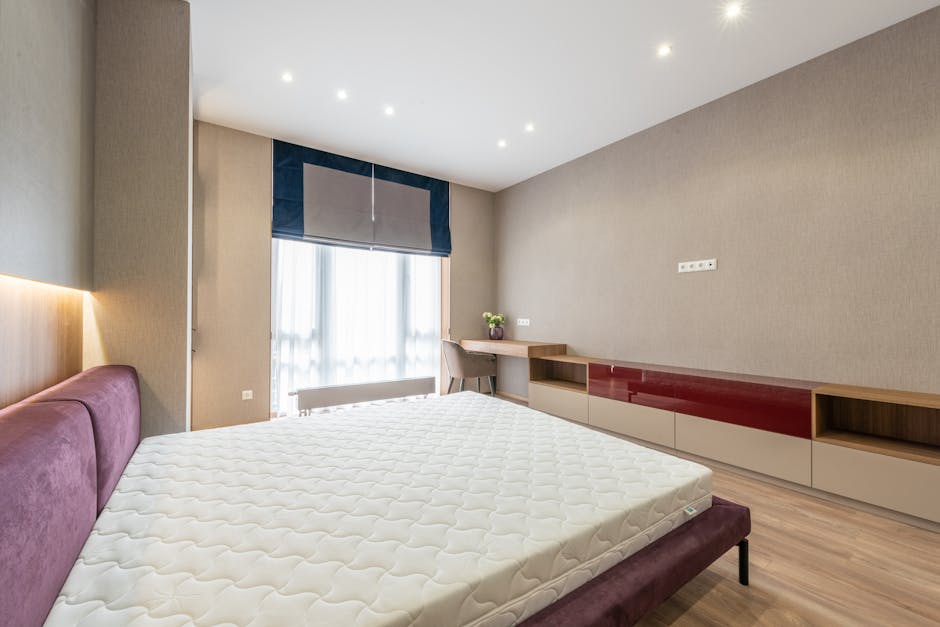
    ![Mattress cost per night averages about 22 cents across a nine-year lifespan, making the bedroom's biggest purchase its cheapest major line.](https://images.pexels.com/photos/6489093/pexels-photo-6489093.jpeg?auto=compress&cs=tinysrgb&h=650&w=940)
    ### How much does a mattress cost per night over 9 years?
    In [EachNight's survey of 1,012 owners](https://eachnight.com/sleep-studies/sleep-setup-worth/), the average respondent's mattress cost $648, and the expected lifespan came in around nine years. The survey computed each owner's own price-over-nights ratio and averaged the results, landing at roughly **22 cents per night**. Multiply 22 cents across 3,285 nights and you get about $720, close to but not identical with the $648 average price, which is what averaging ratios instead of prices does. For ranking purposes, 22 cents is the number.
    That makes the mattress cost per night cheaper than both electronics on the ledger, the 51-cent ring and the $1.70 cooling rig, despite being the biggest purchase most bedrooms ever see. Sixty percent of owners in the survey slept on a bed costing under 25 cents a night. The same respondents said they would pay $44 a month for one extra hour of quality sleep, about $1.47 a night, nearly seven times what the bed itself costs them. People who balk at a 22-cent surface routinely pay far more for a device that only observes it.
    Paying more did not guarantee better rest in the survey's own data, either. The under-$300 tier matched the $1,000-to-$1,999 bracket for satisfaction, with 61% in each group calling their sleep good or very good. Price buys materials and longevity, not automatically better nights.
    ## Pillow and Bedding Costs Sit in the Middle
    Bedding textiles are consumables mispriced as durables: the ledger divides price by every night the item exists, not every night it works, so a textile's per-night cost is a curve, not a constant. The sharper metric is **cost per good night**, price over the nights it still worked.
    ### The pillow you are replacing too late
    Common [pillow replacement guidance](https://www.sleepfoundation.org/best-pillows/how-often-should-you-replace-your-pillows) puts useful life at one to two years. Price two pillows: a $50 one runs about **14 cents a night** replaced at one year, 9 at eighteen months, 7 at two; an $80 one, 22, 15, and 11. The flat figure falls as you hold on; cost per good night only worsens, because once the fill goes lumpy each extra night draws its share of the price while delivering none of the sleep. **A pillow replaced on schedule can rival the mattress itself on the ledger**, and the fold test is the trigger: fold it in half; if it stays folded, the curve has already turned against you.
    ### Sheets, the same curve plus a second job
    A decent sheet set runs $60 to $90 and, per guidance on [how long sheets last](https://www.bhg.com/how-long-do-bed-sheets-last-8405868), holds up two to three years, roughly 6 to 12 cents a night. The same curve applies: pilled fabric keeps costing you after it stops breathing, and breathing is the second job, since sheets double as cooling rung 2 and breathability is the cheapest temperature control there is.
    Together the two textile lines run about **13 to 25 cents a night**, and where you land depends on how promptly you replace each one. The perverse part: that 13-cent floor is a pillow held two full years over bargain sheets, cheapest on paper, least useful in practice.
    ## Blackout Curtains for Sleep at a Couple of Cents
    **One to three cents a night** is the price of the only line under five cents on the ledger with a hormone behind it. A $40 to $60 blackout curtain set, or $20 to $30 of window film, held for five or more years amortizes to roughly 2 percent of the $1.47 those same survey owners put on an extra hour of quality sleep. Yet blackout was only the fourth most common purchase in the EachNight survey, bought by 31% of owners, behind gear that in several cases runs 5 to 50 times more per night.
    The mechanism is precise enough to price. Evening light suppresses melatonin, the hormone that cues sleep onset, and [research on light and melatonin](https://link.springer.com/article/10.1186/s12912-026-04995-0) keeps confirming how sensitive the response is to dose and timing, and closed eyelids are weak defense. That sensitivity is the edge case hiding in plain sight: a streetlight bleeding through blinds still doses you, so a room that feels dim enough often is not.
    The intervention-versus-measurement split is starkest here. Two cents changes the input your brain reads all night; the 51-cent ring only reports the output. If the problem is a partner on a mismatched schedule, curtains cannot fix the lamp, and a sleep mask beats a tracker there as well. Light control is the one upgrade where the frugal move and the physiological move are the same purchase.
    ## Cooling Gear Is the Biggest Line Item
    Feeling too hot was the number one mattress complaint in the survey, reported by 34% of owners. Cooling is therefore where the money goes, and the category spans two orders of magnitude, which makes the standalone question ("are cooling mattress pads worth it?") useless without a ladder.
    **Rung 1, moving air, about 3 cents.** A $40 fan over four years is roughly 3 cents a night, and fans were both the most common sleep purchase in the survey (39% of owners) and the product owners most often said noticeably improved their sleep (36%). The cheapest rung is also the best-rated one.
    **Rung 2, passive, 6 to 25 cents.** Linen sheets already on the ledger sit at 6 to 12 cents, a wool topper lands near 14 ($150 over three years), and passive pads cap the rung: $110 to $275 held about three years is 10 to 25 cents a night. Passive gear captures much of the benefit because it removes heat your own body generates; it just cannot go below room temperature.
    **Rung 3, active water systems, $1.50 to $3 a night.** Water-cooled mattress covers from Eight Sleep, Sleepme's Dock Pro line, and similar brands list at roughly $2,000 to $2,900 for a queen, and Eight Sleep adds a [recurring membership fee](https://pages.eightsleep.com/products/membership-standard). Work the example with explicit assumptions: $2,200 of hardware plus $180 a year for five years is $3,100 across 1,825 nights, about **$1.70 a night**. That single line exceeds the mattress, pillow, sheets, and blackout curtains combined (about 45 cents) by nearly a factor of four.
    ### Are cooling mattress pads worth it?
    On the ledger, only when heat is the binding constraint. For night sweats, menopause, or a partner hot enough to wake you, an active system attacks a specific problem and can justify the price. For general "I sleep warm" discomfort, rungs 1 and 2 deliver most of the relief for a fraction of the price.
    ## The Oura Ring at 51 Cents a Night
    ![Oura Ring cost per year reaches roughly $187 once the recurring membership is added, more than double the mattress it monitors.](https://images.pexels.com/photos/35147278/pexels-photo-35147278.jpeg?auto=compress&cs=tinysrgb&h=650&w=940)
    Now the layer most self-quantifiers already own. A [full Oura Ring cost breakdown](https://www.longevitybenchmark.com/wearables/oura-ring-cost/) starts the hardware at $349, and [Oura membership pricing](https://ouraring.com/membership) runs roughly $70 a year. The Oura Ring total cost over three years with membership is therefore about $560: $349 plus $210. Divide by 1,095 nights and you get **about 51 cents a night**, an Oura Ring cost per year of roughly $187.
    That is more than double the mattress on the same ledger, and the survey's effectiveness data is blunt about what buyers got: only 50% of sleep tracker owners said the device improved their sleep, the lowest rate of any popular product in the survey. A tracker changes nothing in the bedroom by design. It measures.
    A tracker can still be a good purchase, just a different kind. Measurement earns 51 cents a night exactly when you act on the data, and the highest-value use is running n=1 experiments on the interventions above: two weeks with blackout curtains versus two weeks without, scored by the ring. Used that way, the tracker tells you whether every other line on the ledger is working. Used as a scoreboard, it is a pricey way to watch yourself sleep badly.
    ## The Full Ledger, Ranked for the Next Dollar
    The whole sleep setup cost per night stack on one page, using the worked numbers above. The physical bed, fan through mattress, still totals under 50 cents a night, less than the tracker watching it. The final column divides each line by the **$1.47** the survey's owners put on one extra hour of nightly sleep, which turns cents into value share; only the cooling rig clears 100 percent, outspending an hour of sleep outright:
    | Layer | Example price | Useful life | Cost per night | Share of the $1.47 sleep hour |
    |---|---|---|---|---|
    | Box fan | $40 | 4 years | ~3¢ | ~2% |
    | Blackout curtains | $50 | 5+ years | ~3¢ | ~2% |
    | Pillow | $50 | 1.5 years | ~9¢ | ~6% |
    | Sheets | $80 | 2 years | ~11¢ | ~7% |
    | Mattress | $648 (survey average) | ~9 years | ~22¢ | ~15% |
    | Oura Ring + membership | $560 over 3 years | 3 years | ~51¢ | ~35% |
    | Active cooling system | ~$3,100 all-in | 5 years | ~$1.70 | ~116% |
    Ranking sleep environment upgrades by where the next dollar buys the most marginal sleep:
    1. **Replace a worn-out mattress.** Nothing else on the ledger actively costs you sleep; a dead mattress does. Among survey owners who admitted their bed needed replacing, 54% woke regularly sore or stiff.
    2. **Blackout the window.** A direct melatonin mechanism, the cheapest lever with a physiological case behind it.
    3. **Replace the pillow.** If it fails the fold test, you are paying mattress money for neck misalignment.
    4. **Add moving air or passive cooling** if heat is your complaint. The survey's own effectiveness data favors the fan.
    5. **Replace sheets on schedule**, which doubles as cooling rung 2.
    6. **The tracker**, but only with an action plan attached.
    7. **Active cooling**, last, unless heat is chronic and passive options have already failed.
    One caveat keeps the ranking honest: **cost per night is a price of admission, not a quality score.** A 3-cent item that does nothing for you is 3 cents wasted, and a $1.70 system that ends two hours of nightly waking is cheap by the owners' own $1.47-an-hour math. Every line must pair its price with how much it can plausibly move your sleep, and the ranking above assumes each item addresses a problem you actually have.
    ## Replacement Timing Beats Any New Purchase
    ### How often to replace a mattress
    Typical [mattress replacement guidance](https://www.sleepfoundation.org/mattress-information/when-should-you-replace-your-mattress) lands at six to ten years, with the survey's owners expecting about nine. The amortization trap is what happens after that: stretch a $700 mattress from nine years to twelve and the per-night cost falls from 21 cents to 16, "saving" about five cents a night, roughly $20 a year, while you sleep on a surface whose support has already failed. The survey quantified both ends of the damage. Owners of mattresses ten or more years old were nearly five times as likely as first-year owners to say the bed needed replacing (52% versus 11%), and the share rating their sleep good or very good fell from 71% in year one to 48% at six to nine years.
    The money behavior is the striking part. Nearly a third of owners (29%) admitted the bed was past due. Cost kept 68% of them from replacing it, and 86% of that group patched instead, spending an average of $151 on toppers, pillows, and similar fixes. That is a quarter of a replacement mattress spent on gear that cannot fix sagging support underneath. Deferring the big purchase looks like thrift and costs more than any gadget on this ledger.
    The cheapest sleep upgrades per dollar are calendar entries. When to replace pillow, sheets, and mattress, roughly: pillow every one to two years on wear signs, sheets every two to three, mattress at six to ten years or when sagging and morning soreness appear, a topper at about three, a fan when it turns loud. Enter the dates once and the ledger maintains itself.
    ## Run Your Own Sleep Setup Cost per Night Audit
    Five steps, one evening:
    1. **Inventory every layer you own**, mattress through tracker, with what you actually paid. Receipts if you have them, honest estimates if not.
    2. **Assign realistic useful life to each**, based on wear signs and age rather than warranty length.
    3. **Divide price by nights** (years × 365) for every line, recurring fees included.
    4. **Tag each line intervention or measurement**, and note which specific problem it addresses.
    5. **Rank by "fixes a problem I actually have" first, cost per night second**, buy the top of the list, and calendar the replacements your dates imply.
    The number that survives the audit is the only one worth arguing about at checkout. A 22-cent mattress, a 9-cent pillow, a 3-cent curtain, and a fan outwork a 51-cent scoreboard and a $1.70 chill on every line that matters.]]>

    0 min
  • Sauna Immune System Surge Is a Dose, Not a Shield
    Active fever means no sauna. Not lighter, not shorter. None, until the fever has been gone for a full day.
    Is sauna during fever safe? No, and the mechanism explains why. Fever is a raised hypothalamic set point that the body actively defends, not simply a high reading on a thermometer, as [fever physiology reviews](https://pubmed.ncbi.nlm.nih.gov/32966005/) describe. The thermostat has been turned up on purpose. External heat applied to a body defending a higher set point compounds the heat load, accelerates fluid loss, and strains the cardiovascular system, which is why mainstream guidance lists acute febrile illness among the clear contraindications, per [sauna safety guidance](https://sauna.guide/guides/when-not-to-sauna).
    Fever is the unambiguous stop. The rest of the list:
    - **Unstable cardiovascular conditions:** clear regular heat use with a clinician first.
    - **Dizziness, nausea, or lightheadedness mid-session:** exit, cool down, sit, drink. Do not push through to finish the block.
    - **Pregnancy:** heat caution applies, so treat it as a clinician conversation rather than a judgment call.
    - **Alcohol:** it impairs thermoregulation and judgment and raises the odds of heat-related hypotension. The two do not mix at any dose.
    The sauna-when-sick question splits cleanly at the thermometer, and four branches cover every case:
    1. **Take your temperature first.** Feelings are not a fever screen.
    2. **Fever, 38°C (100.4°F) or higher:** no sauna until fever-free for at least 24 hours.
    3. **No fever, symptoms above the neck** (scratchy throat, runny nose): an optional short, cooler session, 15 minutes at 80°C, well hydrated, ending at the first sign you feel worse. Warm air can ease symptoms; that is comfort, not cure.
    4. **Symptoms below the neck** (chest congestion, body aches, GI upset): no heat until resolved, fever or not.
    ## Unknowns Worth Tracking Yourself
    What nobody yet knows:
    - Whether the acute surge means fewer infections at any dose, in anyone.
    - Whether an immune dose-response curve exists, and where it bends.
    - How much individual variation in fitness, heat acclimation, age, and sleep changes the picture.
    Your best evidence is local, and it is cheap to collect:
    - **Sick-day log:** dates, symptoms, severity, and duration, all winter.
    - **Morning HRV trend:** a falling trend across a protocol block is a dose warning regardless of what any study says.
    - **Session notes:** temperature, duration, placement against training, and how recovered you felt the next morning.
    Read them together. If three sessions a week arrives alongside falling HRV and climbing fatigue, your dose is too high even though Finnish cohorts tolerated more. If the sick-day log thins out across two winters of consistent use, that is your own data talking, confounds attached, and it still beats extrapolating from a cell count.
    The sauna immune system question, compressed to one paragraph: one Finnish-style session produces a genuine but transient leukocytosis, a mobilization of existing cells that peaks during or just after the session and returns toward baseline within hours. Program it like a training stimulus, temperature and duration and frequency and placement, hydrate for the liter you can lose, and stop it dead at fever. Dose-first beats hype-first every winter.]]>
    0 min
  • Mobility Training Needs End-Range Load, Not More Flow
    Judge the protocol only on cold-state re-tests. Success is small, repeatable increments, a few degrees or a centimeter or two per block, not dramatic single-session changes.
    That cadence sounds slow until you compound it. A few degrees per six-week block, repeated across a year, is range you can see in your squat depth and feel in your hips at the bottom of a chair stand.
    So pick one joint this month. Run the three tests, compute your gap, and choose your branch. Dose it 30 to 60 seconds at a time, two to four sessions a week, and let the cold re-test at week six, not the post-session glow, tell you whether it worked. Treat range of motion like a lift, because that is what it is.]]>
    0 min
