
Sign up to save your podcasts
Or

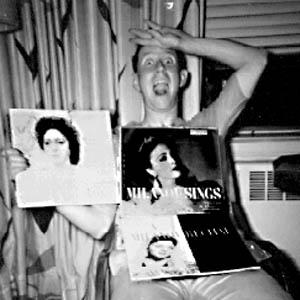


After last season....she could wipe them out if she was 90...... 1982 Frankfurt.
MIRACLE!!!!!!!!!!!!!!!!!!!!!!!!!!!!!!!!!!!
Ran into him before Boheme Sat. No one as sweet and lovable....plus that great voice..His idols are Gedda and Wunderlich..FIGURES!!!!!
Hans Hotter.....Forgot who Erda is..Oh well..She is no help anyway!!!!!!!!!!!!!!!!!!!!
Repeats of some old stuff for new people and oldies who forgot!!!!!!
Tebaldi,Tucker..(Scarpia is dead)
[email protected] Can I do this?
She would not DARE scream at me!!!!!!!!!!!!!!!! She was my second mommy!!!!
On Jan.21, 1956, my 20th birthday, this Carmen w.Rise Stevens,Giuseppe Di Stefano,Robert Merrill,Lucine Amara cond.by Max Rudolf was to precede a surprise birthday party for me on the next day. However (listen to end of act 3),you hear Rise say "put my arm down,"(1:46:24) which dear Pippo broke, and the Rise Stevens music club meeting,scheduled for the next day...to get me out of the house while my friends assembled,was cancelled! PANIC!!!!
My ma convinced me to go see Rise when she came from the hospital, and happily I was able to arrive home and shockingly had the biggest surprise imaginable!
I was so surprised, but there was one person who was too busy to show up..her name was Renata Tebaldi! I would have fainted!
Well,despite Pippo, it turned out well, but it was a close call.
Live Radio broadcasts sponsored by Martini & Rossi.
Di Stefano Iris "Apri la tua finestra"
Carosio Sonnambula "Ah non credea"
Callas Seraglio aria (In Ital.)
Gigli Werther aria (In Ital.)
Simionato Tancredi "Di tanti palpiti"
G.Raimondi Luisa Miller "Quando le sere al placido"
Callas La Vestale "Tu che invoco"
Olivero La Wally "Ebben,ne andro"
DelMonaco Walkure Act one scene
Cossotto Samson et Delilah act 1 aria
Bergonzi/Carteri Butterfly Duet
Born in Jessup, Pennsylvania, Cossa studied with Anthony Marlowe in Detroit, Michigan, Robert Weede in Concord, California, and Armen Boyajian in New York City. He made his debut at the New York City Opera as Morales in 1961, and a week later sang Sharpless with the company. He won the American Opera Auditions in 1964 and was sent to Italy for debuts at the Teatro Nuovo in Milan and Teatro della Pergola in Florence.[2]
He made his debut at the San Francisco Opera in 1967 as Zurga in Les pêcheurs de perles. His Metropolitan Opera debut took place on January 30, 1970 as Silvio in Pagliacci. Other roles there were Figaro in Il barbiere di Siviglia, Lescaut in Manon Lescaut, Marcello in La bohème, Mercutio in Romeo and Juliette, Masetto in Don Giovanni, Valentin in Faust, Yeletsky in Pique Dame, Germont in La traviata, and Albert in Werther. In 1976 he created the role of David Murphy in the world premiere of Gian Carlo Menotti's The Hero with the Opera Company of Philadelphia.[3]
Cossa's left a few notable recordings of his best roles such as Belcore in L'elisir d'amore opposite Dame Joan Sutherland and Luciano Pavarotti, Achillas in Handel's Giulio Cesare opposite Norman Treigle and Beverly Sills, Nevers in Meyerbeer's Les Huguenots, again opposite Sutherland, Martina Arroyo and Huguette Tourangeau, and the baritone solo part in Roger Sessions' When Lilacs Last in the Dooryard Bloom'd. He can also be heard on the Classical Record Library's A Celebration of Schumann and Schubert with the Chamber Music Society of Lincoln Center.
He has sung as soloist with the New York Philharmonic, the Boston Symphony, the Chicago Symphony, the Israel Philharmonic, and the National Symphony.
He was chosen by Licia Albanese to be the recipient of the Puccini Foundation's Bacccarat Award in 2004, and in 1993 was inducted into the Hall of Fame for Great American Singers at the Academy of Vocal Arts in Philadelphia.
Cossa taught at the Manhattan School of Music and in 1988 he accepted a position as Professor of Music at the University of Maryland, College Park, where he became chair of Voice/Opera.
Also, a SWEET GUY!!!!!!!!!!!!!!!!!!!!!!!
His North American debut was as Alvise in Ponchielli's La Gioconda at the second season opening of Hammerstein's Manhattan Opera House. It was the night of "Golden Age" stars, also featuring American debuts of Giovanni Zenatello as Enzo and Jeanne Gerville-Réache as La Cieca, while Lillian Nordica sang the tile role, Mario Ancona was Barnaba and Eleanora de Cisnero was Laura. A year later, Metropolitan Opera engaged Didur as Méphistophélès in Gounod's Faust at the inauguration of the new Brooklyn Academy of Music to be followed two days later by his Ramfis in Giuseppe Verdi's Aida. On this all-star opening night of the 1908 season, Arturo Toscanini was in the pit and the rest of the cast included Emmy Destinn in her Met debut as Aida, Enrico Caruso (Radames), Louise Homer (Amneris) and Antonio Scotti (Amonasro). He remained with the company for a quarter of a century and became one of its principal bass singers, counting 933 performances in 55 roles.[9]
It was at the Met in 1913 that he appeared in the title role of Boris Godunov in the American premiere of Mussorgsky's opera.[10][11][12] Didur created the roles in three operas by Giacomo Puccini at the Met, La fanciulla del West and the Il tabarro and Gianni Schicchi of the Il Trittico trilogy. He also appeared at the world premiere of Humperdinck's Die Königskinder. His other important "firsts" at the Met include the US premieres of Mozart's Così fan tutte, Smetana's The Bartered Bride, Borodin's Prince Igor (singing both Prince Galitzky and Khan Konchak), and Montemezzi's L'amore dei tre re. He also sang under the baton of Gustav Mahler in Mozart's Le nozze de Figaro, Smetana's The Bartered Bride and the Met premiere of Tchaikovsky's The Queen of Spades. Didur's last appearance at the Met was in the role of Coppélius in Les Contes d'Hoffmann on 11 February 1932.[9] His voice had been on the wane for some time and he returned to live in Europe.[13
From the publisher's feed