
Sign up to save your podcasts
Or

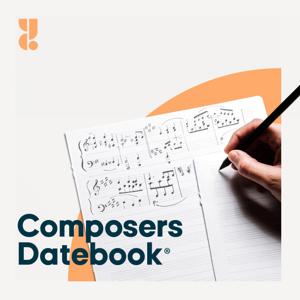

“Are people still writing concertos for harpsichord?” you ask. Well, today, we have an answer, which is “Yes!”
On today’s date in 2002, this new Concerto for Harpsichord and Chamber Orchestra by Philip Glass had its premiere performance at Benaroya Hall in Seattle. Glass was asked to write a new Harpsichord Concerto for the Northwest Chamber Orchestra and says he found the commission intriguing.
“For one, I have always been an admirer of the literature for harpsichord and have played a bit it myself,” Glass wrote. “Secondly, I knew that the modern-day harpsichord was capable of a fuller, more robust sound than was available in ‘period’ instruments and might make a handsome partner to a modern chamber orchestra.”
Glass’ concerto is in the traditional three movements of a Baroque era concerto, with a slower, more lyrical middle movement flanked by speedier, flashier outer movements.
And perhaps surprisingly for a “minimalist” composer famous — or infamous — for his loping, seemingly endless repeated patterns, this Harpsichord Concerto, despite being recognizably a work by Philip Glass, is more varied and mercurial than usual, with a final movement in which the harpsichord soloist really needs to “go for Baroque!”
Philip Glass (b. 1937): Concerto for Harpsichord and Chamber Orchestra; Christopher D. Lewis, harpsichord; West Side Chamber Orchestra/Kevin Mallon; Naxos 8.573146
 View all episodes
 By American Public Media

4.7
176176 ratings
“Are people still writing concertos for harpsichord?” you ask. Well, today, we have an answer, which is “Yes!”
On today’s date in 2002, this new Concerto for Harpsichord and Chamber Orchestra by Philip Glass had its premiere performance at Benaroya Hall in Seattle. Glass was asked to write a new Harpsichord Concerto for the Northwest Chamber Orchestra and says he found the commission intriguing.
“For one, I have always been an admirer of the literature for harpsichord and have played a bit it myself,” Glass wrote. “Secondly, I knew that the modern-day harpsichord was capable of a fuller, more robust sound than was available in ‘period’ instruments and might make a handsome partner to a modern chamber orchestra.”
Glass’ concerto is in the traditional three movements of a Baroque era concerto, with a slower, more lyrical middle movement flanked by speedier, flashier outer movements.
And perhaps surprisingly for a “minimalist” composer famous — or infamous — for his loping, seemingly endless repeated patterns, this Harpsichord Concerto, despite being recognizably a work by Philip Glass, is more varied and mercurial than usual, with a final movement in which the harpsichord soloist really needs to “go for Baroque!”
Philip Glass (b. 1937): Concerto for Harpsichord and Chamber Orchestra; Christopher D. Lewis, harpsichord; West Side Chamber Orchestra/Kevin Mallon; Naxos 8.573146

6,736 Listeners

38,841 Listeners

8,770 Listeners

9,195 Listeners
5,778 Listeners

926 Listeners

1,390 Listeners

1,285 Listeners
3,156 Listeners

1,974 Listeners

523 Listeners
183 Listeners

13,764 Listeners

3,086 Listeners

248 Listeners
28,129 Listeners

430 Listeners

5,467 Listeners
2,196 Listeners

14,142 Listeners
6,416 Listeners
2,514 Listeners
4,837 Listeners

575 Listeners
243 Listeners