
Sign up to save your podcasts
Or



Send a text
Your baby arrives and suddenly the smallest choice shapes the next 18 years: pediatrician or family doctor. We dig past the directory listings to compare how each path changes your day-to-day reality, from 3 a.m. fevers to school forms and the first tough conversations with a teenager. Our goal is simple: help you find the care model that fits your family’s life, values, and stress threshold.
We start with training, where the real split begins. Pediatricians spend three concentrated years immersed in children’s physiology, development, and disease patterns, sharpening early detection for issues like speech delay and autism. Family physicians build broad expertise across the lifespan, offering convenience for multi-person sick days and a deep read on family history that can reveal patterns in cholesterol, asthma, or anxiety. That’s the core trade-off: depth that catches subtle pediatric signals versus breadth that streamlines care and keeps everyone under one roof.
From there, we zoom into the practicalities that matter at 6 p.m. on a Friday. We talk kid-centered clinic environments that lower fear and make shots easier, after-hours access that keeps you out of the ER, and telemedicine that triages rashes and dosing questions fast. We also highlight specialized pediatric services you may not expect, like newborn circumcision after discharge, medical ear piercing with sterile technique, and expert handling of immunization and school readiness forms that can derail a semester if a single date is off. Finally, we map the transition from pediatrics to adult-oriented care, encouraging parents to hand the mic to their teens, support private time with the clinician, and treat the switch as a rite of passage toward autonomy.
If you’re weighing pediatrician versus family doctor, you’ll leave with a clear framework: choose depth for development-focused care in a kid-friendly system, choose breadth for one-stop convenience and generational context. Above all, prioritize comfort and trust; a child who feels safe and heard engages better and stays healthier. If this guide helped clarify your choice, tap follow, share it with a parent who’s deciding, and leave a quick review so others can find it too.
Visit the blog: https://www.omegapediatrics.com/pediatrician-or-family-doctor-for-family/
🎧 Thanks for Listening!
If you found this episode helpful, be sure to subscribe, download, and share it with friends, family, or colleagues who might benefit. Your support helps us reach more listeners and spread valuable knowledge on pediatric care.
🌐 For more expert insights, resources, and services, visit Omegapediatrics.com — your trusted source for compassionate, comprehensive pediatric care.
💬 Have questions or ideas for future episodes? Leave us a comment or message us through our website — we’d love to hear from you!
📲 Follow us on social media for tips, updates, and behind-the-scenes content.
Send a text
The home stretch of pregnancy can feel like an endurance event—and that’s exactly why we broke it down into clear, workable steps. We walk through seven late‑pregnancy challenges with practical solutions you can use today, and we explain the “why” behind each symptom so you can act with confidence instead of worry.
We start with shortness of breath and back pain, tracing the mechanics from diaphragm displacement to ligament laxity and a shifting center of gravity. You’ll learn how posture, gentle aerobic movement, and smarter lifting protect your spine, why flats beat heels, and how a side‑lying setup with a pillow restores alignment at night. We also talk bladder control in plain terms: targeted pelvic floor training with long holds, fiber to ease pressure from constipation, and bladder retraining to cut surprise leaks.
Vein trouble—spider veins, varicose veins, and hemorrhoids—gets a real plan: move often, choose warm soaks for pain relief, use cold packs for leg swelling, wear loose clothing, and consider stool softeners to avoid straining. We separate Braxton Hicks from real labor with a simple checklist anchored in hydration, warm baths, and careful monitoring. For heartburn, a small timing shift makes a big difference: eat first, then drink water after meals to reduce reflux, stay upright, and avoid late‑night eating. Sleep ties it all together with the boring task strategy, stricter sleep hygiene, and a kinder mindset that stops the midnight spiral.
Throughout, we keep one idea front and center: maternal comfort is essential health care, not a luxury. These tools don’t just reduce discomfort; they help your body’s remarkable adaptations do their job. If this helped you or someone you love, tap follow, share it with a friend who’s in the final month, and leave a quick review to tell us which tip worked best for you.
Visit the blog: https://www.omegapediatrics.com/last-month-of-pregnancy-common-problems/
🎧 Thanks for Listening!
If you found this episode helpful, be sure to subscribe, download, and share it with friends, family, or colleagues who might benefit. Your support helps us reach more listeners and spread valuable knowledge on pediatric care.
🌐 For more expert insights, resources, and services, visit Omegapediatrics.com — your trusted source for compassionate, comprehensive pediatric care.
💬 Have questions or ideas for future episodes? Leave us a comment or message us through our website — we’d love to hear from you!
📲 Follow us on social media for tips, updates, and behind-the-scenes content.
Send a text
Choosing a pediatrician isn’t a simple errand; it’s the start of a relationship that can shape your child’s health for years. We map a clear, stress-cutting route through the noise with seven questions that expose what really matters: easy access, responsive hours, professional standards, and a practice culture built for kids and tired parents alike. From that first meet and greet to after-hours triage, we share what to ask, why it matters, and how to spot red flags before they become your 2 a.m. problem.
We take you from logistics to lived experience. You’ll learn how to judge location beyond commute time by weighing hospital proximity, labs, parking, and transit. We dig into operating hours and why same-day visits and true after-hours support can prevent unnecessary urgent care runs. We show how to test the human fit—clear explanations, zero dismissiveness, and genuine connection with your child—because bedside manner is a daily reality, not a luxury. Then we pull back the curtain on operations: separate waiting areas for sick and well visits, team-based staffing to cut delays, telemedicine for flexibility, and vaccination policies aligned with evidence. We also clarify the difference between a state license and AAP-recognized board certification so you can verify expertise with confidence.
Timing your first visit matters too, whether your pediatrician is hospital-affiliated or you’re scheduling within five days of discharge to catch early issues like jaundice and feeding challenges. We walk through how to use personal recommendations and online reviews like data—looking for patterns in communication and wait times instead of reacting to one-off comments. To ground it all, we point to Omega Pediatrics in Roswell, Georgia, as a working model of full-spectrum pediatric care with after-hours access, lactation support, obesity medicine, newborn procedures, and broad insurance acceptance.
If this guide helps you choose with clarity, follow and subscribe for more parent-first health deep dives, and share this episode with a friend who’s picking their pediatrician right now. Your experience matters—what’s the one question you wish you’d asked sooner?
Visit the blog: https://www.omegapediatrics.com/choosinga-pediatrician-ask-these-questions/
🎧 Thanks for Listening!
If you found this episode helpful, be sure to subscribe, download, and share it with friends, family, or colleagues who might benefit. Your support helps us reach more listeners and spread valuable knowledge on pediatric care.
🌐 For more expert insights, resources, and services, visit Omegapediatrics.com — your trusted source for compassionate, comprehensive pediatric care.
💬 Have questions or ideas for future episodes? Leave us a comment or message us through our website — we’d love to hear from you!
📲 Follow us on social media for tips, updates, and behind-the-scenes content.
Send a text
Ever wonder why a simple melody can calm a stormy mood or make new words stick? We pull apart the science and the lived experience to show how music quietly rewires a child’s brain for memory, language, attention, and advanced reasoning—while also shaping character traits like patience, empathy, and real grit. It’s not a luxury or a nice-to-have; it’s one of the most efficient tools for whole-child development.
We start with the cognitive core: how rhythm and structure act like an external filing system for memory, why musical patterns sharpen phonological awareness for reading, and how sustained listening trains selective attention without feeling like a chore. From there, we connect music to executive functions—prediction, cognitive flexibility, and impulse control—and explain how repeated musical engagement accelerates neuroplasticity across auditory, motor, and emotional networks. You’ll also hear why spatial temporal reasoning grows through music’s ratios and patterns, building a quiet bridge to math and logic.
Then we turn to the heart: active music-making as a safe outlet for big feelings, a daily practice in regulation and perseverance, and a social engine that builds empathy and confidence through ensemble work. We explore creativity through improvisation and composition, highlight gains in fine motor skills and coordination, and celebrate music’s role in cultural awareness and belonging. Whether it’s formal lessons or dancing in the living room, small musical rituals deliver outsized returns for brain and character.
If this resonates, help us spread the word. Subscribe, share with a friend who cares about child development, and tell us the musical habit you’ll try this week. Your story might spark someone else’s first step.
Visit the blog: https://www.omegapediatrics.com/benefits-of-music-on-cognitive/
🎧 Thanks for Listening!
If you found this episode helpful, be sure to subscribe, download, and share it with friends, family, or colleagues who might benefit. Your support helps us reach more listeners and spread valuable knowledge on pediatric care.
🌐 For more expert insights, resources, and services, visit Omegapediatrics.com — your trusted source for compassionate, comprehensive pediatric care.
💬 Have questions or ideas for future episodes? Leave us a comment or message us through our website — we’d love to hear from you!
📲 Follow us on social media for tips, updates, and behind-the-scenes content.
Send a text
A sore throat can change a life. We pull back the curtain on group A strep to show how a common infection in school-aged kids can spark rare but devastating complications—and exactly how to stop that chain reaction before it starts. You’ll learn the four visual red flags every parent can recognize at home, why up to 20% of children can carry strep without symptoms, and how that hidden reservoir shapes testing and treatment choices.
We walk through the critical split between local spread and immune-mediated fallout: ear and sinus infections on one side, and on the other, the conditions that keep pediatricians up at night. Rheumatic fever can scar heart valves through molecular mimicry. Post-streptococcal glomerulonephritis can inflame kidney filters with lasting effects. And PANDAS can trigger sudden-onset OCD-like behaviors, tics, and severe anxiety after strep, likely tied to antibody activity in the basal ganglia. These aren’t just medical terms; they are preventable outcomes when diagnosis is prompt and antibiotics are taken correctly.
From clinic steps to home comfort, we keep the plan simple and actionable. Get a rapid swab test. If positive, start penicillin or amoxicillin and finish the full 10-day course—even if your child feels better by day three. Use hydration, pediatric dosing of ibuprofen or acetaminophen, and kid-safe throat sprays for short-term relief. If your family faces repeated infections, we outline data-driven tonsillectomy thresholds and the other factors—like sleep apnea or antibiotic allergies—that inform a tailored decision with your pediatrician and ENT.
The bigger idea we share is prevented immunology: finishing antibiotics doesn’t just kill bacteria; it helps prevent the immune system from misfiring in ways that harm the heart, kidneys, and brain. If this guide helps you or a parent you love, subscribe for more evidence-based parenting insights, rate the show to help others find it, and share this episode with someone who needs a clear plan today.
Visit the blog: https://www.omegapediatrics.com/strep-throat-infection-should-be-treated/
🎧 Thanks for Listening!
If you found this episode helpful, be sure to subscribe, download, and share it with friends, family, or colleagues who might benefit. Your support helps us reach more listeners and spread valuable knowledge on pediatric care.
🌐 For more expert insights, resources, and services, visit Omegapediatrics.com — your trusted source for compassionate, comprehensive pediatric care.
💬 Have questions or ideas for future episodes? Leave us a comment or message us through our website — we’d love to hear from you!
📲 Follow us on social media for tips, updates, and behind-the-scenes content.
Send a text
Play isn’t a time-killer—it’s the engine that builds your child’s brain, body, and social world. We unpack how the right kinds of play turn everyday moments into powerful experiences that accelerate milestones and deepen your bond, from the first coos to full-on make-believe. Along the way, we connect the dots between sensory inputs, motor practice, and imaginative scenes so you can see how each layer supports attention, language, coordination, and emotional regulation.
We start with sensory play and why high-quality inputs—textures, sounds, sights—are the brain’s raw materials. Then we move to the physical side, breaking down gross and fine motor play and how to balance big-movement challenges with the small-muscle precision kids need for self-care and school readiness. When imagination takes the stage, pretend roles and storytelling become training grounds for empathy, language, and executive function. We also spotlight the outsized benefits of outdoor play: uneven ground, shifting conditions, and open-ended exploration sharpen focus, risk assessment, and resilience far better than a flat floor ever could.
You’ll get practical guidance by age: connection-rich play for 0–6 months, cause-and-effect exploration for 7–12 months, simple props and parallel play for toddlers, and complex pretend, memory-boosting stories, and rule-based games for ages 4–6. We share a streamlined toy strategy—sensory, problem-solving, and pretend—plus six buying tips that prioritize safety, movement, and depth over clutter. To keep it real and affordable, we add easy DIYs like sensory bottles and textured sound balls that double as bonding moments. Our goal is to help you transform ordinary spaces into learning-rich environments and to advocate for more recess and outdoor time backed by research.
If this resonates, follow the links to learn more from Omega Pediatrics, then subscribe, share with a parent who needs a clear roadmap for play, and leave a review with your favorite low-cost play idea. Your stories help other families turn play into progress.
Visit the blog: https://www.omegapediatrics.com/power-of-play-boost-your-babys-development/
🎧 Thanks for Listening!
If you found this episode helpful, be sure to subscribe, download, and share it with friends, family, or colleagues who might benefit. Your support helps us reach more listeners and spread valuable knowledge on pediatric care.
🌐 For more expert insights, resources, and services, visit Omegapediatrics.com — your trusted source for compassionate, comprehensive pediatric care.
💬 Have questions or ideas for future episodes? Leave us a comment or message us through our website — we’d love to hear from you!
📲 Follow us on social media for tips, updates, and behind-the-scenes content.
Send a text
Parents shouldn’t have to decode endless brochures to find a camp that actually helps their child grow. We break down the top ten summer camp types and show how each one delivers specific developmental gains—from resilience and teamwork to cultural fluency, stewardship, and creative confidence. Along the way, we spotlight the idea of camps as character laboratories, where kids practice independence and leadership through micro moments of mastery and guided, real-world challenges.
We start with traditional camps that build belonging and grit, then move into leadership camps with mentor-led simulations that sharpen decision-making and collaboration. Adventure camps come next, where regulated risk under expert supervision turns fear into focused courage and risk literacy. We go deeper with environmental camps that transform sustainability into hands-on stewardship, faith-based camps that support identity and community, and language immersion camps that pair conversation with culture for true fluency. For intellectually curious kids, academic camps deliver project-based learning that makes knowledge tangible. We also unpack sports camps that train the mind as much as the body and arts camps where professional mentorship accelerates expressive skill. Finally, we give special attention to special needs camps that prioritize inclusion, adapted activities, and higher staff ratios for personalized growth.
Choosing the right program can feel overwhelming, so we share a four-part selection framework: align with your child’s maturity and interests, visit and assess culture, verify staff expertise and safety protocols, seek novelty to spark engagement, and require accreditation. We explain why American Camp Association accreditation is the gold standard, covering health, safety, staffing, and operations with rigorous benchmarks that offer peace of mind.
Ready to pick with purpose? Listen now, then tell us the single outcome you want your child to grow this summer—resilience, leadership, cultural fluency, creativity, or something else. If this guide helps, subscribe, share with a fellow parent, and leave a review so more families can find their perfect camp match.
Visit the blog: https://www.omegapediatrics.com/make-learning-fun-with-top-summer-camps/
🎧 Thanks for Listening!
If you found this episode helpful, be sure to subscribe, download, and share it with friends, family, or colleagues who might benefit. Your support helps us reach more listeners and spread valuable knowledge on pediatric care.
🌐 For more expert insights, resources, and services, visit Omegapediatrics.com — your trusted source for compassionate, comprehensive pediatric care.
💬 Have questions or ideas for future episodes? Leave us a comment or message us through our website — we’d love to hear from you!
📲 Follow us on social media for tips, updates, and behind-the-scenes content.
Send a text
The moment you turn 26, the safety net can vanish—and the choices start piling up fast. We break down the five best health insurance paths for young adults, with real-world trade-offs on price, provider networks, and digital convenience, so you can pick a plan that truly fits your life. No jargon, no fluff—just a clear roadmap from employer coverage to marketplace options and the hidden levers that make quality care affordable.
We compare Kaiser Permanente’s integrated HMO model for low-cost, coordinated care; Blue Cross Blue Shield’s nationwide PPO flexibility for movers and remote workers; UnitedHealthcare’s prevention-first approach with free checkups and screenings; Cigna’s wellness-driven plans with mental health access and fitness perks; and Oscar’s app-first, telehealth-forward experience for on-demand care. Along the way, we highlight when catastrophic plans make sense, why short-term policies are only a stopgap, and how to avoid costly surprises by understanding deductibles, networks, and out-of-pocket limits.
The real unlock for many listeners is financial assistance. Premium tax credits and cost-sharing reductions can dramatically lower monthly costs and shrink deductibles, often turning a basic bronze plan into an affordable silver or gold plan with stronger benefits. If you’ve assumed you don’t qualify, think again—early-career incomes often do. Our simple decision rules—prioritize affordability, ensure network reach if you move or travel, and demand digital convenience—will help you choose a plan that supports your health today and shapes better habits for decades.
If this guide helps, subscribe, leave a review, and share it with a friend staring down the age 26 cliff. Your future self will thank you—and so will theirs.
Visit the blog: https://www.omegapediatrics.com/health-insurance-young-adults-best-picks/
🎧 Thanks for Listening!
If you found this episode helpful, be sure to subscribe, download, and share it with friends, family, or colleagues who might benefit. Your support helps us reach more listeners and spread valuable knowledge on pediatric care.
🌐 For more expert insights, resources, and services, visit Omegapediatrics.com — your trusted source for compassionate, comprehensive pediatric care.
💬 Have questions or ideas for future episodes? Leave us a comment or message us through our website — we’d love to hear from you!
📲 Follow us on social media for tips, updates, and behind-the-scenes content.
Send a text
Ever wonder how some people seem to glide through Medicare bills without surprise charges? We pull back the curtain on Medigap Plan F—the long-time “gold standard” for near-zero out-of-pocket costs—and explain exactly who can still get it after the 2023 rule change. If you’re grandfathered in, this can be a rare advantage; if not, you’ll learn how Plan G or N stacks up and where the true cost differences show over time.
We walk through the protections that made Plan F famous, including coverage of Part B excess charges that can add thousands during specialist care or major procedures. Then we compare six standout carriers and why each one might fit a different kind of member: Humana for nationwide reach and wellness perks, AARP by UnitedHealthcare for strong discounts, Aetna for price transparency, Blue Cross Blue Shield for household savings, Cigna for smooth digital tools, and Mutual of Omaha for High Deductible Plan F when you want lower monthly premiums with catastrophic protection. Along the way, we lay out a six-point checklist to evaluate five-year cost, rate increase history, financial strength, provider billing relationships, claims speed, and value-add perks like gym memberships and telehealth.
Timing matters, so we break down your Medigap open enrollment window, what guaranteed issue really means, and how underwriting can affect eligibility and pricing outside protected periods. We also zoom out to show how smart Medicare choices connect with broader family health planning—from pediatric care and after-hours access to practical guides like dosing charts and asthma resources—so your whole household benefits from better information and calmer decision-making.
Ready to choose with confidence? Listen now, compare your options using our checklist, and share this with someone navigating Medicare for themselves or a parent. If the guide helped, subscribe, leave a quick review, and tell us: would you prioritize zero point-of-service costs or lower monthly premiums over the long run?
Visit the blog: https://www.omegapediatrics.com/medicare-supplement-plan-f-providers/
🎧 Thanks for Listening!
If you found this episode helpful, be sure to subscribe, download, and share it with friends, family, or colleagues who might benefit. Your support helps us reach more listeners and spread valuable knowledge on pediatric care.
🌐 For more expert insights, resources, and services, visit Omegapediatrics.com — your trusted source for compassionate, comprehensive pediatric care.
💬 Have questions or ideas for future episodes? Leave us a comment or message us through our website — we’d love to hear from you!
📲 Follow us on social media for tips, updates, and behind-the-scenes content.
Send a text
Newborn sleep can feel like a maze of rules, warnings, and mixed advice—so we cut through the noise with a simple, science-backed map. We break down what actually reduces risk in the first year: back sleeping every time, a firm and flat mattress, a completely bare crib, and room sharing without bed sharing. More than a checklist, we explain the physiology behind safer sleep so you can make confident choices even at 3 a.m.
We start with the most powerful move you can make: placing your baby on their back for every sleep. You’ll hear why this position prevents rebreathing and keeps the airway open, and why fears about choking don’t match the anatomy or the data. Then we move to the sleep space itself—why “firm, flat, and bare” is nonnegotiable, how memory foam and inclined sleepers raise risks, and how a sleep sack and footed pajamas keep warmth without loose blankets. We also tackle temperature, showing how avoiding overheating protects a baby’s arousal response and lowers danger.
Next, we explore the geography of the room. Room sharing for at least six months, ideally a year, offers a striking safety benefit, while bed sharing brings hazards like entrapment and suffocation. For breastfeeding families, we walk through a practical routine to feed at night while staying awake and returning the baby to their own sleep surface right away. We add powerful supporting habits—introducing a pacifier once breastfeeding is established, maintaining a smoke-free environment, avoiding alcohol and sedating substances, and keeping up with prenatal care, well visits, and vaccines.
We close with the daily balance every parent navigates: tummy time for development when awake and supervised, and back sleeping for all naps and nights. The takeaway is simple and strong: a few clear actions offer outsized protection and peace of mind. If this guide helps you set up a safer routine, subscribe for more research-grounded parenting insights, share this episode with a new parent who needs it, and leave a review to let us know which tip you’ll use tonight.
Visit the blog: https://www.omegapediatrics.com/newborn-safe-while-sleeping/
🎧 Thanks for Listening!
If you found this episode helpful, be sure to subscribe, download, and share it with friends, family, or colleagues who might benefit. Your support helps us reach more listeners and spread valuable knowledge on pediatric care.
🌐 For more expert insights, resources, and services, visit Omegapediatrics.com — your trusted source for compassionate, comprehensive pediatric care.
💬 Have questions or ideas for future episodes? Leave us a comment or message us through our website — we’d love to hear from you!
📲 Follow us on social media for tips, updates, and behind-the-scenes content.
From the publisher's feed
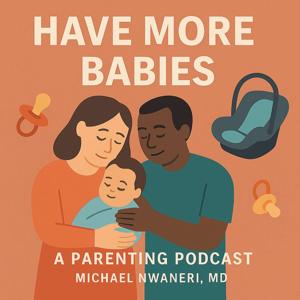
Have More Babies is a practical parenting podcast with pediatrician Michael Nwaneri, MD. Get clear, compassionate guidance for pregnancy, newborn care, feeding, safe sleep, child development,…
Drawing on more than 28 years of experience as a physician, Dr. Nwaneri helps parents understand their options, spot when to seek care, and feel more confident raising children. Explore the episode library for focused answers you can return to as your family grows. This podcast is educational and does not replace personalized medical advice from your child’s clinician.