
Sign up to save your podcasts
Or

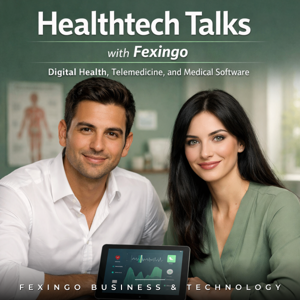


Every year, thousands of cancer patients never learn about clinical trials that could save their lives. In this episode of Healthtech Talks, Lucas and Luna dive into the quiet revolution of AI-powered clinical trial matching. They focus on a specific case: how Tempus, a Chicago-based healthtech company, built an algorithm that scans electronic health records against trial eligibility criteria in under 60 seconds — a process that used to take a human research coordinator six to eight hours per patient. Lucas breaks down the numbers: 80% of clinical trials fail to meet enrollment timelines, and 30% of cancer patients say they would have considered a trial if they had known about it. Luna raises the data-quality question — what happens when a patient's record has missing or unstructured data? — and Lucas explains how natural language processing fills the gaps. They also touch on the ethical tension: does AI match patients to trials they're eligible for, or ones they'd actually benefit from? By the end, listeners understand both the technical breakthrough and the human stakes. No hype, just the mechanics and the moral questions.
#Healthtech #ArtificialIntelligence #ClinicalTrials #Tempus #CancerCare #PatientMatching #NLP #ElectronicHealthRecords #Oncology #ClinicalResearch #HealthTechTalks #Fexingo #FexingoBusiness #BusinessPodcast #BusinessAndTechnology #HealthInnovation #AIinHealthcare #PrecisionMedicine
Keep every episode free: buymeacoffee.com/fexingo
Lucas and Luna explore how AI-powered wearable sensors are being used to predict surgical site infections days before visible symptoms appear. They focus on a real-world deployment at a major US hospital system where patients wear a small adhesive patch post-surgery that tracks heart rate, respiration, skin temperature, and gait. The algorithm, trained on thousands of recovery trajectories, issues alerts when subtle deviations signal an emerging infection. The episode dives into the numbers: how early detection cut readmission rates by 34% and saved an estimated $2.7 million in avoidable costs over the first year. They also discuss the challenges — patient compliance, data privacy, and false alarm fatigue — and what this means for the future of remote post-operative monitoring. A concrete look at how continuous data streams could transform surgical recovery.
#AI #Wearables #SurgicalSiteInfection #RemoteMonitoring #PostSurgery #PredictiveAnalytics #HealthcareAI #PatientSafety #ReadmissionReduction #DigitalHealth #Telemedicine #MedicalSoftware #Healthtech #Business #Technology #FexingoBusiness #BusinessPodcast #HealthtechTalks
Keep every episode free: buymeacoffee.com/fexingo
Sepsis is the silent killer that accounts for one in five deaths worldwide. By the time blood cultures come back positive, the patient is often already in crisis. But a new wave of AI-driven early warning systems is changing the timeline. In this episode of Healthtech Talks, Lucas and Luna explore how machine learning models trained on real-time vitals, lab results, and nursing notes can predict sepsis up to 12 hours before traditional diagnostics. They dive into the Epic Sepsis Model controversy from 2021, and look at a 2025 study from Johns Hopkins that cut sepsis mortality by 20% using a more transparent algorithm. They discuss the tension between accuracy and interpretability, and why clinicians are finally trusting these tools. If you're in healthtech or hospital operations, this episode is about the models that are already running in the background of your local ICU.
#SepsisPrediction #AIinHealthcare #ClinicalDecisionSupport #EarlyWarningSystem #EpicSystems #JohnsHopkins #MachineLearning #Healthtech #DigitalHealth #ICUMonitoring #PatientSafety #MIMICIII #LactateClearance #SOFAScore #Business #Technology #FexingoBusiness #BusinessPodcast
Keep every episode free: buymeacoffee.com/fexingo
In this episode of Healthtech Talks, Lucas and Luna explore how artificial intelligence is predicting acute kidney injury (AKI) up to 48 hours before it becomes critical. They focus on a specific deployment at a large academic medical center where an AI model reduced dialysis starts by 25% and cut ICU length of stay. The hosts break down how the model works—using lab trends, vital signs, and medication data in real time—and discuss the challenges of false alarms, clinician alert fatigue, and integration with electronic health records. Listeners will learn the concrete mechanics behind AI-driven AKI prediction and what it means for patient outcomes and hospital operations.
#AcuteKidneyInjury #PredictiveAI #Healthtech #ClinicalDecisionSupport #Dialysis #Nephrology #AIinHealthcare #EHRIntegration #PatientSafety #ICU #HospitalOperations #MachineLearning #HealthcareInnovation #RealTimeMonitoring #ArtificialIntelligence #Business #FexingoBusiness #BusinessPodcast
Keep every episode free: buymeacoffee.com/fexingo
Lucas and Luna dive into how artificial intelligence is transforming prior authorization in healthcare—a bureaucratic process that costs hospitals billions annually and delays patient care. They examine a real-world case: a mid-sized hospital system in Ohio that deployed an AI platform from a startup called Cohere Health, reducing authorization turnaround time from 11 days to under 48 hours. The hosts break down how natural language processing reads clinical notes and matches them to payer policies, cutting manual review by 70 percent. They also discuss the pushback from insurers and the regulatory landscape under the 2024 CMS rule requiring electronic prior authorization. A focused look at one of healthcare's biggest administrative pain points and the technology trying to fix it.
#PriorAuthorization #AIinHealthcare #CohereHealth #HealthTech #AdministrativeAutomation #NLP #CMS #Episode116 #LucasAndLuna #BusinessAndTechnology #FexingoBusiness #BusinessPodcast #DigitalHealth #Telemedicine #MedicalSoftware #HospitalOperations #InsuranceReform #HealthPolicy
Keep every episode free: buymeacoffee.com/fexingo
In this episode of Healthtech Talks, Lucas and Luna explore how artificial intelligence is personalizing cancer treatment plans at scale. They focus on a specific case: Memorial Sloan Kettering's collaboration with IBM Watson Health (now part of Merative) and how the platform analyzes thousands of medical papers, clinical trials, and patient records in minutes to suggest tailored therapies. The hosts discuss the challenges of data integration, clinician buy-in, and the recent shift toward open-source AI models in oncology. They also touch on how the FDA's evolving stance on AI in healthcare is shaping the market. By the end, you'll understand why personalized cancer care is moving from one-size-fits-all protocols to dynamic, data-driven decisions.
#AI #CancerTreatment #PersonalizedMedicine #Oncology #Healthtech #MemorialSloanKettering #IBM #WatsonHealth #Merative #ClinicalDecisionSupport #FDA #OpenSourceAI #MachineLearning #DataIntegration #HealthcareAI #Business #Technology #FexingoBusiness
Keep every episode free: buymeacoffee.com/fexingo
Pancreatic cancer is notoriously hard to detect early, but AI is changing that. In this episode, Lucas and Luna explore how machine learning models are analyzing CT scans, electronic health records, and even routine blood tests to flag patients at high risk before symptoms appear. They discuss a recent study from MIT and Harvard that used an AI model trained on millions of patient records to predict pancreatic cancer risk up to three years before diagnosis. The hosts also look at how systems like those from Israeli startup Imagene are being deployed in hospitals today, and the challenges of integrating AI into radiology workflows without overwhelming clinicians. The conversation touches on false positives, FDA clearance hurdles, and what this means for survival rates—currently just 12 percent five-year survival, which could double with early detection. No clickbait, just the realities of a technology that could save hundreds of thousands of lives.
#AI #PancreaticCancer #EarlyDetection #MachineLearning #HealthTech #Radiology #Imagene #MIT #Harvard #CTScan #EHR #Biomarkers #HealthcareAI #MedicalImaging #FexingoBusiness #BusinessPodcast #Technology #Oncology
Keep every episode free: buymeacoffee.com/fexingo
A deep dive into how artificial intelligence is being deployed to cut diagnostic errors in radiology. We examine a landmark 2025 study from the University of Pittsburgh Medical Center showing a 23% reduction in missed findings when AI acts as a second reader on chest X-rays. Lucas and Luna discuss why radiologists are embracing AI as a partner, not fearing replacement, and how the technology is being integrated into real clinical workflows. The episode zooms in on the specific case of pulmonary nodule detection, where AI has proven particularly effective at catching early-stage lung cancers that human eyes might miss. We also touch on the economic angles: reduced malpractice risk, lower repeat imaging costs, and the potential for AI to alleviate radiologist burnout amid growing imaging volumes. No hype, just the numbers and the practical reality.
#AI #Radiology #DiagnosticErrors #ChestXRay #PulmonaryNodule #LungCancer #UPMC #MedicalImaging #ClinicalAI #RadiologistBurnout #Malpractice #PatientSafety #HealthIT #Business #Technology #FexingoBusiness #BusinessPodcast #HealthtechTalks
Keep every episode free: buymeacoffee.com/fexingo
Every year in the US, between 700,000 and 1 million hospitalized patients fall. Many result in broken hips, head injuries, and longer stays. Traditional fall-risk assessments rely on nurses manually scoring patients—subjective, inconsistent, and slow. Now, a wave of AI-powered camera systems is changing that. Lucas and Luna explore how companies like CareAI and Walabot are using computer vision and radar to detect when a patient is about to get out of bed or wobble, alerting staff seconds before the fall. They dig into the privacy concerns—constant monitoring in a hospital room—and the trade-offs between accuracy and dignity. Are we ready for hospitals that watch every move? What happens when the algorithm gets it wrong? This episode drills into the numbers: one pilot hospital at Mount Sinai saw a 37% reduction in falls after deploying ceiling-mounted depth cameras. No video feeds, just skeletal tracking. The hosts also discuss the cost: about $1,500 per bed annually, versus an average $14,000 per fall injury. A focused look at a quiet revolution in patient safety.
#AI #PatientSafety #FallPrevention #ComputerVision #HospitalTech #Healthtech #CareAI #Walabot #MountSinai #DepthCameras #Privacy #RadarSensing #PredictiveAnalytics #NursingTech #Business #Technology #FexingoBusiness #BusinessPodcast
Keep every episode free: buymeacoffee.com/fexingo
Lucas and Luna dive into how hospitals are using AI to predict patient deterioration in real time, before a code blue is called. They examine a specific deployment at a major academic medical center that reduced escalations by 25 percent by analyzing vital signs, lab results, and nurse charting every five minutes. The episode walks through how the model works, the operational challenges of getting clinicians to trust a black box, and why this is different from the sepsis prediction tools that came before. The hosts also touch on the human factor: whether nurses feel supported or surveilled by these systems. If you are building or buying healthtech, this episode gives you a concrete case study of what works and what still grates. Plus, a listener-supported model keeps the show ad-free — buy me a coffee dot com slash fexingo.
#AI #HealthTech #PredictiveAnalytics #PatientSafety #ClinicalDecisionSupport #MachineLearning #HospitalOperations #RealTimeMonitoring #VitalSigns #NursingWorkflow #CodeBlue #DeteriorationIndex #Epic #DigitalHealth #MedicalSoftware #Business #FexingoBusiness #BusinessPodcast
Keep every episode free: buymeacoffee.com/fexingo
From the publisher's feed