
Sign up to save your podcasts
Or

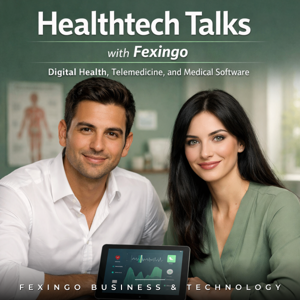


Episode 61 of Healthtech Talks dives into the controversy around AI chatbots for mental health. Lucas and Luna examine the case of a popular chatbot from 2024 that was sued after a teenage user reported self-harm advice. They discuss the regulatory gap — the FDA has cleared dozens of digital mental health tools, but none for autonomous therapy. Luna brings data from a 2025 JAMA study showing that 58% of users prefer chatbots for initial symptom checks, yet clinical outcomes remain mixed. Lucas questions whether venture capital rushed the space: over $2 billion invested in mental health AI in 2025, but only two randomized controlled trials published. The episode drills into the specific tension between accessibility and safety, ending with a forward look at how the FDA's new Digital Health Advisory Committee might change things.
#AI #MentalHealth #Chatbots #DigitalHealth #FDA #Regulation #Therapy #VentureCapital #JAMA #ClinicalTrials #Safety #Healthtech #TeenMentalHealth #Accessibility #Business #Technology #FexingoBusiness #BusinessPodcast
Keep every episode free: buymeacoffee.com/fexingo
Episode 60 of Healthtech Talks with Fexingo dives into the emerging world of real-time health insurance personalisation. Lucas and Luna explore how companies like Oscar Health and Clover Health are using AI to adjust premiums, recommend treatments, and intervene before claims happen—based on live wearable data and medical history. They break down the specific case of Clover Health's 'Clover Assistant' platform, which has reduced hospital readmissions by 11% in its Medicare Advantage population. The hosts also discuss the ethical tightrope between personalisation and privacy: how much data is too much, and who gets left out when algorithms set prices. If you're building or buying healthtech, this episode shows where insurance is heading—and why it matters for everyone. No fluff, just the concrete case.
#RealTimeInsurance #HealthTech #AIInsurance #OscarHealth #CloverHealth #CloverAssistant #MedicareAdvantage #WearableData #PredictiveAnalytics #InsurancePersonalisation #Business #Technology #HealthInsurance #ValueBasedCare #AIHealthcare #FexingoBusiness #BusinessPodcast #HealthtechTalks
Keep every episode free: buymeacoffee.com/fexingo
In this episode, Lucas and Luna explore how artificial intelligence is transforming oncology by creating personalized cancer treatment plans tailored to each patient's genetic profile and real-time health data. They dive into a specific case: how Memorial Sloan Kettering Cancer Center is using an AI platform called OncoHealth to analyze tumor genetics, treatment history, and biomarker changes to recommend chemotherapy and immunotherapy adjustments within hours instead of weeks. The hosts discuss the technology behind it, the clinical impact on patient outcomes, and the challenges of integrating AI into existing hospital workflows. A must-listen for anyone interested in the intersection of AI, genomics, and precision medicine.
#AI #CancerTreatment #PersonalizedMedicine #Oncology #Healthtech #MemorialSloanKettering #OncoHealth #Genomics #PrecisionMedicine #Chemotherapy #Immunotherapy #ArtificialIntelligence #DigitalHealth #Telemedicine #MedicalSoftware #BusinessAndTechnology #FexingoBusiness #BusinessPodcast
Keep every episode free: buymeacoffee.com/fexingo
Lucas and Luna explore how hospitals are using AI to predict clinician burnout by analyzing patterns in electronic health record logins, shift schedules, and patient outcomes. They focus on a pilot program at Stanford Medicine that uses machine learning to flag elevated burnout risk weeks in advance, and discuss the ethical implications of monitoring staff with AI. The episode covers the specific metrics used — time spent on notes after hours, variation in ordering patterns, and peer-comparison data — and how early interventions like adjusted schedules or counseling are cutting turnover. Lucas explains the difference between burnout prediction and surveillance, and Luna pushes back on privacy concerns. The conversation stays grounded in real hospital data and avoids hype.
#AIHealthcare #BurnoutPrediction #StanfordMedicine #ClinicianWellbeing #HealthTech #MachineLearning #WorkforceAnalytics #PredictiveAnalytics #HospitalIT #EHR #StaffRetention #EthicalAI #HealthcareWorkforce #BurnoutPrevention #Business #Technology #FexingoBusiness #BusinessPodcast
Keep every episode free: buymeacoffee.com/fexingo
Episode 57 of Healthtech Talks dives into the intersection of AI and hospital supply chain management—a $200 billion headache for U.S. hospitals where stockouts and expired inventory cost billions annually. Lucas and Luna examine how a mid-sized health system in Ohio deployed AI to predict demand for surgical gloves, catheters, and medications, cutting expired inventory write-offs by 30 percent and reducing stockout rates from 12 percent to under 3 percent. They discuss the role of real-time data, machine learning models trained on historical usage and surgery schedules, and why most hospitals still rely on spreadsheets. The episode also touches on the broader trend of hospital supply chains going digital, inspired by retail giants like Walmart and Amazon, and the barriers to adoption, including IT debt and fragmented vendor systems.
#HealthtechTalks #AI #HospitalSupplyChain #SupplyChainAI #HealthTech #DigitalHealth #InventoryManagement #HospitalOperations #PredictiveAnalytics #Business #Technology #MachineLearning #HealthcareLogistics #CostReduction #OhioHealth #FexingoBusiness #BusinessPodcast #HealthtechTalksPodcast
Keep every episode free: buymeacoffee.com/fexingo
In this episode of Healthtech Talks with Fexingo, Lucas and Luna explore how artificial intelligence is turning smartphone cameras into dermatology screening tools. They examine a landmark study from the Stanford AI Lab published in Nature Medicine, which showed that a deep learning model trained on 130,000 clinical images matched the diagnostic accuracy of board-certified dermatologists in identifying malignant melanomas and carcinomas. The hosts discuss how companies like SkinVision and Google Health have deployed similar convolutional neural networks in consumer apps, achieving sensitivity rates above 95% for detecting the most dangerous skin cancers. Luna raises concerns about false positives in darker skin tones due to training data bias, and Lucas explains how federated learning and diverse dataset initiatives are addressing the gap. The conversation also covers regulatory hurdles — the FDA has cleared exactly three AI-powered dermatology tools as of June 2026 — and what this means for primary care triage. If you're building or running a healthtech business, this is the frontier where computer vision meets accessible diagnostics.
#AI #Healthtech #Dermatology #SkinCancer #DeepLearning #ComputerVision #Telemedicine #StanfordAI #GoogleHealth #SkinVision #FDA #MedicalAI #Diagnostics #HealthcareInnovation #Business #Technology #FexingoBusiness #BusinessPodcast
Keep every episode free: buymeacoffee.com/fexingo
In this episode of Healthtech Talks, Lucas and Luna dive into how artificial intelligence is transforming hospital discharge planning — moving from a one-size-fits-all checklist to personalized, risk-stratified discharge plans that reduce readmissions and improve patient outcomes. They examine a real-world deployment at a large academic medical center where an AI model analyzes over 200 variables — from vital sign trends and lab results to social determinants like housing stability and caregiver availability — to generate a tailored discharge summary and follow-up schedule within seconds. Lucas breaks down the machine learning approach, the data sources involved, and the early results: a 22% reduction in 30-day readmissions and a 15-minute average time savings per discharge. Luna questions the ethical implications of algorithm-driven discharge decisions and the potential for bias. The conversation lands on the shift from reactive to proactive care coordination, and what it means for the future of hospital operations.
#AI #HealthTech #DigitalHealth #HospitalDischarge #ReadmissionReduction #PredictiveAnalytics #MachineLearning #CareCoordination #PatientOutcomes #ClinicalAI #SocialDeterminants #HealthEquity #HospitalOperations #Business #Technology #FexingoBusiness #BusinessPodcast #HealthtechTalks
Keep every episode free: buymeacoffee.com/fexingo
Lucas and Luna explore how hospitals are using AI to predict bed occupancy hours and days in advance, reducing emergency department boarding and surgical delays. They dig into real-world deployments at NYU Langone and Tampa General, where predictive models trained on admission, discharge, and transfer data have cut ambulance diversion by 40% and improved OR start times. The hosts discuss the data challenges—especially the fragmentation of electronic health record systems—and why machine learning models trained on local hospital data often fail when ported to a different facility. They also touch on the ethical question: once you can predict a bed shortage, who gets the bed? The episode closes with a look at how these systems are evolving to incorporate social determinants like housing status and public transit data to forecast demand even earlier.
#AI #Healthcare #HospitalCapacity #PredictiveAnalytics #MachineLearning #NYULangone #TampaGeneral #EmergencyDepartment #BedManagement #PatientFlow #HealthIT #OperationsResearch #DigitalHealth #Business #Technology #HealthtechTalks #FexingoBusiness #BusinessPodcast
Keep every episode free: buymeacoffee.com/fexingo
In this episode of Healthtech Talks with Fexingo, Lucas and Luna explore how artificial intelligence is being used to predict which patients are likely to miss their appointments—and what hospitals are doing about it. They dive into a specific case: how the University of Pittsburgh Medical Center reduced no-show rates by 30 percent using a machine learning model that factors in over 200 variables, from weather data to prior attendance history. The hosts discuss the financial impact of no-shows (estimated at $150 billion annually in the US), the ethical considerations of targeting interventions based on predicted behavior, and how systems like automated text reminders and ride-sharing vouchers are being deployed. They also touch on the broader implications for health equity and access. Featuring one concrete example and a nuanced look at the trade-offs involved.
#AI #Healthcare #NoShows #PredictiveAnalytics #UPMC #MachineLearning #PatientEngagement #HealthTech #HospitalOperations #DigitalHealth #Telemedicine #Business #Technology #HealthEquity #AppointmentReminders #FexingoBusiness #BusinessPodcast #HealthtechTalks
Keep every episode free: buymeacoffee.com/fexingo
Episode 52 of Healthtech Talks digs into one of the most stubborn operational headaches in healthcare: operating room scheduling. Lucas and Luna explore how Northwestern Memorial Hospital in Chicago used machine learning to cut unused OR time by 18% in 2025, saving $4.2 million annually. They walk through the specific model—a gradient-boosted decision tree trained on case duration, surgeon preferences, and patient comorbidities—and explain why simple averages fail. The episode also touches on the human resistance from surgeons who felt the AI encroached on their autonomy, and how the hospital ultimately blended algorithmic predictions with a weekly surgeon review. A concrete look at where healthtech meets operations, without the hype.
#AIinHealthcare #ORScheduling #NorthwesternMemorial #GradientBoosting #HealthtechOperations #MachineLearning #HospitalEfficiency #SurgicalScheduling #PredictiveAnalytics #OperatingRoom #HealthcareLogistics #BusinessAndTechnology #FexingoBusiness #BusinessPodcast #HealthtechTalks #DigitalHealth #HospitalManagement #AIOperations
Keep every episode free: buymeacoffee.com/fexingo
From the publisher's feed