
Sign up to save your podcasts
Or

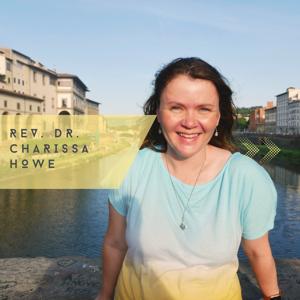


The scripture passage for May 17, 2026 (Ascension Sunday) is Acts 1:6–14. The modern church often makes the exact same mistake as the disciples—paralyzed by anxiety, staring up at the empty sky, or fixating on the past because the unknown is terrifying. However, the Ascension is not an abandonment, but a mandate to mobilize. We are challenged to stop looking in the rearview mirror, let go of our need for perfect blueprints, and step boldly into our neighborhoods equipped with the power of the Holy Spirit. For the full worship service, you can subscribe to the Sixth Presbyterian Church YouTube channel.
Are you frustrated by a church culture that demands conformity and hides behind exclusionary jargon? You aren't alone. Today, we live in a highly secular, pluralistic landscape full of deep spiritual hunger, yet the church often responds by hiding behind its walls or stepping out swinging.In this episode, Rev. Dr. Charissa Howe explores the Apostle Paul’s dramatic shift in strategy at the Areopagus in Acts 17. We discuss how the modern American church has alienated the world by forcing its own terms, often resulting in deep, church-related trauma. Discover how to drop the defensive posture, step out of your comfortable shrines, and adopt the "Areopagus Approach." Learn how to look for God's fingerprints in the unexpected, messy spaces of your city and offer true "soul friendship" to those who are desperate for authentic connection.If you are ready to build bridges instead of walls, tune in now! Don't forget to subscribe and share this episode with a friend.
In this message for the Fifth Sunday of Easter, Rev. Dr. Charissa Clark Howe explores the counter-cultural imagery of 1 Peter 2:2–10. We live in a world that builds monuments to the powerful and the victorious, and it is easy for the church to fall into the exhausting trap of trying to be a pristine monument made of perfectly polished bricks. But what happens when we realize our foundation is a cornerstone that the empires of the world rejected and discarded?
Using the metaphor of running a marathon—where things rarely go according to plan and the true beauty is found in the shared camaraderie of the struggle—Pastor Charissa reminds us that God doesn't demand perfection. Instead, we are called to be "living stones," brought together with all of our rough edges, painful blisters, and dying earbud batteries. Tune in to discover the immense freedom of letting go of worldly status to embrace the messy, beautiful reality of running the race together and offering radical solidarity to those the world pushes to the margins.
In this message for the Fourth Sunday of Easter, Rev. Dr. Charissa Clark Howe reexamines the familiar words of Psalm 23 alongside Jesus' teaching of the Good Shepherd in John 10:1-10. While "The Lord is my shepherd" is frequently read as a private, individualized comfort during times of personal grief, this sermon challenges listeners to expand their theological imagination.What happens when the "I" in the Psalm is expanded to represent our collective church community, or even the Earth itself? Exploring the congregation's need for "unstructured fellowship" and the call to practice "active hope" through holistic Earth care, this message reveals that God's compassion is not compartmentalized. Instead, the Good Shepherd's care encompasses an interconnected ecosystem, leading us together and preparing a table of abundant life right in the middle of our most difficult valleys.
On the Third Sunday of Easter, Rev. Dr. Charissa Clark Howe explores the familiar story of the Road to Emmaus in Luke 24:13–35 through the poetic framework of 19th-century Black and Indigenous activist Olivia Ward Bush-Banks. The fight against systemic injustice and the violence of the empire often leaves us carrying the heavy, traumatized weariness of modern-day martyrs, blinded to God's presence by our own grief.In this message, we examine how the resurrected Christ meets the defeated disciples exactly where they are—not with quick fixes or theological debates, but with pure presence and a listening ear. Furthermore, as the congregation celebrates the baptism of Austin Brown, this sermon highlights how the physical, communal solidarity of the sacraments serves as the ultimate antidote to our exhaustion. It is through the breaking of the bread and the waters of baptism that our trauma is reframed, our hearts are rekindled, and we are given the collective resilience to turn around and return to the messy work of liberation.
Original Poem can be found here: https://scalar.lehigh.edu/african-american-poetry-a-digital-anthology/olivia-ward-bush-banks-the-walk-to-emmaus-1899
On the Second Sunday of Easter, we usually point the finger at "Doubting Thomas" for his skepticism. But in this message exploring John 20:19–31, Rev. Dr. Charissa Clark Howe suggests taking Thomas off the hook and looking instead at the terrified disciples hiding behind dead-bolted doors. At a time when so many are walking away from the modern American church due to a disconnect between what is preached and what is practiced, we are challenged to stop cowering in our comfortable, safe silos. The greatest proof of the resurrection isn't an empty tomb, but a resilient, grassroots community that unlocks its doors, receives the peace of Christ, and steps out into the margins to offer radical compassion, inclusion, and solidarity to a hurting world.
On Easter morning, the empty tomb isn't the final destination—it’s the starting line. In this Easter message, Rev. Dr. Charissa Clark Howe explores the world-shaking events of Matthew 28:1–10 and the surprising instructions given to the terrified but joyful women at the grave.Instead of lingering at the site of the miracle or marching to the halls of power in Jerusalem, the resurrected Jesus immediately heads back to Galilee. He returns to the diverse, unpolished margins where his ministry of feeding and healing everyday people first began.Drawing on the reality of trauma and the biological rewiring of healing, this sermon examines how resurrection is not just a distant promise for the afterlife, but an immediate, present-day reality. It challenges the church to stop functioning as a museum guarding an empty tomb and instead look for the moments of healing and justice happening right now in our own modern-day Galilees. The good news is alive in the world, and Christ is already out there, waiting for us to catch up.
When confronted with the terrifying realities of the world, our deeply human instinct is to either scatter into isolation or draw our swords to fight. Yet, the cross calls us to an entirely different response.Preached during a joint Good Friday worship service with Church of the Redeemer, Rev. Dr. Charissa Clark Howe explores the tragedy of human isolation and the radical, non-anxious presence of Jesus. Grounded in the passion narrative of John 18:1–19:37 and the call to communal solidarity found in Hebrews 10:16–25, this message challenges us to resist a culture of fear that conditions us to lash out or retreat into silos.Rather than meeting the world's hostility with our own violence, we are invited to drop our ideological weapons and stand at the cross together. Choosing to gather, sit in the dark together, and hold onto one another in a stripped-bare sanctuary becomes a profound act of spiritual defiance—a testament that human solidarity and God's love are always stronger forces than division and fear.
Does it feel like you're living in a brewing storm right now? We are caught in a clash of temperatures—between the profound hope of seeing "real church work" happen and the exhausting, terrifying realities of a violent world pressing in. That same heavy, electric tension filled the air in Jerusalem on the very first Palm Sunday. In this week's message, Rev. Dr. Charissa Clark Howe takes us into the dusty streets of a city under occupation, where the people are desperate for a spark to rescue them. But Jesus completely upends their expectations. Instead of arriving on a warhorse to match the empire's violence, he stages a piece of subversive "street theater" on a humble, borrowed donkey, showing us a profoundly different sort of King.
Hit play to discover how the good news of this messy, grassroots parade challenges our own desires for control and inspires us to act. If you are ready to step into the storm and walk through the gates of righteousness together, this message is for you.
Please subscribe and share this episode with someone who needs a reminder of God's steadfast refuge! (Scriptures: Mark 11:1-11 & Psalm 118)
Is a heavy stone of judgment or a deep resentment weighing you down? In a world filled with hostility, cancel culture, and sharp disagreements, it’s incredibly tempting to grip our stones tightly and use our "rightness" as a weapon.Join Rev. Dr. Charissa Clark Howe as we step into the tense, loud temple courtyard of John 8, where a self-righteous crowd has weaponized the law against a vulnerable woman. Noticeably absent from this patriarchal trap? The man involved. Yet, instead of matching the mob's aggressive energy or treating the woman as collateral damage, Jesus utilizes a profound de-escalation tactic that changes everything.Discover why the "weightier matters" of justice, mercy, and faithfulness (Matthew 23:23) require us to confront our own hypocrisy and let go of our moral superiority. If you are exhausted by the world's hostility and want to learn how to build bridges instead of bonfires, this message offers the liberating relief of standing before God with empty hands.Hit play to explore the scandalous nature of unmerited grace! If this message resonates with you, please subscribe and share it with a friend who could use a reminder that God's mercy is for everyone.(Scriptures: John 8:2-11 & Matthew 23:23)
From the publisher's feed