
Sign up to save your podcasts
Or

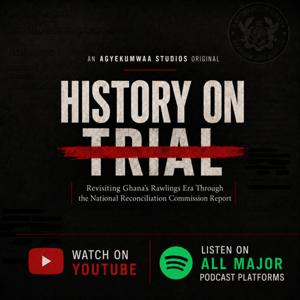


History on Trial — Episode 13: Labor and the Classroom
Accra, April 1982.
At the Hall of Trade Unions, militant workers take over the building, dismiss elected union leaders, and install an Interim Management Committee.
Across Ghana’s universities, student activism increasingly brings NUGS into confrontation with the state. Campus closures, arrests, beatings, and the exile of student leaders disrupt academic life and political organizing.
Traditional authorities also face political interference, with chiefs subjected to destoolment, banishment, and detention.
In this final episode of Institutions on Trial, we examine the National Reconciliation Commission’s findings on organized labor, student movements, and chieftaincy—and how political interference weakened institutions meant to represent and protect Ghanaian society.
Based on official historical records and testimony from the Ghana National Reconciliation Commission Report.
History on Trial
Season 1: Institutions on Trial
Episode 13: Labor and the Classroom
An Agyekumwaa Studios Original.
#HistoryOnTrial #InstitutionsOnTrial #AgyekumwaaStudios #GhanaHistory #Ghana #NRC #NUGS #TUC #GhanaianHistory #AfricanHistory #HistoryPodcast #HistoryDocumentary #TrueCrime
History on Trial — Episode 12: Faith and Resistance
Accra, 1977.
As civil society groups were banned, political parties outlawed, and public assemblies restricted, religious institutions became some of the remaining voices willing to challenge military rule.
The Christian Council of Ghana and the Catholic Bishops' Conference spoke out against arbitrary arrests, state violence, and the breakdown of constitutional order.
But faith and politics were not always united.
Some religious leaders and organizations supported state initiatives, while others faced direct government pressure, restrictions, and bans.
In 1989, the Religious Bodies Registration Law brought religious organizations under greater state control, prompting objections from major Christian bodies concerned about the government's power to deny legal existence to certain groups.
The Commission also documented violence against religious communities, including the destruction of a church in Kumasi in 1982, as well as traditional practices that constituted serious human rights abuses.
In this twelfth episode of History on Trial, we examine the complex relationship between faith, political power, religious freedom, and human rights during Ghana's mandate period.
Based on official historical records and testimony from the Ghana National Reconciliation Commission Report.
History on Trial
Season 1: Institutions on Trial
Episode 12: Faith and Resistance
An Agyekumwaa Studios Original.
#HistoryOnTrial #InstitutionsOnTrial #AgyekumwaaStudios #GhanaHistory #Ghana #June4th #AFRC #PNDC #JerryJohnRawlings #ReligiousFreedom #GhanaianHistory #AfricanHistory #HistoryPodcast #HistoryDocumentary
History on Trial — Episode 11: The Fourth Estate Under Fire
From independence to the 1990s, Ghana’s press stood at the centre of the country’s political struggles.
Under successive governments, state-owned media was used to promote official policies, while editors who resisted government directives were routinely replaced.
Independent publications faced a different reality.
Newsrooms were harassed, journalists were arrested and detained, newspapers were banned, and access to newsprint was restricted. Yet journalists continued to challenge censorship and report on abuses despite the risks.
The result was what became known across the country as the “culture of silence.”
In this eleventh episode of History on Trial, we examine the Media Committee’s findings on press censorship, licensing laws, state control, and the struggle of Ghana’s independent press to survive under fire.
Based on official historical records and testimony from the Ghana National Reconciliation Commission Report.
History on Trial
Season 1: Institutions on Trial
Episode 11: The Fourth Estate Under Fire
An Agyekumwaa Studios Original.
#HistoryOnTrial #InstitutionsOnTrial #AgyekumwaaStudios #GhanaHistory #Ghana #GhanaianHistory #AfricanHistory #PressFreedom #GhanaMedia #HistoryPodcast #HistoryDocumentary #FourthEstate #CultureOfSilence
History on Trial — Episode 10: The Shafts of Tarkwa
May 17th, 2004. Aboso, near Tarkwa in Ghana’s Western Region.
Twenty-five years after the reported abduction and disappearance of Peter Boafo’s father and his nephew in 1979, a testimony before the National Reconciliation Commission leads forensic teams to Aboso Cemetery.
What they uncover in two graves—five sets of skeletal remains, including an adult female and a young male—would bring physical evidence to cases that had remained unresolved for decades.
In this tenth episode of History on Trial, we travel into the mining communities of Tarkwa to examine reports of dawn abductions, secret burials, and disappearances, and how forensic exhumations helped corroborate testimonies that had gone unheard for a generation.
As Secrets of the Mines comes to a close, we confront one of the most difficult questions of historical truth: what happens when rumors, testimony, and physical evidence finally meet?
Based on official historical records and testimony from the Ghana National Reconciliation Commission Report.
History on Trial
Season 1: Secrets of the Mines
Episode 10: The Shafts of Tarkwa
An Agyekumwaa Studios Original.
#HistoryOnTrial #CurfewAtBundase #AgyekumwaaStudios #GhanaHistory #Ghana #GhanaianHistory #AfricanHistory #Tarkwa #Aboso #NationalReconciliationCommission #GhanaPodcast #HistoryPodcast #HistoryDocumentary
History on Trial — Episode 9: The Graves at Mile 11
September 1st, 2003. Mile 11, along the Accra-Cape Coast Road.
For over 17 years, six families had lived without knowing where their loved ones were buried after their execution following a military subversion trial in May 1986.
Then, following petitions to the National Reconciliation Commission, investigators entered the overgrown grounds of Akwasa Cemetery.
What they uncovered were two shallow, unmarked graves containing eight skeletonized remains—two more than the six families had expected.
In this ninth episode of History on Trial, we examine the Commission's first major exhumation and the forensic investigation that followed. We explore the petitions of families searching for their missing loved ones, the identification of the remains, and the NRC's efforts to restore dignity to those who had disappeared into Ghana's history.
But Mile 11 was only the beginning.
The search would soon move west, toward Tarkwa, where investigators would uncover another chapter of secret burials, missing persons, and bodies allegedly dumped in abandoned mining shafts.
Based on official historical records and testimony from the Ghana National Reconciliation Commission Report.
History on Trial
Season 1: Secrets of the Mines
Episode 9: The Graves at Mile 11
An Agyekumwaa Studios Original.
#HistoryOnTrial #SecretsOfTheMines #AgyekumwaaStudios #GhanaHistory #Ghana #GhanaianHistory #AfricanHistory #NationalReconciliationCommission #NRC #HistoryPodcast #HistoryDocumentary #Mile11 #AkwasaCemetery
History on Trial — Episode 8: Martyrs' Day & The NRC Legacy
June 30th, every year in Ghana.
Decades after the murders at Bundase, members of Ghana’s legal community gather to remember the three judges and retired army major whose deaths shook the nation.
But remembering came at a cost.
In the years following the 1982 judicial murders, lawyers and judges who gathered under the banner of Lest We Forgetfaced intimidation, surveillance, arrests, and ill-treatment.
Yet the memory endured.
Two decades later, the National Reconciliation Commission reopened the story. Former investigators, witnesses, officials, and surviving family members came forward to revisit the events and confront the failures and intimidation that surrounded the original investigation.
In this final episode of The SIB Files, we examine the legacy of Martyrs' Day, the NRC's examination of the judicial murders, and the lessons the tragedy continues to hold for Ghana's democracy and the rule of law.
Based on official historical records and testimony from the Ghana National Reconciliation Commission Report.
History on Trial
Season 1: The SIB Files
Episode 8: Martyrs' Day & The NRC Legacy
An Agyekumwaa Studios Original.
#HistoryOnTrial #TheSIBFiles #AgyekumwaaStudios #GhanaHistory #Ghana #MartyrsDay #NationalReconciliationCommission #NRC #GhanaianHistory #AfricanHistory #HistoryPodcast #HistoryDocumentary
History on Trial — Episode 7: The SIB Findings & The Tribunal
November 1982.
The Special Investigation Board completes its investigation into the murder of the three High Court judges and the retired army officer—and recommends 10 individuals for prosecution.
But when the Attorney-General makes his decision, five names are dropped for "insufficient evidence."
The remaining accused are sent before the newly established Public Tribunals rather than the High Court, sparking controversy and opposition from the Ghana Bar Association.
Then, on June 19th, 1983, a prison break throws the trial into chaos. Among those who escape are L/Cpl Samuel Amedeka, Johnny Dzandu, and Tony Tekpor.
As the proceedings continue, the accused deliver their final statements before the tribunal delivers its verdicts.
In this seventh episode of History on Trial, we examine the SIB's prosecution recommendations, the decision to use Public Tribunals, the dramatic prison break, and the final statements that preceded the death sentences.
Based on official historical records and testimony from the Ghana National Reconciliation Commission Report.
History on Trial
Season 1: The SIB Files
Episode 7: The SIB Findings & The Tribunal
An Agyekumwaa Studios Original.
#HistoryOnTrial #SIBFiles #AgyekumwaaStudios #GhanaHistory #Ghana #GhanaianHistory #AfricanHistory #HistoryPodcast #HistoryDocumentary
History on Trial — Episode 6: Tracing the Fiat
July 1982. Bundase Firing Range, Ghana.
A set of tire impressions in the mud becomes one of the first major forensic clues in the investigation into the abduction and killing of the three judges and retired Army officer.
Detective Chief Superintendent Jacob Yidana and his police investigation team begin tracing the vehicle used during the abductions, cross-referencing state garage records, fuel requisitions, and curfew passes.
The trail leads to a Fiat 127 assigned to state duties—and an operational curfew pass signed by high-ranking military officials.
As spent ammunition, vehicle records, witness statements, and interrogations begin to connect key suspects to the crime, the investigation moves closer to the inner circle of power.
But the closer the police team gets, the greater the pressure becomes.
In this sixth episode of History on Trial, we follow the forensic trail of the Fiat, the arrests that followed, and the intimidation that would ultimately target the very officers who helped crack the case.
Based on official historical records and testimony from the Ghana National Reconciliation Commission Report.
History on Trial
Season 1: The SIB Files (Part 2)
Episode 6: Tracing the Fiat
An Agyekumwaa Studios Original.
#HistoryOnTrial #TheSIBFiles #AgyekumwaaStudios #AJXEMedia #GhanaHistory #Ghana #Bundase #SIB #JacobYidana #GhanaianHistory #AfricanHistory #HistoryPodcast #HistoryDocumentary
History on Trial — Episode 5: The Bundase Discovery
June 30th, 1982. Midnight in Accra.
Under a strict citywide curfew, three High Court judges and retired army officer Major Sam Acquah are abducted from their homes and driven to the Bundase Military Firing Range.
There, they are killed and their bodies set on fire. But a heavy rainstorm prevents the evidence from being destroyed completely.
Three days later, laborers make a horrific discovery at the military range, sending shockwaves through the country and raising urgent questions about who carried out the killings—and how they could have happened during a military-enforced curfew.
As fear spreads through Accra and the legal community demands answers, the PNDC government establishes the Special Investigation Board, chaired by retired Chief Justice Samuel Azu Crabbe, with Chief Superintendent Jacob Yidana leading the police investigation.
In this fifth episode of History on Trial, we examine the Bundase discovery, the evidence left behind, the growing national panic, and the creation of the SIB—the investigation that would begin following the trail toward the highest corridors of power.
Based on official historical records and testimony from the Ghana National Reconciliation Commission Report.
History on Trial
Season 1: The SIB Files - 1
Episode 5: The Bundase Discovery
An Agyekumwaa Studios Original.
#HistoryOnTrial #TheSIBFiles #AgyekumwaaStudios #GhanaHistory #Ghana #Bundase #SIB #GhanaianHistory #AfricanHistory #HistoryPodcast #HistoryDocumentary
History on Trial — Episode 4: The Return to Ballot Boxes
September 24th, 1979. Parliament House, Accra.
After 112 days of AFRC military rule, Ghana returned to civilian government as Flight Lieutenant Jerry John Rawlings handed over power to the newly elected President, Dr. Hilla Limann.
But the transition came with a warning: the military was standing by.
As the Third Republic struggled with economic challenges, political divisions, and vigilante committees, Ghana’s judiciary began reviewing convictions handed down during the AFRC period. Judges ordered the release of people who had been wrongfully imprisoned, bringing them into conflict with military hardliners.
Then, on December 31st, 1981, the Third Republic was overthrown.
Six months later, three High Court judges and a retired army officer were abducted during a curfew and murdered at the Bundase Military Range.
In this fourth episode of History on Trial, we examine the return to civilian rule, the growing tension between the military and judiciary, and the chain of events that culminated in the judicial murders of June 1982.
Based on official historical records and testimony from the Ghana National Reconciliation Commission Report.
History on TrialSeason 1: Curfew at BundaseEpisode 4: The Return to Ballot Boxes
An Agyekumwaa Studios Original.
#HistoryOnTrial #CurfewAtBundase #AgyekumwaaStudios #GhanaHistory #Ghana #ThirdRepublic #HillaLimann #JerryJohnRawlings #AFRC #GhanaianHistory #AfricanHistory #HistoryPodcast #HistoryDocumentary