
Sign up to save your podcasts
Or

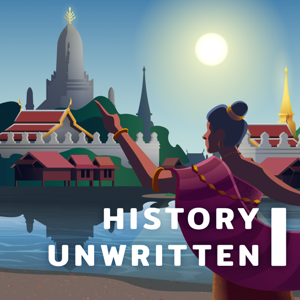


The early 17th century was an age of contradictions - peace abroad and prosperity at home contrasted with political intrigue and civil wars upon the death of kings. Illustrative of this was the coup of King Prasat Thong - "Golden Tower" - a distant relative who utilized wealth and influence to steal the throne for himself.
Series Website
Naresuan's death spells the death of the Age of Warfare. In its place: the Age of Commerce. Trade, diplomacy, and urbanization are the defining order of the day. Merchants from all across Asia congregated in Ayutthaya to exchange goods - with the King of Siam reaping the profit.
The Age of Warfare dies with King Naresuan. The final years of his reign were marked by the reestablishment of Ayutthayan supremacy across the region. Old vassals were restored to subservience, trade routes were brought back under central control, and rebels were snuffed out in an instant.
But King Naresuan garnered a reputation for being quick to anger, cruel and merciless. His epithet "The Black Prince" reveals much of his perception then and now. Indeed, the Age of Warfare was as much a rejection of his brand of kingship as it was a natural phenomenon.
Series Website
Ayutthaya was a husk of its former self. A burnt out shell, ruled by a puppet king installed by their conquerors in Burma. But that puppet would not sit dormant. He rebuilt the city, drove off attackers from Cambodia, and prepared the way for an Ayutthayan resurgence.
But this is not, really, his story. The liberation of Ayutthaya would not have happened without the capable leadership of Prince - then King - Naresuan, the "Black Prince" of Ayutthayan history. Though cruel, abrasive, and obsessed with war, Naresuan would free his country from the Burmese once and for all.
Series Website
Southeast Asia in the 16th century was a playground for ambitious kings hoping to build their empires. The kings of Ayutthaya, Burma, Lan Xang and Cambodia vied for dominance - to become a Chakkavatti - a "Wheel Turning King" from Buddhist philosophy.
From the many, only one would stand victorious. The question is: Who would it be? And what would become of the losers?
Series Website
A brief lull in the fighting presents an opportunity to discuss the Ayutthayan military in the so-called Age of Warfare.
The reforms of Trailokanat and his successors enabled the kingdom to muster larger armies than ever before. The result was greater bloodshed, longer wars and widespread suffering. Little more than a half century after Trailok's death, tragedy would befall Ayutthaya as a direct result of this Age of Warfare.
Series Website
In 1448 King Trailokanat ascended to the Ayutthayan throne. His 40 year reign would see Ayutthaya transformed from just-another-Muang city state to a centralized, autocratic kingdom. Bolstered by intensifying commerce, his armies would fan out across the Northern Cities in a great war with Lan Na, expanding Ayutthaya's borders and forcing the city to expand its bureaucracy to meet the needs of administration.
Series Website
The foundation of Ayutthaya - parsing history from legend, and surveying the city's first 100 years.
A curious blend of maritime commerce, with Tai martial culture, Ayutthaya would go on to become the greatest kingdom of the Southeast Asian mainland in the Early Modern period.
Series website
The Tai migrated into Southeast Asia over the course of centuries. During that time, they became transformed as a people through their encounters with the hostile Chinese and the indigenous peoples they found in Southeast Asia.
From the publisher's feed