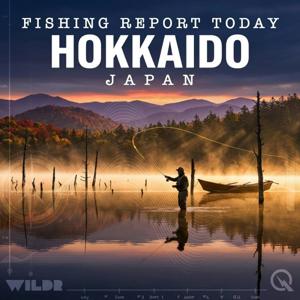
This is Artificial Lure with your Hokkaido fishing report.
Around Hokkaido today we’ve had classic early-summer conditions: cool mornings, mild afternoons, and mostly stable barometric pressure. Coastal temps have been running in the mid‑teens Celsius with light northerly to northwesterly winds. Skies have been partly cloudy, giving just enough cover to keep fish comfortable in the shallows through the morning bite.
On the Pacific side, from Kushiro up toward Nemuro, the tide cycle has been favoring a solid push of water on the morning flood and again late afternoon. The best window has been roughly an hour before high tide through the first hour of the ebb, when current tightens along rock lines and harbor mouths. On the Sea of Japan side, around Otaru and Yoichi, weaker midday movement has made sunrise and sunset key.
Sunrise came early, just after 3:40 a.m. local, with sunset coming in around 7:10 p.m., so your productive “golden hours” have been generous. The low light at both ends of the day has kept baitfish—especially small sardine and sand lance—active near the surface, and the game fish have followed.
Salmon and sea‑run fish are still scattered offshore, but inshore action has been steady. Shore jigging and light casting along rocky points have produced good numbers of **greenling (ainame)** and **rockfish (mebaru)**, with a few better‑than‑average fish pushing the high 20s in centimeters. Anglers working small metal jigs in the 10–20 g range and 3–4 inch soft plastics on 7–10 g jigheads have done the best, especially when slow‑rolling along the bottom and pausing just off structure.
In the bays and harbors, **flounder (hirame)** and other flatfish have been active on the incoming tide. Reports from local anglers around Ishikari and Tomakomai mention mixed bags of flatfish, a handful of squid, and some undersized cod. Natural baits like salted saba strips, shirauo, and sandworms fished on simple bottom rigs have outfished artificials for the cautious biters, but a white or glow paddle‑tail worked just off the sand has drawn the bigger takes.
For lure selection, keep it natural and subtle.
- Early and late: slim **metal jigs** and **minnow plugs** in sardine or anchovy patterns, 60–90 mm.
- Daytime in clear water: **soy‑sauce color** or green pumpkin **soft plastics** on light heads.
- When the wind kicks up: slightly heavier jigs and brighter colors—chartreuse or pearl with a silver belly—have been turning lookers into biters.
Best baits have been **squid strips**, **shrimp**, and live or very fresh small baitfish where legal. In the surf along the Pacific coast, **clam and sandworm baits** on long casts have continued to produce flatfish and the occasional surprise bycatch.
Two standout hot spots today:
1. **Muroran–Cape Chikyu coast**
Rocky points with deep water tight to shore, good tidal squeeze, and plenty of bait. The early‑morning topwater and mid‑water bite for greenling and rockfish has been strong, with a chance at something heavier if you commit to the deeper edges.
2. **Otaru harbor and adjacent rock walls**
Protected from the worst of the wind, with steady current around the entrances. Good mixed fishing: night‑time rockfish on small plugs and jigs, daytime flatfish and the odd squid on baited rigs. Great spot if you want consistent action without traveling far.
Overall fish activity today has been moderate to high during tide changes, slower under the bright midday sun. The key has been staying mobile: hop between points, adjust jig weight to keep contact with bottom, and match the size of the local bait. Light gear, thin braid, and fluorocarbon leaders have made a noticeable difference in the clear water.
That’s your Hokkaido fishing rundown from Artificial Lure.
Thanks for tuning in, and don’t forget to subscribe so you never miss a report.
This has been a quiet please production, for more check out quiet please dot ai.
Great deals on fishing gear https://amzn.to/44gt1Pn