
Sign up to save your podcasts
Or

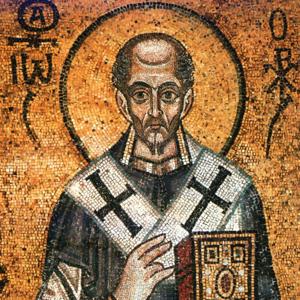

Homily III of John Chrysostom's Adversus Judaeos (delivered ca. 387 CE in Antioch) continues his campaign against Judaizing Christians, expressing frustration that some in his congregation persist in observing Jewish practices despite prior warnings.
Chrysostom condemns divisiveness within the Church as worse than external heresies, likening it to tearing Christ's seamless robe. He argues that Judaizers harm the community by blending incompatible faiths.
He contrasts the grace-filled Christian life with Jewish observances, now obsolete and burdensome post-Christ. Using strong rhetoric, he portrays synagogues in very harsh terms, urging Christians to avoid them entirely.
He calls for active intervention: faithful members must admonish and, if needed, exclude unrepentant Judaizers from communion to protect the flock. The homily emphasizes unity, repentance, and firm separation from Jewish rites to preserve pure Christianity.
 View all episodes
 By Joseph Daniel
Homily III of John Chrysostom's Adversus Judaeos (delivered ca. 387 CE in Antioch) continues his campaign against Judaizing Christians, expressing frustration that some in his congregation persist in observing Jewish practices despite prior warnings.
Chrysostom condemns divisiveness within the Church as worse than external heresies, likening it to tearing Christ's seamless robe. He argues that Judaizers harm the community by blending incompatible faiths.
He contrasts the grace-filled Christian life with Jewish observances, now obsolete and burdensome post-Christ. Using strong rhetoric, he portrays synagogues in very harsh terms, urging Christians to avoid them entirely.
He calls for active intervention: faithful members must admonish and, if needed, exclude unrepentant Judaizers from communion to protect the flock. The homily emphasizes unity, repentance, and firm separation from Jewish rites to preserve pure Christianity.