
Sign up to save your podcasts
Or

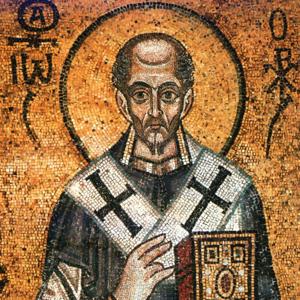

Homily IV of John Chrysostom's Adversus Judaeos (delivered ca. 387 CE in Antioch) focuses on deterring Christians from joining Jews in observing the upcoming Trumpets festival (Rosh Hashanah) and associated fasts.
Chrysostom warns in advance to fortify souls against this "accursed and unlawful" practice, arguing that Jewish fasts lack divine sanction post-Christ and are worse than drunkenness. He invokes Elijah's rebuke ("How long will you limp on both legs?") to urge decisive commitment to Christ over Judaism.
He sharply criticizes Judaizers for associating with those who crucified Christ, blames not only participants but also those who fail to stop them, and uses scriptural proofs to portray Jewish observances as obsolete and defiling. The homily stresses firm separation to avoid spiritual peril.
 View all episodes
 By Joseph Daniel
Homily IV of John Chrysostom's Adversus Judaeos (delivered ca. 387 CE in Antioch) focuses on deterring Christians from joining Jews in observing the upcoming Trumpets festival (Rosh Hashanah) and associated fasts.
Chrysostom warns in advance to fortify souls against this "accursed and unlawful" practice, arguing that Jewish fasts lack divine sanction post-Christ and are worse than drunkenness. He invokes Elijah's rebuke ("How long will you limp on both legs?") to urge decisive commitment to Christ over Judaism.
He sharply criticizes Judaizers for associating with those who crucified Christ, blames not only participants but also those who fail to stop them, and uses scriptural proofs to portray Jewish observances as obsolete and defiling. The homily stresses firm separation to avoid spiritual peril.