
Sign up to save your podcasts
Or

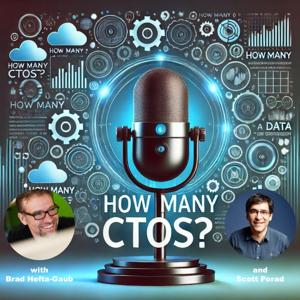


In this episode of "How Many CTOs Does It Take?" podcast, hosts Scott Porad and Brad Hefta-Gaub continue to recap Gergely Orosz's "State of the Tech Industry" talk and focus on what "broke" and "what's next." They argue that machine-generated code is overwhelming pull requests and code review, exposing that many organizations' quality gates were implicitly built around human speed, and they discuss how 98% uptime is becoming an unacceptable norm. They connect this to the need for an "AI coding safety layer" of guardrails, static analysis, verification, and testing, while noting the challenge of convincing stakeholders to invest in quality. They explore workforce morale and fatigue driven by rapid change, heightened expectations, more incidents, job instability, and a less gratifying shift from hands-on coding to supervising agents and systems. They conclude that computer science and cross-disciplinary learning remain valuable and that turmoil creates opportunity, especially for younger engineers.
00:00 Cold Open
01:22 Ski Talk Banter
02:57 Recap Pragmatic Engineer
05:10 Guardrails Are The New Craft
09:45 Selling Quality Investment
14:43 Morale Fatigue Causes
17:14 Incidents And Reliability
18:47 Job Aesthetics Changing
19:23 From Coding to Orchestration
21:26 Chihuly Visionary Analogy
23:41 Will Education Adapt
28:06 Liberal Arts and Curiosity
30:05 Bootcamps vs Core Skills
32:58 Systems Research Path
35:21 Opportunity in Turmoil
35:52 Credits and Outro
Resources:
#TechPodcast #EngineeringPodcast #DevTalks #PodcastForDevs #HowManyCTOs #Podcast #CTOs #CTOPodcast #ChiefTechnologyOfficer #Technology #Engineering #SoftwareDevelopment #SoftwareEngineering #TechLeadership #EngineeringLeadership #EngineeringCulture #TechDebates #AI #AIAssistedCoding #AIAssistedProgramming #AIProgramming #AICoding #IndustryChange #IndustryTrends #IndustryEvolution #WorkforceTrends #LeadershipInTech #FutureOfWork
In this episode of "How Many CTOs Does It Take?" podcast, hosts Scott Porad and Brad Hefta-Gaub discuss a Pragmatic Engineer talk on the state of the tech industry in 2026, focusing on what changed and what hasn't. They argue this is a "golden age" of building software due to AI, while acknowledging current "creative destruction" that may ultimately make the industry leaner. Key changes include agentic software factories where people increasingly don't read code, and a shift toward open-weight models for cost and data-sovereignty reasons, including local/on-prem inference. They note core software fundamentals (system design, resilience, security, validation) and organizational friction (alignment, clear requirements) remain unchanged. They also explore remote work's evolution, speculate about smaller squads and team structures, and end by deferring "what broke" and "what's next" to a future episode.
00:00 Episode Teaser 00:26 Show Intro and Banter 01:28 Time Travel and Quantum Aside 02:49 Was Tech Better Five Years Ago 04:47 AI Tools Golden Age 06:53 Creative Destruction Now 07:59 Reverse Engineer Anything Debate 11:03 Remote Work Then And Now 13:31 Pragmatic Engineer Summary Setup 14:50 Agentic Factories and Open Models 17:47 Open Weights Local Inference 24:14 What Has Not Changed 26:19 Org Structure And Smaller Teams 31:47 Wrap Up and Next Episode Preview 32:24 Credits and OutroResources:
#TechPodcast #EngineeringPodcast #DevTalks #PodcastForDevs #HowManyCTOs #Podcast #CTOs #CTOPodcast #ChiefTechnologyOfficer #Technology #Engineering #SoftwareDevelopment #SoftwareEngineering #TechLeadership #EngineeringLeadership #EngineeringCulture #TechDebates #AI #AIAssistedCoding #AIAssistedProgramming #AIProgramming #AICoding #TechIndustry #AgenticSoftware #QuantumMechanics #RemoteWork #SystemDesign #OrganizationalFriction #CreativeDestruction #FutureOfTech
In this episode of "How Many CTOs Does It Take?" podcast, hosts Scott Porad and Brad Hefta-Gaub interview software pioneer Kent Beck about his background (JUnit, test-driven development, extreme programming, Agile Manifesto, and his book "Tidy First?") and his current focus on "augmented development" with AI, which he calls a "genie." Beck argues that while AI shortens the build–feedback loop, it can also remove productive struggle that builds competence, agency, and flow, leaving developers exhausted and hollow. He critiques the "agent" metaphor, long tool latencies, and productivity measured as more code, proposing tools optimized for sub-second feedback, smaller safe increments, and even pushing changes to production thousands of times a day. Beck predicts programming demand will rise (Jevons Paradox), but warns mid-level "paycheck" developers must adapt. He advises leaders to use the tools themselves, build trust, and adopt via the technology adoption curve rather than mandates and layoffs.
00:00 Cold Open 00:22 Meet Kent Beck 04:31 Early Computing Origins 07:49 XP and AI Shift 11:29 Augmented Development Feel 13:06 Struggle Builds Competence 17:18 Beyond Agents Metaphor 20:39 Toil Versus Struggle 25:03 Flow and Feedback Loops 27:38 Amanuensis Junior Programmer 29:52 Manager Mode Reality 32:54 Optimize for One Second 36:35 Tech Cycles And Humans 41:01 Jobs And Jevons Paradox 46:56 Rethinking Productivity 52:15 Limbo Micro Deployments 56:01 Tool Seeds Sharing 59:34 Debugger Joy And TDD 01:02:19 Leading Adoption With Trust 01:08:57 Wrap Up And CreditsResources:
#TechPodcast #EngineeringPodcast #DevTalks #PodcastForDevs #HowManyCTOs #Podcast #CTOs #CTOPodcast #ChiefTechnologyOfficer #Technology #Engineering #SoftwareDevelopment #SoftwareEngineering #TechLeadership #EngineeringLeadership #EngineeringCulture #TechDebates #AI #AIAssistedCoding #AIAssistedProgramming #AIProgramming #AICoding #AIRevolution #ExtremeProgramming #AgileManifesto #KentBeck #TechPioneers #FutureOfCoding #AIConversations #CodingCommunity #AIChallenges #HumanSideOfTech
In this episode of "How Many CTOs Does It Take?" podcast, hosts Scott Porad and Brad Hefta-Gaub discuss growing fear about AI among engineers and managers, framing it as an "adaptive moment" requiring leaders to disrupt old stabilizing practices. They explore concerns that AI lowers the barrier for others to change systems, increasing accountability, on-call risk, and architectural drift—problems that existed pre-AI but are now intensified. Their proposed response is to strengthen the software factory/SDLC with non-human, deterministic guardrails: robust automated tests, CI/CD quality gates, mutation testing, and better observability, rather than human gatekeeping or fiefdoms. They share examples of risky AI agent behavior (attempting to access credentials to reorder Jira tickets) and real-world harm from AI claim adjudication pilots, concluding that best practices are now the floor and that engineers who build quality gates become more valuable.
00:00 Cold Open 01:04 AI Fear in Engineering 02:00 Adaptive Leadership Moment 03:55 Software Factory Mindset 06:10 Fear of Accountability 08:09 Old Problem New Pressure 11:58 Non Human Quality Gates 13:41 Scaling Creates Fiefdoms 16:34 Architecture Agent Example 20:26 Apocolyptic AI Concerns 23:51 AI in Medicare Risks 32:29 Best Practices Are Floor 33:41 Wrap Up and SubscribeResources:
#TechPodcast #EngineeringPodcast #DevTalks #PodcastForDevs #HowManyCTOs #Podcast #CTOs #CTOPodcast #ChiefTechnologyOfficer #Technology #Engineering #SoftwareDevelopment #SoftwareEngineering #TechLeadership #EngineeringLeadership #EngineeringCulture #TechDebates #AI #AIAssistedCoding #AIAssistedProgramming #AIProgramming #AICoding #SoftwareFactory #AIChallenges #EngineeringManagement #AdaptiveLeadership #QualityGates #TechTalkingPoints #InnovationStrategy #LeadershipInsights #TechInnovation #AIThreat #AIFear #AIInTech
Resources:
#TechPodcast #EngineeringPodcast #DevTalks #PodcastForDevs #HowManyCTOs #Podcast #CTOs #CTOPodcast #ChiefTechnologyOfficer #Technology #Engineering #SoftwareDevelopment #SoftwareEngineering #TechLeadership #EngineeringLeadership #EngineeringCulture #TechDebates #AI #AIAssistedCoding #AIAssistedProgramming #AIProgramming #AICoding #LegalTech #TechSimplified #AIInsights #ProLegal #InnovativeTech #BridgingTech #FrankBravo #Telemetry #TechBacklash #Trust #Troubleshooting
Resources:
How Many CTOs Pod: https://howmanyctospod.com
Scott Porad: https://www.linkedin.com/in/scottporad/
Brad Hefta-Gaub: https://www.linkedin.com/in/bradheftagaub/
#TechPodcast #EngineeringPodcast #DevTalks #PodcastForDevs #HowManyCTOs #Podcast #CTOs #CTOPodcast #ChiefTechnologyOfficer #Technology #Engineering #SoftwareDevelopment #SoftwareEngineering #TechLeadership #EngineeringLeadership #EngineeringCulture #TechDebates #AI #AIAssistedCoding #AIAssistedProgramming #AIProgramming #AICoding
In this episode of "How Many CTOs Does It Take?" podcast, hosts Scott Porad and Brad Hefta-Gaub interview Scott Hanson, founder and CTO of Ambiq, a company focused on ultra-low-power chips for "intelligence everywhere," with 300M+ units shipped into wearables and other devices. Hansen traces Ambiq's origins with University of Michigan smart-dust research and his PhD work on subthreshold computing—running transistors at extremely low voltages for quadratic energy savings—then explains the challenges of making it manufacturable across temperature and process variation. He discusses university IP spinout mechanics, patent timing vs. publication, and his transition from founder CEO to CTO under a professional CEO. The conversation covers Ambiq's Apollo SoCs and the newer Apollo "Atomic" NPU direction enabling much larger edge AI models, new memory innovations, and future camera and conversational-interface use cases, plus hardware development realities like long feedback loops, simulation/FPGA prototyping, and high mask/tooling costs.
00:00 Cold Open 00:19 Meet Ambiq And The Guest 02:25 Smart Dust Origins At Michigan 03:21 Subthreshold Computing Explained 04:53 From Lab Demo To Manufacturable 06:05 Bio Inspired Power Ideas 08:25 Choosing EE And Finding The Path 10:42 Deciding To Commercialize 13:30 University Spinout And IP Deals 16:35 Papers Versus Patents Strategy 19:06 Founder CEO To CTO Transition 22:30 CTO CEO Partnership 23:49 Ego Shift Support 24:42 Apollo Atomic Overview 27:25 Edge AI Use Cases 29:49 On Device Translation 32:43 Memory Bandwidth Bottlenecks 37:21 Hardware Leadership Tech Debt 40:15 Testing With FPGAs 42:54 Cost Of Chip Tooling 44:33 Wrap Up and CreditsResources:
#TechPodcast #EngineeringPodcast #DevTalks #PodcastForDevs #HowManyCTOs #Podcast #CTOs #CTOPodcast #ChiefTechnologyOfficer #Technology #Engineering #SoftwareDevelopment #SoftwareEngineering #TechLeadership #EngineeringLeadership #EngineeringCulture #TechDebates #AI #AIAssistedCoding #AIAssistedProgramming #AIProgramming #AICoding #TechInnovation #EnergyEfficient #SiliconChips #SmartWearables #CEOtoCTO #Ambiq #LowPower #EdgeComputing #ElectronicsEngineering #SmartDevices #EdgeAI #SubthresholdComputing #HardwareInnovation #NeuralProcessing #WearTech
In this episode of "How Many CTOs Does It Take?" podcast, hosts Scott Porad and Brad Hefta-Gaub interview Andy Boettcher, Chief Innovator of DoubleTrack, a boutique data and AI consultancy. Andy recounts his 33 years across systems, development, with 13 years in Salesforce, and how his career shifted into data/AI full-time after ChatGPT's 2022 release. The group compares manufacturing's precise cost estimation to software's people-driven unpredictability, then explores moving beyond AI for cost takeout toward top-line revenue lifts. Andy emphasizes mindset—curiosity, open-ended questions, and "always assuming you're wrong"—and argues resistant engineers will be replaced by those using AI. They discuss using AI as a peer, agentic workflows, real-time CX intelligence for renewals/upsell, ethics, and the need for human-in-the-middle quality gates, scoring rubrics, and trustworthy PR artifacts.
00:00 Cold Open 00:18 Meet the Guest Andy 02:15 Micro Estimating Story 04:17 Why Software Estimates Fail 05:55 DoubleTrack and AI Work 08:15 Revenue vs Cost Takeout 10:39 AI as Peer Partner 13:35 Curiosity New Mindset 17:30 Learning to Prompt Better 20:49 Agents and Orchestration 23:05 Managing Teams of Agents 25:09 Real Time CX Signals 27:09 Scraping The Corners 29:07 Ethics Of Live Upsell 30:17 Async Agents In Practice 34:47 Trust And AI Slop 40:29 Agent Driven Code Reviews 44:52 Rubrics And Quality Gates 48:24 Final Advice And Wrap UpResources:
#TechPodcast #EngineeringPodcast #DevTalks #PodcastForDevs #HowManyCTOs #Podcast #CTOs #CTOPodcast #ChiefTechnologyOfficer #Technology #Engineering #SoftwareDevelopment #SoftwareEngineering #TechLeadership #EngineeringLeadership #EngineeringCulture #TechDebates #AI #AIAssistedCoding #AIAssistedProgramming #AIProgramming #AICoding #Innovation #Data #RevenueGeneration #MachineLearning #BusinessStrategy #DataAnalytics #BusinessGrowth
In this episode of "How Many CTOs Does It Take?" podcast, hosts Scott Porad and Brad Hefta-Gaub interview Jack Moldave of Eyebot, a company he co-founded nearly six years ago to make getting glasses as easy as buying shoes by enabling on-demand vision tests and prescriptions in retail settings. Jack explains Eyebot's kiosk experience in Walmart Vision Centers, including intake questions, visual acuity testing, touch-free refraction and glasses scanning, and remote review by licensed optometrists/ophthalmologists with prescriptions returned in under 15 minutes. He discusses navigating FDA regulation as a Class I medical device using risk assessment (FMEA), a quality management system, and traceability, and shares why venture capital helped fund regulated hardware R&D. The conversation also covers Eyebot's doctor portal and network, limits versus comprehensive eye exams, potential future screening as a Class II device, and the challenges and culture required to merge hardware and software development with over-the-air updates and manufacturing partners.
00:00 Podcast Cold Open 00:51 Eyebot Mission 02:04 Founders and Origin 04:43 Access Stories 07:19 FDA Basics 10:30 FMEA Risk Analysis 13:17 Quality Systems 15:43 Funding Realities 16:53 Walmart Kiosk Flow 20:29 Touch Free Design 23:50 Remote Doctor Network 26:57 When to Refer Out 27:48 Minotaur Care Model 28:48 Doctor Shortage Solution 33:38 Hardware Software Moat 35:05 Formlabs Playbook 38:46 Leasing and Upgrades 40:11 First Launch with Walmart 48:35 Suppliers and Scaling 49:52 Culture and Closing 51:53 Outro and CreditsResources:
#TechPodcast #EngineeringPodcast #DevTalks #PodcastForDevs #HowManyCTOs #Podcast #CTOs #CTOPodcast #ChiefTechnologyOfficer #Technology #Engineering #SoftwareDevelopment #SoftwareEngineering #TechLeadership #EngineeringLeadership #EngineeringCulture #TechDebates #AI #AIAssistedCoding #AIAssistedProgramming #AIProgramming #AICoding #VisionCare #Innovation #MedicalDevice #Eyebot #EngineeringExcellence #HardwareDevelopment #SoftwareIntegration #DigitalHealth #FutureOfHealth #RegulatoryChallenges #EngineerSpeak #TechSolutions #MedTech #HealthcareInnovation #VisionCareAccess #MedDevice #SoftwareHardwareBlend
From the publisher's feed