
Sign up to save your podcasts
Or

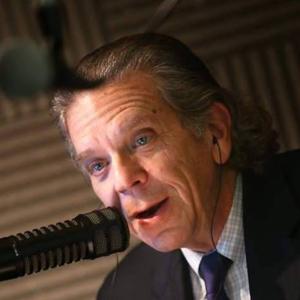

Our celebration of Juneteenth as a federal holiday is a direct result of the civil rights struggles of the 1960s. The battles led by Martin Luther King Jr. and many others created an enduring legacy on which the continued fight for civil rights rests. But what happens when this legacy is manipulated, distorted, and appropriated to further agendas far removed from the original purpose? What does it mean when various causes are labeled the “civil rights struggle of our time?” Does it dilute the impact of the original battle? When wielded in the wrong hands, could it even be seen as an affront to 50 years of civil rights progress? These questions form the central theme of my WhoWhatWhy conversation today with Hajar Yazdiha.
Hajar is an assistant professor of sociology at the University of Southern California, and she has critically examined how various movements, including those on the far right, have appropriated the symbols and rhetoric of the civil rights era to advance their cause. To talk about this further, it is my pleasure to welcome Hajar Yazdiha here to discuss her new bookThe Struggle for the People’s King: How Politics Transforms the Memory of the Civil Rights Movement.
 View all episodes
 By Jeff Schechtman


3.7
77 ratings
Our celebration of Juneteenth as a federal holiday is a direct result of the civil rights struggles of the 1960s. The battles led by Martin Luther King Jr. and many others created an enduring legacy on which the continued fight for civil rights rests. But what happens when this legacy is manipulated, distorted, and appropriated to further agendas far removed from the original purpose? What does it mean when various causes are labeled the “civil rights struggle of our time?” Does it dilute the impact of the original battle? When wielded in the wrong hands, could it even be seen as an affront to 50 years of civil rights progress? These questions form the central theme of my WhoWhatWhy conversation today with Hajar Yazdiha.
Hajar is an assistant professor of sociology at the University of Southern California, and she has critically examined how various movements, including those on the far right, have appropriated the symbols and rhetoric of the civil rights era to advance their cause. To talk about this further, it is my pleasure to welcome Hajar Yazdiha here to discuss her new bookThe Struggle for the People’s King: How Politics Transforms the Memory of the Civil Rights Movement.

38,475 Listeners
3,966 Listeners
9,526 Listeners

12,497 Listeners

5,553 Listeners

8,191 Listeners

15,892 Listeners

2,068 Listeners
753 Listeners

4,553 Listeners